Changing spark plugs is one of the most common maintenance tasks for gasoline-powered vehicles. Although spark plugs are small components, they play a major role in starting the engine, maintaining smooth combustion, and supporting fuel efficiency. Over time, spark plugs wear out, develop deposits, or lose their ability to create a strong ignition spark, which can affect overall engine performance.
Many drivers delay spark plug replacement because they are unsure about the process, required tools, or whether it is possible to do the job themselves. However, with the correct knowledge and preparation, changing spark plugs can be a straightforward maintenance task for many vehicles. Understanding the proper replacement process can help prevent installation mistakes and protect important ignition components.
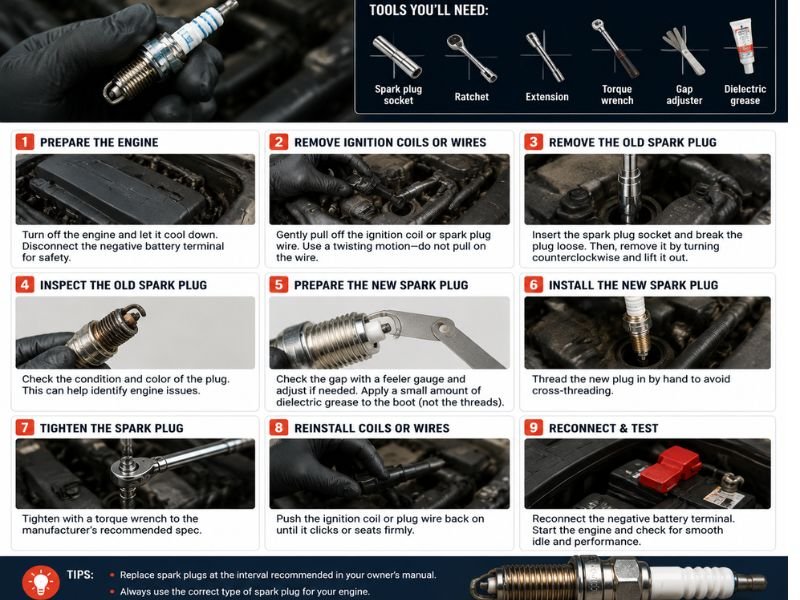
In this complete how to change spark plugs guide, you will learn the step-by-step replacement process, the tools required, how to safely remove old spark plugs, how to install new ones correctly, and the common mistakes to avoid during replacement.
What You Will Learn From This Guide
In this guide, you will discover:
- When spark plugs need to be replaced
- What tools are required for changing spark plugs
- How to remove old spark plugs safely
- How to install new spark plugs correctly
- How to check spark plug gap before installation
- How to avoid common spark plug replacement mistakes
- Important differences when changing spark plugs on different engines
Replacing spark plugs correctly is not only about removing an old part and installing a new one. Proper installation ensures the spark plug creates a reliable ignition spark, maintains the correct seal inside the cylinder head, and allows the engine to operate efficiently.
At SparkPlugGuide, Chris Turner focuses on explaining automotive maintenance in a simple and practical way. Whether you are a beginner performing your first DIY repair or a vehicle owner who wants to understand the replacement process better, this guide will help you confidently approach spark plug replacement.
What Does Changing Spark Plugs Mean?
Changing spark plugs means removing old or worn spark plugs from an engine and replacing them with new spark plugs that match the vehicle manufacturer’s specifications. Since spark plugs are responsible for creating the ignition spark that starts combustion, replacing them at the correct time helps maintain reliable engine performance.
Spark plugs operate inside the combustion chamber where they are exposed to extreme heat, pressure, and repeated electrical firing. Over time, the center electrode and ground electrode can wear down, deposits can build up, and the spark gap can change. These issues reduce the spark plug’s ability to ignite the air-fuel mixture efficiently.
Why Do Spark Plugs Need to Be Changed?
Spark plugs naturally wear out because they experience thousands of ignition cycles during normal engine operation.
Common reasons for replacing spark plugs include:
- Electrode wear from repeated sparking
- Carbon or oil deposits
- Incorrect spark plug gap
- Reduced ignition performance
- Reaching the recommended maintenance interval
A worn spark plug may still allow the engine to run, but it can reduce combustion efficiency and create symptoms such as rough idle, poor acceleration, misfires, or increased fuel consumption.
How Changing Spark Plugs Affects Engine Performance
New spark plugs help restore proper ignition by creating a strong and consistent spark inside each cylinder.
A correctly installed spark plug supports:
- Smooth engine operation
- Reliable starting
- Efficient fuel combustion
- Stable acceleration
- Reduced risk of ignition problems
However, replacing spark plugs does not upgrade an engine beyond its original capability. The main purpose of replacement is to restore proper ignition performance and maintain the engine’s designed operation.
Spark Plug Replacement and the Ignition System
Spark plugs are one part of the complete ignition system. They work together with components such as:
- Ignition coils
- Spark plug wires
- Engine control unit (ECU)
The ignition coil generates the high voltage required for the spark plug to create a spark, while the spark plug delivers that spark inside the combustion chamber.
If other ignition components are damaged, replacing spark plugs alone may not solve the problem. Proper diagnosis is important when engine performance issues continue after replacement.
Why Correct Spark Plug Replacement Matters
Installing spark plugs correctly is just as important as choosing the right spark plugs.
Important factors include:
- Correct spark plug type
- Proper spark plug gap
- Correct tightening torque
- Clean installation area
Incorrect installation can lead to problems such as loose spark plugs, damaged threads, poor heat transfer, or ignition problems.
Understanding what changing spark plugs means helps vehicle owners see why this maintenance task is important and why proper replacement procedures are necessary for long-term engine reliability.
When Should You Change Spark Plugs?
Spark plugs should be changed when they become worn, damaged, or reach the replacement interval recommended by the vehicle manufacturer. The exact timing depends on the spark plug material, engine design, driving conditions, and vehicle maintenance schedule.
Unlike some maintenance tasks that have a fixed timeline, spark plug replacement depends on several factors. A vehicle with premium iridium spark plugs may go much longer between replacements compared to a vehicle using traditional copper spark plugs.
Signs Your Spark Plugs Need Replacement
The easiest way to know when spark plugs need changing is by paying attention to changes in engine performance.
Common warning signs include:
- Difficulty starting the engine
- Rough idle
- Engine misfires
- Reduced acceleration
- Poor fuel economy
- Increased exhaust emissions
- Check engine light
These symptoms occur because worn spark plugs may struggle to create a strong and consistent ignition spark.
How Often to Change Spark Plugs
Spark plug replacement intervals vary depending on the type of spark plug installed and the vehicle manufacturer’s recommendation.
Copper spark plugs generally have shorter service intervals because the electrode material wears faster. Platinum spark plugs last longer due to better wear resistance, while iridium spark plugs are designed for extended service life.
Modern vehicles may require spark plug replacement anywhere from around 30,000 miles to over 100,000 miles depending on the engine and spark plug type.
The most accurate replacement interval should always come from:
- Vehicle owner’s manual
- Manufacturer maintenance schedule
- Recommended spark plug specifications
How Many Miles to Change Spark Plugs
Mileage recommendations depend on spark plug material and vehicle design.
Traditional spark plugs may need replacement around 20,000–30,000 miles, while platinum and iridium spark plugs can often last 60,000–100,000 miles or more.
However, mileage alone should not determine replacement. Driving conditions, engine health, and maintenance history can affect spark plug lifespan.
For example, vehicles used for frequent short trips, heavy towing, or stop-and-go traffic may experience faster spark plug wear.
How Often Should You Change Spark Plug Wires?
Spark plug wires do not usually require replacement as frequently as spark plugs, but they should be inspected regularly for signs of damage.
Spark plug wires can wear due to:
- Heat exposure
- Cracking insulation
- Electrical leakage
- Poor connections
Damaged spark plug wires can reduce the electrical energy reaching the spark plugs and create symptoms similar to bad spark plugs, such as misfires, hesitation, and rough engine operation.
Why Regular Spark Plug Replacement Matters
Changing spark plugs at the correct time helps maintain:
- Reliable ignition
- Efficient combustion
- Smooth engine performance
- Better fuel efficiency
Ignoring worn spark plugs for too long can increase stress on ignition components such as ignition coils and may allow engine performance problems to become worse.
Regular inspection and timely replacement ensure that the ignition system continues working properly and helps prevent unexpected engine issues.
Tools Needed to Change Spark Plugs
Changing spark plugs requires a few basic tools to safely remove old spark plugs and install new ones correctly. Having the right tools helps prevent damage to the spark plugs, ignition components, and cylinder head.
The exact tools required may vary depending on the vehicle design, but most spark plug replacement jobs require a spark plug socket, ratchet, extension, and proper measurement tools.
Basic Spark Plug Replacement Tools
Spark Plug Socket
A spark plug socket is one of the most important tools for spark plug replacement. Unlike a regular socket, a spark plug socket is designed specifically to hold and protect the spark plug during removal and installation.
Most spark plug sockets include:
- Rubber insert
- Magnetic holder
- Protective design for ceramic insulation
Common spark plug socket sizes include:
- 5/8 inch (16mm)
- 13/16 inch (21mm)
- 14mm
The correct socket size depends on the specific spark plug used in your vehicle.
Ratchet and Extension Bar
A ratchet handle is used to loosen and tighten spark plugs, while an extension bar helps reach spark plugs located deep inside the engine.
Many modern engines place spark plugs inside recessed areas, making an extension necessary for proper access.
Torque Wrench
A torque wrench helps tighten spark plugs according to the manufacturer’s recommended specification.
Proper torque is important because:
- Over-tightening can damage spark plug threads or the cylinder head
- Under-tightening can cause loose spark plugs and poor heat transfer
Using the correct torque ensures the spark plug creates a proper seal and operates safely.
Spark Plug Gap Gauge
A spark plug gap gauge is used to check the distance between the center electrode and ground electrode before installation.
The correct spark plug gap helps ensure:
- Strong ignition spark
- Proper combustion
- Reliable engine performance
Even new spark plugs should be checked because the gap can sometimes change during handling or transportation.
What Tools Do I Need to Change Spark Plugs?
The main tools required for changing spark plugs usually include:
- Spark plug socket
- Ratchet
- Extension bar
- Torque wrench
- Spark plug gap gauge
Some vehicles may require additional tools, such as:
- Screwdrivers
- Trim removal tools
- Coil removal tools
- Compressed air
The required tools depend on the engine layout and how easily the spark plugs can be accessed.
Additional Items That Can Help During Replacement
Although not always required, some additional items can make the replacement process easier.
Flashlight
A flashlight helps inspect the spark plug area and identify dirt, oil leaks, or damaged components.
Compressed Air
Compressed air can remove dust and debris from around the spark plug area before removal, preventing contaminants from entering the cylinder.
Gloves
Protective gloves help keep hands clean and provide better grip when working inside the engine compartment.
Choosing the Right Tools Matters
Using the correct tools is important because spark plugs contain delicate ceramic insulation and must be installed carefully.
Improper tools can cause:
- Cracked spark plugs
- Damaged threads
- Incorrect installation torque
- Difficulty removing spark plugs
Having the right equipment makes spark plug replacement safer, easier, and more reliable.
How to Change Spark Plugs Step by Step
Changing spark plugs is a straightforward maintenance task when you have the correct tools and follow the proper procedure. The process involves removing the old spark plugs, inspecting the ignition components, preparing the new spark plugs, and installing them according to the vehicle manufacturer’s specifications.
Before starting, always confirm that you have the correct replacement spark plugs for your engine. Using the wrong spark plug type, gap, or heat range can affect ignition performance and engine reliability.
Step 1: Allow the Engine to Cool Completely
Before removing spark plugs, make sure the engine is completely cool.
Spark plugs are installed in the cylinder head, which can become extremely hot during operation. Removing spark plugs from a hot engine can cause:
- Burn injuries
- Damaged threads
- Difficulty removing the spark plugs
Allow enough time for the engine temperature to drop before beginning the replacement process.
Step 2: Locate the Spark Plugs
The location of spark plugs depends on the engine design.
In modern vehicles, spark plugs are usually located:
- On top of the cylinder head
- Under ignition coils
- Beneath spark plug wires
Some engines provide easy access, while others may require removing covers or other components before reaching the spark plugs.
Step 3: Disconnect the Ignition Coil or Spark Plug Wire
Before removing the spark plug, carefully disconnect the component that delivers electricity to it.
Modern vehicles commonly use coil-on-plug ignition systems where each spark plug has an individual ignition coil mounted directly above it.
Older vehicles may use spark plug wires connected to a distributor or coil pack.
When disconnecting:
- Remove connectors carefully
- Avoid pulling wires forcefully
- Keep track of component positions
Damaging connectors or wires can create additional ignition problems.
Step 4: Remove the Old Spark Plug
Use the correct spark plug socket attached to a ratchet and extension to carefully remove the old spark plug.
The removal process includes:
- Place the spark plug socket over the plug
- Turn the ratchet counterclockwise
- Loosen the spark plug slowly
- Remove it carefully from the cylinder head
Avoid using excessive force because damaged spark plug threads can create expensive repair problems.
How to Remove Spark Plugs
Removing spark plugs requires careful handling to avoid damaging the spark plug or engine components.
The basic removal process involves using the correct spark plug socket, loosening the plug gradually, and lifting it out without dropping debris into the cylinder area.
Before removal, cleaning dirt around the spark plug opening is recommended because contaminants can enter the engine when the plug is removed.
Step 5: Inspect the Old Spark Plug
The removed spark plug can provide useful information about engine condition.
Inspect for:
- Electrode wear
- Carbon buildup
- Oil deposits
- Cracked ceramic insulation
- Incorrect spark gap
The condition of the old spark plug can reveal possible issues with combustion, fuel mixture, or engine operation.
Step 6: Check the New Spark Plug Gap
Before installing the new spark plug, check the spark plug gap using a gap gauge.
The gap should match the specification provided by the vehicle manufacturer.
An incorrect gap can cause:
- Weak ignition
- Misfires
- Poor combustion
- Increased stress on ignition coils
Never assume every new spark plug has the correct gap without checking.
Step 7: Install the New Spark Plug
Carefully place the new spark plug into the spark plug socket and lower it into the cylinder head.
Important installation steps:
- Start threading by hand
- Avoid cross-threading
- Tighten according to manufacturer torque specifications
Hand-starting the spark plug helps prevent thread damage.
Step 8: Reconnect Ignition Components
After installing the new spark plug, reconnect the ignition coil or spark plug wire.
Make sure:
- Electrical connectors are properly locked
- Ignition coils are seated correctly
- Spark plug wires are fully connected
A loose connection can prevent the spark plug from working correctly.
Step 9: Test the Engine After Replacement
After replacing all spark plugs, start the engine and check its operation.
A properly completed replacement should result in:
- Smooth engine operation
- Stable idle
- Normal acceleration
- No ignition warning lights
If problems continue, additional diagnosis may be needed because the issue may involve another ignition or engine component.
Following the correct spark plug replacement procedure helps maintain reliable ignition performance and reduces the risk of installation-related problems.
How to Remove a Stuck or Broken Spark Plug
Removing spark plugs is usually a simple process, but sometimes a spark plug may become difficult to remove due to corrosion, carbon buildup, improper installation, or excessive tightening. A stuck or broken spark plug requires extra care because forcing it can damage the cylinder head or create additional repair problems.
Using the correct tools and taking a careful approach can help reduce the risk of damaging the engine during removal.
How to Loosen a Stuck Spark Plug
A stuck spark plug usually happens when the plug has been installed for a long time or has developed corrosion around the threads.
Common causes include:
- Rust or corrosion on threads
- Carbon deposits
- Incorrect installation torque
- Spark plug overheating
To loosen a stuck spark plug, avoid using excessive force immediately. Applying controlled pressure and using proper techniques can help prevent thread damage.
Helpful approaches include:
- Allowing the engine to cool completely
- Cleaning the area around the spark plug
- Using the correct spark plug socket
- Applying appropriate penetrating lubricant when suitable
- Turning the plug slowly and carefully
If the spark plug begins to move, continue slowly rather than forcing it quickly. Patience is important because damaged threads inside the cylinder head can require expensive repairs.
How to Remove a Broken Spark Plug
A broken spark plug can be more difficult to remove because part of the spark plug may remain inside the engine.
A spark plug can break due to:
- Excessive tightening
- Corrosion
- Brittle materials
- Using incorrect removal methods
Removing a broken spark plug may require specialized tools designed to extract the damaged section without harming the cylinder head.
In some cases, professional assistance may be necessary, especially if:
- The broken piece falls deeper into the engine area
- The threads become damaged
- Special extraction equipment is required
Careful installation and using the correct torque specification can help prevent spark plug breakage during future maintenance.
Changing Spark Plugs on Different Engines
The basic process of changing spark plugs is similar across many engines, but the difficulty and required steps can vary depending on the vehicle type and engine design.
Cars, lawn mowers, and small engines may all use spark plugs, but their accessibility, tools, and replacement procedures can be different.
How to Change a Car Spark Plug
Changing a car spark plug involves removing the ignition components, removing the old spark plug, checking the replacement plug specifications, and installing the new spark plug correctly.
Modern vehicles may use coil-on-plug ignition systems, while older vehicles may use spark plug wires.
The general process includes:
- Accessing the spark plugs
- Disconnecting ignition components
- Removing old spark plugs
- Installing new plugs with correct torque
The exact procedure depends on the vehicle’s engine layout.
How to Change a Mower Spark Plug
Lawn mower spark plugs are generally easier to replace because small engines have simpler ignition systems and easier access.
The process usually involves:
- Disconnecting the spark plug wire
- Removing the old spark plug
- Checking the gap on the new plug
- Installing the replacement
Regular spark plug maintenance helps lawn mower engines start more easily and operate efficiently.
How to Remove a Spark Plug From a Lawn Mower
Removing a spark plug from a lawn mower requires the correct socket size and careful handling.
Before removal:
- Turn off the engine
- Disconnect the spark plug wire
- Clean dirt around the plug area
A clean work area prevents debris from entering the engine when the spark plug is removed.
How to Change a Spark Plug on a Push Mower
Changing a spark plug on a push mower is usually a simple maintenance task.
The process involves removing the old spark plug, checking the new spark plug gap, and installing the replacement securely.
Because push mower engines are smaller than vehicle engines, spark plug replacement can often be completed with basic tools.
The correct spark plug type should always match the mower manufacturer’s specifications.
Should You Use Dielectric Grease When Changing Spark Plugs?
Dielectric grease is a silicone-based electrical lubricant commonly used to protect electrical connections from moisture, corrosion, and contamination. During spark plug replacement, some vehicle owners use dielectric grease on the inside of the spark plug boot to help maintain a reliable connection between the ignition component and the spark plug.
Dielectric grease is not required for every spark plug replacement, but it can be useful when applied correctly.
What Does Dielectric Grease Do?
Dielectric grease helps protect electrical connections by creating a moisture-resistant barrier.
It can help:
- Prevent corrosion
- Reduce moisture intrusion
- Make future spark plug removal easier
- Protect rubber ignition boots
It is commonly used with ignition components exposed to heat and environmental conditions.
Where Should Dielectric Grease Be Applied?
When using dielectric grease during spark plug replacement, it should generally be applied inside the spark plug boot, where the rubber boot connects to the spark plug.
It should not be applied:
- On the spark plug electrode
- On the spark plug gap
- Directly on the metal contact area where electricity must flow
Applying grease incorrectly can interfere with proper ignition performance.
Is Dielectric Grease Necessary for Every Vehicle?
No, dielectric grease is not mandatory for every spark plug replacement.
Many modern ignition systems work correctly without it because manufacturers design ignition boots and connectors to provide reliable protection.
Whether to use dielectric grease depends on:
- Vehicle manufacturer recommendation
- Environmental conditions
- Ignition system design
Using it correctly can provide additional protection, but it is not a replacement for proper installation.
Professional Spark Plug Replacement Services
While many vehicle owners choose to change spark plugs themselves, some prefer professional service because spark plug access can vary greatly between vehicles. Some engines have easily accessible spark plugs, while others require removing additional components before replacement.
Professional technicians have the tools and experience needed to diagnose ignition problems and complete spark plug replacement according to manufacturer specifications.
Where to Get Spark Plugs Changed
Spark plugs can be replaced at several types of automotive service locations, including:
- Independent repair shops
- Dealership service centers
- Automotive maintenance facilities
The best option depends on the vehicle, repair complexity, and the technician’s experience with your specific engine.
Professional replacement can be helpful when:
- Spark plugs are difficult to access
- A spark plug is stuck
- Ignition problems continue after replacement
- Special tools are required
Does AutoZone Change Spark Plugs?
AutoZone is primarily known for selling automotive parts, tools, and accessories. Some locations may provide limited assistance or services, but spark plug installation availability depends on the specific store and local service options.
Customers should confirm available services directly with their nearby AutoZone location before visiting.
Does Valvoline Change Spark Plugs?
Valvoline provides various automotive maintenance services, but available services can vary depending on the location.
Spark plug replacement may not be offered at every Valvoline service center, so customers should check with their local facility to confirm whether this service is available.
Does Jiffy Lube Change Spark Plugs?
Jiffy Lube offers different automotive maintenance services depending on location and facility capabilities.
Spark plug replacement availability may vary, so it is recommended to confirm with the specific service center before scheduling an appointment.
Choosing professional spark plug replacement can be a good option for drivers who prefer expert installation, especially when dealing with complex engine designs or difficult-to-access spark plugs.
Common Mistakes When Changing Spark Plugs
Changing spark plugs may seem like a simple maintenance task, but small mistakes during removal or installation can create ignition problems or even damage engine components. Proper preparation, the correct tools, and following manufacturer specifications are important for a successful spark plug replacement.
Many spark plug problems after replacement happen because of incorrect installation rather than the new spark plugs themselves.
Installing the Wrong Spark Plug Type
One of the most common mistakes is installing a spark plug that does not match the vehicle’s requirements.
Spark plugs differ in:
- Electrode material
- Heat range
- Thread size
- Reach
- Spark gap specification
Using the wrong spark plug may cause:
- Poor ignition performance
- Engine misfires
- Reduced fuel efficiency
- Potential engine problems
Always verify the correct spark plug specification before installation.
Incorrect Spark Plug Gap
The spark plug gap is the distance between the center electrode and ground electrode where the ignition spark occurs.
An incorrect gap can affect spark quality.
If the gap is too wide:
- The ignition system may struggle to create a spark
- Misfires may occur
- Ignition coils may experience additional stress
If the gap is too narrow:
- Spark strength may decrease
- Combustion efficiency may be affected
Always check the recommended spark plug gap before installing new spark plugs.
Over-Tightening Spark Plugs
Over-tightening is a common installation mistake that can damage both the spark plug and engine components.
Excessive tightening can cause:
- Damaged spark plug threads
- Cracked ceramic insulation
- Difficulty during future removal
- Poor heat transfer
Using a torque wrench helps ensure the spark plug is tightened correctly according to manufacturer specifications.
Under-Tightening Spark Plugs
Spark plugs that are not tightened enough may not create a proper seal between the spark plug and cylinder head.
Possible problems include:
- Compression leakage
- Loose spark plug movement
- Poor heat transfer
- Engine performance issues
Proper torque is important for both safety and performance.
Forgetting to Check Ignition Connections
After installing new spark plugs, ignition components must be reconnected properly.
Common mistakes include:
- Loose ignition coil connectors
- Incorrectly installed spark plug wires
- Unsecured electrical connections
A poor connection can create symptoms that look like faulty spark plugs.
Frequently Asked Questions About Changing Spark Plugs
Changing spark plugs is a common maintenance task, but many vehicle owners have questions about the difficulty, timing, cost, and benefits of replacement. The answers below cover some of the most common questions related to spark plug replacement.
Is It Easy to Change Spark Plugs?
Changing spark plugs can be easy on vehicles with good accessibility and basic ignition layouts. However, some modern engines require removing additional components before reaching the spark plugs, making the job more complex.
The difficulty depends on the vehicle design, available tools, and your mechanical experience.
How Long Does It Take to Change Spark Plugs?
The time required to change spark plugs depends on the engine type and accessibility.
Some vehicles can be completed within 30 minutes to an hour, while others may take several hours if spark plugs are difficult to access.
Professional technicians may complete the job faster because they have experience and specialized tools.
How Often Should Spark Plugs Be Changed?
Spark plug replacement intervals depend on the spark plug material and vehicle manufacturer recommendations.
Copper spark plugs usually require more frequent replacement, while platinum and iridium spark plugs can last significantly longer.
Always follow the maintenance schedule provided for your specific vehicle.
Can I Change Spark Plugs Myself?
Yes, many vehicle owners can change spark plugs themselves if they have the correct tools and follow proper procedures.
DIY replacement requires:
- Correct spark plugs
- Proper tools
- Attention to torque specifications
- Safe installation practices
Complex engines may require professional assistance.
What Happens If You Do Not Change Spark Plugs?
Old spark plugs can reduce ignition performance and may cause problems such as:
- Engine misfires
- Poor fuel economy
- Rough operation
- Difficulty starting
Ignoring worn spark plugs for too long may also increase stress on other ignition components.
Should I Replace All Spark Plugs at Once?
In most cases, replacing all spark plugs together is recommended.
Installing a complete set helps maintain:
- Consistent ignition performance
- Balanced combustion between cylinders
- Similar wear levels
Replacing only one spark plug may result in uneven performance.
Do New Spark Plugs Improve Engine Performance?
New spark plugs can restore lost performance if the old spark plugs were worn or damaged.
They may help improve:
- Smooth engine operation
- Starting performance
- Fuel combustion efficiency
However, new spark plugs do not increase engine power beyond the vehicle’s original design.
Can Changing Spark Plugs Improve Fuel Economy?
Replacing worn spark plugs can help restore fuel efficiency by improving combustion quality.
When spark plugs create a strong and consistent spark, the engine can burn fuel more effectively.
However, fuel economy also depends on other factors such as driving habits, tire condition, engine maintenance, and fuel system health.
Conclusion
Changing spark plugs is an important part of regular vehicle maintenance that helps maintain reliable ignition, smooth engine operation, and efficient combustion. Although spark plugs are small components, their condition has a direct impact on how effectively the engine converts fuel into power.
Learning how to change spark plugs allows vehicle owners to understand the replacement process, recognize when spark plugs need attention, and avoid common installation mistakes. Using the correct tools, choosing the right spark plug type, checking the spark plug gap, and following proper torque specifications are essential steps for a successful replacement.
While many vehicles allow spark plug replacement as a DIY maintenance task, some modern engines require additional knowledge and specialized tools. In those cases, professional service may be the better option to avoid damaging ignition components or engine parts.
Regular spark plug inspection and timely replacement can help prevent issues such as misfires, poor acceleration, rough idle, and reduced fuel efficiency. A properly maintained ignition system supports better engine reliability and long-term performance.
At SparkPlugGuide, Chris Turner focuses on making automotive maintenance topics easier to understand so drivers can make informed decisions about their vehicles and handle spark plug-related problems with confidence.