Spark plugs are one of the most important maintenance components in a gasoline engine, but many vehicle owners are unsure about how long they actually last. Unlike engine oil or air filters, spark plug replacement intervals can vary significantly depending on the spark plug material, vehicle type, engine design, and driving conditions.
A spark plug may continue working even after it starts losing performance. Over time, electrode wear, carbon buildup, oil contamination, and changes in the spark gap can reduce ignition efficiency. This can lead to problems such as engine misfires, rough idle, poor acceleration, reduced fuel economy, and difficulty starting the vehicle.
Understanding how long spark plugs last helps you replace them at the right time instead of waiting until engine performance problems appear. Whether your vehicle uses copper, platinum, iridium, or another type of spark plug, knowing the expected lifespan can help you plan maintenance and protect your ignition system.
In this complete guide, you will learn how long different spark plug types last, what factors affect spark plug lifespan, how to recognize worn spark plugs, and when replacement is necessary.
What You Will Learn From This Guide
In this guide, you will discover:
- Average spark plug lifespan by material type
- How many miles spark plugs typically last
- The difference between copper, platinum, and iridium spark plug longevity
- Factors that reduce or extend spark plug life
- Signs that indicate your spark plugs need replacement
- How proper maintenance can help spark plugs last longer
Spark plug lifespan is not only about mileage. A vehicle’s engine condition, driving habits, and maintenance history all play an important role in determining how long spark plugs can perform effectively.
At SparkPlugGuide, Chris Turner focuses on explaining automotive maintenance topics in a simple and practical way. Whether you are maintaining your first vehicle or trying to understand when your spark plugs need replacement, this guide will help you make better decisions about your engine’s ignition system.
How Long Do Spark Plugs Last?
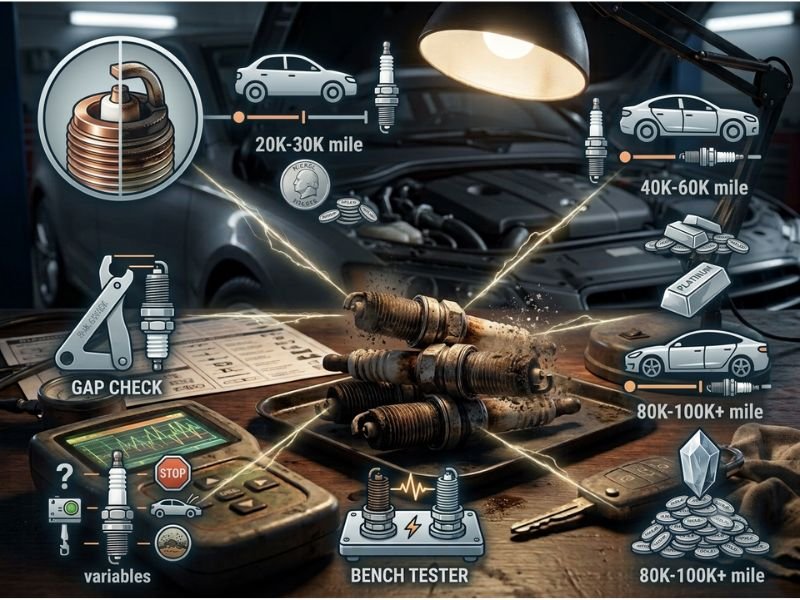
Most spark plugs last between 30,000 and 100,000 miles, depending on the spark plug material, engine design, vehicle manufacturer recommendations, and driving conditions. However, there is no single lifespan that applies to every spark plug because different materials and engine technologies affect how quickly spark plugs wear.
Spark plugs work in an extremely demanding environment inside the combustion chamber. They are exposed to high temperatures, electrical energy, pressure, and repeated ignition cycles. Over time, these conditions gradually wear down the electrodes and affect the spark plug’s ability to create a strong ignition spark.
Average Spark Plug Lifespan
The expected lifespan of a spark plug depends mainly on the electrode material.
Generally:
- Copper spark plugs have the shortest lifespan
- Platinum spark plugs last longer than copper plugs
- Iridium spark plugs usually provide the longest service life
The actual lifespan can vary based on the engine and how the vehicle is driven.
Why Spark Plug Lifespan Varies
Two vehicles using the same type of spark plug may not get the same lifespan because several factors influence wear.
Important factors include:
Engine Design
Modern engines with advanced fuel injection systems and improved ignition technology may allow spark plugs to operate efficiently for longer periods.
Driving Conditions
Vehicles used for short trips, frequent idling, or heavy traffic may experience faster spark plug wear compared with vehicles used mainly for highway driving.
Engine Health
Problems such as oil consumption, incorrect fuel mixture, or carbon buildup can reduce spark plug lifespan.
Maintenance Quality
Regular engine maintenance helps spark plugs perform properly and reach their expected service life.
Spark Plug Lifespan vs Replacement Interval
Spark plug lifespan does not always mean you should wait until the spark plug completely fails.
Manufacturers usually provide recommended replacement intervals based on testing and engine requirements. Replacing spark plugs before complete failure helps maintain:
- Consistent ignition performance
- Better fuel combustion
- Smooth engine operation
Waiting too long can allow worn spark plugs to affect other ignition components, such as ignition coils.
Do All Spark Plugs Last the Same?
No, different spark plug types are designed with different durability levels.
A traditional copper spark plug may require replacement much sooner than an iridium spark plug because the electrode materials wear differently.
Choosing the correct spark plug type for your vehicle is important because the engine is designed to work with specific ignition characteristics.
Spark Plug Lifespan by Material
Spark plug material is one of the biggest factors that determines how long a spark plug will last. Different electrode materials have different levels of durability, heat resistance, and wear protection.
Manufacturers use different materials because engines have different performance requirements. Some engines prioritize affordability, while others require long service intervals and advanced ignition performance.
How Long Do Copper Spark Plugs Last?
Copper spark plugs generally have the shortest lifespan compared with modern spark plug materials. They typically last around 20,000 to 30,000 miles, although the exact interval depends on the engine and manufacturer recommendation.
Copper provides excellent electrical conductivity, which helps create a strong spark. However, the electrode material wears faster because copper is softer and less resistant to electrical erosion.
Copper spark plugs are still useful in many applications because they offer:
- Excellent conductivity
- Reliable ignition performance
- Lower replacement cost
They are commonly found in older vehicles and engines specifically designed for copper spark plugs.
How Long Do Platinum Spark Plugs Last?
Platinum spark plugs usually last longer than copper spark plugs because platinum is a harder material that resists electrode wear.
Many platinum spark plugs can last around 60,000 miles or more, depending on vehicle specifications and driving conditions.
The platinum tip helps maintain a stable spark gap for a longer period, which improves ignition consistency.
Benefits of platinum spark plugs include:
- Longer lifespan than copper plugs
- Better resistance to wear
- Reliable performance for daily driving
How Long Do Iridium Spark Plugs Last?
Iridium spark plugs are among the longest-lasting spark plugs available today. Many iridium spark plugs can last around 80,000 to 100,000 miles or more when used under normal operating conditions.
Iridium is extremely strong and heat resistant, allowing manufacturers to create fine-wire electrodes that maintain excellent ignition performance over a long period.
Advantages of iridium spark plugs include:
- Very high durability
- Efficient ignition
- Long replacement intervals
- Strong performance in modern engines
Many newer vehicles use iridium spark plugs as original equipment because they provide reliable performance with minimal maintenance.
Why Spark Plug Material Matters
The electrode material affects how well the spark plug handles:
- Electrical erosion
- High combustion temperatures
- Repeated ignition cycles
- Long-term wear
A premium material does not automatically make a spark plug better for every vehicle. The best option is always the spark plug type recommended for the specific engine.
Understanding the difference between copper, platinum, and iridium spark plugs helps vehicle owners choose the right replacement option and plan maintenance more effectively.
How Many Miles Do Spark Plugs Last?
Spark plug lifespan is often measured by mileage because vehicles accumulate wear based on how many ignition cycles the engine completes. However, the exact number of miles a spark plug lasts depends on the spark plug material, engine design, and driving conditions.
In general, spark plugs can last anywhere from 20,000 miles to over 100,000 miles. Traditional spark plugs usually require more frequent replacement, while advanced materials such as platinum and iridium are designed for longer service intervals.
Average Spark Plug Mileage by Type
Different spark plug materials have different expected mileage ranges.
Copper Spark Plugs
Copper spark plugs usually last around 20,000 to 30,000 miles.
They provide excellent electrical conductivity but wear faster because the electrode material is less resistant to erosion caused by repeated sparks.
Platinum Spark Plugs
Platinum spark plugs typically last around 60,000 miles or more.
Their harder electrode material helps reduce wear and allows the spark plug to maintain a stable spark gap for a longer period.
Iridium Spark Plugs
Iridium spark plugs commonly last around 80,000 to 100,000 miles or more.
Their fine-wire electrode design and high heat resistance make them suitable for modern engines that require long-lasting ignition performance.
Factors That Affect Spark Plug Mileage
The actual mileage you get from spark plugs may be different from the expected range because several factors affect wear.
Driving Habits
Driving style has a major impact on spark plug lifespan.
Vehicles used for:
- Frequent short trips
- Heavy traffic
- Constant idling
- Aggressive acceleration
may experience faster spark plug wear.
Short trips can be especially harmful because the engine may not reach its ideal operating temperature, increasing carbon buildup.
Engine Condition
The condition of the engine also affects spark plug life.
Problems such as:
- Oil entering the combustion chamber
- Rich fuel mixture
- Poor combustion
- Carbon deposits
can shorten spark plug lifespan.
Fuel Quality
Poor-quality fuel or fuel system problems can increase deposits on spark plugs.
A clean combustion process helps spark plugs maintain better performance for longer.
Maintenance History
Regular engine maintenance supports longer spark plug life.
Important maintenance practices include:
- Changing air filters when needed
- Maintaining proper fuel system operation
- Following manufacturer service schedules
Should Spark Plugs Be Changed Based Only on Mileage?
No. Mileage is a useful guideline, but it should not be the only factor considered.
A vehicle may need spark plug replacement earlier if it shows symptoms such as:
- Misfires
- Rough idle
- Poor acceleration
- Increased fuel consumption
Regular inspection helps determine the actual condition of the spark plugs.
How Long Do Spark Plugs Last in a Car?
Spark plugs in a car can last anywhere from 30,000 to 100,000 miles or more, depending on the vehicle manufacturer, spark plug material, engine design, and driving conditions.
Modern cars often use platinum or iridium spark plugs because newer engines require reliable ignition performance and longer maintenance intervals.
Spark Plug Lifespan in Modern Cars
Many modern vehicles are equipped with long-life spark plugs from the factory.
Common examples include:
- Platinum spark plugs
- Iridium spark plugs
These spark plugs are designed to handle:
- Higher engine temperatures
- Advanced fuel injection systems
- More efficient combustion processes
Because of these improvements, some vehicles can operate for many years before spark plug replacement is required.
How Engine Type Affects Spark Plug Life
Different engines create different operating conditions for spark plugs.
Factors include:
- Engine size
- Compression ratio
- Turbocharging
- Fuel delivery system
For example, turbocharged engines may place greater stress on spark plugs because they operate under higher cylinder pressure and temperature.
How Driving Conditions Affect Car Spark Plug Lifespan
A car driven mainly on highways may allow spark plugs to last longer because the engine operates at stable temperatures.
However, vehicles used for:
- City driving
- Frequent stopping and starting
- Short-distance trips
may experience faster wear.
Do All Cars Need Spark Plug Replacement at the Same Time?
No. Spark plug replacement intervals vary between vehicles.
The correct replacement schedule depends on:
- Vehicle manufacturer recommendation
- Spark plug type
- Engine specifications
The owner’s manual is the best source for determining when spark plugs should be replaced.
Why Regular Spark Plug Checks Matter in Cars
Even long-life spark plugs should be inspected because mileage alone does not reveal their actual condition.
Regular inspection can identify:
- Electrode wear
- Carbon buildup
- Oil contamination
- Incorrect spark gap
Checking spark plug condition helps maintain engine reliability and prevents unexpected ignition problems.
How Long Do Spark Plug Wires Last?
Spark plug wires usually last longer than spark plugs, but they are not designed to last forever. Their lifespan depends on factors such as heat exposure, engine conditions, driving habits, and the quality of the wire materials.
In general, spark plug wires can last around 60,000 to 100,000 miles, although some may require replacement earlier if they become damaged or start causing ignition problems.
Factors That Affect Spark Plug Wire Lifespan
Spark plug wires operate in a challenging environment near the engine, where they are exposed to heat, vibration, and electrical stress.
Several factors can shorten their lifespan:
Heat Exposure
High temperatures from the engine can gradually damage the protective insulation around spark plug wires.
Over time, heat can cause:
- Cracks in the outer covering
- Reduced insulation quality
- Electrical leakage
Engine Vibration
Continuous engine vibration can weaken wire connections and affect the ability of spark plug wires to deliver electricity consistently.
Damaged connections may cause:
- Intermittent misfires
- Rough engine operation
- Poor acceleration
Moisture and Contamination
Oil leaks, water, and dirt can damage spark plug wires and reduce electrical performance.
Keeping the engine area clean and fixing leaks can help protect ignition components.
Signs Spark Plug Wires Need Replacement
Worn spark plug wires may create symptoms similar to bad spark plugs.
Common signs include:
- Engine misfires
- Difficulty starting
- Reduced power
- Poor fuel economy
- Rough idle
A visual inspection may reveal:
- Cracks
- Burn marks
- Damaged insulation
- Loose connections
Should Spark Plug Wires Be Replaced With Spark Plugs?
Spark plug wires do not always need replacement at the same time as spark plugs. However, if the wires show signs of wear or damage, replacing them together can help restore reliable ignition performance.
A healthy ignition system requires both good spark plugs and properly functioning spark plug wires.
How Many Years Do Spark Plugs Last?
Spark plug lifespan is usually measured by mileage rather than years because engine operation creates wear through ignition cycles. However, time can still affect spark plug condition, especially in vehicles that are driven less frequently.
In general, spark plugs may last several years depending on the material type, vehicle usage, and storage conditions.
Spark Plug Lifespan Based on Time
The number of years a spark plug lasts depends mainly on how often the vehicle is driven.
For example:
- A daily-driven vehicle may reach its mileage limit sooner
- A rarely driven vehicle may age differently despite lower mileage
Even unused or lightly used vehicles should have spark plugs inspected periodically.
Factors That Affect Time-Based Spark Plug Life
Several conditions can affect spark plug performance over time.
Moisture and Corrosion
Vehicles stored for long periods may experience moisture-related issues that affect ignition components.
Corrosion can develop on:
- Spark plug threads
- Electrical connections
- Metal components
Fuel and Engine Deposits
Vehicles that are not driven regularly may experience incomplete combustion, which can contribute to deposits forming on spark plugs.
Storage Conditions
Environmental conditions can influence spark plug condition.
Factors include:
- Humidity
- Temperature changes
- Long storage periods
Do Spark Plugs Expire?
Spark plugs do not usually have a fixed expiration date when stored properly. However, installed spark plugs can deteriorate over time due to engine operation and environmental exposure.
The best approach is to follow:
- Manufacturer replacement recommendations
- Mileage guidelines
- Regular inspection
Time vs Mileage: Which Matters More?
For most drivers, mileage is the more important measurement because spark plug wear happens mainly through engine operation.
However, vehicles that are rarely driven should still receive periodic inspections because age-related issues can affect ignition performance.
Understanding both mileage and time helps ensure spark plugs are replaced before they cause engine performance problems.
How Long Do Lawn Mower Spark Plugs Last?
Lawn mower spark plugs usually last for several seasons, but their actual lifespan depends on the mower type, engine condition, operating hours, fuel quality, and maintenance habits. Unlike car spark plugs, lawn mower spark plugs are often measured by usage time rather than mileage because small engines do not accumulate miles.
A properly maintained lawn mower spark plug can often last around 100 operating hours or more, although replacement timing depends on the manufacturer’s recommendation and how the mower is used.
Factors That Affect Lawn Mower Spark Plug Lifespan
Several conditions can influence how long a lawn mower spark plug remains effective.
Engine Usage
A lawn mower used frequently throughout the mowing season will naturally wear spark plugs faster than a mower used occasionally.
Factors include:
- Number of operating hours
- Frequency of use
- Engine workload
Fuel Quality and Storage
Old or contaminated fuel can create combustion problems that affect spark plug performance.
Poor fuel conditions may lead to:
- Carbon buildup
- Difficult starting
- Reduced engine efficiency
Proper fuel storage and maintenance can help extend spark plug life.
Engine Condition
Small engine problems can also shorten spark plug lifespan.
Issues such as:
- Incorrect fuel mixture
- Oil contamination
- Dirty air filters
can cause deposits to form on the spark plug.
Signs a Lawn Mower Spark Plug Needs Replacement
A worn lawn mower spark plug may cause:
- Difficulty starting
- Uneven engine operation
- Reduced power
- Increased fuel consumption
Inspecting the spark plug regularly can help identify problems before they affect mower performance.
How to Extend Lawn Mower Spark Plug Life
Proper maintenance helps keep small engine spark plugs working efficiently.
Helpful practices include:
- Cleaning the air filter
- Using fresh fuel
- Checking spark plug condition
- Following manufacturer maintenance schedules
Replacing a worn spark plug is usually a simple and affordable maintenance task that can improve starting performance and engine reliability.
Factors That Affect Spark Plug Lifespan
Spark plug lifespan is not determined only by the type of spark plug installed. Several engine and driving factors can influence how quickly spark plugs wear and how effectively they continue producing a reliable ignition spark.
Understanding these factors helps explain why some spark plugs last longer than expected while others require earlier replacement.
Engine Operating Conditions
The environment inside the engine has a major impact on spark plug wear.
Spark plugs are exposed to:
- High combustion temperatures
- Extreme pressure
- Continuous electrical sparks
Engines that operate under heavy stress may wear spark plugs faster.
Driving Habits
Driving style and usage patterns can significantly affect spark plug lifespan.
Vehicles used for frequent:
- Short trips
- Stop-and-go traffic
- Extended idling
may experience faster wear because the engine may not operate at ideal temperatures.
Fuel Mixture Problems
The air-fuel mixture directly affects spark plug condition.
A mixture that is too rich may create carbon deposits, while a mixture that is too lean may increase combustion temperatures.
Both conditions can reduce spark plug performance.
Oil Consumption and Engine Problems
Engine oil entering the combustion chamber can contaminate spark plugs.
Possible causes include:
- Worn piston rings
- Valve seal problems
- Internal engine wear
Oil deposits can reduce spark strength and create misfires.
Incorrect Spark Plug Installation
Installation quality also affects spark plug lifespan.
Problems such as:
- Incorrect spark plug gap
- Wrong tightening torque
- Incorrect spark plug type
can reduce performance and cause premature wear.
Spark Plug Quality and Material
The spark plug material has a major impact on durability.
Copper, platinum, iridium, and other spark plug types have different levels of resistance to wear and heat.
Choosing the correct spark plug recommended for the engine helps maximize lifespan.
Maintaining proper engine condition, following service schedules, and using the correct spark plug specification are the best ways to ensure long-lasting ignition performance.
Signs Your Spark Plugs Need Replacement
Spark plugs usually provide warning signs before they completely fail. Recognizing these symptoms early can help prevent poor engine performance, increased fuel consumption, and potential stress on other ignition components.
Although symptoms can vary depending on the vehicle and engine condition, several common signs indicate that spark plugs may no longer be performing properly.
Engine Misfires
Engine misfires are one of the most common signs of worn spark plugs. A misfire happens when the spark plug fails to ignite the air-fuel mixture correctly inside the combustion chamber.
Common signs include:
- Engine shaking
- Loss of power
- Uneven acceleration
- Rough operation
Misfires may also be caused by ignition coils, spark plug wires, or fuel system issues, so proper diagnosis is important.
Difficulty Starting the Engine
Worn spark plugs may struggle to create a strong enough spark during engine startup.
Drivers may notice:
- Longer cranking time
- Delayed starting
- Multiple attempts before the engine starts
A weak ignition spark makes it harder for the engine to begin the combustion process.
Rough Engine Idle
A healthy engine requires consistent combustion across all cylinders when idling.
Bad spark plugs can cause:
- Engine vibration
- Unstable RPM
- Shaking while stopped
Rough idle is often one of the first noticeable signs of ignition problems.
Reduced Acceleration and Power
When spark plugs cannot ignite fuel efficiently, the engine may lose power during acceleration.
Common symptoms include:
- Slow throttle response
- Weak acceleration
- Difficulty climbing hills
Replacing worn spark plugs can help restore normal ignition performance.
Poor Fuel Economy
Old spark plugs can reduce fuel efficiency because incomplete combustion wastes fuel.
Signs include:
- More frequent refueling
- Reduced miles per gallon
- Higher fuel consumption
Maintaining proper spark plug condition helps the engine burn fuel more efficiently.
Check Engine Light
A failing spark plug may trigger the check engine light when the ECU detects ignition problems.
Common ignition-related codes include:
- P0300 – Random misfire
- P0301-P0308 – Cylinder-specific misfire
However, a check engine light can also indicate other problems, so further diagnosis may be required.
Visible Spark Plug Damage
Physical inspection can reveal whether spark plugs need replacement.
Warning signs include:
- Worn electrodes
- Carbon deposits
- Oil contamination
- Cracked ceramic insulation
Replacing damaged spark plugs helps maintain reliable engine operation.
What Happens If You Do Not Replace Spark Plugs?
Ignoring worn spark plugs may not stop the vehicle immediately, but it can gradually reduce engine performance and create additional problems. Since spark plugs are responsible for igniting the air-fuel mixture, their condition directly affects combustion quality.
Driving with old or damaged spark plugs for too long can increase stress on the ignition system and reduce overall engine efficiency.
Reduced Engine Performance
As spark plugs wear, they may produce a weaker or inconsistent spark.
This can lead to:
- Poor acceleration
- Reduced engine power
- Slower throttle response
- Rough operation
The engine may still run, but it will not operate as efficiently as it should.
Increased Fuel Consumption
Worn spark plugs can prevent complete combustion of fuel inside the cylinder.
When fuel does not burn properly, the engine may use more fuel to maintain performance.
This can result in:
- Lower fuel economy
- Increased fuel costs
- Higher emissions
Increased Stress on Ignition Components
Faulty spark plugs can make other ignition components work harder.
For example, a worn spark plug with an incorrect gap may require higher voltage from the ignition coil to create a spark.
Over time, this may increase wear on:
- Ignition coils
- Spark plug wires
- Electrical components
Potential Catalytic Converter Problems
When spark plugs fail to ignite fuel properly, unburned fuel may enter the exhaust system.
This can increase heat inside the catalytic converter and potentially cause damage over time.
Catalytic converter repairs can be expensive, making timely spark plug replacement important.
More Difficult Engine Diagnosis
Driving with worn spark plugs for too long can create multiple symptoms that make diagnosis more complicated.
For example, poor engine performance may eventually involve:
- Spark plugs
- Ignition coils
- Fuel system components
- Emission system parts
Replacing spark plugs at the recommended interval helps avoid unnecessary complications.
Regular spark plug replacement is a simple maintenance task that protects engine performance, improves reliability, and prevents more expensive repairs in the future.
How to Extend Spark Plug Lifespan
Although spark plugs are designed to wear over time, proper maintenance and good driving habits can help them reach their expected service life. Taking care of the engine, using the correct spark plugs, and addressing problems early can reduce unnecessary wear and maintain reliable ignition performance.
Spark plug lifespan depends not only on the plug material but also on the overall condition of the engine and ignition system.
Use the Correct Spark Plug Type
Using the correct spark plug specification is one of the most important factors in maximizing lifespan.
The correct spark plug should match:
- Engine design
- Heat range
- Electrode material
- Spark plug gap
- Manufacturer recommendation
Installing an incorrect spark plug may cause poor performance, overheating, or faster electrode wear.
Maintain Proper Engine Condition
A healthy engine helps spark plugs perform efficiently.
Problems such as:
- Oil leaks
- Poor fuel mixture
- Carbon buildup
- Faulty sensors
can shorten spark plug life.
Regular engine maintenance helps prevent conditions that damage spark plugs.
Keep the Air Filter Clean
A dirty air filter can affect the air-fuel mixture entering the engine.
Restricted airflow may create combustion problems that contribute to carbon deposits on spark plugs.
Replacing the air filter when needed helps maintain proper combustion conditions.
Use Quality Fuel
Fuel quality can influence combustion and spark plug condition.
Poor-quality fuel may contribute to:
- Deposit buildup
- Incomplete combustion
- Reduced ignition performance
Using appropriate fuel and maintaining the fuel system can help protect spark plugs.
Follow Recommended Maintenance Intervals
Vehicle manufacturers provide spark plug replacement schedules based on engine testing and expected performance.
Following these recommendations helps prevent:
- Excessive electrode wear
- Ignition problems
- Unexpected engine issues
Waiting until spark plugs completely fail can create additional problems.
Inspect Spark Plugs Regularly
Regular inspection helps identify early warning signs before performance problems appear.
During inspection, check for:
- Electrode wear
- Deposits
- Oil contamination
- Incorrect spark gap
Early detection allows problems to be corrected before they affect engine reliability.
Should You Replace Spark Plugs Before They Fail?
Yes, replacing spark plugs before complete failure is usually recommended. Spark plugs often lose performance gradually, meaning they may affect engine efficiency before they stop working completely.
Preventive replacement helps maintain consistent ignition and avoids unexpected engine problems.
Why Preventive Spark Plug Replacement Matters
Waiting until spark plugs fail completely can result in:
- Engine misfires
- Poor fuel economy
- Starting problems
- Reduced performance
Replacing spark plugs according to the recommended schedule helps maintain proper combustion.
Following Manufacturer Recommendations
The vehicle manufacturer’s maintenance schedule is the best guide for spark plug replacement.
Manufacturers consider factors such as:
- Engine design
- Spark plug material
- Operating conditions
Following these recommendations ensures the engine receives the correct maintenance at the right time.
Benefits of Replacing Spark Plugs on Time
Timely spark plug replacement can help provide:
- Reliable engine starting
- Smooth operation
- Efficient fuel combustion
- Reduced ignition system stress
It also helps prevent worn spark plugs from affecting other components.
Is It Better to Wait for Symptoms?
Waiting for symptoms is not always the best approach because spark plugs may already be affecting performance before noticeable problems appear.
Early replacement is often more cost-effective than dealing with:
- Misfires
- Ignition coil damage
- Reduced engine efficiency
Preventive Maintenance vs Emergency Repairs
Replacing spark plugs as part of regular maintenance is usually simpler and less expensive than repairing problems caused by neglected ignition components.
A proactive approach helps keep the engine operating efficiently and reduces the chance of unexpected breakdowns.
Understanding when to replace spark plugs allows vehicle owners to maintain better engine performance and avoid unnecessary repair costs.
Frequently Asked Questions About Spark Plug Lifespan
Spark plug lifespan depends on many factors, including spark plug material, vehicle type, engine condition, and driving habits. Below are answers to common questions about how long spark plugs last and when they may need replacement.
How Long Do Normal Spark Plugs Last?
Normal spark plugs typically last around 30,000 to 50,000 miles, depending on the type of spark plug and vehicle specifications.
Traditional copper spark plugs usually have shorter lifespans, while platinum and iridium spark plugs are designed to last significantly longer. The best replacement interval should always follow the vehicle manufacturer’s recommendation.
How Often Should Spark Plugs Be Changed?
Spark plugs should be changed according to the maintenance schedule provided by the vehicle manufacturer.
Some vehicles may require replacement every 30,000 miles, while others with long-life iridium spark plugs may not need replacement until 100,000 miles or more.
Driving conditions and engine health can also affect replacement timing.
Do Expensive Spark Plugs Last Longer?
More expensive spark plugs often use advanced materials such as platinum or iridium, which usually provide better durability than traditional copper spark plugs.
However, a higher price does not always mean better performance. The best spark plug is the one that matches the engine’s specifications and requirements.
How Do I Know If My Spark Plugs Are Worn Out?
Common signs of worn spark plugs include:
- Engine misfires
- Rough idle
- Difficulty starting
- Reduced acceleration
- Poor fuel economy
A physical inspection may also reveal worn electrodes, carbon buildup, or damaged spark plug components.
Can Old Spark Plugs Affect Fuel Economy?
Yes, old spark plugs can affect fuel economy because they may not ignite the air-fuel mixture efficiently.
A weak or inconsistent spark can cause incomplete combustion, which may increase fuel consumption and reduce engine efficiency.
Should I Replace All Spark Plugs at the Same Time?
In most cases, replacing all spark plugs at the same time is recommended.
Replacing the complete set helps maintain consistent ignition performance across all engine cylinders and prevents uneven wear between old and new spark plugs.
Do Unused Spark Plugs Expire?
Unused spark plugs do not usually have a strict expiration date when stored properly.
However, long-term exposure to moisture, contamination, or poor storage conditions can affect their condition. Proper storage in a dry environment helps maintain spark plug quality.
Can Spark Plugs Last 200,000 Miles?
Most spark plugs are not designed to last 200,000 miles.
Some advanced spark plugs may provide very long service intervals, but reaching 200,000 miles without replacement is uncommon. Regular inspection and following manufacturer recommendations are still important.
Conclusion
Spark plug lifespan depends on several factors, including spark plug material, engine design, driving conditions, and maintenance quality. While some spark plugs may last around 30,000 miles, advanced options such as iridium spark plugs can often provide reliable performance for 100,000 miles or more.
Understanding how long spark plugs last helps vehicle owners plan maintenance properly and avoid waiting until engine problems appear. Replacing spark plugs at the recommended interval can help maintain smooth ignition, efficient combustion, and overall engine reliability.
Although mileage is an important guideline, spark plug condition should also be considered. Symptoms such as misfires, rough idle, poor acceleration, and reduced fuel economy may indicate that spark plugs need attention before the scheduled replacement date.
At SparkPlugGuide, Chris Turner focuses on explaining automotive maintenance topics in a simple and practical way so drivers can better understand their vehicles and make informed decisions about spark plug replacement.