
Yes, you can remove a spark plug with a regular socket if the socket is the correct size, deep enough to fit over the plug, and thin enough to reach into the spark plug well.
However, a dedicated spark plug socket is usually the safer and easier choice because it is specifically designed to fit spark plugs and often includes a rubber insert or magnetic retainer that holds the plug during removal.
A regular deep socket can work in an emergency or when the spark plug is easy to access.
The biggest difficulty is usually not loosening the plug—it is lifting the spark plug out of a deep cylinder-head well without dropping or damaging it.
Can You Remove a Spark Plug With a Regular Socket?
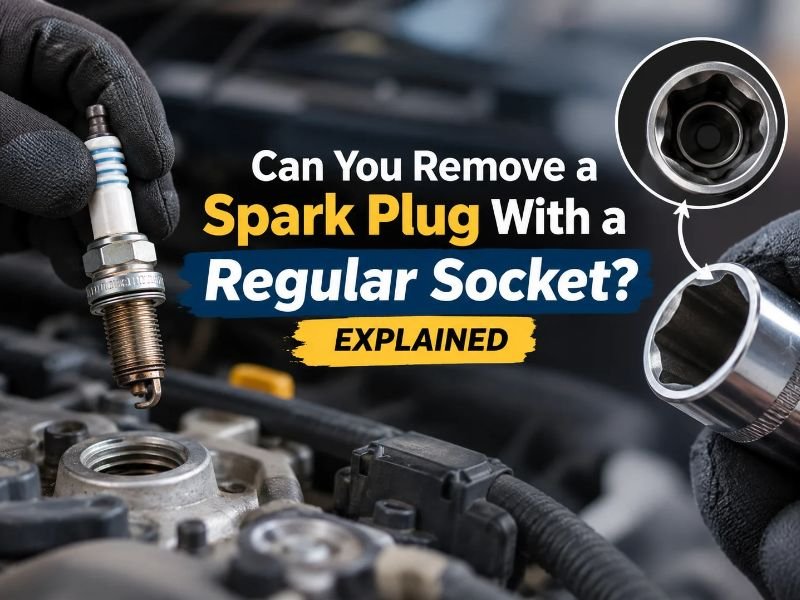
Yes, you can remove a spark plug with a regular socket, but it needs to meet several requirements.
The socket must:
- Match the spark plug hex size
- Be deep enough to clear the top of the spark plug
- Fit inside the spark plug well
- Work with the ratchet and extension you are using
A normal shallow socket usually does not work because a spark plug is relatively long.
A deep socket is much more likely to fit.
Even when a regular socket can loosen the plug, it may not hold the spark plug once it is completely unthreaded. A spark plug socket solves that problem by gripping the plug inside the socket.
What Is a Spark Plug Socket?
A spark plug socket is a specialized deep socket made specifically for installing and removing spark plugs.
It usually differs from a standard deep socket in two important ways.
First, it is designed with enough internal depth to fit over the entire upper portion of the spark plug.
Second, many spark plug sockets contain either a rubber insert or magnetic retainer.
The insert grips the porcelain insulator so the spark plug stays inside the socket when you lift it out of the cylinder head.
This feature is especially useful on modern engines where the spark plugs may sit several inches down inside narrow plug wells.
Regular Socket vs Spark Plug Socket
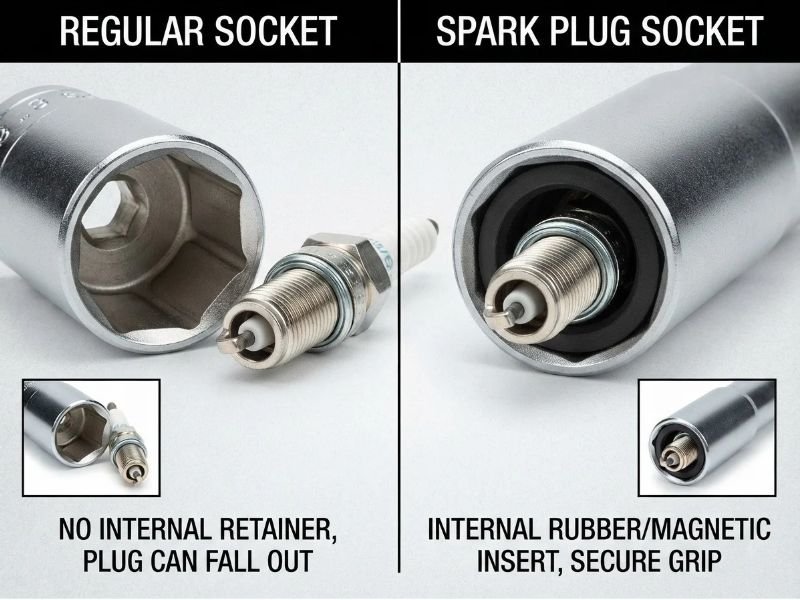
Both sockets can turn a spark plug if they fit correctly, but they are designed for different purposes.
| Feature | Regular Deep Socket | Spark Plug Socket |
| Can loosen spark plug | Yes, if it fits | Yes |
| Extra depth | Depends on socket | Yes |
| Holds spark plug | Usually no | Usually yes |
| Rubber or magnetic insert | No | Often |
| Designed for plug wells | Not specifically | Yes |
| Best for spark plugs | Acceptable in some cases | Preferred |
A regular deep socket may therefore be mechanically capable of doing the job, but a spark plug socket makes removal and installation much easier.
Why Is a Spark Plug Socket Better?
A dedicated spark plug socket gives you better control over the plug.
It Holds the Spark Plug
The biggest advantage is that the plug stays inside the socket after it has been loosened completely.
Without a retainer, the plug may remain sitting at the bottom of the well after the socket is removed.
You then need another way to retrieve it.
It Helps Protect the Porcelain
Spark plugs have a ceramic or porcelain insulator that can crack if hit hard or bent sideways.
A properly fitting spark plug socket supports the plug while it is being removed.
It Is Usually Deep Enough
Spark plug sockets are specifically designed around the length and shape of common spark plugs.
A regular socket may bottom out internally before it reaches the hex.
It May Fit Narrow Plug Wells Better
Some engines have narrow spark plug tubes.
A thick-walled general-purpose socket may not fit, even if the socket size itself is correct.
A suitable spark plug socket is often designed with a slimmer profile.
Can You Use a Deep Socket for Spark Plugs?
Yes. A regular deep socket is the best substitute for a spark plug socket.
If the socket reaches the spark plug hex and fits down the plug well, it can normally loosen the plug.
The main drawback is retrieval.
Once the spark plug is fully unscrewed, the regular deep socket may simply slide off and leave the plug inside the engine.
You can sometimes remove the plug with:
- A magnetic pickup tool
- A piece of clean rubber hose
- Long-reach spark plug pliers
- A magnetic extension, if suitable
Do not grab or pry aggressively against the porcelain insulator.
Can You Use a Shallow Socket?
Usually not.
A shallow socket often cannot slide far enough over the spark plug to reach the hex section.
The plug’s terminal and ceramic insulator may hit the inside of the socket first.
For this reason, a deep socket or dedicated spark plug socket is normally necessary.
There are exceptions depending on plug design and engine access, but a shallow socket is not a reliable choice.
What Size Socket Do You Need for a Spark Plug?
There is no single spark plug socket size used on every vehicle.
Common automotive spark plug hex sizes include:
- 5/8 inch
- 13/16 inch
- 9/16 inch
- 14 mm
Some engines use other sizes.
Modern vehicles increasingly use smaller spark plugs, so you should verify the correct size for your specific engine rather than assuming 5/8 inch will fit.
The wrong socket can round the spark plug hex or simply fail to fit into the well.
How Do You Know What Spark Plug Socket Size You Need?
The safest methods are to check:
- Vehicle owner’s or repair information
- Spark plug manufacturer’s specifications
- Part number of the installed spark plug
- Replacement spark plug specifications
If the plug is already exposed, you can also carefully test the fit with the engine off.
The socket should slide fully onto the spark plug hex with very little looseness.
Do not force a socket that feels too small.
Likewise, do not use an oversized socket simply because it can turn the plug loosely.
Can a Regular Socket Get Stuck in a Spark Plug Well?
Yes.
This is one reason you should check the outside diameter of the socket before pushing it deep into a narrow plug tube.
A general-purpose deep socket may have thicker walls than a spark plug socket.
It may fit over the spark plug but become wedged between the plug and the surrounding cylinder-head tube.
If the socket feels unusually tight while entering the well, stop.
Do not hammer it down.
A thin-wall spark plug socket may be required for engines with narrow wells.
How to Remove a Spark Plug With a Regular Socket
If you do not have a spark plug socket, a regular deep socket can be used carefully.
Step 1: Let the Engine Cool
Spark plugs are generally best removed from a cool engine unless the vehicle manufacturer specifies otherwise.
An aluminum cylinder head expands when hot, and removing plugs from a very hot engine can increase the risk of thread damage.
Step 2: Remove the Ignition Coil or Plug Wire
Modern engines often use individual coil-on-plug ignition coils.
Disconnect the electrical connector and remove the coil as required.
Older engines may use spark plug wires.
Pull from the boot rather than yanking directly on the wire.
Step 3: Clean Around the Spark Plug
Dirt can collect around the plug well.
Before removing the spark plug, clear loose debris so it does not fall into the combustion chamber after the plug comes out.
Compressed air can be useful when used carefully.
Wear eye protection.
Step 4: Install the Deep Socket
Use the correct-size deep socket with an extension.
Lower it straight onto the spark plug.
Make sure the socket is fully seated on the hex.
Step 5: Loosen the Spark Plug
Turn the ratchet counterclockwise.
Use steady pressure.
A properly installed spark plug should normally break loose without extreme force.
If the plug feels seized, avoid simply applying more and more force because cylinder-head threads can be damaged.
Step 6: Finish Unscrewing the Plug
Once the plug is loose, continue turning it until it is completely unthreaded.
A ratchet, extension, or your fingers on the extension can be used depending on access.
Step 7: Retrieve the Spark Plug
This is where a regular socket can become inconvenient.
If the plug does not come out with the socket, use a suitable magnetic pickup tool or another safe retrieval method.
Do not drop tools or debris into the open spark plug hole.
How to Remove the Spark Plug Without a Rubber Insert
If your regular socket has no retaining insert, the spark plug may remain at the bottom of the well.
A small magnetic pickup tool can work if the plug contains enough magnetic steel in the accessible area.
Another traditional method is to slip a short piece of clean rubber hose over the top of the spark plug.
The hose grips the ceramic insulator gently and allows you to lift the plug out.
That same hose can also be useful when starting a new spark plug by hand because it makes cross-threading harder. If the plug does not thread easily, the hose simply slips rather than giving you enough leverage to force the threads.
Can You Install a Spark Plug With a Regular Socket?
Yes, but installation requires more care than removal.
A regular socket may not hold the new spark plug securely, which means the plug can fall from the socket into a deep well.
That can potentially damage the plug’s electrode or ceramic insulator.
The larger concern is cross-threading.
A spark plug should be started by hand rather than immediately tightened with a ratchet.
Using a spark plug socket, extension, or rubber hose with gentle hand pressure allows you to feel whether the plug is threading correctly.
If there is significant resistance before the plug is mostly threaded in, stop and check the alignment.
Do You Need a Torque Wrench for Spark Plugs?
A torque wrench is strongly recommended when the manufacturer specifies a spark plug tightening torque.
Correct tightening is important.
A spark plug that is too loose can fail to seal correctly or transfer heat as intended.
A spark plug that is overtightened can damage the threads in the cylinder head or make future removal difficult.
Torque requirements vary depending on:
- Engine design
- Plug thread diameter
- Cylinder-head material
- Spark plug design
- Whether the plug uses a gasket or tapered seat
Use the specification for the exact engine and spark plug.
Can You Use an Impact Wrench to Remove Spark Plugs?
An impact wrench is generally not the best tool for routine spark plug removal or installation.
Spark plugs thread into the cylinder head, which is often aluminum.
The sudden impact forces make it harder to feel what is happening at the threads.
A hand ratchet provides much better control.
If a plug is difficult to remove, the reason should be investigated rather than simply applying more impact force.
For installation, an impact wrench should be avoided because overtightening or cross-threading could cause expensive cylinder-head damage.
What If the Spark Plug Is Extremely Tight?
If a plug refuses to loosen with reasonable hand pressure, do not rush.
Possible causes include:
- Carbon buildup
- Corrosion
- Previous overtightening
- Damaged threads
- Long service interval
Applying excessive force can break the spark plug or damage the cylinder-head threads.
Depending on the engine and spark plug design, a manufacturer may have a specific procedure for difficult plug removal.
This is particularly important on engines known for spark plugs that can seize or break during removal.
Can a Regular Socket Damage a Spark Plug?
It can if the fit is poor.
A socket that is too large can round the spark plug hex.
A socket that is too shallow may press against the ceramic insulator instead of reaching the hex.
A socket with excessive internal clearance can also allow the plug to move sideways while being turned.
Always make sure the socket sits squarely on the metal hex portion of the spark plug.
What If the Regular Socket Is Too Thick?
Some cylinder heads have very narrow spark plug wells.
If your regular socket cannot reach the plug because its outside diameter is too large, you need a thinner socket.
Do not grind down a socket unless you fully understand the safety implications of modifying hand tools.
A properly sized thin-wall spark plug socket is usually inexpensive and provides the correct fit.
Can You Remove Spark Plugs Without a Spark Plug Socket?
Yes.
A spark plug socket is highly convenient, but it is not absolutely required in every situation.
A properly fitting deep socket can loosen and remove the plug.
However, if you regularly work on vehicles, buying the correct spark plug socket is worthwhile because it makes the job faster and reduces the chance of dropping or damaging plugs.
Spark plug sockets are also relatively inexpensive compared with the potential cost of damaging a plug or cylinder-head thread.
Regular Socket vs Magnetic Spark Plug Socket
Magnetic spark plug sockets use a small magnet rather than a rubber insert to retain the plug.
They have several advantages.
The magnet usually remains effective over repeated use, while some rubber inserts eventually become loose or stay attached to the plug.
A magnetic socket also makes removing plugs from deep wells especially convenient.
Either magnetic or rubber-retaining spark plug sockets can work well.
The important thing is that the socket fits your specific spark plug and engine.
Should You Put Anti-Seize on Spark Plug Threads?
Do not automatically apply anti-seize.
Many modern spark plugs have thread coatings, and some spark plug manufacturers recommend installing them dry.
Adding lubricant can change the relationship between tightening torque and clamping force, potentially causing the plug to be overtightened even when a torque wrench is used.
Follow the spark plug and vehicle manufacturer’s instructions.
If anti-seize is specifically required for your application, use the recommended amount and torque procedure.
Common Mistakes When Removing Spark Plugs
One common mistake is working on a very hot engine without checking the manufacturer’s procedure.
Another is allowing dirt to fall into the plug hole.
Other avoidable mistakes include using the wrong-size socket, pulling ignition wires by the cable, forcing a stuck plug, and failing to keep the socket straight.
When installing new plugs, the biggest mistakes are cross-threading and overtightening.
Spark plug replacement is usually straightforward, but damaged cylinder-head threads can turn it into a much more expensive repair.
When Should You Buy a Spark Plug Socket?
If you are changing more than one plug, buying the correct socket is usually worthwhile.
A proper spark plug socket is especially useful when:
- Spark plugs sit deep in the cylinder head
- Plug wells are narrow
- The engine uses coil-on-plug ignition
- You need to reinstall plugs safely
- You regularly perform vehicle maintenance
For a one-time emergency removal, a regular deep socket may be enough.
For routine maintenance, the dedicated tool is the better choice.
FAQs About Can You Remove a Spark Plug With a Regular Socket
Can I Use a Normal Socket Instead of a Spark Plug Socket?
Yes, if it is a correctly sized deep socket that fits the spark plug and the plug well.
The main disadvantage is that a normal socket usually does not grip the spark plug for easy removal.
Do You Really Need a Spark Plug Socket?
Not always, but it makes the job much easier.
A spark plug socket is particularly helpful for deep plug wells because it holds the plug while you lift it out.
Can I Use a Deep Socket for Spark Plugs?
Yes. A deep socket is the best regular-socket substitute for a dedicated spark plug socket.
Verify that it is deep enough and thin enough for your engine.
Can I Use a 5/8 Socket for Spark Plugs?
Only if your spark plug uses a 5/8-inch hex.
Many vehicles use 5/8-inch plugs, but others use 14 mm, 9/16-inch, 13/16-inch, or another size.
Check the exact plug specification first.
How Do I Get a Spark Plug Out if My Socket Does Not Hold It?
A magnetic pickup tool can often retrieve it.
A short piece of clean rubber hose that fits snugly over the plug’s porcelain section can also be useful.
Can I Remove Spark Plugs With a Regular Ratchet?
Yes.
A hand ratchet, extension, and properly fitting spark plug or deep socket are commonly used for spark plug removal.
Can I Use an Impact Driver on Spark Plugs?
A hand ratchet is preferable because it provides much greater control and feedback.
Impact tools can make it easier to damage threads or over-tighten the plug.
Can a Regular Socket Crack a Spark Plug?
Yes, if the socket is too shallow, poorly fitted, or allowed to push sideways against the porcelain.
Use a socket that fully seats on the spark plug’s metal hex.
Conclusion
So, can you remove a spark plug with a regular socket? Yes. A properly sized deep socket can loosen and remove a spark plug as long as it is deep enough to clear the plug and narrow enough to fit inside the spark plug well.
The main advantage of a dedicated spark plug socket is its ability to securely hold and protect the plug during removal and installation. This becomes especially valuable on modern engines with deep plug wells.
For an occasional emergency, a regular deep socket can work. For routine spark plug replacement, using the correct spark plug socket, extension, hand ratchet, and torque wrench makes the job easier and reduces the risk of damaging the plug or cylinder-head threads.