
Old spark plug symptoms usually include difficulty starting, engine misfires, rough idling, reduced acceleration, poor fuel economy, and weaker engine performance. As spark plugs wear over time, the electrodes gradually lose their ability to create a strong and consistent spark, affecting the combustion process.
Spark plugs are designed to handle thousands of ignition cycles, but they do not last forever. Continuous exposure to heat, electrical stress, and combustion pressure causes gradual wear that can reduce engine efficiency.
Many drivers continue using old spark plugs without realizing that small performance changes are often early warning signs. A worn spark plug may not fail suddenly, but it can slowly affect fuel consumption, engine smoothness, and overall driving experience.
In this guide, you will learn the most common old spark plug symptoms, how worn spark plugs affect engine performance, what old spark plugs look like, and when replacement is necessary.
What Are the Symptoms of Old Spark Plugs?
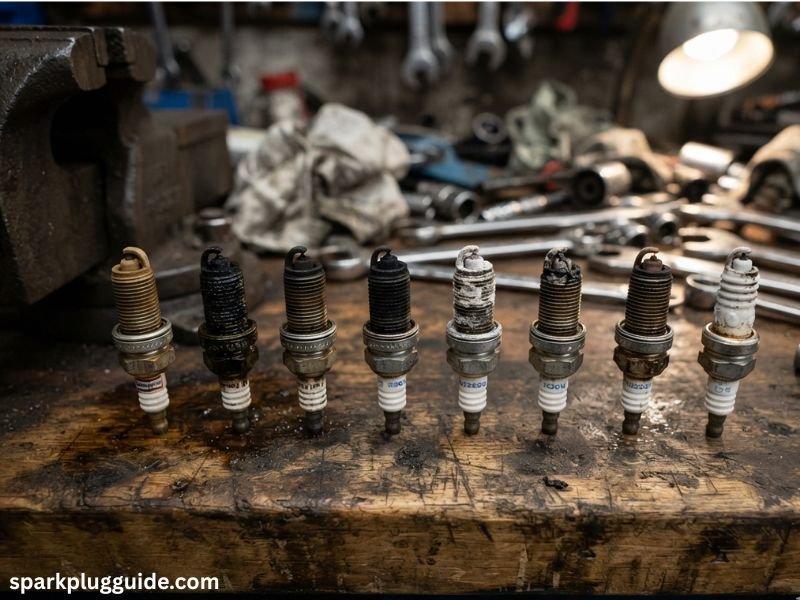
Old spark plugs lose their ability to produce an effective ignition spark because the electrodes wear down over time. When the spark becomes weaker, the air-fuel mixture may not burn efficiently, causing noticeable engine problems.
The symptoms usually develop gradually and may become more noticeable as the spark plugs continue to age.
Hard Starting Engine
One of the earliest signs of old spark plugs is difficulty starting the engine.
As spark plugs wear, they may require more electrical energy to create a spark. The ignition system has to work harder, especially when the engine is cold.
Drivers may notice:
- Longer cranking time
- Multiple attempts before starting
- Delayed engine startup
A vehicle that used to start immediately but now struggles may have worn spark plugs or another ignition-related problem.
Engine Misfires
Old spark plugs can cause engine misfires when they fail to ignite the fuel mixture properly.
A misfire occurs when combustion does not happen correctly inside one or more cylinders.
Common signs include:
- Engine hesitation
- Uneven power delivery
- Shaking during operation
Worn electrodes and an increased spark gap can reduce spark strength, making it harder for the plug to ignite the mixture consistently.
Rough Idling
A healthy spark plug helps maintain smooth and stable engine operation. When spark plugs become old, inconsistent ignition can cause rough idling.
Symptoms may include:
- Engine vibration
- Unstable RPM
- Uneven running while stopped
The problem happens because some combustion cycles may produce less power than others.
Poor Acceleration
Old spark plugs can reduce engine responsiveness, especially during acceleration.
Drivers may experience:
- Slower throttle response
- Reduced engine power
- Hesitation when increasing speed
When the spark is weak, the fuel mixture does not burn completely, reducing the amount of power produced during combustion.
How Old Spark Plugs Affect Engine Performance
Old spark plugs directly affect combustion efficiency because they are responsible for creating the spark needed to ignite the air-fuel mixture. As they wear, the ignition process becomes less reliable and the engine may lose performance.
The effects are usually gradual, which is why many drivers do not notice the problem immediately.
Weak Spark Production
Over time, spark plug electrodes wear down due to repeated electrical discharge and high combustion temperatures.
This wear can cause:
- Reduced spark intensity
- Increased voltage demand
- Less reliable ignition
A weak spark makes it harder for the engine to burn fuel efficiently.
Incomplete Fuel Combustion
When old spark plugs fail to ignite the fuel mixture properly, some fuel may remain unburned.
This can lead to:
- Lower engine efficiency
- Increased fuel consumption
- More combustion deposits
Incomplete combustion affects both performance and fuel economy.
Increased Ignition System Stress
Worn spark plugs can place additional stress on ignition components.
As the spark plug gap increases, the ignition coil may need to produce higher voltage to create a spark.
Over time, this can increase strain on:
- Ignition coils
- Spark plug wires
- Electrical components
Replacing old spark plugs at the recommended interval helps maintain proper ignition system operation.
What Does an Old Spark Plug Look Like?
An old spark plug usually shows visible signs of wear caused by continuous exposure to heat, electrical energy, and combustion pressure. Inspecting the spark plug condition can help determine whether it has reached the end of its useful life.
Unlike a damaged spark plug that fails suddenly, an old spark plug typically develops gradual wear over time.
Worn Electrodes
The electrodes are one of the first areas affected by normal spark plug aging.
An old spark plug may have:
- Rounded electrode edges
- Reduced electrode thickness
- Visible material loss
Every time the spark jumps between the electrodes, a small amount of material wears away. Over thousands of ignition cycles, this changes the shape of the electrodes and reduces spark quality.
Increased Spark Plug Gap
As spark plugs age, the distance between the center electrode and ground electrode gradually increases.
A worn spark plug may have:
- Larger-than-normal spark gap
- Weak spark production
- Increased ignition coil demand
An excessive gap makes it harder for the ignition system to create a strong spark, especially during engine startup.
Carbon Deposits
Old spark plugs often develop deposits on the firing tip after extended use.
Carbon buildup may appear as:
- Black coating
- Dry soot
- Dark deposits around the electrode
A small amount of discoloration can be normal, but heavy deposits may interfere with spark performance and indicate additional engine problems.
Damaged Ceramic Insulator
The ceramic insulator protects the spark plug from electrical leakage.
An aged or damaged spark plug may show:
- Small cracks
- Heat marks
- Discoloration
Physical damage can reduce ignition reliability and may require immediate replacement.
Common Causes of Premature Spark Plug Wear
Although spark plugs naturally wear over time, certain conditions can cause them to become old or worn faster than expected. Understanding these factors can help extend spark plug life and prevent unnecessary performance issues.
High Mileage Use
The most common reason spark plugs become old is normal mileage.
During operation, spark plugs experience:
- Thousands of ignition cycles
- Extreme temperatures
- Continuous electrical stress
Over time, the electrodes slowly wear down, increasing the spark gap and reducing ignition efficiency.
Poor Engine Conditions
Problems inside the engine can accelerate spark plug wear.
Examples include:
- Oil entering the combustion chamber
- Excess carbon buildup
- Incorrect fuel mixture
These conditions can create deposits that affect spark quality and shorten spark plug lifespan.
Incorrect Spark Plug Type
Using the wrong spark plug can lead to faster wear.
Problems may occur when the spark plug has:
- Incorrect heat range
- Wrong specifications
- Poor compatibility with the engine
The correct spark plug should always match the manufacturer’s recommendations.
Extreme Driving Conditions
Certain driving habits can cause spark plugs to wear faster.
Examples include:
- Frequent short trips
- Heavy towing or engine loads
- High-performance driving
- Stop-and-go traffic
These conditions increase stress on the ignition system and may require more frequent inspection.
Old Spark Plug vs New Spark Plug
Comparing an old spark plug with a new one makes the effects of wear easier to understand. A new spark plug is designed with precise electrode shape and gap, while an old spark plug may show signs of erosion and reduced performance.
The differences can be seen both visually and through engine behavior.
Appearance Difference
A new spark plug typically has:
- Clean electrodes
- Correct spark gap
- No deposits or damage
An old spark plug may show:
- Worn electrode edges
- Larger spark gap
- Carbon buildup
- Discoloration
The physical changes happen gradually as the spark plug operates inside the engine.
Performance Difference
A new spark plug provides:
- Strong ignition spark
- Smooth engine operation
- Reliable starting
An old spark plug may cause:
- Misfires
- Rough idle
- Slow acceleration
- Starting difficulties
Replacing worn spark plugs can often restore smoother engine performance.
Fuel Efficiency Difference
Spark plug condition affects how efficiently fuel burns.
A new spark plug helps:
- Complete combustion
- Better fuel efficiency
- Consistent engine performance
Old spark plugs may waste fuel because the air-fuel mixture does not burn completely.
This can result in increased fuel consumption over time.
Ignition System Difference
Old spark plugs require more effort from the ignition system because the increased gap needs higher voltage.
This may place additional stress on:
- Ignition coils
- Spark plug wires
Installing new spark plugs at the correct interval helps maintain a balanced ignition system.
How to Check If Your Spark Plugs Are Old
Checking spark plug condition is one of the best ways to determine whether replacement is needed. Old spark plugs usually show physical signs of wear, but mileage and engine performance can also provide important clues.
Regular inspection helps identify worn spark plugs before they cause major ignition problems.
Inspect Spark Plug Condition
The first step is removing the spark plug and examining its overall condition.
Look for signs such as:
- Worn electrodes
- Increased gap
- Carbon buildup
- Oil or fuel deposits
- Cracked ceramic
A spark plug with excessive wear or damage is usually no longer able to provide reliable ignition.
The appearance of the spark plug can also reveal other engine problems, such as fuel mixture issues or oil contamination.
Measure Spark Plug Gap
The spark plug gap changes naturally as the electrodes wear down over time.
A larger gap can cause:
- Weak spark
- Hard starting
- Engine misfires
Using a spark plug gap tool allows you to compare the current gap with the manufacturer’s recommended specification.
If the gap is significantly larger than recommended, replacement is usually the better option.
Check Mileage and Service History
Mileage is another important factor when determining whether spark plugs are old.
Spark plug lifespan depends on:
- Spark plug material
- Engine design
- Driving conditions
- Maintenance history
Checking previous service records helps determine when spark plugs were last replaced.
If the replacement history is unknown and performance symptoms appear, inspection is recommended.
How Often Should You Replace Old Spark Plugs?
The replacement time for spark plugs depends on the type of spark plug, vehicle specifications, and driving conditions. While some spark plugs last longer than others, all spark plugs eventually wear and require replacement.
Following the recommended maintenance schedule helps maintain proper ignition performance.
Replacement Depends on Spark Plug Material
Different spark plug materials have different service lives.
Common types include:
- Copper spark plugs
- Platinum spark plugs
- Iridium spark plugs
Copper spark plugs generally wear faster, while platinum and iridium spark plugs are designed to last longer because they use harder electrode materials.
Follow Manufacturer Recommendations
Vehicle manufacturers provide specific replacement intervals based on engine requirements.
The recommended interval considers:
- Engine operating temperature
- Ignition system design
- Spark plug type
Following the manufacturer’s schedule helps prevent performance problems caused by worn spark plugs.
Replace Earlier Under Severe Conditions
Some driving conditions can shorten spark plug life.
Earlier replacement may be needed for vehicles that experience:
- Frequent short trips
- Heavy traffic driving
- Extreme temperatures
- High engine loads
These conditions increase stress on the ignition system and may accelerate spark plug wear.
Do All Spark Plugs Need Replacement at the Same Time?
For engines using multiple spark plugs, replacing them together is usually recommended.
Replacing all spark plugs at once helps maintain:
- Consistent ignition performance
- Balanced engine operation
- Similar wear levels
This approach also makes future maintenance easier.
Can Old Spark Plugs Damage the Engine?
Old spark plugs do not usually damage an engine immediately, but continuing to use severely worn spark plugs can create performance issues and increase stress on other engine components.
Replacing old spark plugs at the correct time helps maintain efficient combustion and protect the ignition system.
Increased Ignition Coil Stress
As spark plugs wear, the spark gap becomes larger and requires more voltage to create a spark.
This can increase stress on:
- Ignition coils
- Spark plug wires
- Electrical components
Over time, excessive strain may contribute to ignition system failures.
Poor Combustion Problems
Old spark plugs can cause incomplete combustion because the spark may not ignite the fuel mixture effectively.
This can lead to:
- Unburned fuel
- Reduced efficiency
- Carbon buildup
Poor combustion affects engine performance and may increase fuel consumption.
Possible Long-Term Effects
If worn spark plugs are ignored for a long time, they may contribute to additional problems.
Possible effects include:
- Increased emissions
- Catalytic converter stress
- Reduced engine performance
Replacing spark plugs before they become severely worn helps prevent these issues.
Can Old Spark Plugs Cause a Check Engine Light?
Yes, old spark plugs can sometimes trigger a check engine light, especially when they cause engine misfires.
The vehicle’s computer may detect:
- Misfire events
- Poor combustion
- Ignition problems
However, other engine issues can create similar warnings, so proper diagnosis is important.
Frequently Asked Questions About Old Spark Plugs
Old spark plugs can create different engine problems as they lose their ability to produce a strong ignition spark. These common questions explain how worn spark plugs affect performance, fuel economy, and engine reliability.
What Are the Signs of Old Spark Plugs?
The most common signs of old spark plugs include:
- Hard starting
- Engine misfires
- Rough idling
- Poor acceleration
- Reduced fuel efficiency
These symptoms happen because worn spark plugs cannot ignite the air-fuel mixture as effectively as new ones.
How Do I Know If My Spark Plugs Need Replacing?
You may need to replace spark plugs if you notice performance issues or visible signs of wear.
Common indicators include:
- Increased spark plug gap
- Worn electrodes
- Heavy deposits
- Cracked insulator
Checking the spark plug condition and comparing it with the recommended replacement interval can help determine whether replacement is needed.
Can Old Spark Plugs Cause Poor Acceleration?
Yes, old spark plugs can reduce acceleration because they may produce a weaker spark.
When combustion becomes less efficient, the engine may experience:
- Slower throttle response
- Reduced power
- Hesitation during acceleration
Replacing worn spark plugs can help restore proper ignition performance.
Can Old Spark Plugs Reduce Fuel Economy?
Yes, worn spark plugs can reduce fuel economy because they may cause incomplete combustion.
When fuel does not burn efficiently:
- More fuel may be required
- Engine efficiency decreases
- Fuel consumption increases
Maintaining fresh spark plugs helps support better combustion.
How Many Miles Do Spark Plugs Last?
Spark plug lifespan depends on the type of spark plug and vehicle requirements.
Factors affecting lifespan include:
- Spark plug material
- Engine design
- Driving conditions
Copper, platinum, and iridium spark plugs all have different replacement intervals.
Do Old Spark Plugs Affect Engine Starting?
Yes, old spark plugs can make starting more difficult.
A worn spark plug may produce a weak spark, especially during cold starts.
Common signs include:
- Longer cranking
- Delayed startup
- Engine struggling to start
Can Old Spark Plugs Cause a Check Engine Light?
Yes, old spark plugs can trigger a check engine light when they cause ignition problems such as misfires.
However, a check engine light can also indicate other issues, so proper diagnosis is recommended.
Should I Replace All Spark Plugs at Once?
In most cases, replacing all spark plugs together is recommended.
This helps maintain:
- Balanced ignition performance
- Consistent engine operation
- Similar wear levels between plugs
Conclusion
Old spark plug symptoms often develop gradually, making them easy to ignore. However, signs such as hard starting, engine misfires, rough idling, poor acceleration, and reduced fuel economy indicate that the spark plugs may no longer be working efficiently.
As spark plugs age, electrode wear increases, the spark gap changes, and the ignition system has to work harder to create combustion. Continuing to use severely worn spark plugs can reduce engine performance and increase stress on other ignition components.
Regular spark plug inspection and replacement at the recommended interval help maintain reliable engine operation. Choosing the correct spark plug type and addressing related engine issues can also extend spark plug life and prevent repeated ignition problems.
Understanding old spark plug symptoms allows drivers to identify wear early and keep their engines running smoothly.