
A glow plug is an electrically heated component used in many diesel engines to raise combustion-chamber temperature during cold starting. Unlike a gasoline spark plug, it does not create an electrical spark. Its heating tip becomes extremely hot so compressed diesel fuel and air can begin burning reliably when the engine is cold.
Diesel engines normally ignite fuel through the heat created when air is compressed inside the cylinder. A cold engine can lose enough of that heat through the cylinder walls, pistons, and valves to make startup difficult. Glow plugs supply extra heat during these conditions.
What is a glow plug? Think of it as a small electric heating element installed in or near each diesel combustion chamber. Modern units can heat within seconds, remain active after startup, and take part in emissions-control strategies.
NGK explains that some modern ceramic glow plugs can reach about 1,000°C (1,832°F) in less than two seconds and can continue after-glowing at temperatures up to roughly 1,350°C (2,462°F).
Diesel technology remains widely used in the United States. The U.S. Energy Information Administration reports that U.S. transportation consumed about 123 million gallons of diesel fuel per day in 2025, with diesel engines used extensively in trucks, buses, farm machinery, construction equipment, trains, and other applications.
Glow plugs may look simple from the outside, but the internal design has to withstand high combustion pressure, vibration, electrical current, and extreme temperature changes. Metal and ceramic versions accomplish the same basic job through somewhat different construction.
Below, you will see what glow plugs do, how they heat a diesel engine, what they look like, the main types, how they differ from spark plugs, and the symptoms that can appear when one fails.
What Is a Glow Plug?
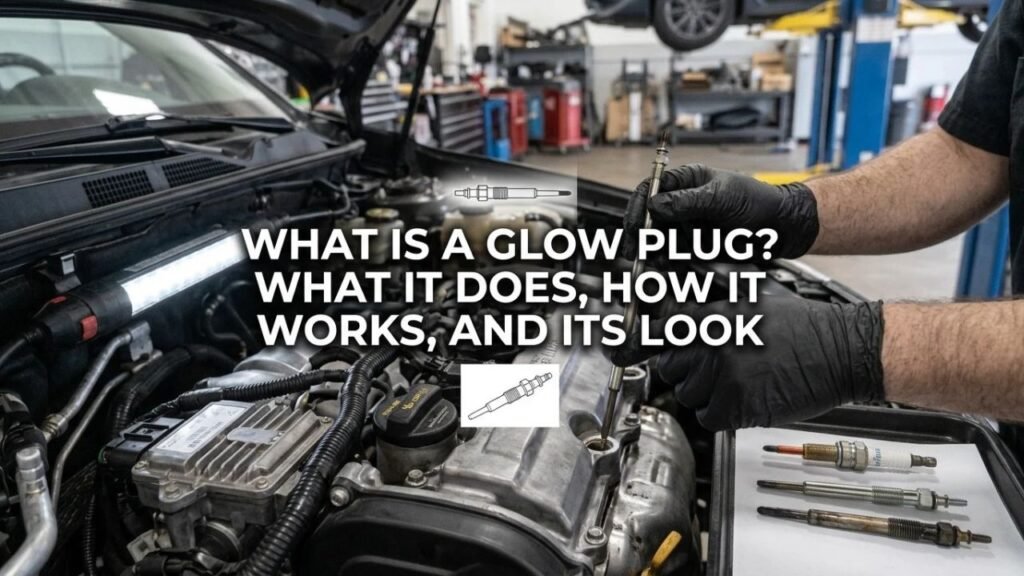
A glow plug is a small electrically heated device fitted to many compression-ignition diesel engines.
Its primary purpose is to add heat around the combustion chamber when the engine is too cold for reliable self-ignition.
Why Diesel Engines Use Glow Plugs
A diesel engine does not normally need a spark to ignite its fuel.
Instead, it:
- Draws air into the cylinder.
- Compresses the air heavily.
- Raises the air temperature through compression.
- Injects diesel fuel into the hot compressed air.
- Allows the fuel to ignite.
DENSO explains that diesel combustion begins after compressed air reaches high temperature and pressure and fuel is injected into it. When the air remains too cold, some fuel may fail to burn properly, so the glow plug supplies extra heat.
Cold metal parts absorb heat from the compressed air. The colder the cylinder head, piston, valves, and combustion chamber are, the harder cold ignition can become.
The glow plug offsets some of that heat loss.
How Many Glow Plugs Does a Diesel Engine Have?
Many passenger-car and light-truck diesel engines use one glow plug per cylinder.
A four-cylinder diesel therefore commonly has four glow plugs, while a six-cylinder engine commonly has six.
That is not a universal rule.
Some diesel engines use different cold-start systems, such as intake-air heaters or grid heaters. Certain heavy-duty applications can also use heating devices positioned differently from the individual cylinder glow plugs found in passenger vehicles.
Where Are Glow Plugs Located?
Glow plugs are normally threaded into the cylinder head.
The heating tip extends toward the combustion chamber so it can warm the area where cold-start combustion begins.
Depending on engine design, glow plugs can be positioned near:
- The fuel injector
- The combustion chamber
- A pre-combustion chamber on older indirect-injection diesels
Access varies greatly.
Some glow plugs sit in plain view after an engine cover is removed. Others may be hidden beneath intake components, wiring, fuel lines, or other engine hardware.
Key Takeaway: A glow plug is an electrically heated diesel-engine component, commonly one per cylinder, that adds heat near the combustion chamber to support cold starting.
What Do Glow Plugs Do?
Glow plugs help establish the temperature needed for diesel combustion during and shortly after a cold start.
Modern designs can do more than warm the engine before cranking.
Help a Cold Diesel Engine Start
Cold starting is the function most drivers associate with glow plugs.
Turn the ignition on in a cold diesel vehicle and the glow-plug control system may immediately energize the plugs.
Electrical current heats their tips rapidly.
The heated tips raise local combustion-chamber temperature enough to improve ignition after diesel fuel is injected.
The glow-plug warning light on the dashboard may illuminate briefly while this process takes place.
Reduce Rough Running After Startup
Some modern systems leave the glow plugs operating after the engine has started.
This is known as post-glow or after-glow.
Cold diesel combustion can be less stable during the first moments after startup. Continuing to supply heat can support smoother combustion while the engine warms.
Bosch explains that modern glow plugs may remain active after startup instead of functioning only as a starting aid.
Reduce Cold-Start Smoke
Poor cold combustion can leave part of the injected fuel incompletely burned.
That can contribute to white or gray exhaust smoke immediately after startup.
Extra combustion heat from the glow plugs promotes more complete fuel burning during this cold period.
NGK lists smoother cold operation and reduced hydrocarbon and carbon-monoxide emissions among the reasons modern glow systems continue operating after startup.
Support Emissions-Control Operation
Modern diesel-engine control systems can use glow plugs as part of broader emissions strategies.
Depending on the engine, this can include helping raise combustion and exhaust temperatures during certain operating conditions.
DENSO notes that the engine management system can activate glow plugs as part of strategies supporting diesel particulate filter regeneration.
Support DPF Regeneration on Some Diesels
A diesel particulate filter traps soot in the exhaust.
That soot must periodically be burned away during regeneration.
Higher exhaust temperature is needed for this process.
NGK states that glow plugs can take part in regeneration strategies by raising combustion temperature, which contributes to higher exhaust temperature.
Not every diesel uses the glow plugs in exactly the same way during DPF regeneration, so vehicle-specific operation varies.
Key Takeaway: Glow plugs assist cold starting, stabilize cold combustion, reduce startup smoke, and can remain active after startup or support DPF-related temperature control on some modern diesels.
How Do Glow Plugs Work?
A glow plug converts electrical energy into heat.
The principle is similar to an electric heating element, but the component has to work extremely quickly and survive inside a diesel cylinder head.
The Control System Supplies Electrical Current
When cold-start conditions call for extra heat, the engine control system or glow-plug control module sends current to the glow plugs.
The amount and duration depend on factors such as:
- Coolant temperature
- Outside temperature
- Engine design
- Battery voltage
- Engine operating state
Older diesels may use simpler glow relays and timers.
Newer systems can control glow duration and current much more precisely.
The Heating Element Becomes Extremely Hot
Electrical resistance inside the glow plug creates heat.
BERU describes a common self-regulating metal glow plug as using both a heating coil and regulating coil. Current initially heats the plug quickly, while increasing resistance in the regulating coil reduces current as temperature rises.
This keeps the plug from continually drawing maximum current after reaching its operating temperature.
Heat Reaches the Combustion Area
The heated tip extends into or very close to the combustion chamber.
As the engine cranks, compressed air passes near this hot area.
Fuel injected into the heated, compressed air has a much better chance of igniting cleanly than it would against cold combustion-chamber surfaces.
The Diesel Fuel Still Ignites by Compression
This distinction matters.
The glow plug does not fire a spark across an electrode gap.
Diesel fuel still ignites because compression has produced high air temperature.
The glow plug simply supplies extra thermal energy when cold conditions make compression heating alone insufficient for dependable startup.
Glow Plugs May Stay On After the Engine Starts
Modern glow-plug operation can continue after combustion has begun.
The engine controller may use post-glow to improve cold idle and reduce incomplete combustion while the engine warms.
Some ceramic designs can maintain high temperature for several minutes. NGK reports after-glow durations exceeding ten minutes on some ceramic systems.
Key Takeaway: Glow plugs use electrical resistance to create intense heat near the combustion chamber, helping compressed diesel air reach conditions that support reliable fuel self-ignition.
What Do Glow Plugs Look Like?
A typical glow plug looks like a long, narrow metal pencil with threads and an electrical connection at one end.
It is much slimmer than many people expect.
Main External Parts of a Glow Plug
From top to bottom, a common metal glow plug includes:
- Electrical terminal or connector
- Upper body
- Hex section for a socket or wrench
- Threaded section
- Sealing area
- Long narrow heating rod
- Heated tip
BERU’s technical cutaway shows this pencil-like layout with a connecting terminal, plug body, insertion thread, glow tube, regulating coil, and heating coil.
The Electrical End
The top of the glow plug connects to the vehicle’s electrical system.
Depending on design, it may use:
- A threaded terminal
- Push-on connector
- Molded electrical plug
- Bus-bar connection
This is where electrical current enters the heating element.
The Threaded Body
Like a spark plug, the glow plug has threads that secure it into the cylinder head.
A hex section lets the technician install or remove it with a suitable socket.
Glow plug bodies are usually long and slim because the heated section must reach the correct point inside the cylinder head.
The Heating Tip
The bottom section is the part exposed to combustion-chamber conditions.
On a metal glow plug, it commonly resembles a narrow metal probe.
On ceramic designs, the heating element can have a different color or surface appearance and must be treated carefully because the construction differs from conventional metal plugs.
Glow Plug Size
There is no universal size.
Length, thread diameter, electrical connection, heating-tip dimensions, voltage, and operating characteristics are matched to the engine.
Two glow plugs may look nearly identical but operate at different voltages or temperature profiles.
Using the wrong one can cause poor starting or component damage.
Key Takeaway: Most glow plugs look like slim metal pencils with an electrical connector, hex body, threads, and a long heating tip that extends toward the combustion chamber.
What Is Inside a Glow Plug?
The internal construction depends on the glow plug type.
Modern plugs can use metal heating coils, ceramic heating elements, or more advanced sensor-equipped designs.
Heating Coil
A conventional metal glow plug contains a resistance-heating coil.
Electrical current passing through the coil generates heat.
BERU describes the heating coil as being surrounded by electrically insulating but thermally conductive material, allowing heat to move toward the outer glow tube while protecting the internal coil.
Regulating Coil
Many self-regulating glow plugs also contain a regulating coil.
As plug temperature rises, the electrical resistance of this section changes.
Current drops as resistance rises, controlling temperature and reducing the chance of overheating.
Magnesium Oxide Insulation
NGK states that metal rod glow plugs commonly surround their internal heating coils with magnesium oxide.
This material transfers heat while protecting the coil against vibration and shock.
Ceramic Heating Element
Ceramic glow plugs replace the conventional metal heating-tip arrangement with electrically conductive ceramic material.
Ceramic technology allows very rapid heat-up and very high operating temperatures.
NGK reports temperatures up to approximately 1,350°C on some ceramic designs.
Key Takeaway: Inside a glow plug are resistance-heating components designed to convert electrical current into heat while surviving vibration, combustion pressure, and extreme temperature.
Types of Glow Plugs
Glow plug technology has changed as diesel starting and emissions requirements have changed.
Two broad families dominate automotive applications: metal and ceramic glow plugs.
Metal Glow Plugs
Metal rod glow plugs use a heat-resistant metal glow tube surrounding the heating element.
Common versions include:
- Standard metal glow plugs
- Self-regulating plugs
- Quick-heating plugs
- Advanced quick-glow designs
They remain widely used because they provide strong durability and can be designed for many diesel engines.
Ceramic Glow Plugs
Ceramic glow plugs use high-temperature ceramic materials in the heating section.
Their advantages can include:
- Very fast heating
- Higher operating temperatures
- Longer post-glow capability
- Strong cold-start performance
The exact benefits depend on the specific engine and plug design.
Pressure Sensor Glow Plugs
Some newer diesel engines use a much more advanced component known as a pressure sensor glow plug.
BERU describes its PSG as combining a heating rod with a sensor that measures combustion pressure and sends cylinder-pressure information to the ECU.
This lets the engine controller monitor combustion more directly while retaining the normal glow-plug heating function.
Key Takeaway: Diesel engines may use conventional metal plugs, high-temperature ceramic plugs, or advanced pressure-sensing glow plugs depending on engine design.
Glow Plug vs Spark Plug: What Is the Difference?
Glow plugs and spark plugs may both be threaded into an engine’s cylinder head, but they perform very different jobs.
| Feature | Glow Plug | Spark Plug |
| Common engine type | Diesel | Gasoline |
| Main action | Produces heat | Produces electrical spark |
| Primary cold-start role | Warms combustion area | Ignites mixture directly |
| Uses electrode gap | No | Yes |
| May stay heated after start | Yes, on many systems | Fires repeatedly while engine runs |
| Typical quantity | Often one per cylinder | Usually one per cylinder, sometimes more |
Spark Plugs Create an Ignition Spark
A gasoline engine normally uses a spark plug to ignite a compressed air-fuel mixture.
High voltage jumps across the spark plug gap and produces the spark.
This happens repeatedly while the engine is running.
Glow Plugs Produce Heat
A diesel glow plug does not create a spark gap.
It heats its tip.
Once the diesel engine is warm enough, normal combustion can continue through compression ignition without the glow plug acting like a spark plug.
Glow Plugs Can Still Work After Startup
Modern diesel engines may keep glow plugs energized after the engine is running.
That does not mean they have become spark plugs.
They are still producing heat, not ignition sparks.
Key Takeaway: Spark plugs directly ignite gasoline with a spark, while glow plugs heat diesel combustion chambers so compression ignition can occur reliably during cold conditions.**
Do All Diesel Engines Have Glow Plugs?
No.
Many automotive diesel engines use glow plugs, but they are not required on every diesel design.
Many Cars and Light Trucks Use Them
Passenger cars, vans, and light-duty diesel trucks commonly use one glow plug for each cylinder.
These engines benefit from rapid, controlled cold-start heating.
Some Engines Use Intake Heaters
Certain diesel engines use grid heaters or other intake-air heating systems instead of individual cylinder glow plugs.
An intake heater warms the air before it reaches the cylinders.
Some Engines Combine Different Strategies
Cold-start systems have changed considerably over the years.
Engine compression ratio, injection design, emissions equipment, climate requirements, and intended use influence the type of starting aid chosen.
Check the service information for the specific engine rather than assuming every diesel has conventional glow plugs.
How Long Do Glow Plugs Stay On?
Glow time varies widely.
A modern plug may reach starting temperature within seconds, yet its control system may continue operating it after the engine starts.
Pre-Glow
Pre-glow occurs before or during cranking.
The dashboard glow-plug indicator often corresponds with this cold-start preparation period, though the light does not always show the full time that current is being applied.
Post-Glow
Post-glow occurs after startup.
It can improve cold combustion and reduce startup smoke while the engine warms.
Some engine management systems can operate the glow plugs during later engine operation as part of strategies that raise combustion or exhaust temperature.
DENSO and NGK both describe modern glow plugs taking part in DPF-related temperature management.
The exact duration cannot be generalized because the ECU changes operation according to temperature and engine conditions.
What Are the Symptoms of Bad Glow Plugs?
A failed glow plug is often most noticeable when the engine is cold.
One failed plug may create mild symptoms, while several failed plugs can make starting far harder.
Hard Cold Starting
The engine may crank longer before it starts.
This symptom often becomes worse as outside temperature falls.
Rough Idle After Starting
One cold cylinder may take longer to begin burning cleanly.
The engine can shake or idle unevenly for the first few moments.
White Exhaust Smoke
Poor cold combustion can send partly burned fuel into the exhaust.
This may appear as white or light-colored smoke after startup.
Engine Misfire During Warm-Up
A cylinder with inadequate cold-start heat may misfire until enough engine temperature develops.
NGK lists hard starting, rough idle, misfiring, white or black smoke, and reduced fuel economy among possible glow-plug fault symptoms.
Glow Plug Warning Light
Some vehicles display a glow-system warning or store a diagnostic trouble code when the control system detects an electrical fault.
Do not assume the glow plug itself is always responsible.
The fault can involve:
- Glow plug
- Wiring
- Connector
- Relay
- Control module
- Power supply
Key Takeaway: Bad glow plugs commonly show up as difficult cold starts, rough cold idle, temporary misfires, startup smoke, or glow-system warning codes.
What Causes Glow Plugs to Fail?
Glow plugs operate under harsh electrical and thermal conditions.
Several problems can shorten their service life.
Normal Age and Heat Cycling
Each cold start heats the plug rapidly and then allows it to cool.
Repeated temperature cycling eventually wears the heating element.
Excess Voltage
A bad controller or electrical fault can expose a plug to the wrong voltage or keep it energized incorrectly.
NGK identifies excessive voltage from a faulty controller as one cause of premature glow-plug failure.
Fuel Injector Problems
A leaking or poorly spraying injector can expose the glow-plug tip to abnormal combustion and excess heat.
This can damage the heating end.
Carbon Buildup
Carbon around the glow-plug tip can make removal difficult and can contribute to abnormal operating conditions.
Care is needed during removal because a seized glow plug can break in the cylinder head.
Key Takeaway: Age, repeated heat cycles, electrical-control faults, injector problems, and abnormal combustion can shorten glow-plug life.
How Long Do Glow Plugs Last?
There is no fixed replacement interval for every diesel.
NGK gives an average estimate around 160,000 km, which is roughly 100,000 miles, while stressing that actual service life changes with engine condition, operating conditions, maintenance, and plug design.
Some plugs fail earlier.
Others continue operating well past that distance.
Cold-start frequency, electrical control, engine condition, and injector health can all influence service life.
Testing is better than replacing plugs solely because the odometer reaches a certain mileage.
Conclusion
What is a glow plug? It is an electrically heated component used by many diesel engines to provide extra combustion-chamber heat, mainly during cold starting.
Glow plugs do not make a spark. Diesel fuel still relies on compression ignition. The heated glow-plug tip simply raises local temperature so the cold engine can begin combustion more reliably.
Modern glow plugs can keep heating after startup to improve cold-running quality and emissions, and some systems use them during temperature-management strategies related to DPF regeneration.
Physically, most glow plugs resemble long, narrow metal pencils with a terminal, hex body, threads, and a heating tip. Metal and ceramic designs look similar from the outside but use different internal heating technology.
If a diesel becomes difficult to start when cold, smokes heavily after startup, or runs roughly for the first few moments, testing the glow plugs and their control system is a sensible diagnostic step.
FAQs About Glow Plugs
What Do Glow Plugs Do in a Diesel Engine?
Glow plugs produce heat near the combustion chamber to support cold diesel ignition.
Many modern systems also use post-glow after startup to improve cold combustion and may operate the plugs during certain emissions-control strategies.
How Do Glow Plugs Work?
Electrical current passes through a resistance-heating element inside the glow plug.
The tip becomes extremely hot and transfers heat to the combustion area, helping compressed air reach conditions that support diesel fuel self-ignition.
What Do Glow Plugs Look Like?
Most glow plugs look like thin metal pencils.
They have an electrical connection at the top, a hex section, threaded body, and a long narrow heating tip that extends toward the combustion chamber.
Do Glow Plugs Spark Like Spark Plugs?
No.
Glow plugs generate heat rather than an electrical spark. Diesel fuel normally ignites from the temperature created by compressed air, with the glow plug supplying extra heat during cold conditions.
Does a Diesel Engine Have One Glow Plug Per Cylinder?
Many automotive diesel engines do.
A four-cylinder diesel commonly has four glow plugs, and a six-cylinder commonly has six. Some diesel designs use different cold-start heating systems instead.
Do Glow Plugs Stay On After the Engine Starts?
Many modern ones do.
Post-glow can continue after startup to support smoother cold combustion and lower startup emissions. The ECU determines how long they remain active.
Can a Diesel Start With a Bad Glow Plug?
Yes, especially in warm weather or when only one plug has failed.
Starting may take longer, and the engine may run roughly at first. Several failed plugs can make a cold start much harder.
Are Glow Plugs Only Needed in Winter?
No.
Cold weather makes their starting role much more noticeable, but modern glow plugs can operate after startup and take part in engine and emissions temperature-management strategies throughout the year.