Not all spark plugs are created equal. While every spark plug performs the same basic job of creating the spark needed for engine combustion, the technology behind each type can be very different. The material, electrode design, durability, and heat-handling ability of a spark plug can directly affect engine performance, fuel efficiency, and maintenance requirements.
Many vehicle owners replace spark plugs without understanding the differences between copper, platinum, iridium, and other advanced spark plug types.
Choosing the wrong type may lead to poor ignition performance, faster wear, or unnecessary expenses. On the other hand, selecting the right spark plug based on your engine requirements can help maintain smooth operation and reliable performance.
In this complete Spark Plug Types guide, you will learn how different spark plugs are designed, how their materials affect performance, and which type is suitable for different vehicles and driving conditions.
I will cover traditional copper spark plugs, long-lasting platinum and iridium options, newer ruthenium technology, performance spark plugs, and the key factors to consider before choosing a replacement.
What You Will Learn From This Guide
In this guide, you will discover:
- The different types of spark plugs and how they compare
- How copper, platinum, iridium, and ruthenium materials affect performance
- The advantages and disadvantages of each spark plug type
- Which spark plug type is best for daily driving, performance vehicles, and older engines
- How spark plug design influences ignition, durability, and fuel efficiency
- How to choose the correct spark plug for your vehicle
Understanding spark plug types is an important part of understanding your vehicle’s ignition system. A spark plug may be a small component, but it works under extreme conditions inside the combustion chamber and plays a major role in how efficiently your engine converts fuel into power.
At SparkPlugGuide, I focuses on making automotive topics easier to understand by explaining the technology behind everyday engine components. Whether you are a beginner learning about spark plugs for the first time or a vehicle owner comparing replacement options, this guide will help you make a more informed decision.
What Are the Different Types of Spark Plugs?
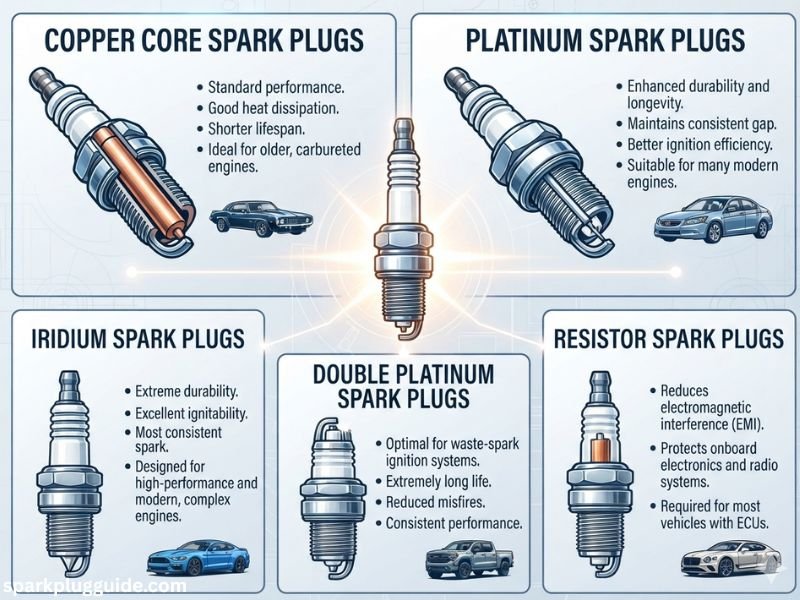
Spark plugs are mainly classified based on their electrode material, design, and performance characteristics. The most common spark plug types include copper, platinum, double platinum, iridium, ruthenium, and performance spark plugs. Each type is designed to provide ignition performance under different engine conditions.
Although all spark plugs perform the same basic function, their construction affects factors such as lifespan, heat resistance, spark efficiency, and overall reliability. Choosing the right type depends on the vehicle manufacturer’s recommendation, engine design, and driving requirements.
Copper Spark Plugs
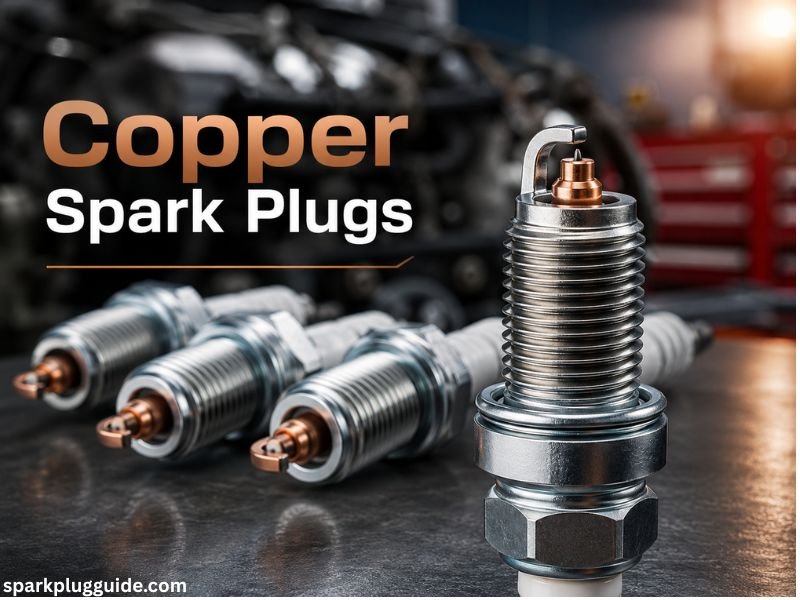
Copper spark plugs are one of the oldest and most traditional types of spark plugs. They use a copper core inside the electrode design, which provides excellent electrical conductivity and allows electricity to flow efficiently through the spark plug.
Despite being an older technology, copper spark plugs still have an important role in certain engines. Some older vehicles and specific engine designs are built to perform best with copper spark plugs because of their strong conductivity characteristics.
How Copper Spark Plugs Work
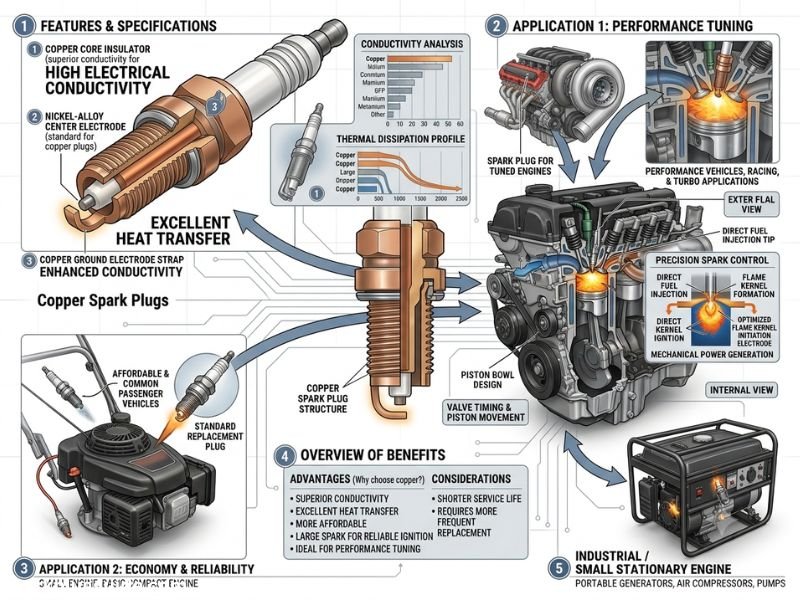
Copper spark plugs use a copper core electrode combined with a nickel alloy coating. The copper core helps transfer electrical energy efficiently, while the nickel alloy protects the electrode from the high temperatures inside the combustion chamber.
The main advantage of copper is its excellent ability to conduct electricity. However, copper itself is a softer material and wears faster compared to modern spark plug materials such as platinum and iridium.
Advantages of Copper Spark Plugs
Copper spark plugs offer several benefits:
- Excellent electrical conductivity
- Reliable ignition performance
- Lower purchase cost
- Suitable for older engine designs
Because copper transfers electrical energy efficiently, these spark plugs can produce a strong spark when used in compatible engines.
Disadvantages of Copper Spark Plugs
The biggest limitation of copper spark plugs is their shorter lifespan compared to advanced spark plug types.
Common disadvantages include:
- Faster electrode wear
- More frequent replacement requirements
- Lower resistance to extreme temperatures
For this reason, many modern vehicles have moved toward platinum and iridium spark plugs that can maintain performance for longer periods.
Best Applications for Copper Spark Plugs
Copper spark plugs are commonly suitable for:
- Older gasoline engines
- Classic vehicles
- Small engines
- Vehicles specifically designed for copper spark plugs
It is important to remember that a newer or more expensive spark plug is not always better. The correct spark plug is the one that matches the engine manufacturer’s specifications.
Platinum Spark Plugs
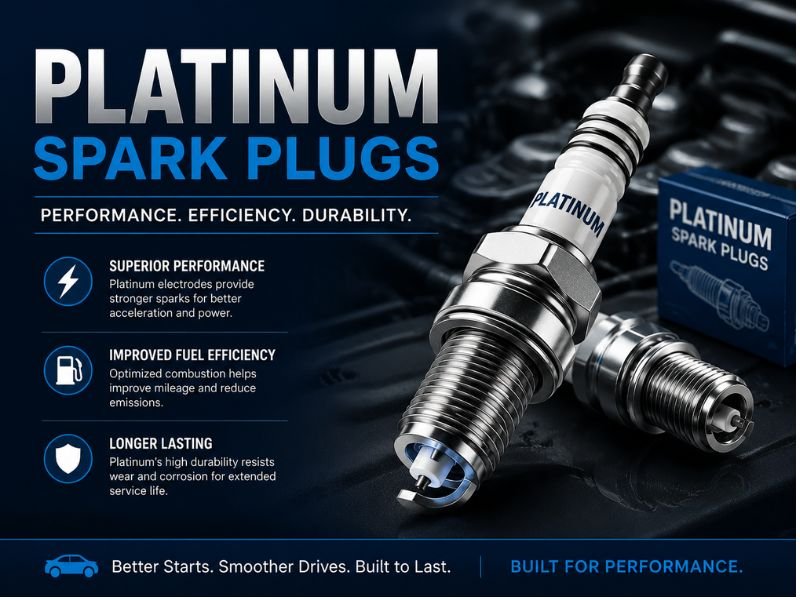
Platinum spark plugs were developed to improve durability compared to traditional copper spark plugs. They use a platinum disc or tip on the center electrode, which helps reduce electrode wear and extend service life.
Platinum is a harder material than nickel alloy, allowing the spark plug to maintain its shape and performance for a longer period under high engine temperatures.
How Platinum Spark Plugs Work
In a platinum spark plug, a small platinum tip is added to the center electrode. This platinum material improves resistance against erosion caused by repeated electrical sparks.
Every time a spark jumps across the electrode gap, a small amount of material can wear away. Platinum helps slow this process, allowing the spark plug to maintain a consistent gap for longer.
Advantages of Platinum Spark Plugs
Platinum spark plugs provide a balance between performance, durability, and cost.
Their main benefits include:
- Longer lifespan than copper spark plugs
- Better resistance to electrode wear
- More stable ignition performance
- Reduced maintenance frequency
They are commonly used in many modern passenger vehicles because they provide reliable performance without the higher cost of premium spark plug technologies.
Disadvantages of Platinum Spark Plugs
Although platinum spark plugs last longer than copper versions, they still have some limitations.
These include:
- Higher cost compared to copper spark plugs
- Lower durability compared to iridium spark plugs in some applications
- Not suitable for every engine design
The correct choice depends on the vehicle’s ignition requirements rather than simply choosing the most advanced material.
Best Applications for Platinum Spark Plugs
Platinum spark plugs are commonly found in:
- Daily driver vehicles
- Modern gasoline engines
- Passenger cars
- Vehicles requiring longer maintenance intervals
Many manufacturers use platinum spark plugs because they provide a good combination of durability and affordability.
Double Platinum Spark Plugs
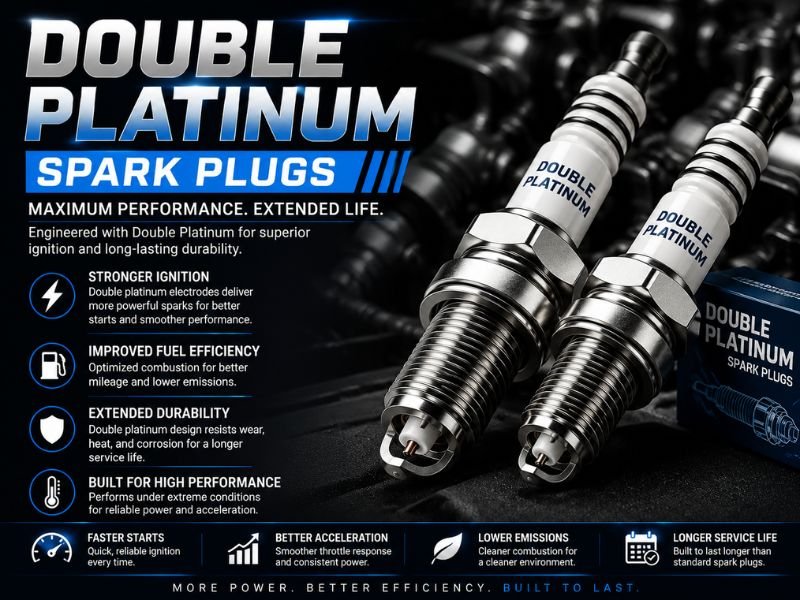
Double platinum spark plugs are an advanced version of traditional platinum spark plugs. Instead of using platinum only on the center electrode, they use platinum on both the center electrode and the ground electrode.
This design improves resistance against electrode wear and helps maintain a consistent spark gap for a longer period. Double platinum spark plugs are especially useful in certain ignition systems where both electrodes experience electrical erosion during operation.
How Double Platinum Spark Plugs Work
During normal spark plug operation, the electrical spark travels between the center electrode and the ground electrode. Each spark creates a small amount of wear on the electrode surfaces over time.
In some ignition systems, especially waste spark ignition systems, the direction of the electrical current alternates between the electrodes. This means both the center and ground electrodes experience wear.
By adding platinum to both electrodes, double platinum spark plugs provide better protection against this wear and help maintain stable ignition performance.
Advantages of Double Platinum Spark Plugs
Double platinum spark plugs offer several benefits compared to standard platinum spark plugs:
- Longer lifespan
- Better resistance to electrode erosion
- More consistent spark performance
- Reduced replacement frequency
- Suitable for specific ignition system designs
Their improved durability makes them a reliable option for vehicles that require this type of spark plug technology.
Disadvantages of Double Platinum Spark Plugs
Although double platinum spark plugs provide better durability, they are not always the best choice for every vehicle.
Some limitations include:
- Higher cost compared to standard platinum spark plugs
- Not necessary for engines designed for copper or single platinum plugs
- Limited performance benefits in engines that do not require them
Using the wrong spark plug type can reduce ignition efficiency, so vehicle compatibility is always more important than selecting a premium option.
Best Applications for Double Platinum Spark Plugs
Double platinum spark plugs are commonly used in vehicles with waste spark ignition systems.
In this system, one ignition coil may control two spark plugs, and the spark travels differently during each ignition event. Because both electrodes experience electrical stress, double platinum construction helps improve durability.
They are commonly found in:
- Certain older and mid-generation gasoline vehicles
- Specific Ford, General Motors, and other manufacturer applications
- Engines designed around waste spark ignition technology
Double Platinum vs Platinum Spark Plugs
The main difference between standard platinum and double platinum spark plugs is electrode protection.
| Spark Plug Type | Platinum Location | Main Benefit |
| Single Platinum | Center electrode only | Improved durability compared to copper |
| Double Platinum | Center and ground electrodes | Better wear resistance in specific ignition systems |
A double platinum spark plug is not automatically better than a regular platinum spark plug. The correct choice depends on the engine design and the manufacturer’s recommended specification.
For vehicles that require double platinum spark plugs, using the correct type can help maintain reliable ignition, consistent combustion, and longer service intervals.
Iridium Spark Plugs
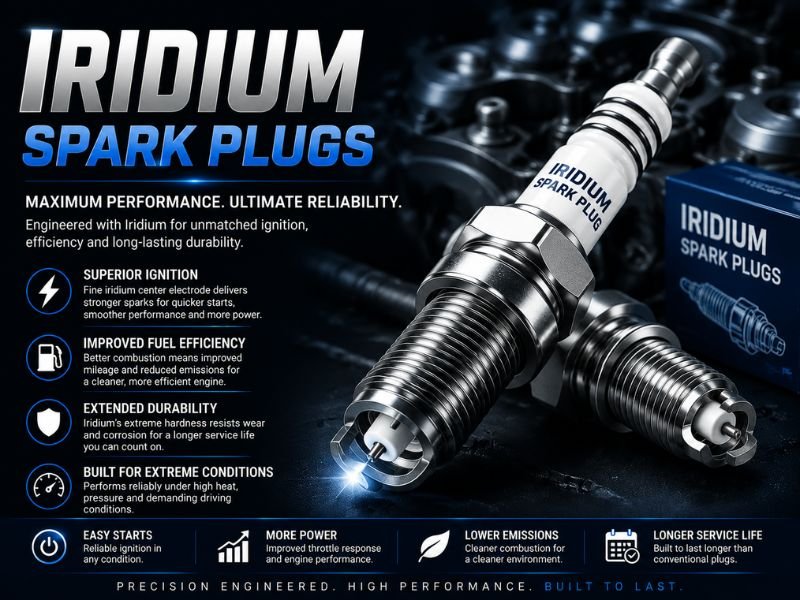
Iridium spark plugs are one of the most advanced and widely used spark plug types in modern gasoline engines. They use an iridium alloy electrode that provides exceptional durability, high heat resistance, and efficient ignition performance.
Because iridium is one of the strongest metals used in spark plug manufacturing, it allows manufacturers to create a very small electrode tip while maintaining excellent durability. This fine-wire design helps create a strong and focused spark using less electrical energy.
Many modern vehicles use iridium spark plugs as original equipment because they offer a longer lifespan and consistent performance compared to traditional spark plug materials.
How Iridium Spark Plugs Work
The main difference between iridium spark plugs and older spark plug designs is the electrode material and size.
Iridium has an extremely high melting point and excellent resistance to wear. This allows manufacturers to create a thinner center electrode, often called a fine-wire electrode.
A smaller electrode provides several benefits:
- Requires less voltage to create a spark
- Concentrates electrical energy more effectively
- Improves ignition efficiency
- Helps maintain a consistent spark over time
The result is a reliable ignition process that helps the engine burn the air-fuel mixture more efficiently.
Why Is Iridium Used in Spark Plugs?
Iridium is used because it can withstand the extreme conditions inside an engine combustion chamber.
During operation, spark plugs experience:
- Extremely high temperatures
- Continuous electrical arcing
- Combustion pressure
- Chemical exposure from fuel combustion
Many traditional materials wear faster under these conditions. Iridium’s strength allows the electrode to maintain its shape and performance for a much longer period.
Advantages of Iridium Spark Plugs
Iridium spark plugs provide several important benefits:
Longer Service Life
Iridium electrodes resist wear better than copper and platinum materials, allowing many iridium spark plugs to last significantly longer.
Depending on the vehicle and driving conditions, iridium spark plugs can often last around:
- 80,000 to 100,000+ miles
Strong and Efficient Ignition
The fine-wire electrode design allows the spark to form more efficiently, helping maintain reliable combustion.
Benefits include:
- Smooth engine operation
- Better throttle response
- Consistent ignition performance
Better Performance in Modern Engines
Modern engines often operate with higher compression ratios, turbochargers, and advanced fuel injection systems. Iridium spark plugs are designed to handle these demanding conditions.
They are commonly used in:
- Turbocharged engines
- Direct injection engines
- High-performance vehicles
Reduced Stress on Ignition Components
Because iridium spark plugs require less voltage to create a spark, they may reduce the workload on ignition components such as ignition coils.
A properly functioning spark plug helps the entire ignition system operate more efficiently.
Disadvantages of Iridium Spark Plugs
Although iridium spark plugs offer excellent performance, they also have some limitations.
Higher Cost
Iridium spark plugs are more expensive than copper and standard platinum options because iridium is a rare and valuable material.
Not Required for Every Engine
Some engines are specifically designed for copper or platinum spark plugs. Installing premium iridium spark plugs does not always provide additional benefits if the engine was not designed for them.
Can Be Damaged During Improper Handling
The fine-wire electrode design is delicate. Incorrect gapping methods or aggressive handling can damage the electrode.
Always follow manufacturer recommendations when installing iridium spark plugs.
Best Applications for Iridium Spark Plugs
Iridium spark plugs are commonly used in:
- Modern passenger vehicles
- Premium vehicles
- Turbocharged engines
- Performance engines
- Vehicles requiring long maintenance intervals
Manufacturers such as NGK and Denso produce widely used iridium spark plug technologies for many vehicle applications.
Iridium vs Platinum Spark Plugs
The main difference between iridium and platinum spark plugs is durability and electrode design.
| Feature | Platinum Spark Plug | Iridium Spark Plug |
| Electrode Material | Platinum | Iridium |
| Durability | High | Very High |
| Electrode Size | Larger | Fine-wire design |
| Lifespan | Medium to long | Long |
| Cost | Moderate | Higher |
Iridium spark plugs are usually the better choice for modern engines that require long-lasting and efficient ignition performance, but the correct option should always match the vehicle manufacturer’s specification.
Understanding iridium spark plugs helps explain why many newer vehicles use advanced ignition technology and why spark plug materials play such an important role in engine performance.
Ruthenium Spark Plugs
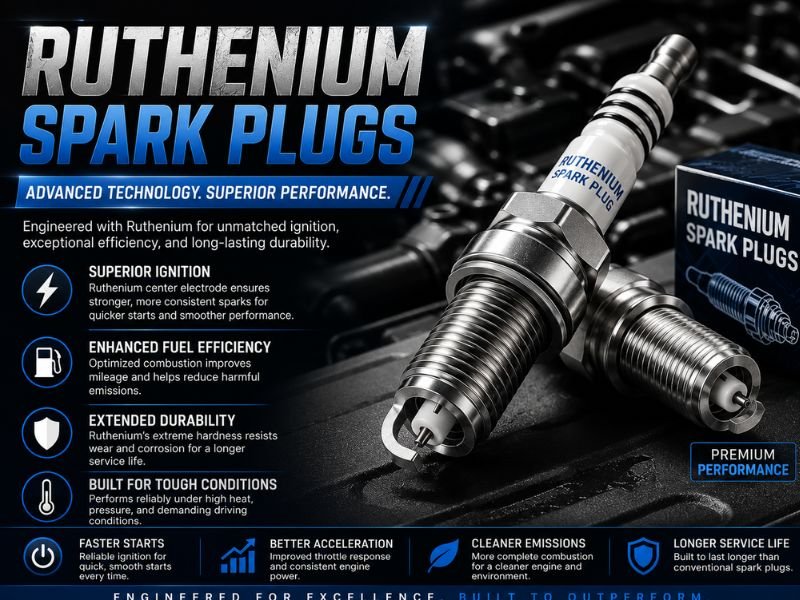
Ruthenium spark plugs are one of the newest developments in spark plug technology, designed to provide excellent durability, wear resistance, and consistent ignition performance. They use a ruthenium-based electrode material that offers advanced protection against the extreme conditions found inside modern gasoline engines.
While copper, platinum, and iridium spark plugs have been used for many years, ruthenium spark plugs represent the next step in spark plug material development. They are designed to provide long service life while maintaining reliable combustion performance.
How Ruthenium Spark Plugs Work
Like other spark plug types, ruthenium spark plugs create a high-voltage spark between the center electrode and ground electrode to ignite the air-fuel mixture inside the combustion chamber.
The main difference is the electrode material.
Ruthenium has excellent resistance to wear and can maintain electrode performance under repeated exposure to:
- High combustion temperatures
- Electrical spark erosion
- Engine pressure
- Chemical byproducts from combustion
This allows ruthenium spark plugs to maintain a stable spark gap for a longer period.
Why Is Ruthenium Used in Spark Plugs?
Spark plug manufacturers are constantly developing new materials to improve durability and ignition performance. Ruthenium is used because it provides strong resistance against electrode degradation.
The benefits of ruthenium technology include:
- Excellent wear resistance
- Stable electrode performance
- Long service intervals
- Reliable ignition under different engine conditions
Compared with traditional materials, ruthenium can help maintain consistent spark performance over a longer lifespan.
Advantages of Ruthenium Spark Plugs
Ruthenium spark plugs offer several benefits for modern gasoline engines.
Excellent Durability
Ruthenium electrodes are designed to resist wear caused by continuous electrical arcing. This helps the spark plug maintain its shape and performance over time.
Long Service Life
Because of their strong wear resistance, ruthenium spark plugs can provide extended replacement intervals depending on the vehicle application.
Stable Ignition Performance
A consistent electrode design helps maintain reliable spark production, supporting:
- Smooth engine operation
- Efficient combustion
- Reliable starting
Suitable for Modern Engine Technology
Many newer engines use advanced fuel injection systems and tighter performance requirements. Ruthenium spark plugs are designed to meet these demands.
They can be suitable for engines with:
- Modern ignition systems
- Advanced fuel delivery technology
- Higher efficiency requirements
Disadvantages of Ruthenium Spark Plugs
Although ruthenium spark plugs provide advanced technology, they also have some limitations.
Higher Price
Ruthenium spark plugs are generally more expensive than traditional copper and some platinum options because of their advanced material technology.
Limited Availability
Compared with popular iridium and platinum spark plugs, ruthenium options are available from fewer manufacturers and may not be recommended for every vehicle.
Not Suitable for Every Engine
The best spark plug is always the one specified for your vehicle. Using ruthenium spark plugs in an engine designed for another spark plug type may not provide additional benefits.
Ruthenium vs Iridium Spark Plugs
Ruthenium and iridium spark plugs are both premium options designed for long-lasting performance, but they use different electrode materials.
| Feature | Iridium Spark Plug | Ruthenium Spark Plug |
| Electrode Material | Iridium | Ruthenium alloy |
| Durability | Very high | Very high |
| Technology | Established premium option | Newer advanced technology |
| Availability | Widely available | More limited |
| Common Use | Modern vehicles | Selected modern applications |
Both types can provide excellent performance when matched correctly with the engine.
Best Applications for Ruthenium Spark Plugs
Ruthenium spark plugs are commonly used in:
- Modern gasoline engines
- Vehicles requiring long-lasting spark plugs
- Drivers looking for advanced ignition technology
One example of ruthenium spark plug technology is developed by NGK, which has introduced ruthenium-based spark plug designs for specific automotive applications.
Are Ruthenium Spark Plugs Better Than Iridium?
There is no universal answer because the best spark plug depends on the engine design and manufacturer recommendation.
Ruthenium spark plugs may offer excellent durability and wear resistance, while iridium spark plugs remain one of the most widely used premium options due to their proven performance and availability.
The most important factor is not choosing the newest technology, but selecting a spark plug that matches your vehicle’s specifications.
Understanding ruthenium spark plugs helps explain how spark plug technology continues to evolve to meet the demands of modern engines.
Performance Spark Plugs
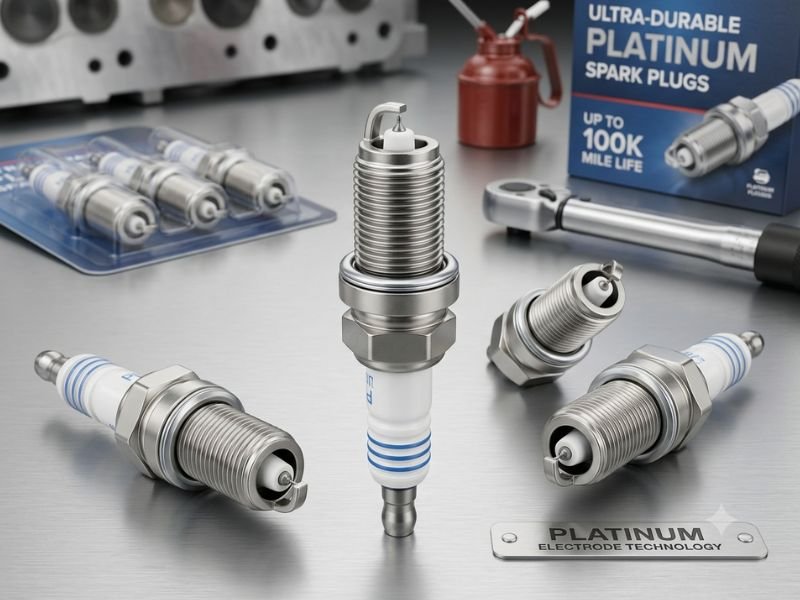
Performance spark plugs are specially designed for engines that operate under more demanding conditions than standard passenger vehicles. They are commonly used in modified engines, racing vehicles, high-performance cars, and applications where ignition reliability is critical.
While standard spark plugs are designed for normal driving conditions, performance spark plugs are engineered to handle higher temperatures, increased cylinder pressure, higher engine speeds, and more aggressive combustion environments.
What Makes Performance Spark Plugs Different?
The main difference between performance spark plugs and regular spark plugs is their design and operating characteristics.
Performance spark plugs may include:
- Specialized electrode designs
- Advanced materials
- Different heat ranges
- Improved resistance to extreme conditions
These features help maintain reliable ignition when an engine is producing more power or operating under heavier stress.
Heat Range in Performance Spark Plugs
Heat range is one of the most important factors when selecting performance spark plugs.
Modified or high-performance engines often produce more heat because of:
- Higher compression ratios
- Turbocharging
- Supercharging
- Increased combustion pressure
A spark plug with the correct heat range helps remove heat effectively while preventing problems such as overheating or carbon buildup.
Using the wrong heat range can lead to:
- Pre-ignition
- Spark plug fouling
- Reduced engine performance
- Potential engine damage
Electrode Design in Performance Spark Plugs
Performance spark plugs often use specialized electrode designs to improve ignition efficiency.
Common designs include:
Fine-Wire Electrodes
Fine-wire electrodes focus electrical energy into a smaller area, helping create a strong and efficient spark.
Benefits include:
- Faster ignition
- Better combustion consistency
- Lower voltage requirements
Multiple Ground Electrodes
Some performance spark plugs use multiple ground electrodes to improve durability and spark reliability.
However, more electrodes do not always mean better performance. The correct design depends on the engine application.
Best Applications for Performance Spark Plugs
Performance spark plugs are commonly used in:
- Racing engines
- Modified street cars
- Turbocharged engines
- Supercharged engines
- High-performance vehicles
They are especially useful when an engine has been modified beyond the specifications of a standard factory setup.
Do Performance Spark Plugs Increase Horsepower?
Performance spark plugs alone usually do not create significant horsepower gains.
Their main purpose is to maintain reliable ignition under demanding conditions.
They can help:
- Prevent misfires
- Maintain consistent combustion
- Support engine modifications
However, actual horsepower improvements usually come from a combination of:
- Engine tuning
- Air intake improvements
- Exhaust modifications
- Fuel system upgrades
Choosing Performance Spark Plugs
When selecting performance spark plugs, consider:
- Engine modifications
- Fuel type
- Compression ratio
- Boost pressure
- Manufacturer recommendations
A spark plug designed for a racing engine may not be suitable for a normal daily driver.
The correct performance spark plug should match the engine’s operating conditions rather than simply being the most expensive option.
Spark Plug Types Comparison: Copper vs Platinum vs Iridium vs Ruthenium
Understanding the differences between spark plug types makes it easier to choose the right option for your vehicle. While all spark plugs perform the same basic function, their materials and designs affect lifespan, cost, durability, and ignition performance.
Copper vs Platinum Spark Plugs
Copper and platinum spark plugs represent two different approaches to ignition technology.
Copper spark plugs provide excellent electrical conductivity and are often preferred for older engines that require them. However, their electrode material wears faster, resulting in shorter replacement intervals.
Platinum spark plugs use a harder electrode material that improves durability and allows them to maintain performance for a longer period.
The main difference:
| Feature | Copper Spark Plug | Platinum Spark Plug |
| Electrode Material | Copper core with nickel alloy | Platinum tip |
| Lifespan | Shorter | Longer |
| Cost | Lower | Medium |
| Conductivity | Excellent | Good |
| Common Use | Older engines | Modern daily vehicles |
Platinum vs Double Platinum Spark Plugs
The difference between platinum and double platinum spark plugs is the amount of platinum used in the electrode design.
Single platinum spark plugs usually have platinum on the center electrode, while double platinum spark plugs have platinum on both the center and ground electrodes.
Double platinum spark plugs are mainly beneficial for vehicles using waste spark ignition systems.
| Feature | Platinum | Double Platinum |
| Platinum Location | Center electrode | Center and ground electrode |
| Wear Resistance | Good | Better in specific systems |
| Best Use | Standard ignition systems | Waste spark systems |
Platinum vs Iridium Spark Plugs
Iridium spark plugs are considered a premium upgrade over platinum because iridium is stronger and allows a smaller electrode design.
| Feature | Platinum | Iridium |
| Durability | High | Very high |
| Electrode Size | Larger | Fine-wire design |
| Lifespan | Medium to long | Longer |
| Cost | Moderate | Higher |
| Modern Use | Common | Very common in newer vehicles |
Iridium spark plugs are often chosen for modern engines because they provide excellent durability and efficient ignition performance.
Iridium vs Ruthenium Spark Plugs
Both iridium and ruthenium spark plugs are advanced options designed for long service life.
Iridium has become widely used in modern vehicles, while ruthenium represents newer spark plug technology focused on wear resistance.
| Feature | Iridium | Ruthenium |
| Technology | Established premium option | Newer technology |
| Durability | Excellent | Excellent |
| Availability | Widely available | More limited |
| Common Use | Many modern vehicles | Selected applications |
Which Spark Plug Type Should You Choose?
The best spark plug type depends on your specific vehicle.
For example:
- Older engines may perform best with copper spark plugs
- Most modern daily vehicles commonly use platinum or iridium spark plugs
- Advanced engines may benefit from premium materials such as iridium or ruthenium
- Modified engines may require performance spark plugs
The correct choice should always be based on:
- Vehicle manufacturer recommendation
- Engine specifications
- Driving conditions
- Required maintenance interval
The most expensive spark plug is not always the best spark plug. Compatibility is more important than price.
How Spark Plug Materials Affect Performance
The material used in a spark plug has a major impact on its durability, ignition performance, heat resistance, and overall lifespan. Although every spark plug creates the same basic ignition spark, different materials allow spark plugs to perform differently under engine conditions.
The center electrode material is one of the biggest factors that separates copper, platinum, iridium, and ruthenium spark plugs. Each material has unique characteristics that influence how efficiently electricity flows and how well the spark plug handles extreme temperatures.
Electrode Material and Spark Performance
The electrode is the part of the spark plug where the electrical spark is created. During engine operation, the electrode experiences repeated electrical arcing and extreme heat, which gradually causes wear.
A high-quality electrode material helps maintain:
- Stable spark production
- Correct spark gap
- Longer service life
- Reliable combustion
Copper Electrode Material
Copper is known for excellent electrical conductivity, which allows electrical energy to flow efficiently through the spark plug.
However, copper itself is relatively soft and cannot withstand electrode wear as well as advanced materials. This is why many copper spark plugs use a nickel alloy coating around the electrode.
Copper spark plugs are valued for:
- Strong electrical conductivity
- Reliable ignition
- Affordable cost
Their main limitation is shorter lifespan compared with platinum and iridium options.
Platinum Electrode Material
Platinum is a harder material than traditional nickel alloys, allowing the spark plug electrode to resist wear for a longer period.
Platinum helps provide:
- Better durability
- More stable spark performance
- Longer replacement intervals
This makes platinum spark plugs a popular choice for many modern vehicles.
Iridium Electrode Material
Iridium is one of the strongest materials used in spark plug manufacturing.
Its high melting point allows manufacturers to create extremely thin electrodes without sacrificing durability.
The fine-wire iridium electrode helps:
- Concentrate electrical energy
- Create an efficient spark
- Reduce voltage requirements
- Maintain performance over time
This is why iridium spark plugs are widely used in modern engines.
Ruthenium Electrode Material
Ruthenium is a newer spark plug material designed to provide excellent resistance against wear.
Its characteristics include:
- Strong durability
- Stable electrode performance
- Long service life
Ruthenium technology represents continued development in spark plug design as manufacturers look for materials that can handle increasingly advanced engine systems.
Spark Plug Gap and Material Performance
The spark plug gap is the distance between the center electrode and ground electrode where the spark occurs.
The electrode material affects how efficiently the spark plug can create and maintain this spark.
For example:
- Fine-wire iridium electrodes require less voltage
- Larger copper electrodes may require more energy but provide strong conductivity
- Platinum electrodes balance durability and performance
The correct gap is essential because even the best spark plug material cannot perform properly if the gap does not match engine specifications.
Heat Resistance and Spark Plug Durability
Spark plugs operate inside the combustion chamber, where temperatures can become extremely high.
The material must resist:
- Thermal stress
- Electrical erosion
- Chemical exposure
- Combustion pressure
Materials such as platinum, iridium, and ruthenium are designed to handle these conditions better than traditional materials.
However, durability also depends on:
- Engine design
- Fuel quality
- Driving habits
- Proper installation
How Spark Plug Materials Affect Fuel Efficiency
Spark plug material does not directly increase fuel economy, but the correct spark plug can help maintain efficient combustion.
A durable spark plug helps provide:
- Consistent ignition
- Complete fuel burning
- Stable engine operation
When spark plugs wear out, combustion efficiency may decrease, leading to:
- Higher fuel consumption
- Reduced engine performance
- Increased emissions
How Spark Plug Materials Affect Replacement Intervals
Different materials have different expected service lives.
General comparison:
| Spark Plug Material | Typical Lifespan |
| Copper | Shorter |
| Platinum | Medium to long |
| Iridium | Long |
| Ruthenium | Long |
Actual lifespan depends on the vehicle manufacturer’s recommendation and operating conditions.
Spark Plug Heat Range Explained
Spark plug heat range describes how quickly a spark plug transfers heat away from the firing end into the engine cylinder head. It is one of the most important specifications when selecting the correct spark plug for an engine.
The heat range does not describe how hot the spark itself is. Instead, it refers to the spark plug’s ability to manage heat during engine operation.
A correct heat range allows the spark plug to maintain the ideal operating temperature.
Why Spark Plug Heat Range Matters
During combustion, spark plugs are exposed to extremely high temperatures. The spark plug must remove enough heat to prevent overheating while staying hot enough to burn away deposits.
The correct heat balance helps prevent:
- Pre-ignition
- Carbon buildup
- Spark plug fouling
- Electrode damage
Hot Spark Plugs
A hot spark plug transfers heat more slowly, allowing the firing end to maintain a higher temperature.
Hot spark plugs can be useful in certain applications because they help burn away deposits and keep the spark plug cleaner.
However, if a spark plug is too hot for an engine, it may cause:
- Overheating
- Pre-ignition
- Engine damage
Cold Spark Plugs
A cold spark plug transfers heat away from the firing end faster.
Cold spark plugs are often used in engines that produce more heat, such as:
- High-performance engines
- Turbocharged engines
- Racing applications
If a spark plug is too cold, it may cause:
- Carbon deposits
- Poor combustion
- Spark plug fouling
How Manufacturers Choose Spark Plug Heat Range
Vehicle manufacturers select heat range based on:
- Engine design
- Compression ratio
- Operating temperature
- Fuel system
- Performance requirements
This is why using the manufacturer-recommended spark plug is important.
Changing the heat range without proper knowledge can create performance problems.
Heat Range in Performance Engines
Performance engines often require different heat range spark plugs because they operate under more extreme conditions.
Factors that increase heat include:
- Higher boost pressure
- Increased compression
- Aggressive tuning
- Higher RPM operation
Performance vehicles may use colder spark plugs to help manage additional heat.
Can Changing Spark Plug Heat Range Improve Performance?
Changing heat range alone does not automatically improve horsepower or engine performance.
The correct heat range simply allows the spark plug to operate safely and efficiently under the engine’s conditions.
Performance improvements require a complete approach involving:
- Engine tuning
- Fuel system adjustments
- Airflow improvements
- Proper ignition setup
Spark plug material and heat range both play important roles in ignition performance. Materials such as platinum, iridium, and ruthenium improve durability, while the correct heat range helps the spark plug operate safely under engine conditions.
Choosing the right combination of material and heat range ensures reliable ignition, efficient combustion, and long-term engine performance.
Which Type of Spark Plug Is Best?
The best spark plug type depends on your vehicle’s engine design, manufacturer recommendation, driving conditions, and performance requirements. There is no single spark plug type that is best for every engine because different vehicles are designed with different ignition needs.
A high-end iridium or ruthenium spark plug may offer longer lifespan, but it is not automatically the right choice for every vehicle. The correct spark plug is the one that matches your engine specifications and provides reliable ignition performance.
Best Spark Plug Type for Daily Driving
For most everyday vehicles, platinum and iridium spark plugs are commonly recommended because they provide a good balance between durability, performance, and maintenance cost.
Daily drivers usually need spark plugs that can handle:
- Regular commuting
- Different weather conditions
- Long maintenance intervals
- Consistent engine operation
Platinum Spark Plugs for Daily Vehicles
Platinum spark plugs are a practical option for many standard vehicles because they provide better durability than copper spark plugs without the higher cost of premium options.
They are suitable for drivers who want:
- Reliable performance
- Longer replacement intervals
- Good value for money
Iridium Spark Plugs for Daily Vehicles
Many modern vehicles come equipped with iridium spark plugs from the factory.
They are popular because they provide:
- Long service life
- Efficient ignition
- Strong performance
- Better resistance to wear
For many newer vehicles, replacing factory-installed iridium spark plugs with the same type is usually the best choice.
Best Spark Plug Type for Performance Cars
Performance vehicles often require spark plugs that can handle higher temperatures, increased cylinder pressure, and demanding driving conditions.
Iridium spark plugs are commonly used in performance applications because they provide excellent durability and reliable ignition under stress.
Modified engines may require specialized performance spark plugs based on:
- Turbocharger or supercharger setup
- Engine tuning
- Compression ratio
- Fuel type
- Driving conditions
A performance spark plug should always be selected based on engine requirements rather than marketing claims.
Best Spark Plug Type for Older Vehicles
Older vehicles often work best with copper spark plugs if they were originally designed for them.
Copper spark plugs provide:
- Excellent conductivity
- Reliable ignition
- Affordable replacement cost
Replacing copper spark plugs with premium materials such as iridium does not always improve performance because older ignition systems may not be designed to take advantage of advanced spark plug technology.
Best Spark Plug Type for Long-Term Ownership
For drivers who want fewer replacements and longer service intervals, iridium and ruthenium spark plugs are popular choices.
Their advantages include:
- High durability
- Strong resistance to electrode wear
- Consistent ignition performance over time
However, long lifespan should not be the only consideration. The spark plug must still match the engine manufacturer’s specifications.
How to Choose the Right Spark Plug Type
Choosing the correct spark plug requires looking at several factors rather than focusing only on material or price.
Check Vehicle Manufacturer Recommendations
The vehicle manufacturer’s recommendation is the most reliable starting point.
Important specifications include:
- Spark plug part number
- Electrode material
- Heat range
- Spark plug gap
- Thread size
- Reach
The owner’s manual or manufacturer service information usually provides the correct spark plug specification.
Consider Your Engine Type
Different engines have different ignition requirements.
Factors include:
- Engine size
- Compression ratio
- Turbocharging
- Fuel injection system
- Ignition coil design
A naturally aspirated economy engine may require a different spark plug compared with a turbocharged performance engine.
Consider Your Driving Conditions
Your driving habits can influence spark plug requirements.
Normal Commuting
For regular city and highway driving, manufacturer-recommended platinum or iridium spark plugs are usually suitable.
Heavy-Duty Driving
Vehicles used for:
- Towing
- Carrying heavy loads
- Frequent high-temperature operation
may require spark plugs designed for more demanding conditions.
Performance Driving
Modified or high-performance vehicles may require specialized spark plugs with specific heat ranges and designs.
Match Spark Plug Specifications
Before purchasing spark plugs, verify:
Thread Size
The spark plug must physically fit the cylinder head.
Heat Range
The spark plug must manage engine temperature correctly.
Electrode Material
Choose the material recommended for your vehicle.
Spark Plug Gap
The gap must match the engine requirement for proper ignition.
Why the Most Expensive Spark Plug Is Not Always the Best
Many drivers assume a more expensive spark plug will automatically improve engine performance. However, spark plug selection is about compatibility, not price.
For example:
- An iridium spark plug may be unnecessary for an engine designed for copper plugs
- A racing spark plug may perform poorly in a normal daily vehicle
- A cheaper OEM-recommended spark plug may provide the best results
The right spark plug is the one designed for your engine.
Popular Spark Plug Brands and Their Technologies
Several manufacturers produce high-quality spark plugs for different vehicles, engine types, and performance needs. While brand reputation matters, compatibility with your vehicle is always the most important factor.
Some of the most recognized spark plug brands include NGK, Denso, Bosch, Champion, and Autolite.
NGK Spark Plugs
NGK is one of the world’s leading spark plug manufacturers and supplies spark plugs for many automotive applications.
NGK produces:
- Copper spark plugs
- Platinum spark plugs
- Iridium spark plugs
- Ruthenium spark plugs
- Racing spark plugs
The company is known for advanced electrode technology, reliable ignition performance, and wide vehicle compatibility.
Many vehicle manufacturers use NGK spark plugs as original equipment.
Denso Spark Plugs
Denso is another major automotive supplier known for precision-engineered ignition components.
Denso produces advanced spark plug technologies including:
- Iridium spark plugs
- Platinum spark plugs
- Original equipment spark plugs
Denso is recognized for:
- Fine-wire electrode designs
- Long-lasting performance
- Consistent manufacturing quality
Bosch Spark Plugs
Bosch produces spark plugs for various passenger vehicles, European applications, and performance engines.
Bosch spark plugs are available in different materials and designs, including:
- Copper
- Platinum
- Iridium
The brand focuses on reliable ignition performance and compatibility with different engine systems.
Champion Spark Plugs
Champion has a long history in ignition technology and produces spark plugs for:
- Cars
- Motorcycles
- Small engines
- Performance applications
The company is known for durable spark plug designs and broad application coverage.
Autolite Spark Plugs
Autolite is a popular spark plug brand, especially in North American markets.
The company offers:
- Copper spark plugs
- Platinum spark plugs
- Iridium spark plugs
Autolite products are commonly chosen for everyday vehicles and replacement applications.
Choosing Between Different Spark Plug Brands
When comparing brands, consider:
- Correct part number
- Vehicle compatibility
- Spark plug material
- Manufacturer recommendation
A matching spark plug from a trusted brand will usually perform better than a premium spark plug that is not designed for your engine.
The best spark plug type depends on your engine, not simply the price or brand name. Copper, platinum, iridium, ruthenium, and performance spark plugs each have specific advantages for different applications.
Choosing the correct spark plug type helps maintain reliable ignition, efficient combustion, and long-term engine performance.
How to Choose the Right Spark Plug Type for Your Vehicle
Choosing the correct spark plug type is an important part of maintaining engine performance and reliability. With many options available, including copper, platinum, iridium, and ruthenium spark plugs, it can be confusing to decide which one is suitable for your vehicle.
The best spark plug is not always the most advanced or expensive option. The correct choice depends on your engine specifications, manufacturer recommendations, driving conditions, and ignition system design.
Check Your Vehicle Manufacturer Recommendation
The first step when choosing a spark plug is checking the recommendation provided by the vehicle manufacturer.
Manufacturers design engines with specific ignition requirements, and the recommended spark plug is selected based on factors such as:
- Engine design
- Combustion characteristics
- Ignition system
- Operating temperature
- Required maintenance interval
You can find the correct spark plug information from:
- Vehicle owner’s manual
- Manufacturer service documentation
- Trusted automotive parts databases
The recommended spark plug specification may include:
- Part number
- Electrode material
- Heat range
- Spark plug gap
- Thread size
- Torque specification
Following these specifications helps ensure proper ignition performance.
Match the Spark Plug Material With Your Engine Needs
Spark plug material affects durability, performance, and replacement frequency.
Copper Spark Plugs
Copper spark plugs are suitable for certain older engines and applications where strong electrical conductivity is important.
They are often chosen because of:
- Affordable cost
- Reliable ignition
- Excellent conductivity
However, they generally require more frequent replacement.
Platinum Spark Plugs
Platinum spark plugs provide a balance between cost and durability.
They are suitable for drivers who want:
- Longer lifespan than copper plugs
- Stable ignition performance
- Reasonable replacement cost
Iridium Spark Plugs
Iridium spark plugs are commonly used in modern vehicles because they provide:
- Long service life
- Efficient ignition
- High temperature resistance
They are a popular choice for engines with advanced fuel injection and ignition systems.
Ruthenium Spark Plugs
Ruthenium spark plugs represent newer spark plug technology focused on durability and wear resistance.
They may be suitable for drivers looking for:
- Extended service intervals
- Stable ignition performance
- Advanced electrode technology
Consider Your Engine Type
Different engine designs require different spark plug characteristics.
Factors that influence spark plug selection include:
Naturally Aspirated Engines
Many naturally aspirated engines can operate effectively with manufacturer-recommended platinum or iridium spark plugs.
Turbocharged Engines
Turbocharged engines produce higher cylinder pressure and temperature, which may require spark plugs designed to handle increased stress.
High-Performance Engines
Performance engines often require specific spark plug designs with:
- Correct heat range
- Strong electrode materials
- Reliable ignition under demanding conditions
Using the wrong spark plug type in a high-performance engine can affect combustion efficiency and engine reliability.
Consider Your Driving Conditions
Driving habits can also influence the ideal spark plug choice.
Daily Driving
For normal commuting and regular use, OEM-recommended platinum or iridium spark plugs are usually suitable.
Heavy-Duty Driving
Vehicles used for towing, hauling, or frequent high-load operation may require spark plugs designed for greater durability.
Performance Driving
Drivers who regularly operate vehicles at high RPM or under aggressive conditions may need specialized performance spark plugs.
Avoid Choosing Spark Plugs Only Based on Price
A common mistake is assuming that a more expensive spark plug will automatically provide better performance.
Spark plug selection should be based on:
- Engine compatibility
- Manufacturer specifications
- Correct heat range
- Proper electrode design
A premium spark plug that does not match your engine may perform worse than a standard spark plug designed specifically for your vehicle.
The goal is not to buy the most expensive spark plug. The goal is to choose the correct spark plug for your engine.
Frequently Asked Questions About Spark Plug Types
Understanding common questions about spark plug types can help drivers make better decisions when replacing or upgrading their spark plugs.
Are Iridium Spark Plugs Better Than Platinum Spark Plugs?
Iridium spark plugs are generally more durable and often provide longer service life than platinum spark plugs. However, the best option depends on the vehicle manufacturer’s recommendation and engine requirements.
Iridium spark plugs are commonly used in newer vehicles because their fine-wire electrode design provides efficient ignition and excellent durability.
Platinum spark plugs are still a reliable choice for many vehicles and can provide a good balance between performance and cost.
Are Expensive Spark Plugs Worth It?
Expensive spark plugs can be worth the additional cost if they match the requirements of your engine.
Premium materials such as iridium and ruthenium may provide:
- Longer replacement intervals
- Better wear resistance
- Consistent ignition performance
However, a more expensive spark plug does not automatically improve horsepower or fuel economy if the engine is not designed for it.
Can I Replace Copper Spark Plugs With Iridium Spark Plugs?
You should only replace copper spark plugs with iridium spark plugs if the vehicle manufacturer allows it.
Although iridium spark plugs offer advanced durability, the engine may have specific requirements related to:
- Heat range
- Electrode design
- Spark characteristics
- Ignition system compatibility
Always check the correct specification before changing spark plug types.
Do Different Spark Plug Types Affect Fuel Economy?
Spark plug type can influence fuel efficiency indirectly by affecting ignition quality and combustion consistency.
A properly functioning spark plug helps the engine:
- Burn fuel efficiently
- Maintain stable combustion
- Operate smoothly
However, changing from one spark plug material to another will not create major fuel savings if the original spark plug already matches the engine requirements.
Which Spark Plug Type Lasts the Longest?
Among common spark plug types, iridium and ruthenium spark plugs generally provide some of the longest service lives.
Their advanced electrode materials resist wear better than traditional copper designs.
However, actual lifespan depends on:
- Engine condition
- Driving habits
- Fuel quality
- Manufacturer specifications
Are All Spark Plugs Universal?
No, spark plugs are not universal.
Different engines require different specifications, including:
- Thread size
- Reach
- Heat range
- Electrode design
- Spark plug gap
A spark plug that fits physically may still be incorrect for the engine.
Do Performance Spark Plugs Make a Car Faster?
Performance spark plugs do not usually increase horsepower by themselves.
Their purpose is to provide reliable ignition under demanding conditions.
They may help maintain:
- Consistent combustion
- Reduced misfires
- Reliable engine operation
Actual performance gains usually require engine modifications, tuning, and other upgrades.
How Do I Know Which Spark Plug Type My Car Needs?
The easiest way to find the correct spark plug type is to check:
- Owner’s manual
- Manufacturer recommendations
- Original spark plug part number
Important details include:
- Spark plug material
- Heat range
- Gap specification
- Thread size
Using the correct spark plug type helps ensure reliable ignition and long-term engine performance.
Conclusion
Spark plugs may be small components, but the differences between spark plug types can have a significant impact on engine performance, reliability, and maintenance requirements. From traditional copper spark plugs to advanced iridium and ruthenium designs, each type has been developed to meet different engine needs and operating conditions.
Copper spark plugs remain a reliable option for certain older engines because of their excellent electrical conductivity and affordability. Platinum and double platinum spark plugs provide improved durability and are commonly used in many modern vehicles. Iridium spark plugs offer advanced ignition performance and long service life, while ruthenium spark plugs represent newer technology focused on durability and wear resistance.
When choosing between different spark plug types, the most important factor is compatibility with your engine. The best spark plug is not always the most expensive one. It is the spark plug that matches your vehicle’s specifications, ignition system, and driving requirements.
Understanding the differences between spark plug materials, electrode designs, heat ranges, and applications helps you make smarter maintenance decisions. Whether you are replacing spark plugs, upgrading an ignition system, or simply learning how your engine works, knowing the basics of spark plug types gives you a better understanding of one of the most important components in gasoline engines.
At SparkPlugGuide, I, Chris Turner focuses on explaining automotive technology in a simple and practical way so drivers can make informed decisions about vehicle maintenance and replacement parts.