Bad Spark Plug Symptoms are often the first warning that your engine is not operating at its best. Common signs include rough idling, engine misfires, sluggish acceleration, difficulty starting, poor fuel economy, reduced engine power, increased exhaust emissions, and an illuminated check engine light.
Identifying these symptoms early can help prevent more serious engine problems, improve fuel efficiency, and save you from costly repairs.
Although spark plugs are small components, they perform one of the most critical jobs in a gasoline engine. Every time you start your vehicle, each spark plug generates the electrical spark needed to ignite the air-fuel mixture inside the combustion chamber.
This controlled combustion is what produces the power that keeps your vehicle moving. When a spark plug becomes worn, fouled with carbon deposits, overheated, or damaged, it can no longer deliver a strong, consistent spark. As a result, the engine may misfire, lose power, consume more fuel, and become less responsive during acceleration.
Many drivers mistake Bad Spark Plug Symptoms for general engine problems because the warning signs often overlap with issues related to ignition coils, fuel injectors, batteries, or sensors.
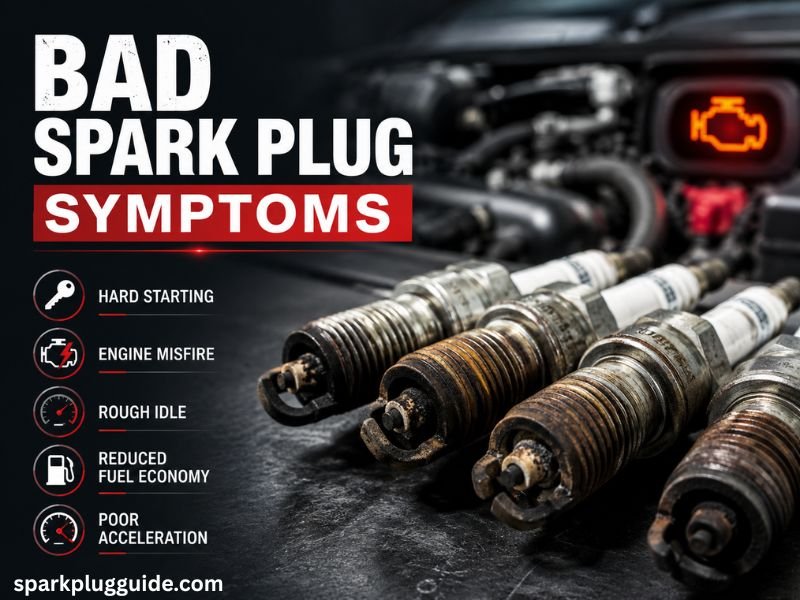
A rough idle, hard starting, reduced fuel economy, or hesitation during acceleration may not immediately point to faulty spark plugs. However, recognizing these symptoms early makes troubleshooting much easier and can prevent additional wear on expensive engine and ignition system components.
Whether you drive a daily commuter, a pickup truck, an SUV, or a performance vehicle, understanding how spark plugs affect engine performance is an important part of routine vehicle maintenance. While spark plugs are designed to last for tens of thousands of miles, they eventually wear out due to heat, pressure, and continuous combustion.
Ignoring the early warning signs can lead to poor engine performance, increased emissions, catalytic converter damage, and higher repair costs.
What You Will Learn From This Guide
In this comprehensive guide, you’ll learn:
- The most common Bad Spark Plug Symptoms and why they occur.
- How worn or failing spark plugs affect engine performance and fuel economy.
- The difference between weak, worn, fouled, and completely faulty spark plugs.
- What a bad spark plug looks like during a visual inspection.
- How spark plugs work with ignition coils and spark plug wires to create combustion.
- The most common causes of spark plug failure and premature wear.
- How to diagnose spark plug-related problems before replacing parts.
- When spark plugs should be cleaned, inspected, or replaced.
- Common mistakes drivers make when diagnosing ignition system problems.
By the end of this guide, you’ll have a clear understanding of how to identify signs of bad spark plugs, what causes them, and the practical steps you can take to restore your engine’s performance before minor issues develop into major repairs.
At SparkPlugGuide, I’m dedicated to making automotive maintenance easier to understand through accurate, practical, and experience-based content. Instead of relying on confusing technical jargon, this guide explains how spark plugs work, why they fail, and how to recognize the warning signs using clear language and real-world examples.
Whether you’re troubleshooting an engine problem, planning routine maintenance, or simply expanding your automotive knowledge, this guide will help you diagnose spark plug issues with confidence and make informed maintenance decisions.
What Are Bad Spark Plugs?
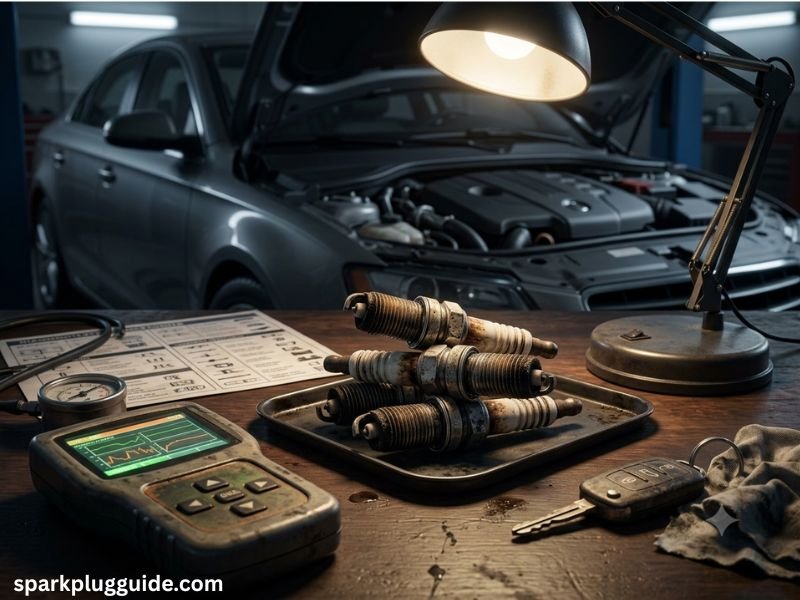
Bad spark plugs are spark plugs that can no longer create a strong and consistent ignition spark due to wear, damage, contamination, or incorrect operation. When a spark plug becomes faulty, it may not ignite the air-fuel mixture properly inside the combustion chamber, leading to reduced engine performance and reliability.
Spark plugs are designed to work under extreme conditions, including high temperatures, pressure, and repeated electrical firing. Over time, these conditions can cause the electrode to wear down, the spark gap to change, or deposits to build up on the spark plug surface.
How Do Spark Plugs Become Bad?
Spark plugs usually do not fail without a reason. Several factors can reduce their performance over time.
Normal Electrode Wear
Every time a spark plug creates a spark, a small amount of material is removed from the electrodes due to electrical erosion. As the center electrode and ground electrode wear down, the spark gap becomes larger and the ignition system needs more voltage to create a spark.
This can lead to:
- Weak ignition
- Engine misfires
- Poor fuel combustion
- Reduced engine performance
Carbon Buildup on Spark Plugs
Carbon deposits can form on the spark plug tip when fuel does not burn completely.
Common causes include:
- Rich fuel mixture
- Frequent short trips
- Dirty air filters
- Poor combustion conditions
Carbon buildup can prevent the spark plug from creating a strong spark and may cause ignition problems.
Oil Contamination
Oil contamination occurs when engine oil enters the combustion chamber and covers the spark plug tip.
Possible causes include:
- Worn piston rings
- Damaged valve seals
- Engine gasket problems
An oil-covered spark plug may struggle to ignite the air-fuel mixture correctly and can cause misfires.
Incorrect Spark Plug Gap
The spark plug gap is the distance between the center electrode and ground electrode where the spark occurs.
If the gap is incorrect:
- A gap that is too wide may require excessive voltage
- A gap that is too narrow may create a weak spark
Both situations can affect combustion efficiency and engine performance.
Using the Wrong Spark Plug Type
Every engine is designed with specific spark plug requirements. Installing the wrong spark plug type, heat range, or electrode design can create ignition problems.
Important specifications include:
- Spark plug material
- Heat range
- Thread size
- Electrode design
- Recommended gap
Using the correct spark plug is essential for maintaining proper engine operation.
How Do Bad Spark Plugs Affect the Engine?
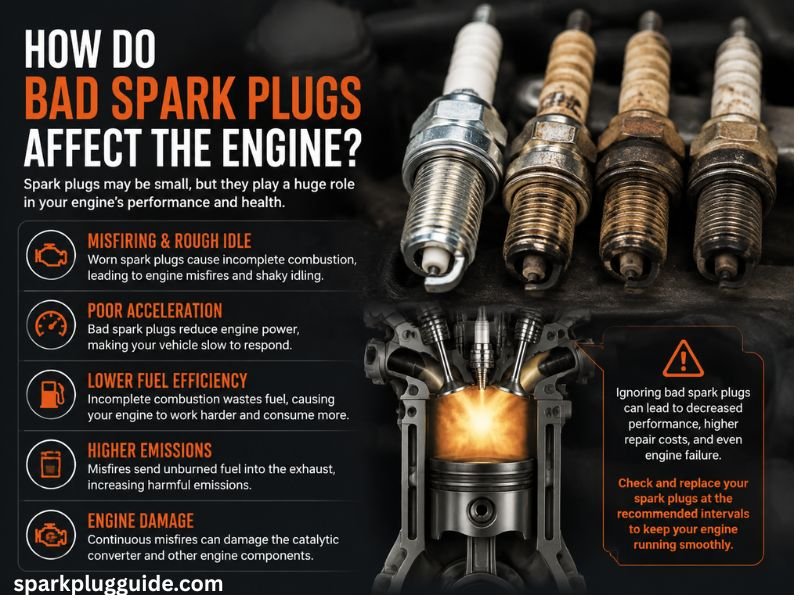
A faulty spark plug affects the combustion process because the engine depends on a precise ignition spark to burn fuel efficiently.
When spark plugs are not working properly, drivers may experience:
- Engine misfires
- Rough idle
- Poor acceleration
- Increased fuel consumption
- Difficulty starting
- Reduced engine power
Because spark plugs are connected with other ignition components, a spark plug problem can also increase stress on parts such as ignition coils and spark plug wires.
Bad Spark Plugs vs Weak Spark Plugs
A weak spark plug and a completely bad spark plug are not always the same.
A weak spark plug may still produce a spark but not with enough strength or consistency to support efficient combustion.
A bad spark plug may have serious issues such as:
- Damaged electrodes
- Severe carbon buildup
- Cracked ceramic insulator
- Complete spark failure
Both conditions can affect engine performance, but the severity of the problem may be different.
Understanding what makes spark plugs fail is the first step toward identifying the common symptoms and knowing when inspection or replacement is necessary.
Common Bad Spark Plug Symptoms
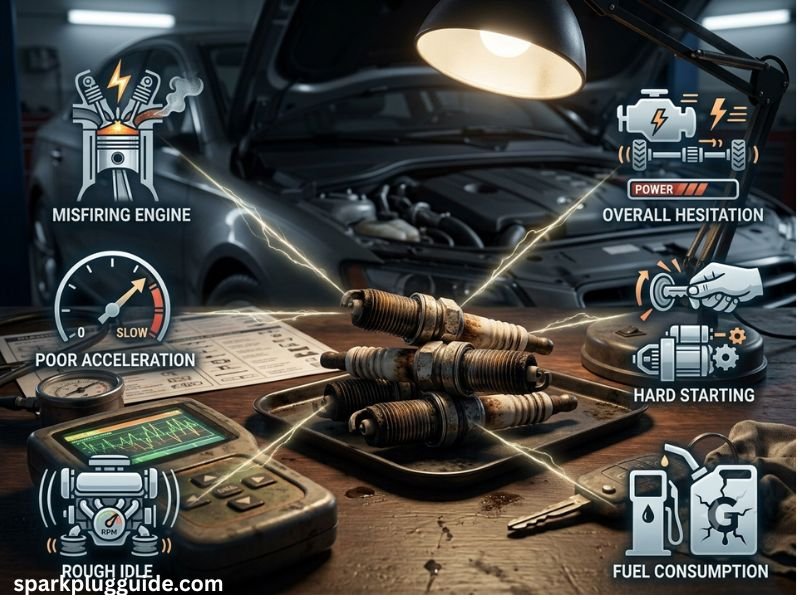
Bad spark plugs can affect almost every part of engine performance because they directly control the ignition process inside the combustion chamber. When a spark plug becomes worn, fouled, or damaged, the engine may struggle to burn the air-fuel mixture efficiently.
The symptoms of bad spark plugs can appear gradually, making them easy to ignore at first. However, recognizing these warning signs early can help prevent further problems with the ignition system and other engine components.
Engine Misfires
Engine misfires are one of the most common symptoms of bad spark plugs. A misfire occurs when one or more cylinders fail to ignite the air-fuel mixture properly.
When a spark plug cannot create a strong enough spark, the fuel inside the cylinder may not burn completely. This causes uneven engine operation and noticeable performance issues.
Common spark plug misfire symptoms include:
- Engine shaking or vibration
- Loss of power during acceleration
- Rough engine operation
- Uneven idle
- Check engine light
A misfire may also be caused by other components, such as ignition coils, fuel injectors, or spark plug wires. Proper diagnosis is important before replacing parts.
Difficulty Starting the Engine
A weak or faulty spark plug can make it harder for the engine to start, especially during cold conditions.
When the spark plug cannot produce a strong ignition spark, the engine may require more attempts before combustion begins.
Common signs include:
- Longer cranking time before starting
- Delayed engine response
- Intermittent starting problems
While starting problems can also come from the battery, starter motor, or fuel system, worn spark plugs are a common ignition-related cause.
Rough Engine Idle
A rough idle is another common sign of spark plug problems. When the engine is running at idle speed, it depends on consistent combustion across all cylinders.
A faulty spark plug can cause uneven combustion, resulting in:
- Engine vibration
- Unstable RPM
- Shaking while stopped
- Unusual engine sounds
Drivers may notice rough idling more clearly when the vehicle is stationary, such as at traffic lights.
Reduced Acceleration and Engine Power
Bad spark plugs can reduce the engine’s ability to produce power efficiently.
When the spark is weak or inconsistent, the air-fuel mixture may not burn completely. This reduces the energy produced during combustion.
Drivers may experience:
- Slow acceleration
- Poor throttle response
- Reduced engine performance
- Lack of power during climbing or overtaking
This symptom is especially noticeable when the engine requires more power.
Poor Fuel Economy
Worn spark plugs can reduce fuel efficiency because they affect how completely the engine burns fuel.
When combustion becomes inefficient, the engine may use more fuel to produce the same amount of power.
Signs of fuel-related spark plug problems include:
- More frequent fuel refills
- Increased fuel consumption
- Reduced miles per gallon (MPG)
Replacing worn spark plugs at the correct interval can help maintain efficient combustion.
Check Engine Light
A bad spark plug can trigger the check engine light when the engine control unit (ECU) detects ignition problems.
The ECU monitors engine performance and can identify issues such as cylinder misfires.
Common diagnostic trouble codes related to ignition problems include:
- P0300 – Random or multiple cylinder misfire
- P0301-P0308 – Cylinder-specific misfire codes
A check engine light does not always mean the spark plugs are faulty, but spark plugs should be inspected when ignition-related codes appear.
Increased Exhaust Emissions
Faulty spark plugs can cause incomplete combustion, allowing unburned fuel to enter the exhaust system.
This may lead to:
- Higher emissions
- Poor engine efficiency
- Increased stress on the catalytic converter
A healthy spark plug helps ensure that fuel burns properly inside the combustion chamber before exhaust gases leave the engine.
Engine Hesitation
Engine hesitation occurs when the vehicle briefly loses power or responds slowly when pressing the accelerator.
Bad spark plugs can cause hesitation because the ignition spark may not occur consistently during acceleration.
Drivers may notice:
- Delayed acceleration
- Jerking movement
- Uneven power delivery
This problem is often more noticeable when accelerating from a stop or increasing speed quickly.
Recognizing these common bad spark plug symptoms helps drivers identify ignition problems earlier. Since similar symptoms can also come from ignition coils, spark plug wires, or fuel system issues, proper inspection is important before replacing components.
How to Tell If a Spark Plug Is Bad
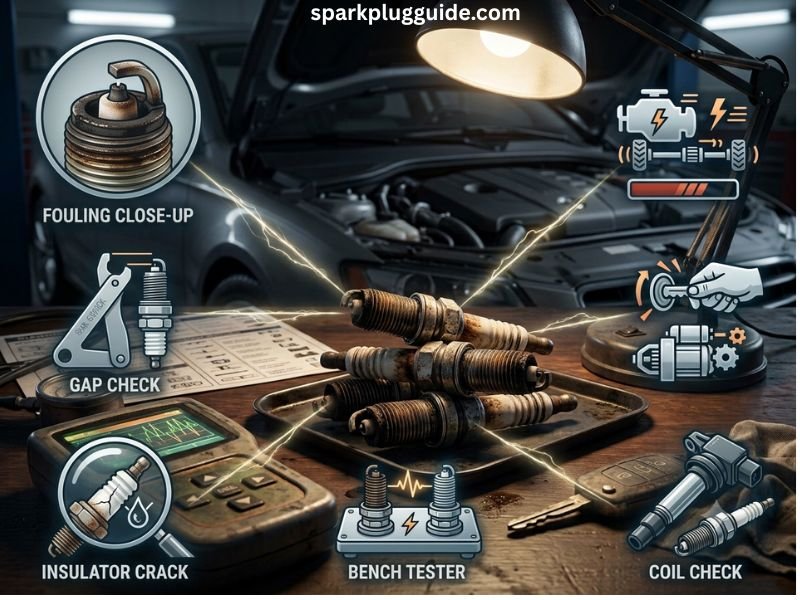
Knowing how to identify a bad spark plug can help you diagnose engine problems before they become more serious. A spark plug may look normal from the outside, but internal wear, electrode damage, or contamination can reduce its ability to create a strong ignition spark.
The easiest way to tell if a spark plug is bad is by combining performance symptoms with a physical inspection. Engine behavior can provide clues, while removing and examining the spark plug can confirm the actual condition.
Check for Common Performance Symptoms
Before removing the spark plug, pay attention to how the engine behaves.
Common warning signs include:
- Engine misfires
- Rough idle
- Difficulty starting
- Reduced acceleration
- Poor fuel economy
- Check engine light
If multiple symptoms appear together, the ignition system should be inspected.
Inspect the Spark Plug Condition
A visual inspection can reveal many spark plug problems.
A bad spark plug may show:
Worn Electrodes
The center electrode and ground electrode naturally wear down over time. Excessive wear increases the spark gap and makes ignition more difficult.
Signs of electrode wear include:
- Rounded electrode edges
- Increased gap distance
- Reduced spark performance
Carbon Deposits
Black carbon buildup on the spark plug tip may indicate incomplete combustion.
Possible causes include:
- Rich fuel mixture
- Dirty air filter
- Frequent short trips
- Engine tuning issues
Oil Deposits
A wet or oily spark plug may indicate that engine oil is entering the combustion chamber.
Possible causes include:
- Worn piston rings
- Valve seal problems
- Internal engine wear
Cracked Ceramic Insulator
The ceramic insulator protects the spark plug from electrical leakage. A crack can prevent the spark from reaching the correct location and may cause misfires.
Test the Spark Plug Performance
Visual inspection is helpful, but testing can provide more accurate information.
Spark plug testing may include:
- Checking spark strength
- Measuring spark plug gap
- Testing ignition system components
A weak spark may indicate problems with:
- Spark plug
- Ignition coil
- Spark plug wire
Sometimes the spark plug is not the only cause of ignition problems.
When diagnosing a bad spark plug, also inspect:
- Ignition coil
- Spark plug wires
- Electrical connections
A faulty ignition coil or damaged wire can create symptoms that look similar to bad spark plugs.
Understanding how to tell if a spark plug is bad helps prevent unnecessary part replacement and allows you to identify the actual cause of engine performance problems.
What Does a Bad Spark Plug Look Like?
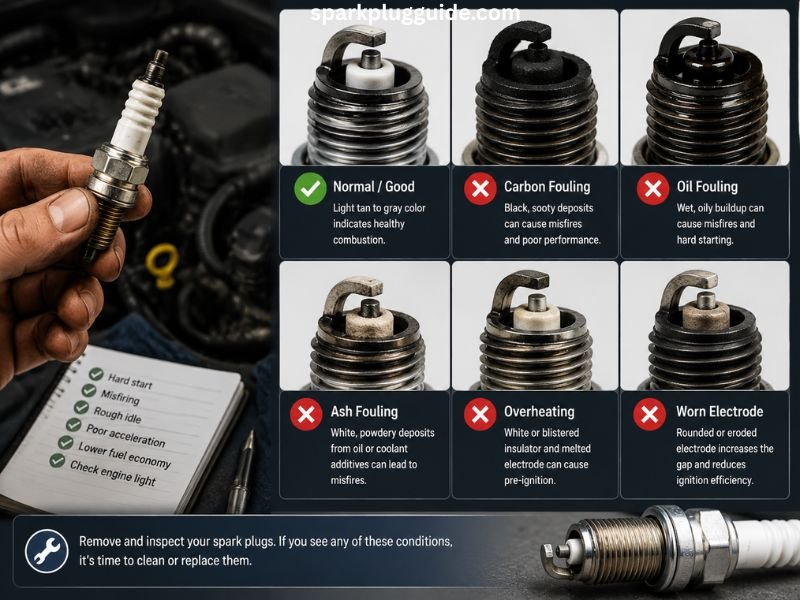
A bad spark plug often shows visible signs of wear, contamination, or damage. Examining the appearance of a removed spark plug can provide valuable information about engine condition and combustion quality.
The color, deposits, and physical condition of the spark plug can reveal whether the problem is related to fuel mixture, oil consumption, overheating, or normal wear.
Normal Spark Plug Appearance
A healthy spark plug usually has:
- Light gray or tan deposits
- Clean electrode surfaces
- Minimal wear
- Proper spark gap
A normal appearance generally indicates that the engine is operating with the correct air-fuel mixture and combustion temperature.
Black Carbon-Fouled Spark Plug
A black, dry, and powdery spark plug usually indicates carbon buildup.
Common causes include:
- Too much fuel entering the combustion chamber
- Incomplete combustion
- Restricted airflow
- Extended idling
Carbon fouling can weaken the spark and reduce engine performance.
Oil-Fouled Spark Plug
An oil-fouled spark plug appears wet, dark, and covered with oily deposits.
This may indicate:
- Engine oil entering the cylinder
- Worn piston rings
- Damaged valve seals
Cleaning the spark plug may temporarily remove deposits, but the underlying engine problem must be addressed.
Overheated or Burned Spark Plug
A spark plug that appears white, blistered, or damaged may indicate excessive heat.
Possible causes include:
- Incorrect heat range
- Lean fuel mixture
- Engine overheating
- Incorrect ignition timing
An overheated spark plug can lead to serious engine problems if ignored.
Damaged Spark Plug Electrode
A damaged electrode may show:
- Excessive erosion
- Missing electrode material
- Melted areas
- Incorrect gap
When the electrode is damaged, the spark plug usually cannot restore proper ignition performance and should be replaced.
Why Spark Plug Appearance Matters
Reading spark plug condition is a useful diagnostic method because it provides information about what is happening inside the combustion chamber.
A spark plug can reveal issues related to:
- Fuel delivery
- Engine temperature
- Oil consumption
- Ignition performance
For this reason, mechanics often inspect spark plugs when diagnosing engine problems.
Understanding what a bad spark plug looks like helps vehicle owners identify problems earlier and make better decisions about cleaning, testing, or replacement.
Symptoms of Weak Spark Plugs
Weak spark plugs are spark plugs that can still produce an ignition spark but cannot deliver the strong and consistent performance required for efficient combustion. Unlike a completely failed spark plug, a weak spark plug may allow the engine to continue running while gradually reducing performance.
Because the symptoms develop slowly, many drivers may not immediately recognize that the spark plugs are becoming less effective. Understanding the signs of weak spark plugs can help identify problems before they lead to complete ignition failure.
Reduced Engine Performance
One of the earliest signs of weak spark plugs is a noticeable decrease in engine performance.
When the spark is not strong enough to ignite the air-fuel mixture efficiently, the engine may produce less power.
Common signs include:
- Slower acceleration
- Reduced throttle response
- Difficulty maintaining speed
- Weak engine performance under load
This happens because incomplete combustion reduces the amount of energy produced inside the cylinder.
Engine Hesitation During Acceleration
Weak spark plugs may cause hesitation when pressing the accelerator.
During acceleration, the engine requires a stronger and more consistent spark because more fuel enters the combustion chamber. If the spark plug cannot keep up, combustion may become inconsistent.
Drivers may experience:
- Delayed response
- Brief power loss
- Jerking movement
- Uneven acceleration
Increased Fuel Consumption
When spark plugs produce a weak spark, fuel may not burn completely. The engine may compensate by using more fuel to maintain performance.
Signs include:
- Lower fuel economy
- More frequent visits to the gas station
- Increased fuel consumption compared with normal driving
Maintaining healthy spark plugs helps support efficient fuel combustion.
Rough Idling and Engine Vibration
A weak spark plug can cause inconsistent combustion when the engine is running at idle.
This may result in:
- Engine shaking
- Uneven RPM
- Vibrations while stopped
- Unstable idle quality
Since idle operation requires precise combustion, ignition problems are often more noticeable at low engine speeds.
Difficult Starting
Weak spark plugs may struggle to ignite the air-fuel mixture, especially during cold starts.
Common signs include:
- Longer cranking time
- Multiple attempts before starting
- Delayed ignition
Although starting problems can also come from the battery or fuel system, weak spark plugs are a common ignition-related cause.
Intermittent Misfires
A weak spark plug may not fail completely but can randomly miss ignition events.
This can cause:
- Occasional engine shaking
- Temporary power loss
- Check engine light activation
Intermittent misfires can become more frequent as the spark plug continues to wear.
Weak Spark Plugs vs Bad Spark Plugs
The difference between weak and bad spark plugs is mainly the severity of the problem.
A weak spark plug:
- Still creates some spark
- Causes reduced performance
- May work inconsistently
A bad spark plug:
- May completely fail
- Can cause serious misfires
- May prevent proper combustion
Both conditions require attention because ignoring weak spark plugs can lead to further ignition system problems.
Spark Plug Failure Symptoms
Spark plug failure symptoms occur when a spark plug can no longer perform its primary function of creating a reliable ignition spark. A failed spark plug can interrupt combustion in one or more engine cylinders and significantly affect vehicle performance.
Unlike minor wear, complete spark plug failure often creates noticeable engine problems that require inspection and replacement.
Complete Loss of Ignition in a Cylinder
When a spark plug completely fails, the affected cylinder may stop producing power because the air-fuel mixture cannot ignite.
This can cause:
- Severe engine misfire
- Strong vibration
- Significant power loss
- Rough engine operation
In some cases, the vehicle may enter a reduced-power mode to protect the engine and emissions system.
Engine Misfire Under Different Conditions
A failed spark plug commonly causes cylinder misfires.
The misfire may occur:
- During acceleration
- At idle
- Under heavy engine load
- During cold starts
A diagnostic scan may show misfire-related trouble codes such as P0300 or cylinder-specific codes like P0301, P0302, and others.
Check Engine Light Activation
The engine control unit (ECU) monitors combustion performance and can detect when a cylinder is not firing correctly.
A failed spark plug may trigger:
- Check engine light
- Misfire warning codes
- Reduced engine performance
However, the check engine light can also be caused by ignition coils, fuel injectors, or other engine components, so proper diagnosis is necessary.
Severe Engine Shaking
When one or more cylinders fail to ignite, the balance of the engine is affected.
Drivers may notice:
- Strong vibration
- Shaking while driving
- Rough operation at idle
This symptom should not be ignored because continuous misfires can increase stress on other components.
Poor Acceleration and Power Loss
A failed spark plug prevents the engine from producing full power.
Common signs include:
- Slow acceleration
- Difficulty climbing hills
- Reduced response when pressing the accelerator
The severity depends on how many cylinders are affected.
Can a Failed Spark Plug Damage Other Components?
Yes, ignoring a failed spark plug can affect other parts of the vehicle.
A continuous misfire can allow unburned fuel to enter the exhaust system, which may increase stress on components such as:
- Catalytic converter
- Oxygen sensors
- Ignition coils
Replacing faulty spark plugs early can help prevent additional repair costs.
When Should Failed Spark Plugs Be Replaced?
A spark plug should be replaced when it shows:
- Severe electrode wear
- Cracked insulation
- Complete ignition failure
- Heavy fouling
- Damage that affects spark production
Regular inspection and following manufacturer replacement intervals can help prevent unexpected spark plug failure.
Symptoms of Bad Spark Plug Wires
Spark plug wires play an important role in transferring high-voltage electricity from the ignition coil or distributor to the spark plugs. When spark plug wires become damaged, cracked, or worn out, they can interrupt electrical flow and create ignition problems that may look similar to bad spark plug symptoms.
Common signs of faulty spark plug wires include engine misfires, rough running, poor acceleration, difficulty starting, and inconsistent engine performance. Inspecting spark plug wires along with spark plugs can help identify the real cause of ignition issues.
For a complete guide, see: Symptoms of Bad Spark Plug Wires.
Signs of Bad Spark Plug Coil
The ignition coil is responsible for converting battery voltage into the high voltage required by spark plugs to create a spark. A failing spark plug coil can cause symptoms that are very similar to faulty spark plugs, making diagnosis more difficult.
Common bad spark plug coil symptoms include engine misfires, rough idle, reduced power, starting problems, and check engine light warnings. Since spark plugs and ignition coils work together, both components should be checked when ignition problems appear.
For a complete guide, see: Signs of Bad Spark Plug Coil.
Loose Spark Plug Symptoms
A loose spark plug occurs when the spark plug is not tightened correctly inside the cylinder head. Although spark plugs are designed to remain securely installed for thousands of miles, improper installation, incorrect torque, or vibration over time can cause them to loosen.
A loose spark plug can affect engine performance because it may prevent proper sealing and heat transfer between the spark plug and cylinder head.
Common loose spark plug symptoms include:
- Engine misfires
- Rough engine operation
- Ticking or clicking noises from the engine area
- Reduced acceleration
- Poor combustion performance
- Possible exhaust leakage around the spark plug area
A loose spark plug can also create problems with ignition reliability because the electrical connection and combustion chamber seal may not work correctly.
If a spark plug is loose for an extended period, it may damage the spark plug threads, ignition components, or surrounding engine parts. Proper installation using the correct torque specification is important to prevent these issues.
For a complete guide covering causes, symptoms, diagnosis, and repair methods, see: Loose Spark Plug Symptoms.
Fouled Spark Plug Symptoms
A fouled spark plug is a spark plug that has become contaminated with deposits that prevent it from creating a strong and consistent spark. Fouling can occur when materials such as carbon, oil, or fuel deposits build up on the spark plug electrodes and insulator.
Different types of fouling can indicate different engine problems.
Common fouled spark plug symptoms include:
- Engine misfires
- Difficulty starting
- Rough idle
- Reduced engine power
- Poor fuel economy
- Weak acceleration
Carbon fouling often occurs due to incomplete combustion or a rich fuel mixture, while oil fouling may indicate internal engine problems that allow oil into the combustion chamber.
Inspecting a fouled spark plug can provide useful information about engine condition and help identify the underlying cause.
For a complete guide covering spark plug fouling types, causes, inspection methods, and solutions, see: Fouled Spark Plug Symptoms.
Spark Plug Misfire Symptoms
Spark plug misfires happen when a spark plug fails to ignite the air-fuel mixture properly inside the combustion chamber. Since proper combustion requires a strong spark at the correct time, even one faulty spark plug can affect engine performance.
Common spark plug misfire symptoms include:
- Engine shaking or vibration
- Rough idle
- Loss of acceleration
- Reduced power
- Check engine light
- Uneven engine operation
A misfire may be caused by worn spark plugs, incorrect spark plug gap, faulty ignition coils, damaged spark plug wires, or fuel system problems.
Diagnosing the exact cause is important because replacing spark plugs may not solve the problem if another ignition component is failing.
For a complete guide covering causes, diagnosis, and repair solutions, see: Spark Plug Misfire Symptoms.
How to Diagnose Bad Spark Plugs
Diagnosing bad spark plugs requires checking both engine performance symptoms and the physical condition of the spark plugs. Since many ignition problems can create similar symptoms, proper diagnosis helps determine whether the issue is caused by spark plugs or another component such as the ignition coil, spark plug wires, or fuel system.
A basic diagnosis usually starts by observing engine behavior and then inspecting the spark plugs directly.
Check for Engine Performance Changes
The first step is noticing changes in how the vehicle operates.
Common warning signs include:
- Rough idle
- Engine hesitation
- Reduced acceleration
- Difficulty starting
- Increased fuel consumption
- Engine misfires
These symptoms indicate that the ignition system may not be working correctly.
Inspect the Spark Plug Condition
Removing and examining the spark plugs can reveal important information about their condition.
Look for:
- Worn electrodes
- Carbon deposits
- Oil contamination
- Cracked ceramic insulator
- Incorrect spark gap
The appearance of the spark plug can also provide clues about combustion conditions inside the engine.
Test Spark Plug Performance
A spark plug test can help determine whether the plug is producing a strong ignition spark.
Testing methods may include:
- Spark testing
- Checking spark plug gap
- Comparing spark plug condition between cylinders
A weak or inconsistent spark may indicate that the spark plug needs replacement or that another ignition component requires attention.
Spark plugs work together with several other components, so diagnosis should not focus only on the plug itself.
Related components to inspect include:
- Ignition coils
- Spark plug wires
- Electrical connectors
- Engine control system
A complete diagnosis helps avoid replacing good parts unnecessarily.
How Long Do Bad Spark Plugs Last?
The lifespan of a bad spark plug depends on the type of damage, driving conditions, and the severity of the problem. Some spark plugs gradually lose performance over time, while others may fail suddenly due to damage or contamination.
A worn spark plug may continue working for a limited period, but driving with faulty spark plugs can reduce engine efficiency and increase stress on other ignition components.
Factors that affect spark plug lifespan include:
- Spark plug material
- Engine condition
- Driving habits
- Fuel quality
- Maintenance schedule
Copper spark plugs generally wear faster than platinum or iridium spark plugs, while premium spark plugs are designed for longer service intervals.
However, lifespan should not be determined only by mileage. If symptoms such as misfires, rough running, or starting problems appear, the spark plugs should be inspected regardless of age.
For a complete guide covering replacement intervals and lifespan differences, see: How Long Do Spark Plugs Last.
How to Prevent Bad Spark Plug Problems
Preventing spark plug problems is easier and less expensive than dealing with ignition failures after they occur. Regular maintenance helps spark plugs maintain proper ignition performance and reduces the risk of engine problems.
Follow Recommended Replacement Intervals
Every vehicle manufacturer provides recommended spark plug replacement schedules based on engine design and spark plug type.
Following these intervals helps prevent:
- Excessive electrode wear
- Weak ignition
- Reduced fuel efficiency
Use the Correct Spark Plug Type
Using the correct spark plug specification is essential for proper engine operation.
Important factors include:
- Electrode material
- Heat range
- Spark gap
- Thread size
Installing the wrong spark plug can create performance problems even if the plug physically fits.
Maintain the Ignition System
Spark plugs depend on other ignition components to work correctly.
Regularly checking:
- Ignition coils
- Spark plug wires
- Electrical connections
can help identify problems before they affect engine performance.
Avoid Ignoring Early Warning Signs
Small performance changes can indicate developing spark plug problems.
Pay attention to:
- Slight hesitation
- Rough idle
- Reduced fuel economy
- Occasional misfires
Addressing these issues early can prevent more serious engine problems.
Proper maintenance, correct installation, and regular inspection help extend spark plug life and keep the engine operating efficiently.
Can Bad Spark Plugs Damage Other Engine Components?
Bad spark plugs do not usually damage the engine immediately, but ignoring faulty spark plugs for a long time can put additional stress on other components. Since spark plugs are a critical part of the ignition system, poor spark performance can affect the way the entire engine operates.
When spark plugs fail to ignite the air-fuel mixture properly, combustion becomes incomplete. This can create additional problems that extend beyond the spark plugs themselves.
Damage to Ignition Coils
Worn or incorrectly gapped spark plugs can increase the workload on ignition coils.
When the spark plug gap becomes too wide, the ignition coil needs to produce more voltage to create a spark. Over time, this additional stress may reduce ignition coil lifespan.
Signs of possible ignition coil stress include:
- Repeated misfires
- Engine hesitation
- Poor acceleration
- Check engine light
Maintaining healthy spark plugs can help reduce unnecessary stress on ignition coils.
Damage to Catalytic Converter
A faulty spark plug can allow unburned fuel to enter the exhaust system.
When this fuel reaches the catalytic converter, it can create excessive heat and potentially damage the converter over time.
A damaged catalytic converter can lead to:
- Increased emissions
- Reduced engine performance
- Expensive repairs
Reduced Engine Efficiency
Bad spark plugs can reduce combustion efficiency, causing the engine to work harder to produce the same amount of power.
This may result in:
- Higher fuel consumption
- Reduced performance
- Increased emissions
Replacing worn spark plugs at the correct time helps maintain efficient engine operation.
Bad Spark Plugs vs Other Ignition Problems
Many ignition system problems create similar symptoms, which can make diagnosis challenging. Engine misfires, rough idle, starting issues, and poor acceleration can be caused by spark plugs, ignition coils, spark plug wires, or other components.
Understanding the differences can help identify the actual source of the problem.
Bad Spark Plugs vs Bad Ignition Coils
Spark plugs create the ignition spark, while ignition coils provide the high voltage needed to produce that spark.
Bad spark plug symptoms often include:
- Worn electrodes
- Incorrect spark gap
- Fouling
- Reduced ignition performance
Bad ignition coil symptoms may include:
- Sudden misfires
- Intermittent engine problems
- Complete loss of spark in a cylinder
Testing both components may be necessary because their symptoms can overlap.
Bad Spark Plugs vs Bad Spark Plug Wires
Spark plug wires transfer electrical energy from the ignition coil to the spark plug.
Damaged wires may cause:
- Weak spark delivery
- Engine hesitation
- Misfires
- Poor acceleration
If spark plugs appear healthy but ignition problems continue, spark plug wires should also be inspected.
Bad Spark Plugs vs Fuel System Problems
Not all engine performance problems come from ignition components.
Fuel-related issues may include:
- Faulty fuel injectors
- Low fuel pressure
- Incorrect fuel mixture
A proper diagnosis helps separate ignition problems from fuel delivery problems.
Understanding these differences prevents unnecessary part replacement and helps ensure the correct repair is performed.
When Should You Replace Bad Spark Plugs?
Replacing spark plugs at the correct time helps maintain engine performance, fuel efficiency, and ignition reliability. While manufacturers provide recommended replacement intervals, actual replacement needs can also depend on driving conditions and engine behavior.
A spark plug should not be replaced only based on mileage. Performance symptoms and physical condition are also important factors.
Replace Spark Plugs When Performance Symptoms Appear
Spark plugs may need replacement if you notice:
- Frequent engine misfires
- Rough idle
- Difficulty starting
- Poor acceleration
- Reduced fuel economy
These symptoms often indicate that the spark plugs are no longer producing a reliable ignition spark.
Replace Spark Plugs After Reaching Service Intervals
Different spark plug materials have different expected lifespans.
Generally:
- Copper spark plugs require more frequent replacement
- Platinum spark plugs last longer
- Iridium spark plugs often provide extended service life
The vehicle manufacturer’s maintenance schedule should always be the primary reference.
Replace Damaged Spark Plugs Immediately
A spark plug should be replaced if inspection shows:
- Cracked ceramic insulation
- Damaged electrodes
- Severe carbon buildup
- Oil contamination
- Incorrect gap that cannot be corrected
A damaged spark plug cannot reliably maintain proper ignition performance.
Should All Spark Plugs Be Replaced Together?
In most cases, replacing all spark plugs at the same time is recommended.
Replacing the complete set helps maintain:
- Balanced ignition performance
- Consistent combustion across cylinders
- Similar wear levels
Changing only one spark plug may create uneven performance between cylinders.
Proper replacement timing helps prevent ignition problems and keeps the engine running efficiently.
Frequently Asked Questions About Bad Spark Plugs
Understanding common questions about bad spark plugs can help vehicle owners identify problems faster and make better maintenance decisions. Spark plug issues often share symptoms with other engine problems, so knowing the common warning signs is important.
What Are the Most Common Symptoms of Bad Spark Plugs?
The most common symptoms of bad spark plugs include engine misfires, rough idling, difficulty starting, reduced acceleration, poor fuel economy, and check engine light warnings.
When spark plugs cannot create a strong and consistent spark, the engine may struggle to burn the air-fuel mixture properly. This affects combustion efficiency and can reduce overall engine performance.
Can Bad Spark Plugs Damage an Engine?
Bad spark plugs usually do not cause immediate engine damage, but ignoring them for a long time can create additional problems.
Faulty spark plugs can increase stress on ignition coils, allow unburned fuel into the exhaust system, and reduce combustion efficiency. In severe cases, prolonged misfires may damage components such as the catalytic converter.
Can Bad Spark Plugs Cause Poor Fuel Economy?
Yes, bad spark plugs can reduce fuel economy because they affect how efficiently the engine burns fuel.
When spark plugs become worn or weak, combustion may become incomplete. The engine may use more fuel to maintain normal performance, resulting in increased fuel consumption.
How Do I Know If My Spark Plugs Need Replacing?
You may need to replace spark plugs if you notice:
- Engine misfires
- Rough idle
- Starting difficulties
- Reduced acceleration
- Poor fuel efficiency
A physical inspection can also reveal problems such as worn electrodes, carbon buildup, oil deposits, or damaged ceramic insulation.
Can Bad Spark Plugs Cause a Check Engine Light?
Yes, bad spark plugs can trigger a check engine light, especially when they cause engine misfires.
The engine control unit (ECU) monitors combustion performance and may detect problems through misfire-related diagnostic trouble codes such as P0300 or cylinder-specific codes.
However, a check engine light can also be caused by ignition coils, fuel injectors, sensors, or other engine components.
Can a Car Run With Bad Spark Plugs?
A car may continue running with bad spark plugs, but performance and reliability will usually decrease.
Driving with faulty spark plugs may cause:
- Poor acceleration
- Increased fuel consumption
- Engine vibration
- More serious ignition problems over time
Replacing damaged spark plugs early can help prevent additional repairs.
Are Weak Spark Plugs Different From Bad Spark Plugs?
Yes, weak and bad spark plugs describe different levels of ignition problems.
Weak spark plugs may still produce a spark but with reduced strength or consistency. Bad spark plugs may have severe wear, damage, or complete failure.
Both conditions can affect engine performance and should be inspected when symptoms appear.
How Often Should Spark Plugs Be Checked?
Spark plugs should be checked according to the vehicle manufacturer’s maintenance schedule.
Inspection frequency depends on:
- Spark plug material
- Vehicle type
- Driving conditions
- Engine design
Regular inspection helps identify wear, deposits, and ignition problems before they affect engine performance.
Conclusion
Bad spark plugs can create a wide range of engine problems, from minor performance changes to serious ignition issues. Since spark plugs are responsible for creating the spark that starts combustion, their condition directly affects engine efficiency, reliability, and overall performance.
Recognizing the common bad spark plug symptoms helps drivers identify problems earlier. Signs such as misfires, rough idling, poor acceleration, reduced fuel economy, and starting difficulties should not be ignored because they may indicate that the ignition system needs attention.
However, diagnosing spark plug problems requires looking at the complete ignition system. Issues with ignition coils, spark plug wires, fuel delivery, or other engine components can create similar symptoms.
Replacing spark plugs at the correct interval, using the right spark plug type, and inspecting them when performance changes occur can help maintain a healthy engine.
At SparkPlugGuide, Chris Turner focuses on making automotive maintenance easier to understand so drivers can identify problems confidently and make informed decisions about repairs and replacement parts.