
Knowing how to use a spark plug tester can save time when an engine cranks but will not start. The small tool helps you check one key part of the ignition system without guessing or replacing parts at random. This makes it useful for cars, trucks, motorcycles, lawn equipment, and many small engines.
The most common type is an inline spark tester. It sits between the spark plug and the plug wire. When you crank the engine, the tester shows whether high-voltage ignition current is reaching the plug. A test can take only a few minutes, but correct setup matters.
In practice, the best approach is to test one cylinder at a time and compare the result with the other cylinders when possible. A tester can show that spark is present, but it does not prove that the spark plug, fuel system, compression, or engine timing is good. Think of it as one useful step in a larger diagnosis.

What Is a Spark Plug Tester?
A spark plug tester is a simple diagnostic tool used to check whether an ignition system is sending spark to a spark plug. Most inline testers have a plug connection at each end and a small viewing window. The window lets you see a flash when the ignition system fires.
The tool does not measure engine power or fuel flow. It mainly answers one question: **Is an ignition spark reaching this plug?** That answer can help narrow down a no-start, rough-running, or misfire problem.
Many home mechanics use an inline tester because it is quick and does not require pulling the spark plug from the cylinder. Some testers are designed for small engines, while others work with automotive ignition systems. Always check the tester instructions before use.
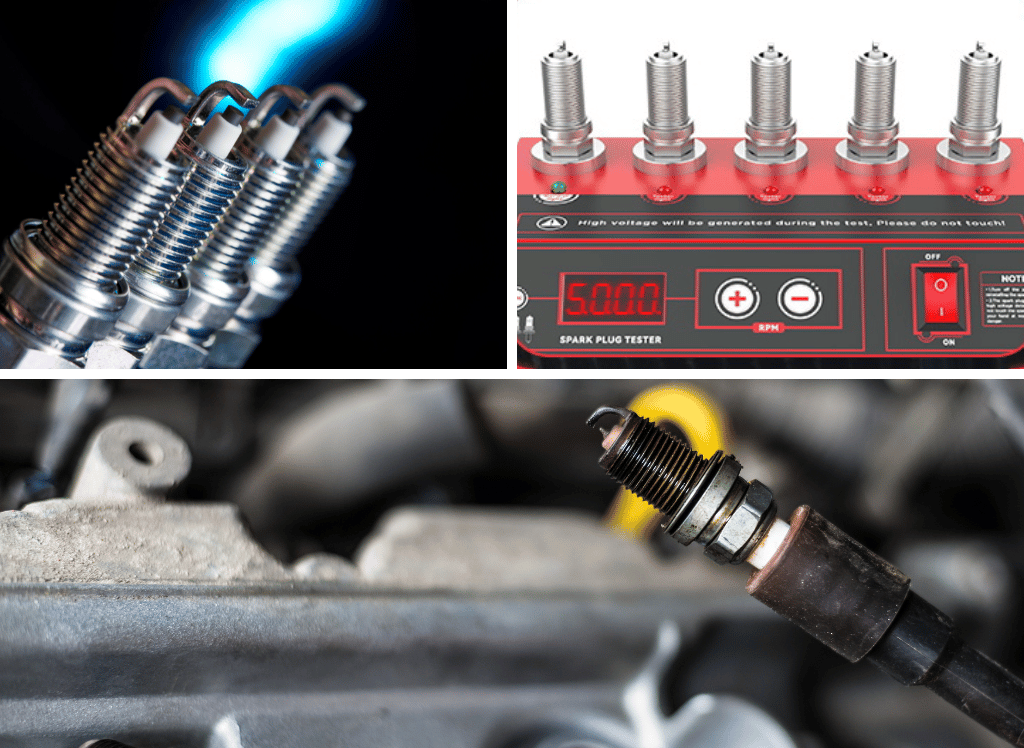
- ✦ Inline tester
This type fits between the spark plug and ignition wire. It is simple and useful for a quick spark check.
- ✦ Adjustable tester
Some testers let you set a gap. They can help with deeper ignition testing, but they need correct settings and careful use.
- ✦ Basic spark checker
A basic tester gives a visual indication of spark. It is often enough for a first check when an engine will not start.
What Does a Spark Tester Tell You?
A spark tester can show whether the ignition system is producing a visible spark at the test point. This can help separate an ignition problem from other causes of a starting issue.
It cannot tell you everything. A visible spark does not prove that the spark has the correct strength under cylinder pressure. It also does not confirm that the engine has enough fuel, compression, or correct ignition timing.
- ✦ Useful result
A regular flash shows that the ignition circuit is producing spark at the tested point.
- ✦ Important limit
A spark test alone cannot confirm that every part of the engine is working correctly.
Tools and Safety Gear You Need
Before learning how to use a spark plug tester, gather the right tools and make the work area safe. You usually need the tester, the vehicle or equipment service information, and basic hand tools if access to the spark plug is tight.
Ignition systems can create very high voltage. Do not hold the tester, plug wire, or metal contacts with your bare hand while the engine is cranking or running. Keep loose clothing, hair, and tools away from belts, fans, pulleys, and other moving parts.
Work in a well-ventilated area. Keep cigarettes, flames, and other ignition sources away from fuel vapors. Let a hot engine cool enough to work safely, and follow the vehicle maker’s instructions when they differ from general advice.
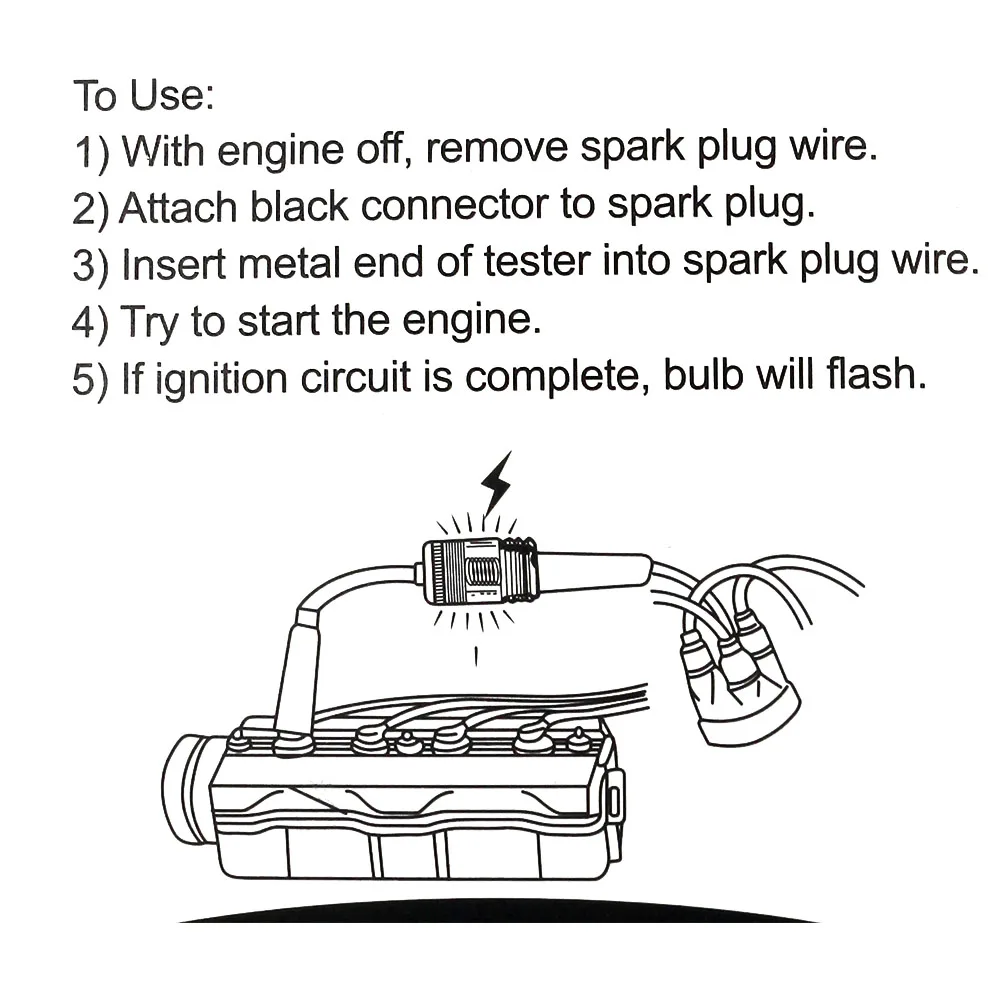
- ✦ Spark plug tester
Use a tester that matches the ignition system and follow its instructions.
- ✦ Safety glasses
Wear eye protection when working around an engine, especially during cranking.
- ✦ Insulated tools
Use suitable insulated tools when the repair calls for them, and never touch a live ignition circuit.
- ✦ Service information
Keep the owner’s or service manual nearby for cylinder locations, ignition details, and special test steps.
Safety Checks Before Testing
Park the vehicle on a stable surface and set the parking brake. Put the transmission in Park or Neutral as appropriate, and make sure the area around the engine is clear.
Inspect the tester and ignition wire before connecting anything. Do not use a damaged tester, cracked insulation, or badly damaged plug wire. If you see exposed conductors or signs of arcing, stop and repair the fault first.
- ✦ Turn the engine off first
Make all connections with the ignition off and the engine stopped.
- ✦ Keep clear
Stay away from rotating parts while someone cranks the engine.
- ✦ Control fuel risk
Avoid creating sparks near spilled fuel or fuel vapors.
How to Use a Spark Plug Tester Step by Step
The basic process for how to use a spark plug tester is simple. You disconnect the ignition wire from the spark plug, place the tester in the circuit, and then crank the engine while watching the tester. The exact connection can vary by tester design, so follow the markings on your tool.
Do not remove several plug wires at once. Work on one cylinder at a time. This helps you keep the wires in the correct order and makes the test result easier to understand.
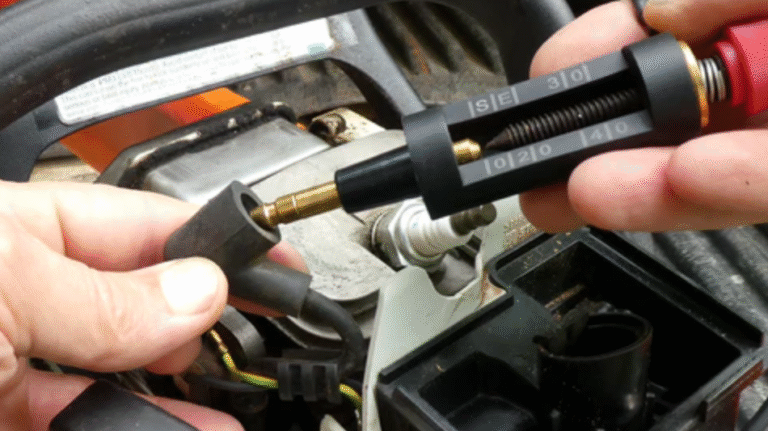
- ✦ Step 1: Shut the engine off
Turn the ignition off and allow the engine to stop completely before making the connection.
- ✦ Step 2: Find the spark plug wire
Locate the wire or boot that connects the ignition system to the spark plug you want to test.
- ✦ Step 3: Remove the wire from the plug
Pull the boot from the spark plug carefully. Grip the boot rather than pulling hard on the wire itself.
- ✦ Step 4: Install the tester
Connect one end of the inline tester to the spark plug and the other end to the plug wire. Make sure both connections are secure.
- ✦ Step 5: Crank the engine
Stand clear of moving parts and crank the engine for a few seconds while watching the tester window.
- ✦ Step 6: Watch the spark
Look for a clear, repeated flash that matches the firing pulses. Do not touch the tester or ignition parts while the system is active.
- ✦ Step 7: Turn the ignition off
Stop cranking, switch the ignition off, and wait before removing the tester.
- ✦ Step 8: Restore the original connection
Remove the tester and reconnect the ignition wire to the spark plug. Push the boot fully into place.
How to Read the Tester
A visible and regular flash usually means the ignition system is sending spark through the tester. If the light or spark appears only sometimes, the ignition signal may be intermittent.
No visible spark means you need more diagnosis. The cause may be a bad plug wire, ignition coil, coil control issue, crankshaft or camshaft position signal problem, ignition switch issue, or another fault. The tester shows the symptom at that point, not the failed part.
- ✦ Regular flash
Spark reaches the tester in a steady pattern while the engine cranks.
- ✦ Intermittent flash
Spark appears and disappears. This can point to an intermittent ignition or control problem.
- ✦ No flash
No visible spark reaches the tester. Continue with a wider ignition-system diagnosis.
How to Test Different Ignition Systems
Not every engine uses the same ignition setup. Older vehicles may use a distributor and plug wires, while many modern engines use coil-on-plug ignition. Some engines use coil packs with several plug wires.
The core idea behind how to use a spark plug tester stays the same: test at a point where the ignition spark should reach the plug. However, the connection method can change. Never force an inline tester onto a coil or connector that it was not designed to fit.
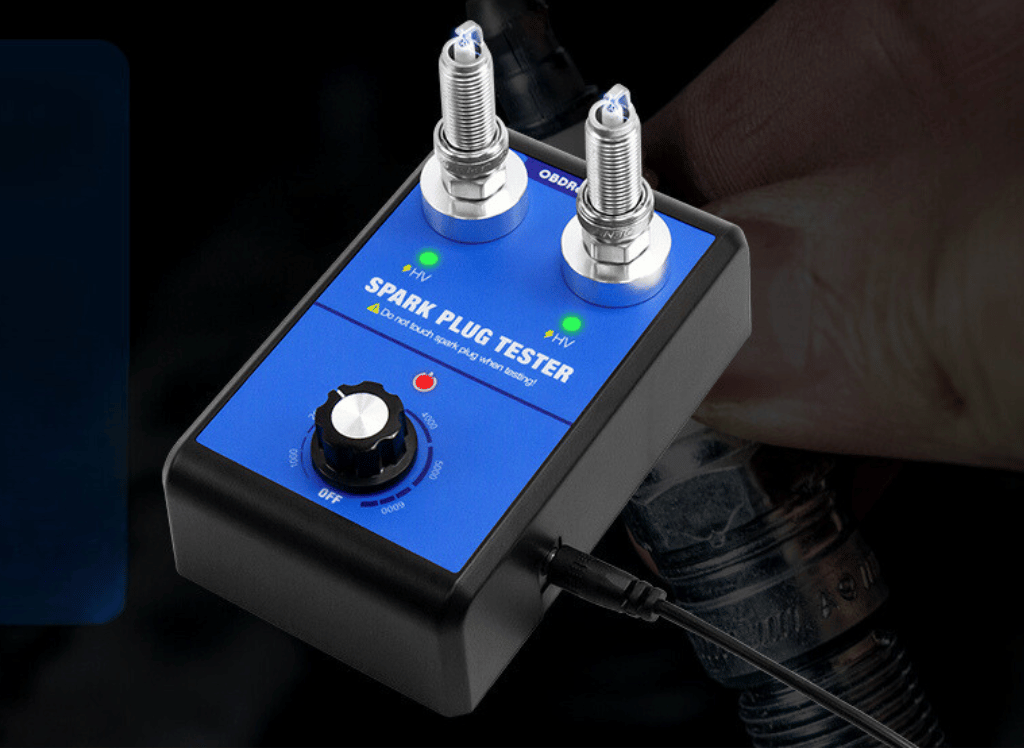
- ✦ Distributor and plug wires
An inline tester can usually be placed between the plug wire and spark plug when the tester is designed for that system.
- ✦ Coil pack systems
Test the appropriate high-voltage connection with a compatible tester and follow the service manual.
- ✦ Coil-on-plug systems
Many coil-on-plug engines need a tester made for that ignition design. Do not improvise a connection to an electronic coil.
- ✦ Small engines
Lawn mowers, generators, snow blowers, and similar equipment may use a simple ignition coil and plug wire. Use a tester suited to small-engine ignition systems.
Coil-on-Plug Ignition
Coil-on-plug systems place the ignition coil directly over the spark plug. There may be no traditional plug wire to disconnect. In this case, a standard inline tester may not be the right tool.
Use the test method listed for the specific vehicle. Some ignition systems can be damaged by incorrect testing methods. When in doubt, use the manufacturer’s service procedure rather than guessing.
- ✦ Check the design
Confirm whether the engine uses coil-on-plug, a coil pack, or traditional plug wires.
- ✦ Use the right tester
Choose a tester that is designed for the ignition system you are testing.
What Different Spark Test Results Mean
The result from a spark plug tester is most useful when you treat it as part of a step-by-step diagnosis. A good spark result shifts your attention toward fuel, compression, timing, or other causes. A missing spark result tells you to focus on the ignition path.
When testing a multi-cylinder engine, compare cylinders when the same test method applies. If one cylinder has no spark and the others do, the problem may be local to that cylinder’s plug, wire, coil, or related circuit. If all cylinders lack spark, look farther upstream.
- ✦ Spark on every tested cylinder
The basic ignition output appears present. Check fuel delivery, compression, timing, and engine controls if the engine still will not start.
- ✦ No spark on one cylinder
Inspect that cylinder’s spark plug, wire, coil, connector, and related control circuit as applicable.
- ✦ No spark on several cylinders
Check shared ignition components and signals, such as power supply, ignition control, and engine position inputs.
- ✦ Weak or unclear result
Check the tester connection and battery condition before assuming a failed ignition part.
Why a Good Spark Does Not End the Diagnosis
An engine needs more than spark to run. It also needs the right amount of fuel, enough compression, and spark at the correct time. A spark tester checks only one part of that chain.
For example, an engine may show spark at the plug but still fail to start because fuel is not reaching the cylinders. A timing problem can also prevent an engine from running even when spark is present.
- ✦ Fuel
Confirm that the engine receives the fuel it needs and that the fuel system works as designed.
- ✦ Compression
Low compression can prevent combustion even when ignition spark is present.
- ✦ Timing
Spark must occur at the correct point in the engine cycle.
Common Mistakes When Using a Spark Plug Tester
Most spark testing mistakes come from poor connections, unsafe handling, or reading too much into one test. A few simple habits can make the process safer and more useful.
One common error is testing a different part than you think you are testing. Another is assuming that any visible spark proves the entire ignition system is healthy. Slow down, confirm the test point, and compare your result with the service information.
- ✦ Testing with a loose connection
A loose tester can create a false result. Make sure both ends are fully seated before cranking.
- ✦ Touching ignition parts
Never hold the tester or exposed ignition parts while the system is producing spark.
- ✦ Testing near fuel vapors
Do not perform spark tests where spilled fuel or concentrated fuel vapors may be present.
- ✦ Replacing parts too soon
A no-spark result does not automatically mean the ignition coil is bad. Test the related power, wiring, control, and position signals as needed.
- ✦ Ignoring the battery
A weak battery may slow engine cranking and affect ignition testing. Check battery condition when results seem unusual.
- ✦ Using the wrong tester
A tester made for one ignition design may not be suitable for another. Match the tool to the system.
A Simple Way to Avoid False Results
Before testing, inspect the tester and make sure you know where both ends connect. After the first test, repeat it if the result seems unclear. If possible, compare the result with another cylinder or a known-good setup.
If the result changes when you move the tester or wire, stop and inspect the connection. A stable setup is essential for a useful test.
- ✦ Secure the tester
Make sure each connection is firm before cranking.
- ✦ Repeat unclear tests
A second test can help confirm whether an unusual result is real.
How to Use a Spark Plug Tester for No-Start Problems
A no-start complaint is one of the best reasons to learn how to use a spark plug tester. If the starter turns the engine but the engine does not fire, checking for spark is a logical early step.
Start by confirming that the engine cranks at a normal speed. Then test for ignition spark using the correct procedure. If spark is missing, stay on the ignition side of the diagnosis until you find where the spark path stops.
If spark is present, move to the next systems. Check fuel delivery, compression, and timing based on the symptoms and the vehicle’s service procedure. This approach can prevent unnecessary parts replacement.
- ✦ Crank condition
Make sure the engine actually cranks and that the battery is strong enough to turn it at a normal speed.
- ✦ Spark check
Use the spark tester at the correct point and observe the result while the engine cranks.
- ✦ Fuel check
If spark is present, inspect fuel delivery and related engine controls.
- ✦ Compression check
If ignition and fuel appear normal, compression may need to be tested.
- ✦ Timing check
If the engine still will not run, verify that ignition and valve timing are correct for the engine.
When to Stop and Get Professional Help
Stop testing if you find damaged wiring, fuel leaks, signs of electrical arcing, or a test procedure you do not understand. Modern vehicles can have complex ignition and engine control systems, and incorrect tests can cause damage.
A professional technician may also be needed when the basic spark test passes but the vehicle still has a serious misfire or no-start problem. Advanced diagnosis can require scan data, circuit tests, compression tests, or manufacturer-specific procedures.
- ✦ Visible damage
Stop if you find melted insulation, exposed wiring, fuel leaks, or damaged ignition parts.
- ✦ Complex electronic system
Use the factory procedure when the vehicle has a system that the basic tester does not support.
Spark Plug Tester vs. Other Ignition Tests
A spark plug tester is not the only way to check an ignition system. A multimeter can test voltage, resistance, and some electrical circuits, while a scan tool can reveal fault codes and live data on many modern vehicles.
These tools answer different questions. A spark tester gives a direct visual check for ignition output at a selected point. A multimeter can help find electrical supply or resistance problems, but it does not replace a proper spark test.
For a difficult fault, several tests may be needed. The key is to choose each test based on what you already know rather than changing parts based on a single symptom.
- ✦ Spark tester
Checks for visible ignition spark at the test point.
- ✦ Digital multimeter
Measures electrical values such as voltage, resistance, and continuity when the correct test procedure is known.
- ✦ Scan tool
Can read diagnostic trouble codes and, on supported vehicles, show engine data that helps with ignition diagnosis.
- ✦ Compression tester
Checks engine cylinder compression and helps diagnose mechanical problems that a spark tester cannot detect.
Why You Should Not Use a Multimeter as a Direct Replacement
A multimeter can be very useful, but measuring an ignition coil or plug wire with the wrong setting or method can give misleading results. High-voltage ignition circuits also require care because the test point may not be safe for a standard meter.
Use the multimeter for the electrical checks it is designed to perform. Use a spark tester when you need to see whether the ignition system is actually producing a spark at the selected point.
- ✦ Different purpose
A multimeter measures electrical values, while a spark tester checks ignition output.
- ✦ Follow the manual
Use the manufacturer’s test method for ignition coils, modules, and electronic circuits.
Tips for Getting a More Reliable Spark Test
Good test habits make spark diagnosis much easier. Keep the tester clean, make firm connections, and test under the same conditions when comparing cylinders.
If you are working on a vehicle with a difficult starting problem, write down each result. Note which cylinder you tested and whether the spark was present, absent, or intermittent. Clear notes can help you spot a pattern.
- ✦ Test one cylinder at a time
This keeps the diagnosis organized and reduces the chance of mixing up plug wires.
- ✦ Check connections twice
A poor connection can look like an ignition fault.
- ✦ Compare results
On systems where comparison is appropriate, check more than one cylinder to find differences.
- ✦ Use the correct cranking method
Follow the vehicle or equipment service procedure for ignition testing.
- ✦ Do not guess from color alone
A visual flash is useful, but its appearance alone does not prove the complete ignition system is healthy.
A Practical Diagnostic Mindset
The goal is not simply to see a spark. The goal is to learn where the fault is. Start with the simplest safe test, record the result, and let that result guide the next test.
This method saves time because it reduces guesswork. It also helps you avoid replacing expensive parts when the real issue is a wire, connector, fuse, sensor signal, or another basic fault.
- ✦ Test before replacing
Use evidence from the test to guide parts replacement.
- ✦ Follow the fault
If spark is missing, trace the ignition path instead of assuming one specific component has failed.