
Learning how to read 2 stroke spark plugs is one of the simplest ways to learn what is happening inside a small two stroke engine. The plug can show clues about combustion, fuel mixture, heat, oil, and possible engine trouble. It can be useful on dirt bikes, ATVs, personal watercraft, chainsaws, and other two stroke machines.
The key is to avoid treating plug color as a perfect fuel mixture gauge. Modern fuels, oil blends, fuel additives, riding style, plug heat range, and engine design can all affect what you see. For that reason, good plug reading combines the plug itself with the engine’s symptoms and the conditions under which the plug was used.
 display: block; margin: 0 auto; border-radius: 12px; box-shadow: 0 8px 25px rgba(0, 0, 0, 0.12);”>
What Does It Mean to Read a 2 Stroke Spark Plug?
To read a 2 stroke spark plug means inspecting the used plug for clues about combustion. You look at the center electrode, insulator nose, ground strap, shell, and deposits. The goal is to spot signs of a normal burn or signs that need more testing.
When learning how to read 2 stroke spark plugs, focus on the condition of the plug rather than one exact shade of brown. A plug can look different after easy trail riding than it does after a long high-load run. A plug that has only seen starting, idling, or short trips may not give a useful picture of full-load jetting.
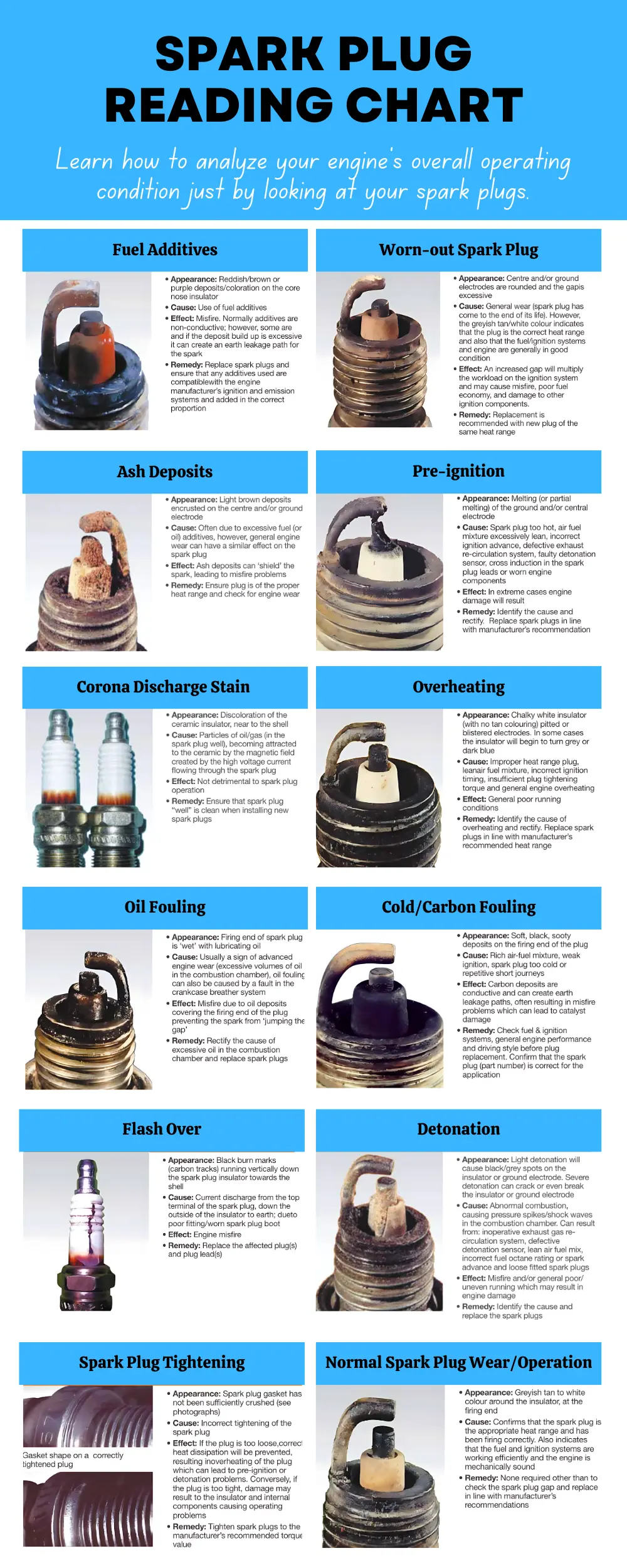
- ✦ Normal appearance
A dry plug with a clean insulator and light tan, gray, or light brown coloring can be consistent with normal operation. The exact appearance varies with fuel, oil, plug design, and engine setup.
- ✦ Rich clues
A dark, sooty, or wet plug can occur when the engine receives more fuel than it burns well, but oil, low temperature, weak ignition, and short running can also darken the plug.
- ✦ Lean or hot clues
A very clean or unusually pale plug, especially with overheating, detonation, or damaged electrodes, can be a warning that the engine is running too hot or too lean.
- ✦ Damage clues
Melted electrodes, heavy speckling, cracked porcelain, or severe erosion require attention. These signs can point to excessive heat, detonation, pre-ignition, or another serious problem.
Why 2 Stroke Plugs Can Be Harder to Read
A two stroke burns a fuel and oil mixture, so the plug can collect oil and combustion deposits. Modern unleaded fuel also does not always create the classic plug colors shown in older spark plug charts. This makes the old rule of looking only for a perfect coffee-brown color too simple.
The engine’s operating condition matters just as much. A plug from a machine that spent ten minutes idling may tell you more about low-speed operation than about the main jet at full throttle.
- ✦ Fuel type
Different fuels can leave different colors and deposits. Do not compare a plug used with one fuel to a plug used with another fuel as if the conditions were identical.
- ✦ Oil type
Premix and injector oils can affect deposits. The oil ratio and oil formulation also matter.
- ✦ Operating range
Idle, low throttle, midrange, and full throttle are influenced by different parts of the carburetor system.
How to Read 2 Stroke Spark Plugs Step by Step
The best way to learn how to read 2 stroke spark plugs is to use a repeatable process. First, make sure the engine is in a known state. Then inspect the plug under good light and compare what you see with the way the engine runs.
Do not make a major jetting change from one random plug pulled after a cold start. A controlled test gives much better information. If the engine has a serious running problem, fix obvious mechanical faults before using plug color to fine-tune the carburetor.
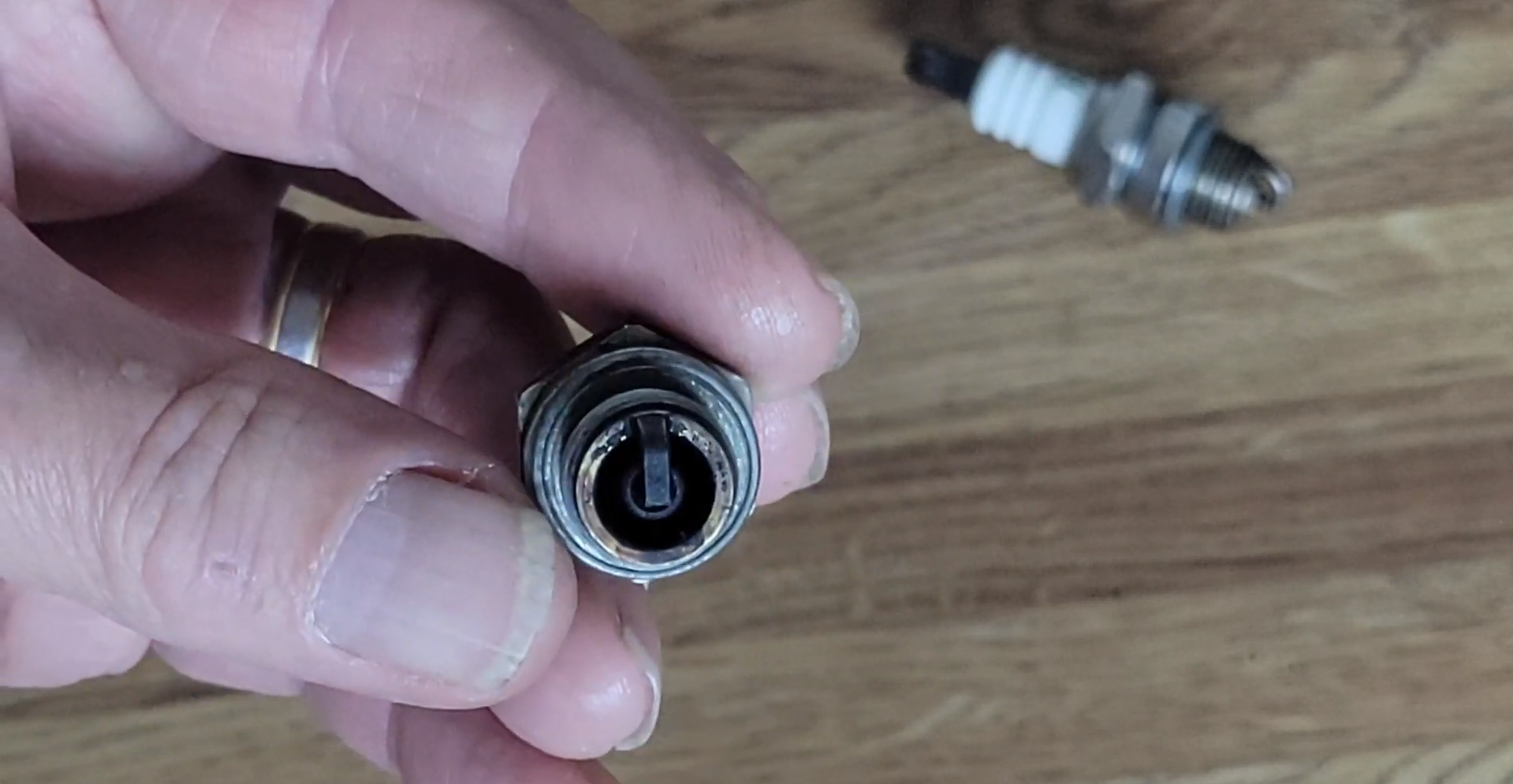
- ✦ 1. Identify the plug
Confirm the correct spark plug part number and heat range for the engine. The wrong plug can create misleading readings and may create a safety or engine-damage risk.
- ✦ 2. Run the engine under a known condition
For a useful high-load reading, bring the engine to the test condition without spending a long time idling afterward.
- ✦ 3. Stop and inspect safely
Allow the machine and plug to cool enough for safe handling. Remove the plug with the correct tool and avoid damaging the threads or ceramic insulator.
- ✦ 4. Inspect several areas
Look at the insulator nose, center electrode, ground strap, shell, and any unusual deposits. Check for cracks, melting, heavy carbon, oil, or signs of overheating.
- ✦ 5. Compare with engine symptoms
Ask whether the engine starts well, pulls cleanly, four-strokes, bogs, overheats, knocks, or loses power. Plug evidence becomes more useful when it agrees with other clues.
How to Perform a Controlled Plug Reading
For carbureted two strokes, a controlled test is more useful than pulling a plug after ordinary mixed riding. If you are checking high-throttle behavior, use a safe open area and follow the engine maker’s service guidance. A high-speed test should never be done where traffic, people, or terrain make it unsafe.
After the test, inspect the plug before adding a long period of low-speed running. The aim is to preserve evidence from the operating range you want to study. Repeat the test after one change at a time so you can see what actually changed.
- ✦ Change one thing
If you alter the main jet, fuel, oil ratio, ignition setting, or another major variable, avoid changing several other settings at the same time.
- ✦ Record conditions
Write down fuel, oil ratio, air temperature, elevation, throttle position, jet sizes, plug type, and engine symptoms. This makes later comparisons much easier.
- ✦ Use a fresh plug when needed
A clean or new plug can provide a clearer baseline than a plug that has been used for many hours under mixed conditions.
How to Read 2 Stroke Spark Plug Color
Color is one of the first things people check when learning how to read 2 stroke spark plugs. A light tan, gray, or light brown insulator can be a useful sign of normal combustion, but there is no single perfect color for every two stroke engine.
A black plug does not automatically mean the main jet is too large. The engine may have spent too much time idling, the plug may be too cold, the ignition may be weak, or the oil may leave dark deposits. Read the color together with the plug’s texture and the engine’s behavior.

- ✦ Light tan or light brown
This can be consistent with normal combustion when the engine is healthy and the test conditions are known. It should not be treated as a universal target color.
- ✦ Dark brown or gray
A darker dry deposit can result from the fuel, oil, operating range, or mixture. Look for other signs before changing jetting.
- ✦ Dry black soot
Dry carbon can be linked to a rich condition, low operating temperature, incomplete combustion, excessive idling, or an ignition issue.
- ✦ Wet black plug
Fuel or oil on the plug can indicate flooding, poor combustion, too much fuel, a weak spark, or an engine that did not reach normal operating conditions.
- ✦ Very pale or unusually clean
A pale plug alone does not prove a lean condition. If it appears with overheating, detonation, or electrode damage, treat the combination as a warning and investigate before continued hard use.
Why the Classic Tan Plug Rule Has Limits
Older spark plug charts often show a simple range from black to tan to white. These charts can help you learn the basics, but modern engines and fuels make the picture less exact. The plug’s heat range, fuel formulation, oil, combustion chamber design, and riding conditions all affect the deposit pattern.
For that reason, how to read 2 stroke spark plugs should be viewed as a diagnostic skill, not a color-matching game. A good reading asks what the plug is telling you and what it is not telling you.
- ✦ Color is evidence
Treat plug color as one piece of evidence rather than a final diagnosis.
- ✦ Texture matters
Dry soot, oily deposits, ash, melted metal, and speckled deposits have different meanings.
- ✦ Location matters
The area on the insulator where deposits collect can help, but it must be interpreted with the plug design and test method.
What a Rich 2 Stroke Spark Plug Looks Like
A rich two stroke burns more fuel than the engine can use efficiently under a given condition. The plug may become dark or sooty, and the engine may feel dull or uneven. However, a dark plug can have other causes, so confirm the diagnosis before changing the jetting.
Common rich-running symptoms include a blubbering or four-stroking sound under load, poor throttle response, excessive smoke beyond what is normal for the engine, and a tendency to load up at low speed. The exact symptoms depend on the engine and which carburetor circuit is active.

- ✦ Dark carbon
Dry black carbon can be a sign of an overly rich mixture or incomplete combustion.
- ✦ Wet fuel
A wet plug can appear after flooding or repeated starting attempts. It does not prove that the main jet is too rich.
- ✦ Lazy response
A rich engine may respond slowly when the throttle opens, especially if the affected carburetor circuit is not matched to the operating range.
- ✦ Four-stroking
A loaded, burbling sound at high throttle can occur when a two stroke is too rich, although sound alone is not enough for a diagnosis.
What to Check Before Leaning the Jetting
Before installing a smaller jet, check the basics. Confirm the air filter is clean, the choke or enrichment system is fully off, the correct fuel is being used, and the plug is the correct type. A mechanical or ignition problem can look like a mixture problem.
Also consider where the symptom occurs. The pilot circuit, needle, and main jet affect different throttle ranges. Changing the main jet will not fix every low-speed rich condition.
- ✦ Air filter
A badly restricted filter can reduce airflow and make the engine act rich.
- ✦ Choke or enricher
A partially engaged enrichment system can create a rich condition and dark plug deposits.
- ✦ Float and fuel level
Incorrect fuel level can affect carburetor behavior and may create symptoms that look like normal jetting errors.
What a Lean 2 Stroke Spark Plug Looks Like
A lean two stroke has less fuel relative to air than the engine needs under a given condition. A lean condition can raise combustion temperature and, in severe cases, contribute to piston damage. This is why caution matters more than chasing a certain plug color.
Possible lean symptoms include a sharp or unusually crisp response followed by poor power, surging, hanging idle in some conditions, excessive heat, or detonation. These symptoms are not unique to lean jetting, so confirm the cause before making changes.

- ✦ Pale appearance
A pale or unusually clean insulator can be a warning when it matches other signs of excessive heat or lean operation.
- ✦ Overheating
An engine that runs hotter than normal needs attention. Cooling problems can produce heat symptoms even when the fuel mixture is correct.
- ✦ Detonation
A metallic ping or knock under load can indicate detonation. Stop hard running and investigate the cause rather than relying on plug color alone.
- ✦ Electrode damage
Rounded, eroded, melted, or otherwise damaged electrodes can indicate excessive heat or abnormal combustion and deserve prompt diagnosis.
Why a Lean 2 Stroke Can Be Dangerous
Two stroke engines rely on the correct fuel and oil supply for both combustion and lubrication. A serious mixture problem can increase heat and reduce the margin against piston or cylinder damage. An air leak, fuel delivery problem, incorrect jetting, or other fault can all contribute.
If a plug shows signs of severe overheating or the engine makes abnormal noise, do not keep testing it at high load just to get a better color reading. Find the cause first.
- ✦ Check for air leaks
Unmetered air can create a lean condition and may enter through damaged intake parts, seals, or other points depending on the engine.
- ✦ Check fuel delivery
A restricted fuel path, low fuel level, or other delivery problem can cause a condition that resembles lean jetting.
- ✦ Check cooling
Low coolant, blocked airflow, or other cooling faults can cause high temperatures without the mixture being the only problem.
How to Read the Spark Plug Electrode and Insulator
The center electrode and insulator are often more useful than simply looking at the outside of the plug. Use a bright light and, if needed, a small inspection magnifier. Look for normal wear as well as unusual deposits, cracks, melting, and tiny metallic marks.
The ground strap can also provide clues about heat. Its condition should be interpreted with the exact plug design and engine maker’s guidance. Do not assume that one visual mark gives an exact temperature reading.
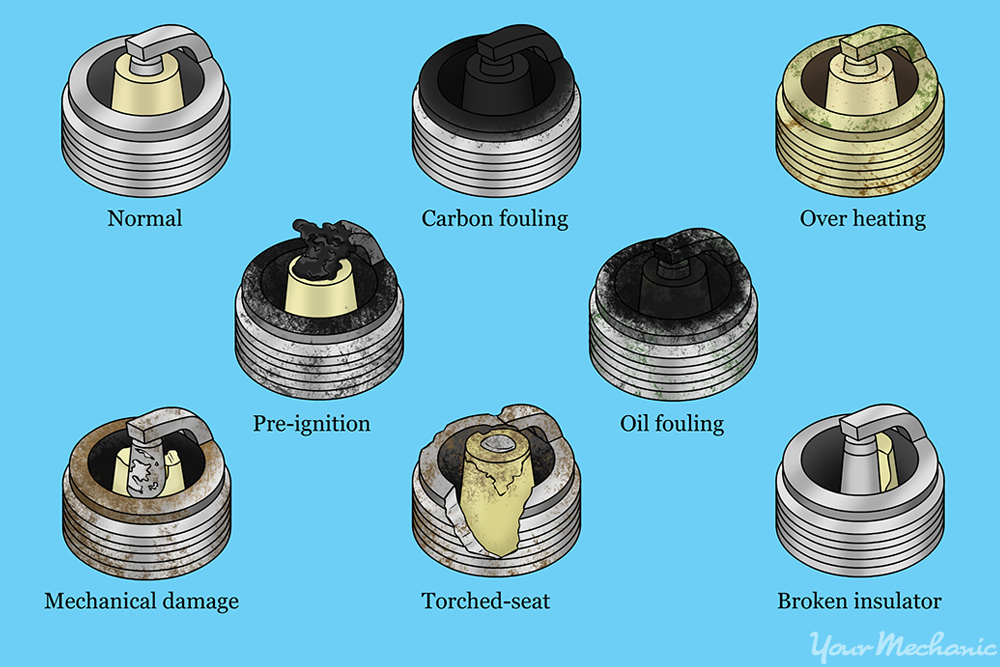
- ✦ Center electrode
Check for normal wear, rounding, erosion, melting, or unusual deposits.
- ✦ Insulator nose
Inspect the ceramic around the center electrode for color, deposits, cracks, and abnormal marks.
- ✦ Ground strap
Look for erosion, overheating, or unusual discoloration. Compare the condition with a known-good plug when possible.
- ✦ Metal specks
Small shiny or metallic deposits can be a warning of abnormal combustion or engine damage. Do not ignore them.
Reading Deposits Without Overdiagnosing Them
Deposits can come from fuel, oil, additives, combustion, or engine wear. Ash-like deposits may have a different cause from soft black carbon or oily residue. The pattern matters, but it should always be matched with engine symptoms and service information.
If the plug has a cracked insulator or damaged electrode, replace it before further testing. A damaged plug can cause misfire and can make other diagnostic work harder.
- ✦ Soft black carbon
Often linked with incomplete combustion, rich operation, low temperature, or repeated low-speed use.
- ✦ Oily deposits
Can result from normal two stroke lubrication, excess oil, poor combustion, or an engine condition that allows too much oil into the combustion chamber.
- ✦ Ash deposits
May come from fuel or oil additives and should be interpreted with the engine’s known fuel and oil setup.
How Spark Plug Reading Relates to 2 Stroke Jetting
Spark plug reading and carburetor tuning are closely linked, but the plug cannot tell you which jet to change by color alone. The pilot circuit, needle, and main jet each work over different throttle ranges. You need to match the engine symptom to the throttle position before making a change.
Altitude and weather also affect a carbureted two stroke. At higher elevation, air density is lower than at sea level. Temperature and humidity can also change the amount of oxygen entering the engine, so a setup that works well in one location may need adjustment elsewhere.
- ✦ Pilot circuit
It has a strong effect at idle and low throttle. Low-speed starting, idle quality, and initial response can help identify issues in this range.
- ✦ Needle
The needle affects much of the mid-throttle range. A midrange hesitation or rich feel may require attention here rather than at the main jet.
- ✦ Main jet
The main jet has its strongest effect at high throttle. High-load testing is needed when using a plug reading to help assess this range.
- ✦ Air screw or fuel screw
Depending on carburetor design, this adjustment mainly affects the lower throttle range and can help fine-tune response.
Altitude, Temperature, and Humidity
A carbureted engine responds to air density, not simply the temperature shown on a weather app. Elevation, temperature, pressure, and moisture can all affect the amount of oxygen available for combustion. That is why riders who move between sea level and mountain areas often need to review jetting.
When comparing plug readings, record the conditions. A plug from a cool morning at low elevation should not be treated as a direct match for a plug from a hot ride at high elevation.
- ✦ Elevation
Higher elevation generally means lower air density, which changes the fuel-to-air relationship in a carbureted engine.
- ✦ Temperature
Air density changes with temperature, so major temperature changes can affect carburetor behavior.
- ✦ Humidity
Moisture in the air changes the amount of oxygen available for combustion and can affect tuning.
Common 2 Stroke Spark Plug Problems and What They May Mean
A plug can show more than rich or lean conditions. It may also reveal misfire, oil-related deposits, overheating, abnormal combustion, or simple wear. The most useful diagnosis comes from looking at the plug and then checking the engine for a matching cause.
When learning how to read 2 stroke spark plugs, do not ignore physical damage. A plug that is cracked, badly eroded, or contaminated may need replacement before you can make a reliable tuning judgment.

- ✦ Fouled plug
Heavy deposits can stop the plug from firing well. Causes can include rich operation, excess oil, low-speed use, weak ignition, or an incorrect plug.
- ✦ Oil-fouled plug
Oil can wet or coat the plug. Check oil delivery, mixture ratio, engine condition, and operating temperature before assuming the carburetor is at fault.
- ✦ Overheated plug
Severe heat marks, electrode damage, or abnormal deposits require investigation of mixture, ignition, cooling, fuel, and plug heat range.
- ✦ Detonation damage
Speckled deposits or damaged components can accompany abnormal combustion. Stop hard use and inspect the engine if detonation is suspected.
- ✦ Wrong heat range
A plug that is too hot or too cold for the application can produce misleading deposits and may create engine problems.
When to Replace the Spark Plug
Replace the plug when it reaches the service interval set for the engine or when its condition calls for replacement. Do not keep a badly worn or damaged plug in service because its appearance can make diagnosis harder.
Use the exact plug specification recommended by the engine maker. Heat range, reach, thread size, terminal design, and other details all matter.
- ✦ Replace damaged ceramic
Do not use a plug with a cracked insulator or other structural damage.
- ✦ Replace badly worn electrodes
Severe electrode wear can increase the required firing voltage and affect ignition.
- ✦ Use the correct gap
Set the plug gap to the engine maker’s specification unless the manufacturer gives another specific instruction.
Mistakes to Avoid When Reading a 2 Stroke Spark Plug
Many plug-reading mistakes happen because people try to make the process too simple. A dark plug is not always a rich main jet, and a light plug is not always a lean main jet. The engine, test method, fuel, oil, plug heat range, and operating conditions all matter.
A good diagnostic process also protects the engine. If you suspect a lean condition or detonation, do not keep running at full load simply to make the plug color easier to see.
- ✦ Do not judge a plug after only idling
Idling can create deposits that do not represent high-load combustion.
- ✦ Do not rely on color alone
Combine color with deposits, electrode condition, engine symptoms, and test conditions.
- ✦ Do not change several settings at once
If you change the main jet, needle, fuel, oil, and ignition together, you may not know which change caused the result.
- ✦ Do not ignore mechanical faults
Air leaks, poor compression, cooling problems, ignition faults, and fuel delivery issues can mimic carburetor problems.
- ✦ Do not chase a color from an old chart
Older charts are useful learning tools, but modern fuels and engine designs mean a specific color is not a universal target.
- ✦ Do not continue with a damaged plug
A cracked, melted, or badly worn plug should be replaced and the cause of the damage investigated.
A Better Diagnostic Mindset
Think of the spark plug as a witness, not a judge. It can provide valuable evidence, but it does not tell the entire story. The strongest diagnosis comes from several clues that point in the same direction.
Keep notes when tuning a two stroke. Record the jet sizes, fuel, oil ratio, temperature, elevation, plug type, throttle range, and symptoms. This simple habit makes repeated tuning far more consistent.
- ✦ Start with known settings
Write down the current setup before making a change.
- ✦ Make small changes
Change one tuning variable at a time and test safely.
- ✦ Look for repeatable evidence
A pattern that appears under the same conditions is more useful than a one-time plug color.
A Simple 2 Stroke Spark Plug Reading Checklist
If you want a simple routine for how to read 2 stroke spark plugs, use the same checklist every time. This reduces guesswork and helps you notice changes that may be easy to miss when looking at the plug casually.
Keep the checklist with your maintenance notes. Over time, repeated observations can help you understand how your engine responds to fuel, weather, altitude, jetting, and riding conditions.
- ✦ Confirm the plug
Check the plug number, heat range, reach, and gap against the engine specification.
- ✦ Confirm the test
Know whether the plug was used at idle, low throttle, midrange, or high load.
- ✦ Check color
Look at the insulator and note whether the deposit is light, dark, gray, tan, or unusually clean.
- ✦ Check texture
Separate dry soot, wet fuel, oily residue, ash, and possible metallic deposits.
- ✦ Check damage
Inspect the electrode, ground strap, ceramic, and threads for heat damage or physical wear.
- ✦ Check engine symptoms
Compare the plug with starting, throttle response, power, temperature, smoke, sound, and fuel behavior.
- ✦ Check the environment
Record elevation, air temperature, humidity when useful, fuel, oil, and recent riding conditions.
- ✦ Decide on the next test
If evidence points toward a tuning issue, make one controlled change and repeat the test safely.
When a Professional Inspection Makes Sense
A spark plug can point toward a problem, but it cannot replace a full engine inspection. If the engine shows severe overheating, detonation, loss of compression, repeated plug failure, or unexplained power loss, a qualified technician should inspect it before continued hard use.
This is especially important when the engine is expensive to repair or the machine is used for racing, long-distance riding, or other high-load work. A few minutes of diagnosis can be cheaper than guessing at jetting after damage has already started.
- ✦ Stop for severe symptoms
Stop hard running if you hear strong detonation, see severe overheating, or find major plug or electrode damage.
- ✦ Check compression when appropriate
Compression testing can provide useful information when plug evidence suggests a possible mechanical issue.
- ✦ Inspect the engine if damage is suspected
A damaged piston, cylinder, bearing, seal, or cooling system needs a direct inspection rather than repeated plug tests.