
A spark plug that is too hot may show symptoms such as a white or blistered insulator tip, melted electrodes, engine knocking, pre-ignition, and reduced engine performance. This happens when the spark plug absorbs more heat than it can transfer away, causing excessive temperature buildup inside the combustion chamber.
Spark plugs are designed with specific heat ranges to control how much heat they retain and release. When the wrong spark plug is installed or engine conditions create excessive heat, the spark plug may become too hot and fail to operate properly.
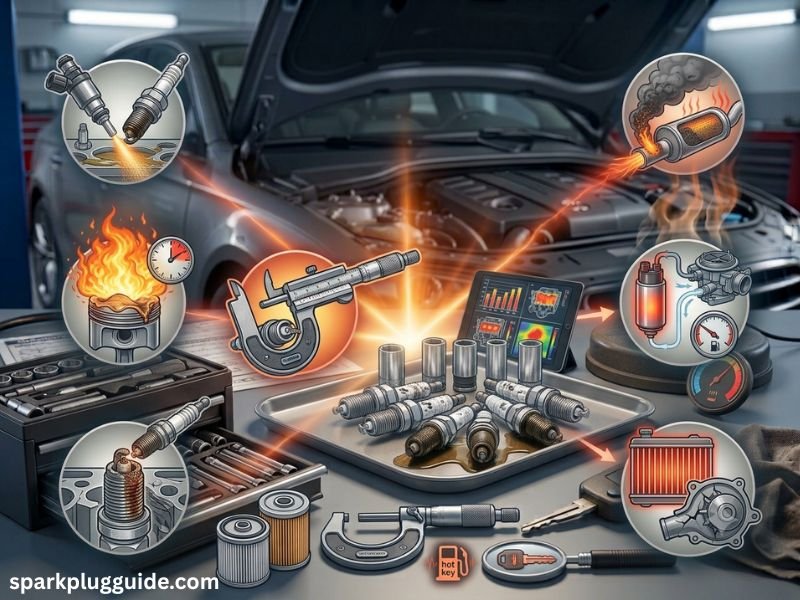
Ignoring overheating spark plug symptoms can lead to more serious issues, including poor combustion, engine damage, and reduced reliability. Identifying the warning signs early helps prevent further ignition problems and keeps the engine running efficiently.
In this guide, you will learn the common too hot spark plug symptoms, what causes spark plugs to overheat, how to identify the problem, and what steps can help prevent spark plug overheating.
What Are Too Hot Spark Plug Symptoms?
A spark plug that is too hot cannot remove heat efficiently, causing the plug tip and electrodes to operate at higher temperatures than intended. Over time, excessive heat can damage the spark plug and affect engine performance.
The symptoms of a too hot spark plug are often visible on the plug itself, but they can also appear through engine performance problems.
White or Blistered Spark Plug Insulator
One of the most common signs of a spark plug running too hot is a white or blistered ceramic insulator.
A normal spark plug usually has a light brown or grayish appearance after use. However, an overheated spark plug may look:
- Bright white
- Chalky
- Blistered
- Burned around the tip
This appearance usually indicates that the spark plug has been exposed to excessive combustion temperatures.
Possible causes include:
- Incorrect spark plug heat range
- Lean air-fuel mixture
- Engine overheating
- Advanced ignition timing
Melted or Damaged Electrode
Excessive heat can damage the spark plug electrodes over time.
A too hot spark plug may show:
- Rounded electrode edges
- Melted electrode material
- Severe erosion
- Missing electrode sections
The electrode is designed to withstand high temperatures, but extreme heat can cause permanent damage.
A damaged electrode can affect spark quality and may result in:
- Engine misfires
- Poor acceleration
- Unstable engine operation
Engine Knocking or Pre-Ignition
A spark plug that operates too hot can contribute to pre-ignition, where the air-fuel mixture ignites before the spark plug creates the normal ignition spark.
This can cause:
- Engine knocking
- Abnormal combustion
- Increased cylinder pressure
Pre-ignition is a serious condition because it can damage pistons, valves, and other engine components if ignored.
Reduced Engine Performance
When a spark plug becomes too hot, it may not create a consistent ignition spark.
Drivers may notice:
- Reduced engine power
- Hesitation during acceleration
- Rough engine operation
- Poor fuel efficiency
These symptoms occur because the combustion process becomes less efficient.
What Causes a Spark Plug to Run Too Hot?
A spark plug can run too hot when it cannot transfer heat properly or when engine conditions create excessive combustion temperatures. The problem is often related to incorrect spark plug selection, engine tuning issues, or operating conditions.
Understanding the cause is important because replacing the spark plug alone may not solve the problem.
Incorrect Spark Plug Heat Range
Every spark plug has a specific heat range designed for a particular engine application.
A spark plug with the wrong heat range may:
- Retain too much heat
- Operate above its designed temperature
- Increase the risk of overheating
Using the spark plug recommended by the vehicle manufacturer helps maintain proper temperature control.
Lean Fuel Mixture
A lean fuel mixture means the engine is receiving too much air compared with fuel.
This condition can increase combustion temperature and cause the spark plug to run hotter.
Possible causes include:
- Vacuum leaks
- Fuel delivery problems
- Incorrect engine tuning
A lean mixture should be corrected because it can affect both spark plugs and engine components.
Advanced Ignition Timing
Ignition timing controls when the spark occurs during the combustion cycle.
If the ignition happens too early, combustion pressure and temperature may increase.
This can lead to:
- Excessive heat
- Pre-ignition
- Spark plug damage
Proper ignition timing is essential for maintaining normal engine operation.
Engine Overheating Problems
A spark plug may become too hot when the engine itself is operating above its normal temperature range.
Possible causes include:
- Cooling system problems
- Low coolant level
- Faulty thermostat
- Radiator issues
High engine temperature increases the amount of heat transferred to spark plugs.
High Compression or Performance Modifications
Modified engines often create higher combustion temperatures.
Changes such as:
- Increased compression ratio
- Turbocharging
- Performance tuning
can increase spark plug heat requirements.
Performance engines may require different spark plug specifications to handle higher operating temperatures.
How to Tell If a Spark Plug Is Too Hot
Identifying an overheated spark plug usually requires inspecting its appearance and comparing it with a normal spark plug. The condition of the ceramic insulator, electrode, and deposits can provide useful information about whether the plug has been operating at excessive temperatures.
A spark plug that is too hot often shows clear physical signs caused by extreme combustion heat.
Inspect Spark Plug Color
Spark plug color is one of the easiest ways to identify possible overheating problems.
A spark plug running too hot may appear:
- White instead of light brown or gray
- Burned around the firing tip
- Extremely clean with very few deposits
A normal spark plug usually develops a light tan or gray color after normal use. A bright white appearance often suggests that the spark plug has been exposed to higher-than-normal temperatures.
However, spark plug color should always be considered with other signs because fuel mixture, engine condition, and driving habits can also affect appearance.
Check Electrode Condition
The electrode condition can reveal whether the spark plug has experienced excessive heat.
Signs of heat damage include:
- Rounded electrode edges
- Thin or worn electrode material
- Melted sections
- Excessive erosion
When temperatures become too high, the electrode material can slowly break down. This changes the spark plug gap and reduces ignition efficiency.
A damaged electrode may require more voltage from the ignition coil and can contribute to misfires or poor engine performance.
Look for Heat Damage on the Ceramic Insulator
The ceramic insulator protects the spark plug from electrical leakage and extreme combustion conditions.
An overheated spark plug may have:
- Blistered ceramic surface
- Burn marks
- Unusual discoloration
Severe heat damage can weaken the spark plug structure and affect its ability to create a reliable spark.
Compare With a Normal Spark Plug
Comparing a used spark plug with a healthy one can make overheating signs easier to identify.
A normal spark plug generally has:
- Light brown or gray color
- Even electrode wear
- No melting or burning marks
A too hot spark plug may show:
- White appearance
- Burned electrodes
- Signs of excessive heat exposure
This comparison helps determine whether the spark plug condition is normal or abnormal.
Too Hot Spark Plug vs Normal Spark Plug
The main difference between a too hot spark plug and a normal spark plug is how they handle heat during engine operation. A properly selected spark plug maintains the correct operating temperature, while an overheated spark plug retains or receives excessive heat that can cause damage.
Understanding the differences can help identify potential ignition problems early.
Spark Plug Appearance Difference
A normal spark plug usually shows signs of controlled combustion.
It may have:
- Light tan or gray deposits
- Clean electrode edges
- Proper spark gap
A spark plug that is too hot may show:
- White or chalky insulator
- Burned electrode area
- Melted or damaged components
The appearance changes because excessive temperature affects the spark plug materials.
Electrode Condition Difference
The electrodes provide the surface where the ignition spark occurs.
A normal spark plug has:
- Stable electrode shape
- Minimal wear
- Correct gap
An overheated spark plug may have:
- Excessive electrode erosion
- Rounded edges
- Reduced electrode material
These changes can weaken spark performance and affect combustion.
Engine Performance Difference
A normal spark plug helps maintain smooth engine operation.
When a spark plug becomes too hot, drivers may experience:
- Engine hesitation
- Reduced acceleration
- Knocking sounds
- Misfires
These issues occur because excessive heat can interfere with proper ignition and combustion.
Heat Management Difference
A normal spark plug transfers heat from the firing tip into the cylinder head at the correct rate.
A too hot spark plug may:
- Retain excessive heat
- Operate outside its designed temperature range
- Increase the risk of pre-ignition
Using the correct spark plug heat range is important for maintaining proper temperature control.
Can a Spark Plug Heat Range Cause Overheating?
Yes, the spark plug heat range can affect operating temperature. Spark plug heat range determines how quickly the plug transfers heat away from the firing tip and into the engine cylinder head.
Using a spark plug with an incorrect heat range can cause the plug to operate too hot or too cold.
Choosing the Correct Heat Range
The correct heat range depends on the engine design and operating conditions.
Manufacturers select spark plug heat ranges based on factors such as:
- Engine temperature
- Compression ratio
- Ignition system
- Normal driving conditions
Using the recommended spark plug specification helps maintain proper heat control.
What Happens If the Spark Plug Is Too Hot?
A spark plug with a heat range that is too hot removes heat too slowly.
This can cause:
- Excessive firing tip temperature
- Pre-ignition risk
- Electrode damage
The spark plug may appear clean and white because high temperatures burn away normal deposits.
Why Some Engines Need Colder Spark Plugs
Some engines require colder spark plugs because they produce more heat during operation.
This is common in:
- High-performance engines
- Modified engines
- Engines operating under heavy loads
A colder spark plug transfers heat away faster, helping prevent overheating in demanding conditions.
Should You Change to a Colder Spark Plug?
Changing spark plug heat range should only be done when recommended by an engine manufacturer or based on specific performance requirements.
Using a colder plug without a reason may create problems because the spark plug may not reach its ideal operating temperature.
The best approach is choosing the spark plug heat range designed for the engine’s normal operating conditions.
How to Prevent Spark Plugs From Running Too Hot
Preventing spark plugs from overheating starts with maintaining the correct ignition, fuel, and engine conditions. A spark plug that operates within its designed temperature range can provide reliable ignition and last longer without causing performance problems.
Proper maintenance helps reduce the risk of excessive heat damage and protects other engine components.
Use the Correct Spark Plug Type
Using the correct spark plug for the engine is one of the most important steps in preventing overheating.
The correct spark plug should match:
- Vehicle specifications
- Engine design
- Recommended heat range
Installing the wrong spark plug can affect heat transfer and may cause the firing tip to become too hot.
Always follow manufacturer recommendations when selecting replacement spark plugs.
Maintain Proper Fuel Mixture
The air-fuel mixture has a direct effect on combustion temperature.
A lean fuel mixture can make combustion hotter and increase spark plug temperature.
Maintaining the correct fuel mixture helps prevent excessive heat caused by:
- Fuel delivery problems
- Vacuum leaks
- Incorrect engine tuning
A properly balanced mixture supports efficient combustion and normal spark plug operation.
Check the Engine Cooling System
The cooling system plays an important role in controlling overall engine temperature.
Problems such as:
- Low coolant level
- Faulty thermostat
- Cooling system leaks
can increase engine temperature and transfer additional heat to spark plugs.
Regular cooling system maintenance helps keep engine temperatures within a safe range.
Maintain Correct Ignition Timing
Ignition timing determines when the spark occurs during the combustion process.
Incorrect timing can increase combustion temperature and create excessive heat inside the cylinder.
Proper ignition timing helps:
- Improve combustion efficiency
- Reduce overheating risk
- Protect spark plug condition
Inspect Spark Plugs Regularly
Regular spark plug inspection can help identify overheating problems early.
Look for:
- White insulator appearance
- Burned electrodes
- Unusual deposits
- Heat damage
Early detection allows the underlying problem to be fixed before it causes more serious engine damage.
Frequently Asked Questions About Too Hot Spark Plug Symptoms
Understanding spark plug overheating can help vehicle owners recognize warning signs and take action before serious engine problems occur. These common questions explain the most important details about hot spark plugs.
What Does a Too Hot Spark Plug Look Like?
A spark plug that is too hot often appears white or burned instead of having a normal light brown or gray color.
Common signs include:
- White ceramic insulator
- Blistered surface
- Melted electrode
- Excessive wear
These signs indicate that the spark plug has been exposed to higher temperatures than recommended.
Can a Hot Spark Plug Damage an Engine?
Yes, an overheated spark plug can contribute to engine damage if the cause is not corrected.
Excessive spark plug temperature may lead to:
- Pre-ignition
- Engine knocking
- Damaged pistons
- Poor combustion
Addressing the cause early helps prevent more expensive repairs.
What Color Is a Spark Plug That Is Too Hot?
A spark plug that is too hot often appears white or very light in color.
A normal spark plug usually has a light tan or gray appearance, while an overheated plug may look:
- White
- Chalky
- Burned
Color alone should not be used for diagnosis, but it can provide useful clues.
Can Wrong Spark Plugs Cause Overheating?
Yes, using the wrong spark plug can cause overheating problems.
A spark plug with an incorrect heat range may not transfer heat properly, causing the firing tip to become too hot.
Always use spark plugs that match the engine manufacturer’s specifications.
Should I Use a Colder Spark Plug?
A colder spark plug may be needed for certain high-performance or modified engines that produce more heat.
However, switching to a colder plug without a specific reason is not recommended.
The correct heat range depends on the engine design and operating conditions.
What Causes Spark Plugs to Burn White?
A white spark plug can be caused by several conditions, including:
- Lean fuel mixture
- Excessive engine temperature
- Incorrect heat range
- Advanced ignition timing
Finding the exact cause is important before replacing the spark plug.
Conclusion
A spark plug that runs too hot can show several warning signs, including a white or blistered insulator, damaged electrodes, engine knocking, and reduced performance. These symptoms indicate that the spark plug is operating outside its normal temperature range.
The most common causes include incorrect spark plug heat range, lean fuel mixture, ignition timing issues, engine overheating, and performance modifications. Simply replacing the spark plug may not solve the problem unless the underlying cause is corrected.
Using the correct spark plug specification, maintaining the cooling system, checking engine conditions, and inspecting spark plugs regularly can help prevent overheating problems.
Understanding too hot spark plug symptoms allows vehicle owners to identify potential ignition issues early and protect the engine from unnecessary damage.