Spark plugs are small engine components, but removing and installing them correctly requires the right tools. One of the most important tools for spark plug maintenance is the socket, and choosing the wrong size can make the job difficult or even damage the spark plug.
Many vehicle owners assume that all spark plugs use the same socket size, but this is not always true. Spark plug socket size depends on the hex size of the spark plug, which can vary between different engines, manufacturers, and spark plug designs. Common sizes include 14mm, 16mm (5/8 inch), 18mm, and 21mm (13/16 inch).
Using the correct spark plug socket helps protect the ceramic insulator, provides a secure grip, and makes removal and installation safer. A standard socket may not provide the same protection because spark plug sockets are specifically designed with features such as rubber inserts or magnetic holders.
In this complete guide, you will learn what size socket for spark plug you need, the most common spark plug socket sizes, how to measure spark plug socket size, the difference between regular sockets and spark plug sockets, and how to choose the right tool for your vehicle.
What You Will Learn From This Guide
In this guide, you will discover:
- The most common spark plug socket sizes
- How spark plug hex size determines socket size
- The difference between regular sockets and spark plug sockets
- How to measure the correct socket size
- Which tools are needed for spark plug removal
- Common mistakes to avoid when choosing a socket
Choosing the correct socket is a small but important part of spark plug maintenance. The right tool makes the process easier and reduces the risk of damaging expensive engine components.
At SparkPlugGuide, Chris Turner explains automotive maintenance topics in a simple and practical way, helping vehicle owners understand the tools and techniques needed for proper engine care.
What Size Socket Do You Need for a Spark Plug?
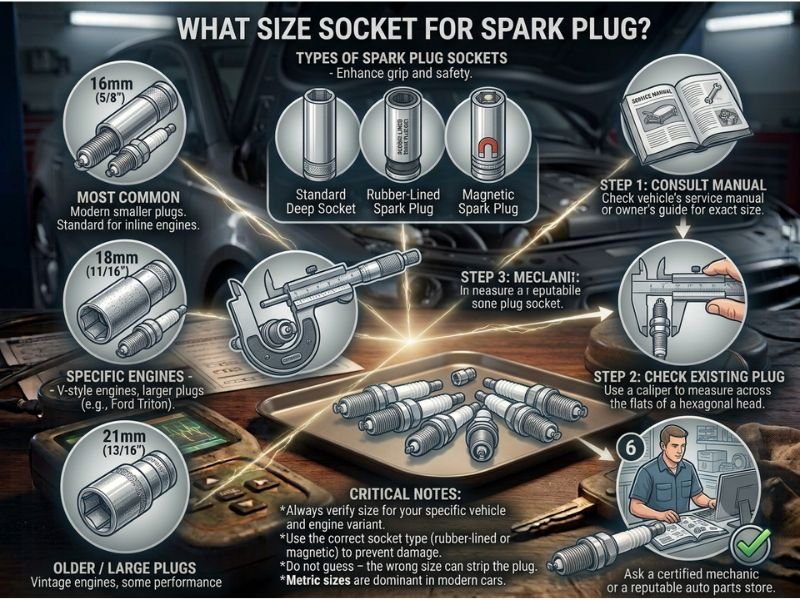
The most common spark plug socket sizes are 5/8 inch (16mm), 13/16 inch (21mm), and 14mm, but the exact size depends on the spark plug design and engine application. The socket size is determined by the hex section of the spark plug, not by the vehicle’s engine size or cylinder count.
Before removing a spark plug, it is important to confirm the correct socket size because using the wrong tool can damage the spark plug or make removal more difficult.
Common Spark Plug Socket Sizes
Spark plugs are manufactured with different hex sizes, which means different sockets may be required.
The most common sizes include:
- 14mm spark plug socket
- 16mm (5/8 inch) spark plug socket
- 18mm spark plug socket
- 21mm (13/16 inch) spark plug socket
Each size is used for different spark plug applications.
5/8 Inch (16mm) Spark Plug Socket
The 5/8 inch or 16mm spark plug socket is one of the most commonly used sizes in modern vehicles.
It is often found in:
- Passenger cars
- Small SUVs
- Many four-cylinder engines
Because of its popularity, many spark plug socket sets include this size as a standard option.
13/16 Inch (21mm) Spark Plug Socket
The 13/16 inch or 21mm socket is a larger spark plug socket size commonly found in some older vehicles and certain engine applications.
It is used when the spark plug has a larger hex section.
Always check the spark plug specification before choosing this size because not every large engine uses a 21mm socket.
14mm Spark Plug Socket
The 14mm spark plug socket is commonly used in many modern engines, especially those with newer spark plug designs.
It is often associated with:
- Compact engine designs
- Modern ignition systems
- Certain European vehicle applications
18mm Spark Plug Socket
An 18mm spark plug socket is less common but is still required for specific engines.
Because spark plug designs vary between manufacturers, it is important not to assume a common size will fit every vehicle.
Does Engine Size Determine Spark Plug Socket Size?
No. Engine size does not directly determine spark plug socket size.
For example:
- A large engine may use a smaller spark plug socket
- A smaller engine may require a larger socket
The socket size depends on the spark plug’s hex design.
Common Spark Plug Socket Sizes Explained
Understanding common spark plug socket sizes helps vehicle owners choose the correct tool before starting maintenance. Although many people recognize sizes like 16mm or 21mm, each socket size is designed to fit specific spark plug hex dimensions.
Using the correct size provides a secure fit and reduces the chance of damaging the spark plug.
5/8 Inch Spark Plug Socket
The 5/8 inch spark plug socket is approximately equal to 16mm and is one of the most widely used spark plug socket sizes.
It is commonly found in:
- Modern cars
- Four-cylinder engines
- Many six-cylinder engines
This size is popular because many manufacturers use spark plugs with a 5/8 inch hex design.
13/16 Inch Spark Plug Socket
The 13/16 inch spark plug socket is approximately equal to 21mm.
This larger socket size is often used for spark plugs with larger hex sections.
It may be found in:
- Older vehicles
- Certain trucks
- Specific engine applications
The exact requirement depends on the spark plug design rather than the vehicle category.
14mm Spark Plug Socket
The 14mm spark plug socket has become increasingly common in many modern engines.
Manufacturers use smaller spark plug designs to support:
- Compact engine layouts
- Improved combustion designs
- Modern ignition systems
Because 14mm spark plugs can be more delicate, using the correct spark plug socket is especially important.
18mm Spark Plug Socket
The 18mm size is less common compared with 14mm, 16mm, and 21mm sockets.
It is typically used in specific engine applications where the spark plug design requires a larger hex size.
Before purchasing a socket, always verify the exact requirement for your vehicle.
Why Spark Plug Socket Size Matters
The correct socket size helps:
- Prevent rounding of the spark plug hex
- Protect the ceramic insulator
- Provide better grip during removal
- Make installation easier
A properly fitting socket transfers force evenly and reduces the chance of accidental damage.
Using the wrong socket can make spark plug removal harder and may lead to unnecessary repair costs.
How to Measure Spark Plug Socket Size
Finding the correct spark plug socket size starts with measuring the spark plug hex size. The hex section is the metal part of the spark plug where the socket fits, and its measurement determines which socket you need.
Using the correct measurement helps prevent damage during removal and ensures the socket fits securely.
Check the Spark Plug Hex Size
The easiest way to determine socket size is by measuring the hex portion of the spark plug.
The measurement should be taken:
- Across the flat sides of the hex section
- Not from corner to corner
- Using the correct measurement unit
Most spark plug sockets are labeled according to this hex measurement.
Measure With a Caliper
A digital caliper can provide an accurate measurement of the spark plug hex size.
The process involves:
- Place the caliper jaws across the flat sides of the hex section
- Record the measurement
- Match the measurement with the correct socket size
A caliper is especially useful when the socket size is unknown or when working with uncommon spark plug designs.
Check Manufacturer Specifications
Another reliable method is checking the spark plug or vehicle specifications.
Information may be available through:
- Vehicle owner’s manual
- Spark plug manufacturer details
- Service documentation
This method avoids guessing and ensures you select the correct tool.
Compare With Known Socket Sizes
If you already have a socket set, you can test different sizes carefully.
The correct socket should:
- Slide fully onto the spark plug hex
- Fit tightly without excessive movement
- Remove the spark plug without slipping
Do not force an incorrect socket because it may damage the spark plug.
Why Accurate Measurement Matters
Using the wrong socket size can cause:
- Rounded spark plug edges
- Difficulty during removal
- Damage to the spark plug shell
A properly measured socket provides a secure connection and makes spark plug maintenance safer.
What Is a Spark Plug Socket?
A spark plug socket is a specialized tool designed specifically for removing and installing spark plugs. Unlike regular sockets, spark plug sockets are built with features that help protect the spark plug and make handling easier.
Because spark plugs contain a fragile ceramic insulator, using the correct socket is important to avoid accidental damage.
Difference Between Regular Socket and Spark Plug Socket
A regular socket is designed for general nuts and bolts, while a spark plug socket is specifically made for spark plug maintenance.
A spark plug socket usually includes:
- Extra depth
- Internal protection
- Secure spark plug holding feature
These features make it easier to remove and install spark plugs safely.
Rubber Insert Spark Plug Socket
Many traditional spark plug sockets include a rubber insert inside the socket.
The rubber insert helps:
- Hold the spark plug securely
- Protect the ceramic insulator
- Prevent the plug from falling during removal
This is especially useful when installing spark plugs in difficult-to-reach areas.
Magnetic Spark Plug Socket
Some modern spark plug sockets use a magnetic design instead of a rubber insert.
A magnetic socket helps:
- Hold the spark plug firmly
- Improve control during installation
- Reduce the chance of dropping the spark plug
Both rubber and magnetic designs serve the same purpose: safer spark plug handling.
Why Use a Spark Plug Socket?
Using a dedicated spark plug socket provides several advantages:
- Better grip on the spark plug
- Protection against ceramic damage
- Easier removal and installation
- Reduced risk of slipping
A regular socket may fit the spark plug hex, but it does not provide the same level of protection.
Does Every Spark Plug Need a Special Socket?
Most spark plugs should be removed with a spark plug socket because of their unique design.
However, the exact socket type depends on:
- Spark plug size
- Engine design
- Accessibility
Choosing the correct socket makes the maintenance process easier and safer.
Spark Plug Socket vs Regular Socket
Although a regular socket may appear similar to a spark plug socket, they are designed for different purposes. Using a regular socket for spark plugs can create problems because spark plugs require additional protection during removal and installation.
A spark plug socket is specifically designed to handle the fragile structure of a spark plug.
Depth Difference Between Socket Types
Spark plugs are long and narrow compared with standard bolts, which is why they require deep sockets.
A spark plug socket provides:
- Extra length
- Better access inside the engine
- Secure contact with the spark plug hex
A regular socket may not reach properly or may not hold the spark plug securely.
Protection Features
Spark plug sockets include features that regular sockets usually do not have.
These features may include:
- Rubber holding inserts
- Magnetic holders
- Internal spark plug support
These features protect the ceramic insulator and make installation easier.
Risk of Using a Regular Socket
Using a regular socket can create several problems.
Possible issues include:
- Cracking the ceramic insulator
- Dropping the spark plug
- Damaging the spark plug terminal
- Difficulty removing the plug
Although a regular socket may remove a spark plug in some cases, it is not the recommended tool.
Can You Use an Extension With a Spark Plug Socket?
Yes, extensions are commonly used with spark plug sockets.
An extension helps when:
- Spark plugs are located deep inside the engine
- Access is limited
- The ignition components are difficult to reach
The correct combination of socket and extension makes spark plug removal easier.
Which Tool Is Better for Spark Plug Maintenance?
A dedicated spark plug socket is always the better choice because it is designed specifically for this job.
Using the correct tool helps protect:
- Spark plug condition
- Engine components
- Installation accuracy
For regular spark plug maintenance, investing in a proper socket is a simple way to avoid unnecessary problems.
What Size Socket for Different Engine Types?
The spark plug socket size is determined by the spark plug design rather than the engine type. However, different engine configurations may commonly use certain spark plug sizes depending on the manufacturer and vehicle application.
Whether you have a four-cylinder engine, V6, or V8, you should always confirm the exact spark plug specification before choosing a socket.
What Size Socket for 4 Cylinder Engines?
Many four-cylinder engines use common spark plug socket sizes such as:
- 14mm
- 16mm (5/8 inch)
- 18mm
The exact size depends on the spark plug model installed in the engine.
Four-cylinder engines are common in:
- Compact cars
- Sedans
- Small SUVs
Because these engines use different spark plug designs, cylinder count alone cannot determine the required socket size.
What Size Socket for V6 Engines?
V6 engines may use different spark plug socket sizes depending on the manufacturer.
Common sizes include:
- 14mm
- 16mm
- 21mm
A V6 engine requires six spark plugs, but the socket size depends on the hex design of those spark plugs.
What Size Socket for V8 Engines?
V8 engines can also use different spark plug socket sizes.
Common options include:
- 14mm
- 16mm (5/8 inch)
- 21mm (13/16 inch)
Performance V8 engines may use specialized spark plugs that require specific tools.
What Size Socket for HEMI Engines?
HEMI engines may require different spark plug socket sizes depending on the engine generation and spark plug design.
For example:
- 5.7 HEMI engines may use specific spark plug socket requirements
- 6.4 HEMI engines may have different specifications
Always verify the exact engine details before purchasing tools.
What Size Socket for Lawn Mower Spark Plugs?
Small engines such as lawn mowers often use different spark plug sizes compared with vehicles.
Common lawn mower spark plug socket sizes include:
- 5/8 inch
- 13/16 inch
The exact size depends on the engine manufacturer and spark plug model.
What Size Socket for Iridium Spark Plugs?
Iridium spark plugs do not require a special socket size simply because they are made from iridium. The socket size depends on the hex size of the spark plug, just like traditional copper or platinum spark plugs.
The main difference with iridium spark plugs is their fine-wire electrode design, which requires careful handling.
Does Spark Plug Material Determine Socket Size?
No. The spark plug material does not determine socket size.
Socket size depends on:
- Spark plug hex measurement
- Spark plug design
- Manufacturer specifications
An iridium spark plug and a copper spark plug may use the same socket size if their hex dimensions are identical.
Why Iridium Spark Plugs Need Careful Handling
Iridium spark plugs use a fine-wire center electrode that is designed for efficient ignition and long service life.
When removing or installing them:
- Use the correct socket
- Avoid excessive force
- Protect the ceramic insulator
Using the wrong tool can damage the spark plug before it is installed.
Can You Use a Regular Spark Plug Socket for Iridium Plugs?
Yes, you can use a standard spark plug socket if it matches the correct hex size.
The important factors are:
- Correct socket measurement
- Proper fit
- Safe handling
The socket does not need to be different because the plug uses iridium material.
Choosing the Right Socket for Iridium Spark Plugs
Before working with iridium spark plugs:
- Confirm the spark plug model
- Check the hex size
- Select the matching spark plug socket
Using the correct socket helps maintain the performance benefits of iridium spark plugs.
Tools Needed for Spark Plug Removal
Removing spark plugs requires more than just the correct socket size. Having the right tools makes the process easier, prevents damage, and helps ensure proper installation afterward.
A basic spark plug removal toolkit usually includes a spark plug socket, ratchet, extension, and sometimes a torque wrench.
Spark Plug Socket
The spark plug socket is the most important tool for this job.
A proper socket helps:
- Fit the spark plug hex correctly
- Protect the ceramic insulator
- Hold the spark plug securely
Choose a socket that matches the exact spark plug size.
Ratchet Handle
A ratchet handle connects to the spark plug socket and allows you to loosen or tighten the spark plug.
A quality ratchet provides:
- Better control
- Easier access
- Smooth operation
A smaller ratchet is often preferred because it reduces the chance of applying excessive force.
Extension Bar
Some spark plugs are located deep inside the engine.
An extension bar helps:
- Reach recessed spark plugs
- Improve access
- Provide better working angles
The required extension length depends on the engine design.
Torque Wrench
A torque wrench is useful when installing spark plugs.
It helps ensure the spark plug is tightened according to manufacturer specifications.
Correct torque prevents:
- Loose spark plugs
- Damaged threads
- Over-tightening problems
Spark Plug Gap Tool
Although not required for removal, a spark plug gap tool can be useful during installation.
It helps confirm:
- Correct electrode distance
- Proper spark plug setup
Magnetic Pickup Tool
A magnetic pickup tool can help retrieve dropped spark plugs or small components in tight engine areas.
It is especially useful when working in limited spaces.
Protective Equipment
Basic safety equipment is recommended during spark plug maintenance.
Useful items include:
- Gloves
- Safety glasses
Proper preparation makes spark plug removal safer and more efficient.
How to Choose the Right Spark Plug Socket
Choosing the correct spark plug socket is important because the wrong tool can make removal difficult and may damage the spark plug. The best socket should match the spark plug hex size, provide a secure grip, and be designed specifically for spark plug maintenance.
Before purchasing a socket, it is important to verify the spark plug specifications for your vehicle.
Check Spark Plug Specifications
The first step is identifying the exact spark plug used in your engine.
You can find this information from:
- Vehicle owner’s manual
- Spark plug manufacturer details
- Vehicle service information
Spark plug specifications usually include important details such as:
- Hex size
- Thread size
- Spark plug type
Match the Socket to the Hex Size
The socket must match the spark plug hex measurement exactly.
Common spark plug socket sizes include:
- 14mm
- 16mm (5/8 inch)
- 18mm
- 21mm (13/16 inch)
A socket that is too large may slip, while one that is too small will not fit.
Choose a Deep Spark Plug Socket
Spark plugs are usually located inside deep areas of the engine, which is why deep sockets are commonly used.
A deep spark plug socket provides:
- Better reach
- Secure connection
- Easier removal
A standard shallow socket may not reach the spark plug properly.
Select Rubber or Magnetic Holding Design
Spark plug sockets usually come with either rubber inserts or magnetic holders.
A rubber insert helps:
- Grip the spark plug
- Protect the ceramic insulator
- Hold the plug during installation
A magnetic design provides similar benefits and can make installation easier.
Consider Socket Quality
A high-quality spark plug socket can last for many years and reduce the risk of damage.
Look for:
- Strong materials
- Accurate sizing
- Proper fit
Cheap or poorly made sockets may wear out quickly or fail to grip the spark plug correctly.
Choose the Correct Drive Size
Spark plug sockets are available with different drive sizes.
Common options include:
- 1/4-inch drive
- 3/8-inch drive
- 1/2-inch drive
A 3/8-inch drive is commonly used for automotive spark plug work because it provides a good balance between control and strength.
Common Spark Plug Socket Mistakes
Using the correct spark plug socket is important, but many people make mistakes that can damage the spark plug or make maintenance more difficult. Understanding these common errors helps ensure safer removal and installation.
Using the Wrong Socket Size
One of the most common mistakes is choosing a socket that does not exactly match the spark plug hex size.
A wrong-size socket can cause:
- Rounded spark plug edges
- Poor grip
- Difficulty removing the plug
Always confirm the correct measurement before starting the job.
Using a Regular Socket Instead of a Spark Plug Socket
A regular socket may fit the spark plug hex, but it does not provide the same protection.
Problems may include:
- Cracked ceramic insulator
- Dropped spark plug
- Difficulty during installation
A dedicated spark plug socket is designed specifically for this task.
Ignoring Socket Depth
Spark plugs are often installed deep inside the cylinder head.
Using a socket that is not deep enough may prevent proper engagement with the spark plug.
A deep spark plug socket helps provide better access and control.
Applying Too Much Force
Spark plugs are delicate components, especially around the ceramic insulator.
Excessive force can:
- Break the spark plug
- Damage engine threads
- Make removal more difficult
If a spark plug is stuck, use proper techniques instead of forcing it.
Using Impact Tools Incorrectly
Impact tools can create excessive force when working with spark plugs.
This may cause:
- Cracked ceramic
- Damaged threads
- Incorrect tightening
Hand tools are usually preferred for spark plug removal and installation.
Not Cleaning Around the Spark Plug Area
Before removing a spark plug, dirt and debris around the plug area should be removed.
Otherwise, debris may fall into:
- Spark plug hole
- Combustion chamber
Cleaning the area first helps protect the engine.
Read More: How to Clean Spark Plugs
Frequently Asked Questions About Spark Plug Socket Size
Spark plug socket size is a common question among vehicle owners performing maintenance themselves. The correct socket depends on the spark plug design, and understanding common sizes helps avoid tool selection mistakes.
What Size Socket Removes a Spark Plug?
The most common spark plug socket sizes are:
- 14mm
- 16mm (5/8 inch)
- 21mm (13/16 inch)
However, the correct size depends on the specific spark plug installed in the vehicle.
Are All Spark Plug Sockets the Same Size?
No. Spark plug sockets come in different sizes because spark plugs have different hex dimensions.
Common sizes vary between:
- Vehicle manufacturers
- Engine designs
- Spark plug models
Always check the spark plug specification before choosing a socket.
What Size Socket for NGK Spark Plugs?
NGK spark plugs use different socket sizes depending on the specific model.
Common sizes include:
- 14mm
- 16mm
- 21mm
The correct socket should be selected based on the exact spark plug specification.
What Size Socket for Bosch Spark Plugs?
Bosch spark plugs also come in different hex sizes depending on the model.
The required socket size depends on:
- Spark plug design
- Vehicle application
- Engine requirements
Always confirm before installation.
Can I Use a Regular Socket for Spark Plugs?
A regular socket may sometimes fit, but it is not recommended.
Spark plug sockets are designed with features that protect the plug and make removal easier.
What Size Spark Plug Socket for a Lawn Mower?
Many lawn mower spark plugs commonly use:
- 5/8 inch socket
- 13/16 inch socket
However, the exact size depends on the mower engine and spark plug model.
Do All Cars Use 5/8 Spark Plug Sockets?
No. While 5/8 inch (16mm) is a very common size, many vehicles use other sizes such as 14mm or 21mm.
The spark plug hex size determines the correct socket.
How Do I Know My Spark Plug Socket Size?
You can determine socket size by:
- Checking the spark plug specification
- Measuring the hex section
- Matching it with available socket sizes
Using the correct measurement ensures a proper fit.
Conclusion
Choosing the correct spark plug socket size is an important part of safe and effective spark plug maintenance. Although many people assume that all spark plugs use the same socket, the required size depends on the spark plug hex design and vehicle application.
The most common spark plug socket sizes include 14mm, 16mm (5/8 inch), 18mm, and 21mm (13/16 inch). However, the exact size should always be confirmed before removing or installing spark plugs.
Using a dedicated spark plug socket provides important advantages compared with a regular socket. Features such as rubber inserts or magnetic holders help protect the ceramic insulator, hold the spark plug securely, and make installation easier.
Before working on spark plugs, always check the vehicle specifications, choose the correct socket size, and use proper tools such as a ratchet, extension bar, and torque wrench when needed. The right equipment not only makes the job easier but also helps prevent unnecessary damage to the spark plug and engine components.
At SparkPlugGuide, Chris Turner explains automotive maintenance topics in a practical and beginner-friendly way, helping vehicle owners understand spark plugs, tools, and repair processes with confidence.