
Wet spark plugs commonly cause symptoms such as difficulty starting the engine, misfires, rough idling, poor acceleration, and visible moisture or fuel/oil residue on the spark plug tip. A spark plug becomes wet when excess fuel, engine oil, or moisture prevents it from creating a strong and consistent ignition spark.
A properly working spark plug needs a clean and dry electrode area to ignite the air-fuel mixture inside the combustion chamber. When liquid contamination covers the spark plug tip, the electrical energy may not create a strong enough spark, causing incomplete combustion and engine performance problems.
Wet spark plugs can happen for different reasons, including engine flooding, fuel system problems, ignition failures, or oil entering the combustion chamber. Identifying the type of wetness is important because a fuel-soaked spark plug requires a different solution than an oil-fouled spark plug.
In this guide, you will learn the common symptoms of wet spark plugs, what a wet spark plug looks like, why spark plugs become wet, how to diagnose the issue, and what steps can help restore proper engine performance.
What Are the Symptoms of Wet Spark Plugs?
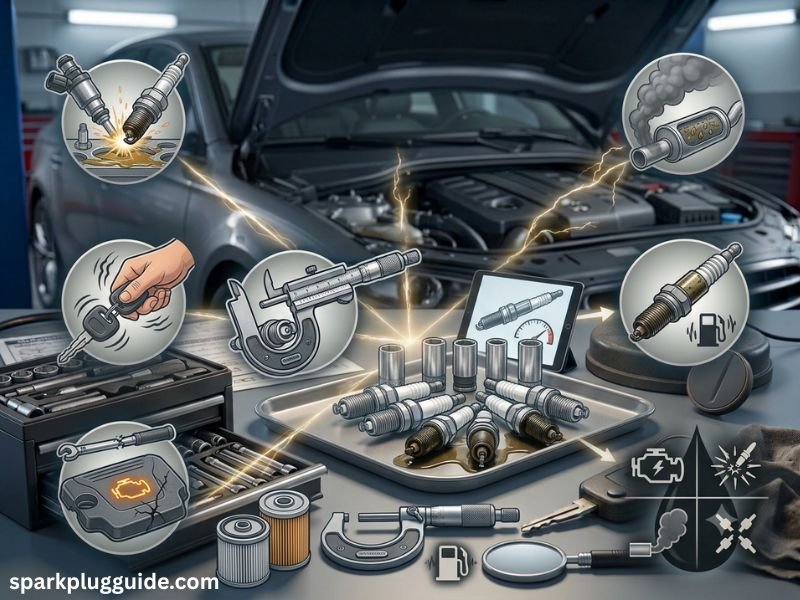
A wet spark plug cannot create a strong ignition spark because liquid contamination interferes with normal combustion. The moisture, fuel, or oil coating on the spark plug tip can prevent the air-fuel mixture from burning properly, leading to noticeable engine performance problems.
The symptoms may vary depending on whether the spark plug is wet because of excess fuel, oil contamination, or external moisture.
Engine Hard Starting
One of the most common symptoms of wet spark plugs is difficulty starting the engine.
When a spark plug becomes wet with fuel, it may not produce enough spark energy to ignite the air-fuel mixture. This is especially common when an engine becomes flooded with excessive fuel.
Drivers may notice:
- Longer cranking before the engine starts
- Engine struggling to turn on
- Repeated starting attempts
A wet spark plug can prevent proper combustion until the excess fuel evaporates or the issue is corrected.
Engine Misfires
A wet spark plug can cause one or more cylinders to misfire.
A misfire happens when the spark plug fails to ignite the fuel mixture correctly inside the combustion chamber.
Signs of misfire may include:
- Engine shaking
- Uneven power delivery
- Loss of smooth operation
When the spark plug is covered with fuel or oil, the spark may become weak or inconsistent, causing incomplete combustion.
Rough Idling
Wet spark plugs can affect how smoothly the engine runs while it is stationary.
A vehicle with wet spark plugs may experience:
- Engine vibration
- Unstable RPM
- Uneven idle performance
This happens because some cylinders may not be producing the same amount of power as others.
Poor Acceleration
When a spark plug cannot create a strong ignition spark, the engine may struggle to produce normal power.
Drivers may notice:
- Slow acceleration
- Hesitation when pressing the throttle
- Reduced engine response
Incomplete combustion caused by wet spark plugs reduces engine efficiency.
Strong Fuel Smell
A strong gasoline smell can indicate that the spark plug is wet with excess fuel.
When fuel enters the cylinder but does not burn properly, unburned gasoline may pass through the engine.
This may result in:
- Fuel smell from the exhaust
- Increased fuel consumption
- Poor engine performance
Visible Wet Spark Plug Tip
The easiest way to identify a wet spark plug is by removing and inspecting it.
A wet spark plug may appear:
- Shiny
- Moist
- Covered with fuel residue
- Coated with black oily deposits
The type of liquid on the spark plug can help determine the cause of the problem.
What Does a Wet Spark Plug Look Like?
A wet spark plug usually has visible liquid or residue on the firing tip, electrode, or ceramic insulator area. The appearance depends on what caused the wet condition.
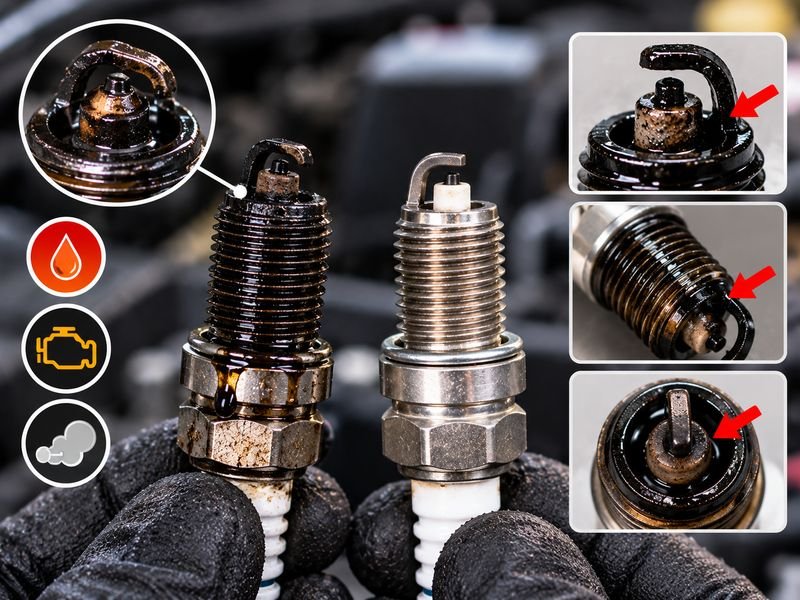
A spark plug wet with gasoline looks different from one contaminated with engine oil.
Understanding the difference helps identify the correct solution.
Wet Spark Plug From Fuel
A fuel-wet spark plug usually appears:
- Shiny or damp
- Covered with a thin liquid layer
- Smells strongly of gasoline
The electrode area may look clean but wet because excess fuel is preventing normal ignition.
Common causes include:
- Engine flooding
- Faulty fuel injector
- Repeated failed starting attempts
A fuel-soaked spark plug may dry after some time, but the reason for excess fuel should still be investigated.
Wet Spark Plug From Oil
An oil-wet spark plug has a different appearance.
It usually looks:
- Dark black
- Thickly coated
- Greasy or sticky
Oil contamination often happens when engine oil enters the combustion chamber.
Possible causes include:
- Worn piston rings
- Damaged valve seals
- Engine wear
Oil-fouled spark plugs often continue causing problems until the source of the oil leak is repaired.
Wet Spark Plug From Water or Moisture
Sometimes spark plugs become wet due to external moisture rather than internal engine problems.
This may happen because of:
- Water entering the ignition area
- Damaged spark plug boot seals
- Engine washing without proper drying
Moisture around the spark plug can interrupt electrical energy and create weak ignition.
How to Identify the Type of Wet Spark Plug
The appearance and smell can provide clues:
Fuel wet spark plug:
- Thin liquid coating
- Gasoline smell
- Usually lighter appearance
Oil wet spark plug:
- Thick black residue
- Greasy texture
- Oil smell
Water contamination:
- Clear moisture
- Usually no fuel or oil smell
Identifying the type of contamination helps determine the correct repair approach.
What Causes Spark Plugs to Become Wet?
Spark plugs become wet when liquid enters the combustion area or when the spark plug cannot burn away fuel and deposits properly. The cause can be related to fuel delivery problems, ignition system failures, engine wear, or operating conditions.
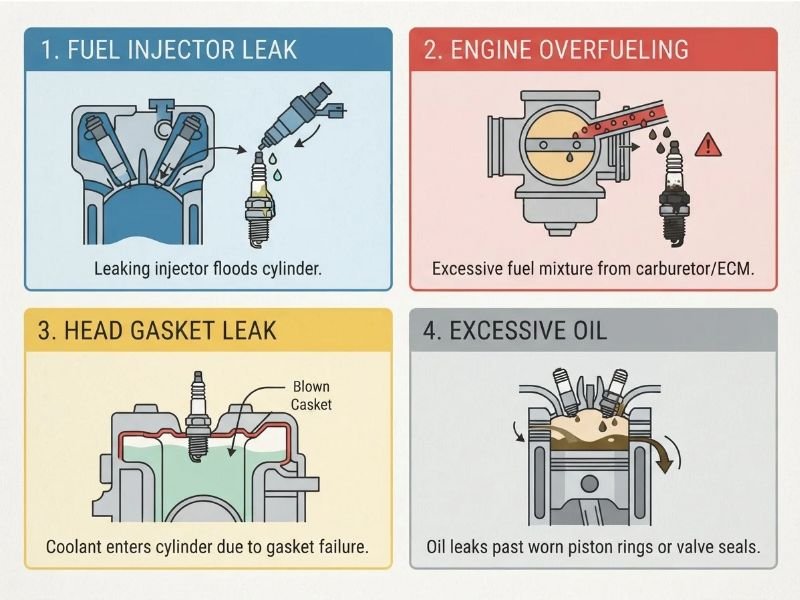
Finding the reason behind a wet spark plug is important because simply drying or replacing the plug may only provide a temporary solution.
Excess Fuel Entering the Cylinder
One of the most common causes of wet spark plugs is too much fuel entering the combustion chamber.
When excessive fuel is injected, the spark plug may become soaked before it can ignite the mixture properly.
This condition is often called engine flooding.
Common reasons include:
- Repeated failed starting attempts
- Faulty fuel injector
- Incorrect fuel delivery
- Engine control problems
A fuel-soaked spark plug may prevent the engine from starting because the spark cannot ignite the overly rich mixture.
Failed Ignition System
A weak or failed ignition system can also cause spark plugs to become wet.
If the spark plug does not receive enough electrical energy, the fuel entering the cylinder may remain unburned.
Possible ignition problems include:
- Weak ignition coil
- Damaged spark plug
- Faulty spark plug wire
- Electrical connection problems
When combustion does not happen properly, fuel can accumulate on the spark plug surface.
Faulty Fuel Injector
A leaking or malfunctioning fuel injector can send too much fuel into the combustion chamber.
A faulty injector may:
- Leak fuel when it should be closed
- Deliver incorrect fuel amounts
- Create an overly rich mixture
This excess fuel can wet the spark plug and cause:
- Hard starting
- Misfires
- Poor fuel economy
Cold Engine Operation
Cold weather and short driving conditions can contribute to wet spark plugs.
When an engine does not reach normal operating temperature:
- Fuel may not burn completely
- Moisture can build up
- Deposits may form on the spark plug
Vehicles that are frequently used for short trips may experience this problem more often.
Oil Entering the Combustion Chamber
A spark plug can become wet with oil when engine oil enters the combustion chamber.
Possible causes include:
- Worn piston rings
- Damaged valve seals
- Cylinder wear
Oil contamination usually creates a thick, dark coating on the spark plug and may lead to continuous fouling.
Wet Fuel Spark Plug vs Wet Oil Spark Plug
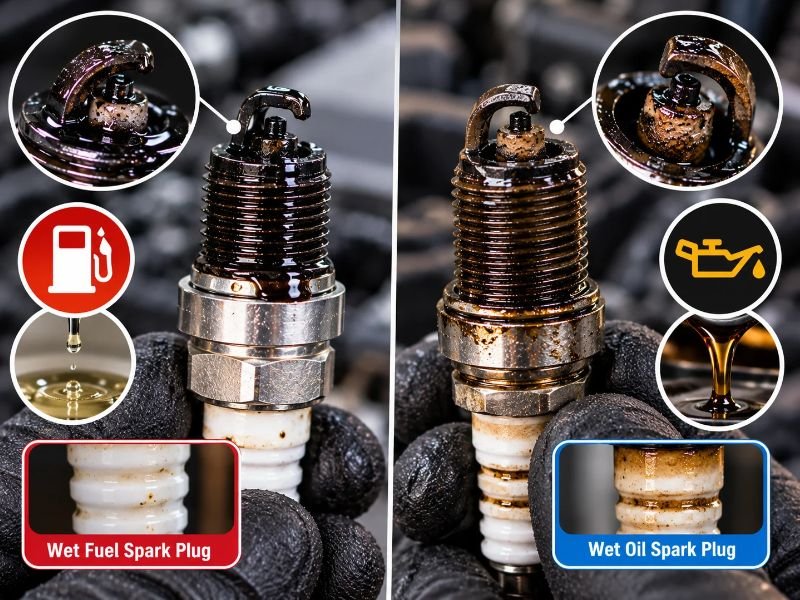
Not all wet spark plugs indicate the same problem. A spark plug covered with fuel and one covered with oil may look similar at first, but their appearance, causes, and engine symptoms are different.
Identifying the type of contamination helps determine the correct repair.
Fuel Wet Spark Plug Appearance
A fuel-wet spark plug usually has a thin liquid coating on the firing tip.
It may appear:
- Shiny
- Damp
- Clean but wet
A strong gasoline smell is usually present because unburned fuel remains on the spark plug surface.
Fuel wetness often happens when the engine receives more fuel than it can burn.
Oil Wet Spark Plug Appearance
An oil-wet spark plug usually has a thicker and darker coating.
It may appear:
- Black
- Greasy
- Sticky
Oil contamination often leaves heavy deposits around:
- Electrode area
- Ceramic insulator
- Spark plug tip
This condition usually points toward an engine mechanical issue rather than a simple ignition problem.
Difference in Engine Symptoms
Fuel-wet spark plugs commonly cause:
- Engine not starting
- Strong fuel smell
- Temporary misfires
Oil-wet spark plugs commonly cause:
- Continuous misfires
- Blue exhaust smoke
- Oil consumption
- Repeated spark plug fouling
Understanding these differences helps avoid replacing spark plugs repeatedly without fixing the actual cause.
Which Problem Is More Serious?
Both conditions require attention, but oil contamination often indicates a deeper engine issue.
A fuel-wet spark plug may occur because of a temporary flooding condition, while oil contamination may be linked to internal engine wear.
Proper diagnosis is important before deciding on repairs.
Can a Wet Spark Plug Cause a Misfire?
Yes, a wet spark plug can cause an engine misfire because liquid contamination can prevent the spark plug from creating a strong enough spark. When the air-fuel mixture does not ignite properly, the affected cylinder cannot produce normal power.
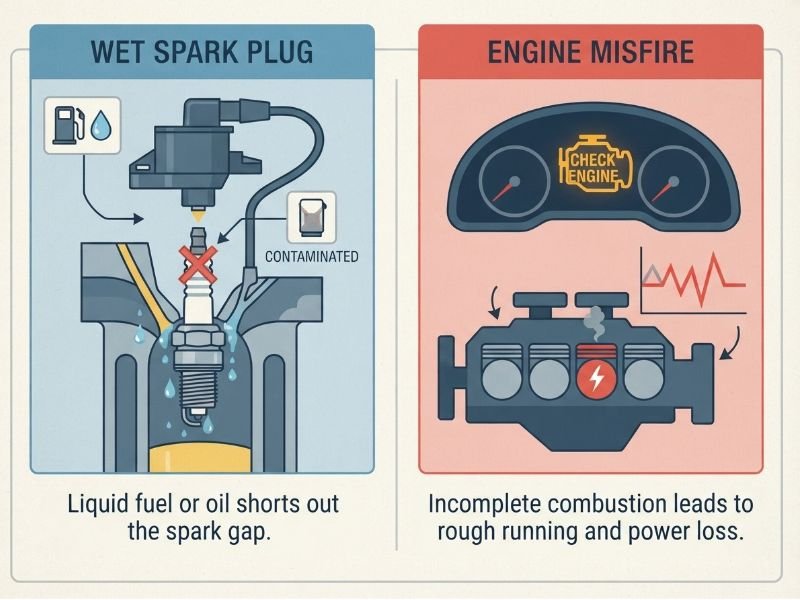
This can result in noticeable engine performance problems.
How Moisture Prevents Proper Spark
A spark plug needs a clean electrode area to create an effective ignition spark.
When fuel, oil, or moisture covers the spark plug tip:
- Electrical energy may leak away
- Spark strength may decrease
- Ignition may become inconsistent
As a result, the fuel mixture may not burn completely.
Why a Cylinder Stops Firing
Each engine cylinder depends on the spark plug to ignite the air-fuel mixture at the correct time.
A wet spark plug may cause the cylinder to:
- Misfire
- Produce less power
- Send unburned fuel into the exhaust
If multiple spark plugs become wet, the engine may run very poorly or fail to start.
Symptoms of Misfire From Wet Spark Plugs
Common signs include:
- Engine shaking
- Rough idle
- Loss of acceleration
- Check engine light
- Poor fuel economy
These symptoms can also occur from other ignition problems, so proper inspection is needed.
Can a Wet Spark Plug Recover?
A fuel-wet spark plug may sometimes recover after drying if no damage has occurred.
However, if the spark plug is:
- Oil fouled
- Damaged
- Covered with heavy deposits
replacement may be necessary.
The underlying cause should always be corrected to prevent the problem from happening again.
How to Diagnose Wet Spark Plugs
Diagnosing wet spark plugs starts with inspecting the spark plug condition and identifying what type of liquid contamination is present. Since wet spark plugs can be caused by fuel, oil, or moisture, finding the source of the problem is more important than only replacing the spark plug.
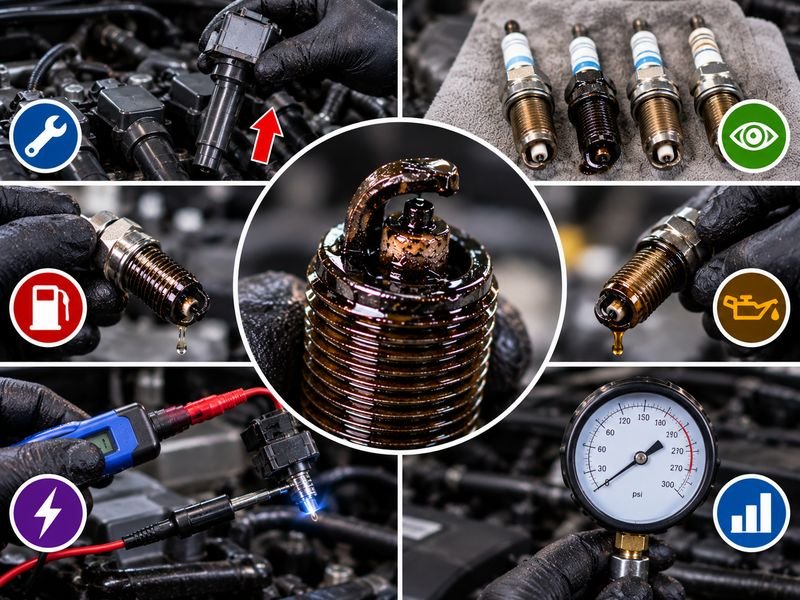
A proper diagnosis helps prevent repeated ignition problems.
Remove and Inspect the Spark Plug
The first step is removing the spark plug and checking its condition.
During inspection, look for:
- Fuel smell
- Oil residue
- Visible moisture
- Carbon deposits
- Electrode condition
A spark plug that is wet with fuel usually has a thin liquid coating, while an oil-contaminated plug often has thick black residue.
The appearance can provide clues about whether the problem is related to the fuel system, ignition system, or engine condition.
Check the Spark Plug Spark
After inspection, checking spark output can help determine whether the ignition system is working correctly.
A weak or missing spark may indicate problems with:
- Ignition coil
- Spark plug
- Spark plug wire
- Electrical connections
If the spark plug is wet because the ignition system is not working properly, the fuel may continue entering the cylinder without being burned.
Inspect the Fuel System
If the spark plug is wet with gasoline, the fuel system should be checked.
Possible causes include:
- Leaking fuel injector
- Excess fuel delivery
- Incorrect fuel mixture
A faulty fuel injector can continue adding fuel even when the engine does not need it, causing repeated wet spark plug problems.
Check the Ignition System
A properly functioning ignition system is required to burn the fuel mixture.
Important components to inspect include:
- Ignition coils
- Spark plug wires
- Spark plug condition
A weak ignition system can allow fuel to accumulate because the combustion process is incomplete.
Look for Engine Oil Problems
If the spark plug is wet with oil, the engine may have an internal mechanical issue.
Possible causes include:
- Worn piston rings
- Valve seal failure
- Excessive oil consumption
Repeated oil-fouled spark plugs should not be ignored because the problem may extend beyond the ignition system.
How to Fix Wet Spark Plugs
Fixing wet spark plugs requires identifying and correcting the cause of the contamination. Simply drying or replacing the spark plug may temporarily solve the problem, but the issue can return if the underlying cause remains.
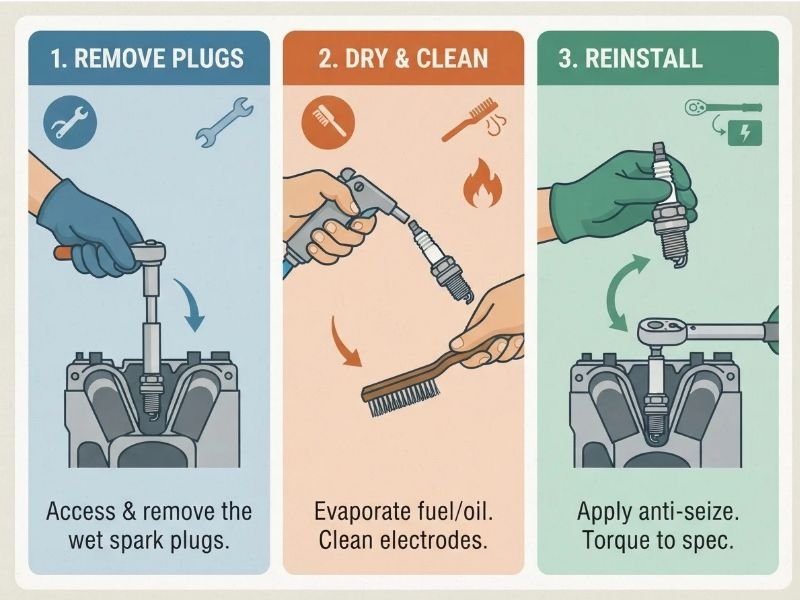
The correct solution depends on whether the spark plug is wet from fuel, oil, or moisture.
Dry or Replace the Spark Plug
If a spark plug is wet with fuel and still in good condition, allowing it to dry may restore normal operation.
However, replacement may be needed when the spark plug has:
- Heavy deposits
- Damaged electrodes
- Oil contamination
- Excessive wear
A damaged spark plug may not create a reliable spark even after cleaning.
Clear a Flooded Engine
Fuel-soaked spark plugs often happen because the engine receives too much fuel.
To clear a flooded engine:
- Allow excess fuel to evaporate
- Follow the vehicle’s recommended starting procedure
- Avoid repeated unsuccessful starting attempts
Once excess fuel is removed, the spark plug may return to normal operation if no other problem exists.
Repair Fuel System Problems
If fuel continues entering the cylinder excessively, the root cause must be repaired.
Possible repairs include:
- Replacing faulty fuel injectors
- Fixing fuel pressure problems
- Correcting fuel mixture issues
Without fixing the fuel problem, new spark plugs may become wet again.
Repair Ignition System Issues
If the spark plug becomes wet because of weak ignition, related components should be checked.
Possible repairs include:
- Replacing faulty ignition coils
- Repairing damaged spark plug wires
- Correcting electrical connection problems
A strong ignition spark is necessary for proper combustion.
Fix Oil Contamination Problems
Oil-wet spark plugs require attention to the source of the oil leak.
Possible causes that may need repair include:
- Valve seal problems
- Worn piston rings
- Engine cylinder wear
Replacing the spark plug without fixing oil entry into the combustion chamber will usually result in repeated fouling.
How to Prevent Wet Spark Plugs
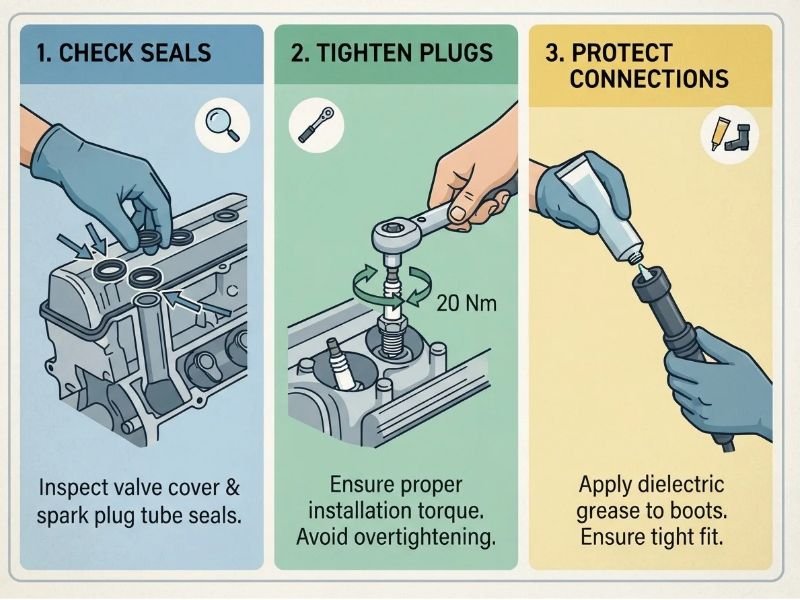
Preventing wet spark plugs involves maintaining the ignition system, fuel system, and engine condition. Regular maintenance reduces the chance of fuel, oil, or moisture interfering with spark plug performance.
A healthy ignition system helps ensure consistent combustion and reliable engine operation.
Maintain Ignition Components
Spark plugs and ignition components should be maintained according to manufacturer recommendations.
Important maintenance includes:
- Replacing worn spark plugs
- Checking ignition coils
- Inspecting spark plug wires
A strong ignition system reduces the chance of unburned fuel causing wet spark plugs.
Avoid Repeated Short Trips
Frequent short trips can contribute to spark plug wetness because the engine may not reach its normal operating temperature.
When the engine stays cold:
- Fuel may not burn completely
- Moisture may accumulate
- Deposits may form
Allowing the engine to warm properly helps support efficient combustion.
Maintain the Fuel System
A properly working fuel system helps prevent excessive fuel from reaching the spark plugs.
Regular maintenance includes:
- Checking fuel injectors
- Monitoring engine performance
- Addressing fuel-related issues early
A leaking injector or incorrect fuel mixture can quickly create wet spark plug problems.
Fix Oil Leaks Early
Oil entering the combustion chamber can repeatedly damage spark plugs.
Addressing oil-related problems early helps prevent:
- Spark plug fouling
- Misfires
- Reduced engine performance
Regular engine inspections can help identify leaks before they create larger problems.
Inspect Spark Plugs Regularly
Regular spark plug inspection can reveal early warning signs.
Look for:
- Wet residue
- Unusual deposits
- Electrode damage
- Abnormal wear
Early detection allows problems to be corrected before they affect engine reliability.
Frequently Asked Questions About Wet Spark Plugs
Wet spark plugs can happen because of fuel, oil, or moisture contamination, and many drivers are unsure what the condition means for engine performance. These common questions explain the causes, effects, and solutions related to wet spark plugs.
What Does a Wet Spark Plug Mean?
A wet spark plug means that liquid contamination is present on the spark plug tip or electrode area. The liquid may be fuel, engine oil, or moisture.
A wet spark plug usually indicates that the combustion process is not working properly or that another engine problem is affecting spark plug operation.
Can Wet Spark Plugs Dry Out?
Yes, fuel-wet spark plugs can sometimes dry out if the excess fuel evaporates and the spark plug is not damaged.
However, if the spark plug is wet because of oil contamination or has heavy deposits, drying it will not solve the underlying problem.
The cause of the wet condition should always be identified.
Are Wet Spark Plugs Bad?
Yes, wet spark plugs can negatively affect engine performance because they may not create a strong ignition spark.
A wet spark plug can cause:
- Misfires
- Hard starting
- Rough engine operation
- Poor acceleration
The severity depends on whether the plug is wet from fuel, oil, or moisture.
Why Is My Spark Plug Wet With Gasoline?
A gasoline-wet spark plug usually means that excess fuel is entering the combustion chamber but is not burning properly.
Common causes include:
- Engine flooding
- Faulty fuel injector
- Weak ignition system
- Repeated failed starting attempts
The ignition system and fuel delivery system should be checked to find the cause.
Why Is My Spark Plug Wet With Oil?
An oil-wet spark plug usually indicates that engine oil is entering the combustion chamber.
Possible causes include:
- Worn piston rings
- Damaged valve seals
- Engine wear
Oil contamination often creates repeated spark plug fouling and may require engine repairs.
Can a Wet Spark Plug Cause No Start?
Yes, wet spark plugs can prevent an engine from starting.
When the spark plug is covered with fuel or oil, it may not produce a strong enough spark to ignite the air-fuel mixture.
This is especially common during engine flooding situations.
Should I Replace a Wet Spark Plug?
Replacement depends on the condition of the spark plug.
A lightly fuel-wet spark plug may work again after drying if it is otherwise healthy.
However, replacement is recommended when the plug has:
- Oil contamination
- Damaged electrodes
- Heavy deposits
- Excessive wear
How Do I Dry a Wet Spark Plug?
A fuel-wet spark plug can be dried by removing it and allowing the excess fuel to evaporate.
However, drying the spark plug only addresses the symptom.
If the cause is:
- Fuel injector problems
- Ignition failure
- Oil contamination
the underlying issue must be repaired to prevent the problem from returning.
Conclusion
Wet spark plugs can prevent proper ignition and lead to noticeable engine problems such as hard starting, misfires, rough idling, and poor acceleration. The condition usually occurs when fuel, oil, or moisture interferes with the spark plug’s ability to create a strong spark.
Identifying whether the spark plug is wet with gasoline, oil, or water is important because each condition has a different cause. Fuel-wet spark plugs are often related to flooding or fuel system problems, while oil-wet spark plugs may indicate engine wear or internal issues.
Simply replacing a wet spark plug may not fix the problem permanently. Proper diagnosis of the ignition system, fuel system, and engine condition is necessary to prevent repeated spark plug fouling.
Maintaining spark plugs, ignition components, and fuel systems regularly helps ensure reliable combustion and better engine performance.