
Dirty spark plug symptoms usually include engine misfires, rough idling, hard starting, poor acceleration, reduced fuel economy, and visible deposits on the spark plug tip. A dirty spark plug cannot create a strong and consistent spark because carbon, oil, fuel residue, or other contaminants interfere with the ignition process.
Spark plugs need a clean electrode area to generate the electrical spark required for combustion. When deposits build up on the firing tip, the spark may become weak or inconsistent, causing the engine to run less efficiently.
A dirty spark plug is not always the same as a worn-out spark plug. In many cases, cleaning may restore performance if the plug is still in good condition. However, heavy contamination or repeated fouling may indicate a deeper engine problem.
In this guide, you will learn the common dirty spark plug symptoms, what a dirty spark plug looks like, why spark plugs become dirty, and when cleaning or replacement is the better solution.
What Are the Symptoms of a Dirty Spark Plug?
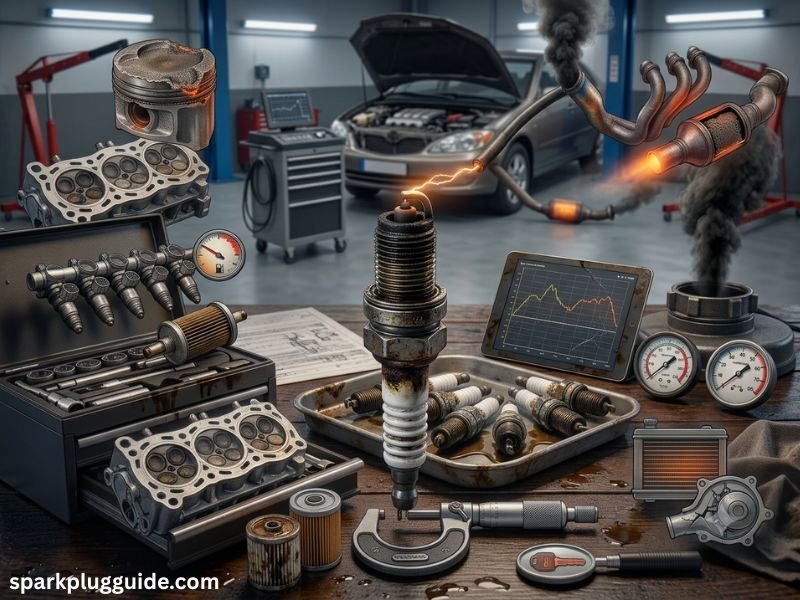
A dirty spark plug affects the ignition process because deposits on the electrode can prevent the spark from jumping correctly. When the air-fuel mixture does not ignite properly, the engine may show several performance problems.
The symptoms depend on the type and amount of contamination on the spark plug.
Engine Misfires
One of the most common symptoms of a dirty spark plug is engine misfire.
A misfire happens when the spark plug fails to ignite the air-fuel mixture completely inside the cylinder.
Signs may include:
- Engine hesitation
- Uneven power delivery
- Shaking during operation
Carbon buildup, oil residue, or fuel deposits can reduce spark strength and cause inconsistent combustion.
Rough Engine Idle
A dirty spark plug can make the engine run unevenly when idling.
Drivers may notice:
- Engine vibration
- Unstable RPM
- Rough running at low speed
This happens because the affected cylinder may not produce the same amount of power as the others.
A clean spark plug helps maintain stable combustion and smoother engine operation.
Hard Starting Problems
Dirty spark plugs can make starting the engine more difficult, especially when deposits become heavy.
Common signs include:
- Longer cranking time
- Multiple starting attempts
- Difficulty starting in cold conditions
When contaminants cover the electrode, the spark may not be strong enough to ignite the fuel mixture immediately.
Poor Acceleration
A dirty spark plug can reduce engine responsiveness during acceleration.
The driver may experience:
- Delayed throttle response
- Reduced power
- Engine hesitation
Because combustion becomes less efficient, the engine cannot produce the same power output as it would with a clean spark plug.
Reduced Fuel Economy
Dirty spark plugs can increase fuel consumption because the fuel mixture may not burn completely.
This can lead to:
- More fuel usage
- Lower engine efficiency
- Increased emissions
Maintaining clean spark plugs helps the engine burn fuel more effectively.
What Does a Dirty Spark Plug Look Like?
A dirty spark plug usually has visible deposits or contamination on the firing tip, electrode, or ceramic insulator. The appearance depends on what type of material has built up on the spark plug.
Inspecting the spark plug can help identify whether the issue is caused by carbon, oil, fuel, or another type of deposit.
Carbon Fouled Spark Plug
A carbon-fouled spark plug is one of the most common types of dirty spark plugs.
It usually appears:
- Black
- Covered with dry soot
- Powdery around the electrode
Carbon buildup often happens when the engine burns too much fuel compared with available air.
Common causes include:
- Rich fuel mixture
- Dirty air filter
- Weak ignition system
- Frequent short trips
Heavy carbon deposits can block proper spark formation and reduce engine performance.
Oil Dirty Spark Plug
An oil-contaminated spark plug looks different from normal carbon buildup.
It may appear:
- Wet
- Shiny black
- Greasy
Oil contamination usually means engine oil is entering the combustion chamber.
Possible causes include:
- Worn piston rings
- Damaged valve seals
- Engine wear
An oil-fouled spark plug often continues causing problems until the source of the oil leak is repaired.
Fuel Fouled Spark Plug
A fuel-fouled spark plug usually appears wet with gasoline residue.
Signs include:
- Damp spark plug tip
- Strong fuel smell
- Little visible carbon buildup
This commonly happens when excess fuel enters the cylinder but does not burn properly.
Possible causes include:
- Flooded engine
- Faulty fuel injector
- Weak ignition spark
Dirty Spark Plug Gap
Deposits can also collect around the spark plug gap area.
This may cause:
- Weak spark
- Poor ignition
- Misfires
A dirty gap prevents the spark from jumping efficiently between the electrodes.
What Causes a Spark Plug to Become Dirty?
Spark plugs become dirty when deposits or contaminants build up on the firing tip and electrode area. These deposits can come from fuel, oil, combustion byproducts, or incorrect engine conditions.
Finding the cause of the buildup is important because simply cleaning the spark plug may not prevent the problem from returning.
Carbon Buildup From Rich Fuel Mixture
A rich fuel mixture means the engine is receiving more fuel than it can burn efficiently.
When excess fuel enters the combustion chamber, it can create carbon deposits on the spark plug.
Common causes include:
- Incorrect fuel mixture
- Faulty fuel injector
- Dirty air filter
- Engine tuning issues
Carbon buildup can reduce spark strength and cause ignition problems.
Oil Contamination
Engine oil entering the combustion chamber can make the spark plug dirty.
Oil contamination may happen because of:
- Worn piston rings
- Damaged valve seals
- Engine wear
An oil-covered spark plug usually develops thick black deposits and may continue to foul even after cleaning.
Short Driving Trips
Frequent short trips can contribute to dirty spark plugs because the engine may not reach its normal operating temperature.
When the engine stays cold:
- Fuel may not burn completely
- Moisture may remain inside the combustion chamber
- Deposits can form more easily
Vehicles used mainly for short-distance driving may require more frequent spark plug inspection.
Poor Air Filter Condition
A dirty or restricted air filter can affect the air-fuel mixture.
When airflow is reduced, the engine may receive too much fuel compared with available air.
This can result in:
- Carbon deposits
- Poor combustion
- Dirty spark plugs
Maintaining a clean air filter helps support proper engine operation.
Incorrect Spark Plug Type
Using the wrong spark plug can increase the chance of fouling.
Problems may occur when the spark plug has:
- Incorrect heat range
- Wrong specifications
- Poor compatibility with the engine
The correct spark plug allows proper heat transfer and helps prevent excessive deposits.
Dirty Spark Plug vs Bad Spark Plug
Although dirty spark plugs and bad spark plugs can create similar engine symptoms, they are not always the same problem.
A dirty spark plug is usually affected by deposits or contamination, while a bad spark plug may be worn, damaged, or unable to function properly.
Understanding the difference helps determine whether cleaning or replacement is needed.
Condition Difference
A dirty spark plug usually has:
- Carbon buildup
- Fuel residue
- Oil deposits
The spark plug may still be usable if the contamination is removed.
A bad spark plug may have:
- Worn electrodes
- Cracked ceramic
- Excessive gap
- Permanent damage
In this case, replacement is usually required.
Cleaning vs Replacement
Dirty spark plugs may sometimes be cleaned if:
- The electrodes are still in good condition
- There is only light buildup
- The spark plug has not reached its service limit
However, cleaning will not restore a spark plug that has:
- Severe electrode wear
- Physical damage
- Excessive erosion
A damaged spark plug should be replaced.
Appearance Difference
A dirty spark plug often shows:
- Black deposits
- Wet residue
- Surface contamination
A bad spark plug may show:
- Rounded electrodes
- Missing electrode material
- Cracked insulator
The appearance can help identify whether the issue is contamination or wear.
Performance Difference
A dirty spark plug may improve after cleaning because the ignition surface becomes cleaner.
A bad spark plug usually continues causing problems because the internal components are worn or damaged.
Symptoms of both conditions may include:
- Misfires
- Rough idle
- Poor acceleration
Proper inspection helps identify the correct solution.
Can a Dirty Spark Plug Cause Engine Problems?
Yes, a dirty spark plug can cause several engine performance problems because deposits interfere with the spark needed for proper combustion.
When the spark becomes weak or inconsistent, the engine may not burn fuel efficiently.
Reduced Spark Strength
Deposits on the spark plug electrode can make it harder for electricity to create a strong spark.
This can cause:
- Weak ignition
- Inconsistent combustion
- Starting problems
A clean electrode surface allows the spark to travel properly between the electrodes.
Incomplete Combustion
A dirty spark plug may fail to ignite the air-fuel mixture completely.
Incomplete combustion can lead to:
- Reduced engine power
- Poor fuel efficiency
- Increased emissions
Unburned fuel may also create additional deposits inside the engine.
Increased Fuel Consumption
When combustion becomes inefficient, the engine may require more fuel to produce the same power.
Drivers may notice:
- Lower fuel mileage
- More frequent refueling
- Reduced engine efficiency
Cleaning or replacing dirty spark plugs can help restore proper combustion when contamination is the main issue.
Engine Performance Issues
A dirty spark plug can affect overall driving performance.
Common problems include:
- Hesitation during acceleration
- Rough running
- Engine vibration
- Loss of power
These symptoms can become worse as more deposits accumulate on the spark plug.
Frequently Asked Questions About Dirty Spark Plugs
Dirty spark plugs can affect engine performance in several ways, but many drivers are unsure how to identify, clean, or prevent spark plug contamination. These common questions explain the most important details about dirty spark plugs.
What Are the Signs of a Dirty Spark Plug?
The most common signs of a dirty spark plug include:
- Engine misfires
- Rough idling
- Hard starting
- Poor acceleration
- Reduced fuel economy
A dirty spark plug may also show visible deposits such as black carbon, oil residue, or fuel contamination on the electrode area.
Can Dirty Spark Plugs Cause Misfires?
Yes, dirty spark plugs can cause engine misfires.
When deposits build up on the spark plug tip, the spark may become weak or inconsistent. This prevents the air-fuel mixture from burning properly.
A misfiring engine may show:
- Shaking
- Hesitation
- Uneven power delivery
Can I Clean a Dirty Spark Plug?
Yes, some dirty spark plugs can be cleaned if the contamination is light and the plug is still in good condition.
Cleaning may help remove:
- Light carbon deposits
- Minor fuel residue
However, cleaning will not fix spark plugs with:
- Worn electrodes
- Cracked ceramic
- Severe damage
What Causes Carbon Buildup on Spark Plugs?
Carbon buildup usually happens when fuel does not burn completely inside the combustion chamber.
Common causes include:
- Rich fuel mixture
- Dirty air filter
- Short driving trips
- Weak ignition system
Carbon deposits can reduce spark quality and affect engine performance.
Can Dirty Spark Plugs Affect Fuel Economy?
Yes, dirty spark plugs can reduce fuel economy.
When combustion becomes inefficient, the engine may use more fuel to produce the same power.
This can happen because:
- Fuel is not burning completely
- Spark strength is reduced
- Engine efficiency decreases
How Often Should Spark Plugs Be Cleaned?
Most modern spark plugs do not require regular cleaning if the engine is operating correctly.
Instead, regular inspection and replacement based on manufacturer recommendations are usually preferred.
Cleaning may only be needed when deposits appear before the normal replacement interval.
Should I Replace a Dirty Spark Plug?
Replacement depends on the condition of the spark plug.
A dirty spark plug may only need cleaning if:
- Deposits are light
- Electrodes are healthy
- The plug is within its service life
Replacement is better when:
- The plug is worn
- Deposits keep returning
- The electrode is damaged
What Does a Black Dirty Spark Plug Mean?
A black spark plug usually indicates carbon buildup or incomplete combustion.
Possible causes include:
- Rich fuel mixture
- Poor airflow
- Weak ignition
A black spark plug should be inspected to determine the exact cause.
Conclusion
Dirty spark plug symptoms can affect engine performance, fuel efficiency, and ignition reliability. Common warning signs include misfires, rough idling, hard starting, poor acceleration, and visible deposits on the spark plug tip.
A dirty spark plug does not always mean it needs immediate replacement. Light deposits may be removed through cleaning if the spark plug is still in good condition. However, repeated fouling or heavy contamination often indicates a deeper issue involving fuel mixture, oil consumption, or ignition system problems.
Regular inspection helps identify dirty spark plugs early and prevents performance issues from becoming worse. Maintaining the correct fuel mixture, using the right spark plug type, and following proper engine maintenance can help keep spark plugs clean and improve overall engine operation.
Understanding dirty spark plug symptoms allows drivers to diagnose ignition problems earlier and choose the right solution between cleaning and replacement.