
Ignition coil and spark plug problems can cause similar symptoms, including engine misfires, rough idling, hard starting, hesitation, and power loss. The main difference is that a bad spark plug usually happens because of wear, fouling, or incorrect spark gap, while a failing ignition coil cannot provide the required voltage to create a strong spark.
Both components work together as part of the ignition system, which makes it difficult to identify the exact cause based only on symptoms. A faulty spark plug can reduce spark quality, while a weak ignition coil can prevent the spark plug from working properly.
Understanding the difference between ignition coil and spark plug symptoms helps avoid replacing the wrong component and spending money on unnecessary repairs.
In this guide, you will learn how ignition coil vs spark plug symptoms differ, what signs indicate each problem, how to diagnose them, and which component may need replacement.
Ignition Coil vs Spark Plug: What Is the Difference?
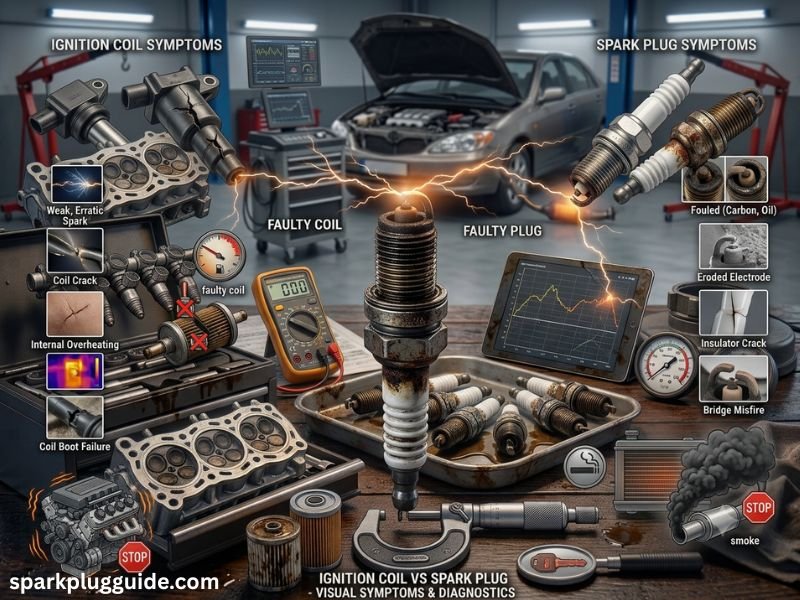
The ignition coil and spark plug are two connected parts of the ignition system, but they perform different functions. The ignition coil creates the high voltage needed for ignition, while the spark plug uses that voltage to create the spark that ignites the air-fuel mixture.
A problem with either component can interrupt combustion and create similar engine symptoms.
What Does a Spark Plug Do?
A spark plug creates the electrical spark needed to ignite the compressed air-fuel mixture inside the combustion chamber.
Its main functions include:
- Creating the ignition spark
- Starting the combustion process
- Helping the engine produce power
Spark plugs can fail because of:
- Normal electrode wear
- Carbon buildup
- Oil contamination
- Incorrect spark gap
- Excessive heat exposure
When a spark plug becomes worn or dirty, the spark may become weak or inconsistent, causing engine performance problems.
What Does an Ignition Coil Do?
The ignition coil is responsible for increasing the vehicle’s battery voltage into the high voltage required by the spark plug.
Its main functions include:
- Converting low voltage into high voltage
- Sending electrical energy to the spark plug
- Supporting consistent ignition
A failing ignition coil may not produce enough voltage, causing the spark plug to create a weak spark or no spark at all.
Common ignition coil problems include:
- Internal electrical failure
- Cracked coil housing
- Overheating damage
- Wiring issues
How They Work Together
The ignition process happens in a specific sequence:
- The engine control system sends a signal to the ignition coil.
- The ignition coil increases voltage.
- The high voltage travels to the spark plug.
- The spark plug creates a spark to ignite the fuel mixture.
Because both components depend on each other, a problem with one can appear similar to a problem with the other.
Symptoms of a Bad Spark Plug
A bad spark plug usually develops problems gradually as the electrode wears or deposits build up. Since spark plugs operate under extreme heat and pressure, their performance decreases over time.
Engine Misfire
A worn or dirty spark plug can cause an engine misfire when it fails to ignite the fuel mixture correctly.
Common signs include:
- Engine shaking
- Uneven power delivery
- Hesitation while driving
Misfires from spark plugs often become worse as the plug continues to wear.
Hard Starting
A damaged spark plug may struggle to create a strong enough spark during engine startup.
Drivers may notice:
- Longer cranking time
- Difficulty starting the engine
- Poor cold-start performance
A worn spark plug gap can increase the voltage required for ignition, making starting more difficult.
Poor Acceleration
A weak spark from a bad spark plug can reduce combustion efficiency.
Symptoms may include:
- Slow acceleration
- Reduced engine response
- Power loss during driving
The engine cannot produce full power when the fuel mixture is not burning properly.
Reduced Fuel Economy
A faulty spark plug can cause incomplete combustion, which wastes fuel.
This may result in:
- Increased fuel consumption
- Lower engine efficiency
- More frequent refueling
Visible Spark Plug Damage
Unlike ignition coil problems, spark plug issues can often be identified through physical inspection.
Signs include:
- Black carbon deposits
- Oil residue
- Worn electrodes
- Incorrect spark gap
Inspecting the spark plug condition is one of the easiest ways to identify a spark plug-related issue.
Can a Bad Ignition Coil Damage Spark Plugs?
A bad ignition coil can affect spark plug performance because the coil controls the electrical energy needed to create a spark. When the ignition coil does not work properly, the spark plug may not ignite the fuel mixture completely, which can lead to deposits and performance problems.
Although ignition coils do not usually damage spark plugs immediately, long-term ignition problems can shorten spark plug life.
Weak Spark Problems
A failing ignition coil may produce a weak spark instead of the strong spark required for proper combustion.
This can cause:
- Incomplete fuel burning
- Carbon buildup on the spark plug
- Fuel fouling
When fuel does not burn completely, deposits can accumulate on the spark plug electrode and reduce ignition efficiency.
Increased Spark Plug Fouling
A weak ignition coil can cause repeated misfires, allowing unburned fuel to remain inside the combustion chamber.
This may result in:
- Black carbon deposits
- Wet fuel residue
- Reduced spark quality
A spark plug that repeatedly becomes fouled may need replacement, but the ignition coil problem must also be repaired.
Can a New Spark Plug Fix a Coil Problem?
Installing new spark plugs may temporarily improve performance if the old plugs were contaminated, but it will not fix a failing ignition coil.
If the ignition coil cannot provide enough voltage, new spark plugs may eventually develop the same problems.
Proper diagnosis is important before replacing ignition components.
Can Bad Spark Plugs Damage Ignition Coils?
Yes, severely worn spark plugs can increase stress on ignition coils. As spark plugs age, the electrode gap becomes larger, requiring more voltage from the ignition coil to create a spark.
Over time, this increased demand may affect ignition coil performance.
Increased Voltage Demand
A worn spark plug with a large gap requires more electrical energy to jump between the electrodes.
This can cause:
- Higher ignition coil workload
- Increased electrical stress
- Reduced coil lifespan
Maintaining the correct spark plug gap helps reduce unnecessary stress on ignition components.
Long-Term Ignition Problems
Continuing to use worn spark plugs can create ongoing ignition problems.
Possible effects include:
- Weak spark performance
- Misfires
- Increased strain on ignition system parts
Replacing old spark plugs at the recommended interval helps protect the ignition coil.
Why Spark Plug Maintenance Matters
Spark plugs and ignition coils are designed to work together.
A properly maintained spark plug:
- Requires normal voltage
- Supports efficient combustion
- Reduces ignition stress
Ignoring worn spark plugs may eventually affect other ignition components.
Which One Should You Replace First?
When dealing with ignition problems, deciding whether to replace the spark plugs or ignition coils depends on the symptoms, inspection results, and maintenance history.
Replacing parts without proper diagnosis can lead to unnecessary costs.
When Spark Plug Replacement Makes Sense
Replacing spark plugs is a good first step when:
- They have reached the recommended service interval
- The electrodes are worn
- There are visible deposits
- The spark gap is incorrect
Spark plugs are maintenance items and usually require replacement more frequently than ignition coils.
When Ignition Coil Replacement Makes Sense
Ignition coil replacement may be necessary when testing confirms a coil failure.
Signs that point toward ignition coil problems include:
- Sudden misfires
- Misfires under acceleration
- No spark from a cylinder
- Coil-related diagnostic codes
A faulty coil should be replaced to restore proper ignition performance.
Avoid Replacing Parts Without Diagnosis
Since ignition coil and spark plug symptoms can overlap, replacing both without testing may not always be necessary.
A proper diagnosis can include:
- Inspecting spark plugs
- Testing ignition coils
- Checking diagnostic codes
- Confirming the source of the misfire
Correct identification saves money and ensures the actual problem is repaired.
Should You Replace Spark Plugs and Ignition Coils Together?
In some cases, replacing both components together makes sense, especially if:
- The vehicle has high mileage
- Spark plugs are overdue
- Ignition coils are showing signs of failure
However, replacement should be based on the actual condition of each component.
Frequently Asked Questions About Ignition Coil vs Spark Plug Symptoms
Ignition coil and spark plug problems often create similar engine symptoms, making it difficult to identify the exact cause. These common questions explain the differences between the two components and how to diagnose ignition issues.
How Do I Know If My Spark Plug or Ignition Coil Is Bad?
You can identify the problem by checking symptoms and inspecting the ignition components.
A bad spark plug may show:
- Worn electrodes
- Carbon buildup
- Oil or fuel deposits
- Increased spark gap
- Gradual performance decline
A bad ignition coil may show:
- Sudden misfires
- Misfires during acceleration
- Loss of spark
- Intermittent engine problems
Testing both components is the best way to confirm the actual cause.
Can a Bad Coil Cause the Same Symptoms as Bad Spark Plugs?
Yes, ignition coil and spark plug failures can create many of the same symptoms.
Both problems may cause:
- Engine misfires
- Rough idling
- Poor acceleration
- Reduced engine power
- Hard starting
The main difference is that spark plug problems are often related to wear or contamination, while ignition coil problems usually involve electrical failure.
Do Ignition Coils Fail Before Spark Plugs?
It depends on the vehicle, driving conditions, and maintenance history.
Spark plugs usually wear naturally because they experience:
- Continuous electrical sparks
- High combustion temperatures
- Electrode erosion
Ignition coils usually last longer but can fail due to:
- Heat exposure
- Electrical problems
- Internal damage
Regular spark plug replacement helps reduce stress on ignition coils.
Can New Spark Plugs Fix Ignition Coil Problems?
No, new spark plugs cannot repair a faulty ignition coil.
New spark plugs may improve performance if the old plugs were:
- Worn
- Dirty
- Fouled
However, if the ignition coil cannot produce enough voltage, the engine problem will continue.
Can Bad Spark Plugs Damage Coils?
Yes, severely worn spark plugs can increase stress on ignition coils.
A worn spark plug may require:
- Higher voltage to create a spark
- More electrical demand from the coil
Over time, this extra workload may reduce ignition coil lifespan.
Should I Replace Ignition Coils With Spark Plugs?
Not always.
Spark plugs are regular maintenance items, while ignition coils are usually replaced only when they fail.
Replace spark plugs when:
- They reach their service interval
- They show wear
- They are contaminated
Replace ignition coils when:
- Testing confirms failure
- Misfire follows the coil
- There is no spark output
Conclusion
Ignition coil and spark plug problems can create similar symptoms, but the causes and solutions are different. Spark plugs mainly fail because of wear, deposits, incorrect gaps, or contamination, while ignition coils fail because they cannot provide the voltage needed for proper ignition.
Common symptoms shared by both problems include:
- Engine misfires
- Rough idling
- Hard starting
- Power loss
- Poor acceleration
The best way to identify the issue is through proper inspection and testing. Checking spark plug condition, scanning for misfire codes, and testing ignition coils can help determine the faulty component.
Maintaining both spark plugs and ignition coils is important because they work together to create efficient combustion. Replacing worn spark plugs on time and diagnosing ignition problems early can help prevent performance issues and unnecessary repairs.