
Yes, Denso spark plugs are generally considered high-quality spark plugs and are a good choice when you use the correct part number for your engine. Denso manufactures conventional, platinum, iridium, and other premium spark plug designs, and many of its plugs are used in original-equipment and replacement applications. Their main strengths are consistent manufacturing, durable electrode materials, fine-wire designs, and a broad range of engine-specific applications.
However, buying a Denso spark plug does not automatically guarantee better performance than every other brand. A properly specified Denso plug can work extremely well, while the wrong Denso plug can cause problems even if it physically fits the engine.
Spark plug compatibility matters more than brand reputation alone.
You need the correct thread size, reach, seat style, heat range, resistor configuration, electrode design, and gap for your exact engine.
For many modern vehicles, Denso iridium plugs are particularly attractive because they offer long service life and a very fine center electrode. But conventional Denso plugs can also be excellent when they are the correct choice for the application.
In this guide, I’ll explain whether Denso spark plugs are good, how long they last, how Denso iridium plugs perform, how they compare with NGK and OEM plugs, and what to check before buying them.
Are Denso Spark Plugs Good?
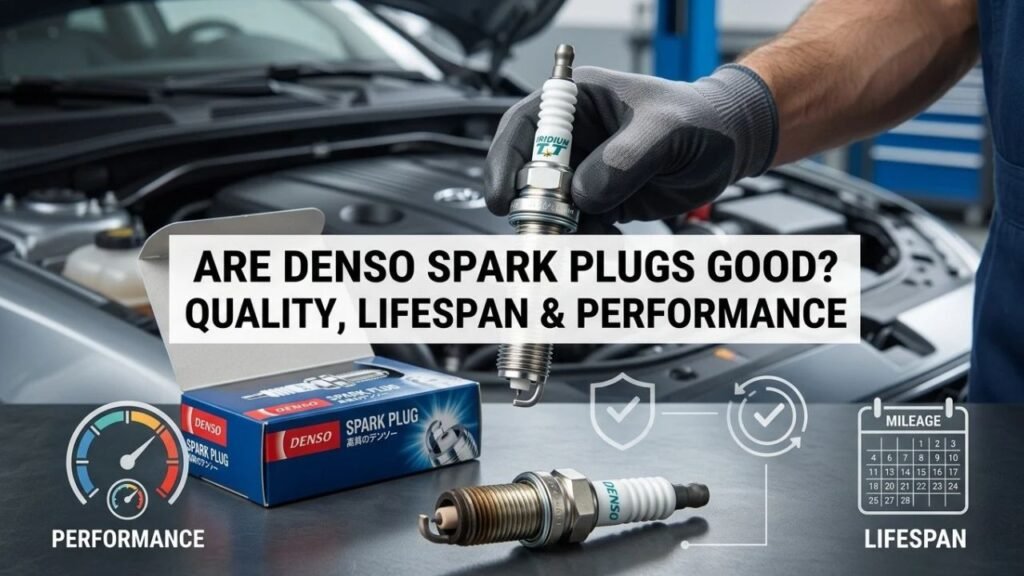
Yes.
Denso is a major automotive-component manufacturer, and its spark plugs are widely used in both original-equipment and aftermarket applications.
The company produces plugs for passenger vehicles, motorcycles, powersports equipment, and other gasoline engines.
A correctly specified Denso spark plug can provide reliable starting, stable combustion, good durability, and long service life.
Why Denso Has a Good Reputation
Several factors contribute to Denso’s reputation.
The company produces plugs with modern precious-metal electrode designs, including fine-wire iridium options.
Denso also offers a broad range of heat ranges and plug configurations, allowing the correct plug to be matched closely to the engine.
For most drivers, that matters more than flashy performance claims.
The goal of a spark plug is consistent ignition over a long period.
Denso plugs generally perform that job very well when used in the right engine.
Key Takeaways:
- Denso spark plugs are generally high-quality.
- Their iridium plugs are especially popular for long-life applications.
- Correct engine compatibility matters more than brand alone.
- A wrong Denso plug is still the wrong plug, even if the brand is reputable.
Who Makes Denso Spark Plugs?
Denso manufactures its own spark plugs as part of its larger automotive-component business.
It is known for producing ignition, fuel-system, thermal-management, electronic, and other vehicle components in addition to spark plugs.
Because Denso supplies components to major vehicle manufacturers, the brand is familiar in both factory and replacement parts markets.
That original-equipment experience is one reason many mechanics and vehicle owners trust Denso ignition products.
Are Denso Spark Plugs OEM Quality?
Many Denso spark plugs meet original-equipment-level requirements, and Denso supplies spark plugs and other components for factory vehicle applications.
However, the term “OEM quality” should not be interpreted to mean every Denso spark plug is automatically identical to the plug that originally came in every vehicle.
A replacement plug still needs to match the exact engine.
OEM vs. Aftermarket Part Numbers
A vehicle may leave the factory with a spark plug carrying a vehicle-manufacturer part number while the underlying plug is produced by a major spark plug manufacturer.
Aftermarket catalogs may list a Denso replacement under a different number.
If that Denso plug is specifically cataloged for your engine, it can be an appropriate replacement.
The important thing is verified fitment, not whether the packaging uses an automaker logo.
What Types of Spark Plugs Does Denso Make?
Denso offers several major spark plug categories.
These include conventional nickel-alloy designs, platinum plugs, iridium plugs, and specialized high-performance or long-life electrode configurations.
The correct type depends on the vehicle.
Conventional Denso Spark Plugs
Traditional Denso plugs generally use a nickel-alloy firing surface with a conductive core.
They are affordable and can perform very well in engines designed for conventional plugs.
Their main disadvantage is shorter electrode life compared with precious-metal designs.
Denso Platinum Spark Plugs
Platinum improves wear resistance at the firing surface.
This allows the spark plug to maintain its electrode shape and gap for longer than many basic conventional plugs.
Platinum designs are useful in applications where the engine manufacturer expects longer service intervals.
Denso Iridium Spark Plugs
Iridium is where Denso is especially well known.
Fine-wire iridium center electrodes allow a very small firing tip that can maintain its shape for a long time.
That can improve spark consistency and reduce the voltage required to initiate the spark compared with a larger worn electrode.
Iridium designs are often used in modern vehicles with long maintenance intervals.
Are Denso Iridium Spark Plugs Good?
Yes.
Denso iridium spark plugs are among the brand’s strongest products.
They combine a fine center electrode with excellent resistance to heat and electrical erosion.
That makes them a good option for engines originally designed for iridium or for applications where Denso specifically lists an iridium upgrade.
Fine-Wire Electrode
A fine center electrode concentrates the electric field at the firing tip.
This can make it easier for the ignition system to initiate the spark.
It also allows the plug to maintain reliable ignition characteristics without requiring a large firing surface.
Long Service Life
Iridium is highly resistant to wear.
This allows the electrode to maintain its shape for much longer than conventional nickel-alloy designs.
However, exact lifespan depends on the specific Denso series.
Not every Denso iridium plug is designed for the same service interval.
Some iridium plugs emphasize performance and fine-electrode design, while others are specifically engineered for very long replacement intervals.
How Long Do Denso Spark Plugs Last?
There is no single lifespan for every Denso spark plug.
The interval depends on electrode material, plug construction, engine design, and the vehicle manufacturer’s maintenance schedule.
Conventional plugs generally require replacement sooner than platinum or iridium plugs.
Long-life iridium designs can remain in service for very high mileage when used in the correct engine.
Why Mileage Varies
A spark plug can wear faster if the engine burns oil, runs excessively rich, overheats, misfires, or experiences abnormal combustion.
Driving conditions matter too.
Frequent short trips, extended idling, severe operating environments, or engine problems can cause deposits and reduce plug life.
This is why the correct maintenance schedule for your exact vehicle matters more than a generic mileage claim.
Denso Iridium Power vs. Iridium TT
Denso offers different iridium product families, and they should not all be treated as identical.
Some are designed with a stronger performance focus, while others emphasize durability and efficient ignition over long service intervals.
Iridium Power
Denso Iridium Power plugs generally use a fine iridium center electrode designed to support efficient spark formation.
They are commonly marketed toward drivers who want improved ignitability and a premium replacement over basic conventional plugs.
Iridium TT
The “TT” concept uses fine electrode designs on both sides of the spark gap in certain Denso plugs.
The purpose is to reduce electrode obstruction around the spark and support reliable ignition.
Depending on the specific series and application, TT designs may offer a combination of fine-electrode performance and durability.
Which One Should You Choose?
Do not choose based only on the product-family name.
Use the Denso plug specifically listed for your engine.
A plug marketed as more advanced is not useful if the heat range or physical dimensions do not match your application.
Are Denso Spark Plugs Better Than NGK?
Denso and NGK are both highly respected spark plug manufacturers.
For most stock vehicles, I would not say one brand is universally better.
The better choice is the correctly specified plug for the exact engine.
Where They Are Similar
Both brands offer conventional, platinum, iridium, and other premium spark plug designs.
Both are used in original-equipment and replacement markets.
Both have extensive application catalogs.
Both can provide excellent reliability.
Where They Differ
The electrode geometry, product families, heat-range numbering, and exact application coverage differ.
One engine may have an OEM-style Denso plug available while another may be more commonly associated with an NGK specification.
The differences can matter more at the part-number level than at the brand level.
My Recommendation
If your engine originally came with Denso plugs and the correct replacement is readily available, staying with Denso is a very sensible choice.
If the original specification uses NGK and the exact NGK replacement is available, there is little reason to change brands purely for the sake of changing.
Brand loyalty should come after correct fitment.
Key Takeaways:
- Denso and NGK are both excellent spark plug brands.
- One is not universally superior to the other.
- Exact application compatibility matters more than brand preference.
- OEM-equivalent fitment should be the priority.
Denso vs. Bosch Spark Plugs
Bosch also produces high-quality spark plugs, including platinum and iridium designs.
The comparison is similar to Denso versus NGK.
A properly specified Bosch plug can work very well.
A properly specified Denso plug can work very well.
The question should be which exact plug is cataloged for your engine and matches the original specification.
Do not compare solely by electrode material.
Heat range, reach, seat style, resistance, and electrode geometry all matter.
Denso vs. ACDelco Spark Plugs
ACDelco is closely associated with GM service and replacement parts, while Denso is a major independent automotive supplier with strong OEM relationships.
For a GM vehicle that originally specifies an ACDelco plug, the OE-type ACDelco replacement is often the simplest choice.
If Denso lists a direct equivalent for the exact engine, it may also work well.
Again, the brand name is less important than matching the exact technical specification.
Denso vs. Champion Spark Plugs
Champion has a long history in spark plugs and remains widely used in automotive, small-engine, powersports, and industrial applications.
Denso is often especially associated with modern Japanese vehicle applications and fine-wire iridium designs.
That does not mean Champion is inferior.
For a vehicle that specifies a Denso equivalent, Denso can be an excellent choice.
For an application designed around Champion plugs, using the correct Champion part may be just as appropriate.
Do Denso Spark Plugs Improve Horsepower?
Not automatically.
A spark plug does not create engine power by itself.
If your old plugs are badly worn, fouled, or misfiring, replacing them with new Denso plugs can restore lost power.
The engine may feel smoother and respond better because combustion is occurring consistently again.
That is different from generating horsepower beyond the engine’s normal capability.
Performance Marketing vs. Real-World Results
Fine-wire electrodes can improve ignitability and spark consistency.
Those are real design advantages.
But on a healthy stock engine already using correct functioning plugs, switching brands alone usually does not produce a dramatic horsepower increase.
Be skeptical of claims suggesting that a simple spark plug swap will transform engine output.
Do Denso Spark Plugs Improve Fuel Economy?
They can help restore normal fuel economy if the existing plugs are worn or misfiring.
A misfire wastes fuel and reduces combustion efficiency.
Installing fresh correctly specified plugs can eliminate that problem.
However, replacing healthy plugs with Denso plugs should not be expected to create a large MPG gain simply because the brand or electrode material changed.
Fuel economy depends on many factors beyond spark plugs.
Are Denso Spark Plugs Good for Turbo Engines?
Yes, when the plug is specifically specified for that turbocharged engine.
Turbocharged engines can create higher cylinder pressures, placing greater demands on the ignition system.
Many modern turbo engines therefore use fine-wire iridium plugs.
Denso produces suitable plugs for numerous turbocharged applications.
Do Not Change Heat Range Without a Reason
A modified turbo engine may require a colder heat range or different gap.
That should be based on the engine’s tune and operating conditions.
For a stock turbocharged vehicle, use the manufacturer-specified heat range and plug application.
Do not install a colder Denso plug simply because the engine has a turbocharger.
Are Denso Spark Plugs Good for High-Mileage Cars?
Yes, if they are the correct application.
A high-mileage engine does not automatically require a special spark plug material or hotter heat range.
If the engine is still stock and operating normally, it should generally continue using the specified plug.
What If the Engine Burns Oil?
An oil-burning engine may foul plugs more quickly.
Installing a more expensive iridium plug will not fix worn piston rings, valve seals, or another mechanical source of oil consumption.
The plug may last longer against electrode erosion but can still become contaminated.
If plugs foul repeatedly, diagnose the engine rather than continuously upgrading spark plugs.
Are Denso Spark Plugs Good for Japanese Cars?
Yes.
Denso spark plugs are commonly associated with Japanese vehicle applications and are widely used as both OE and replacement parts.
They can be an excellent choice for Toyota, Lexus, Honda, Acura, Nissan, Infiniti, Mazda, Subaru, Mitsubishi, and other vehicles when the exact Denso part number is specified.
However, vehicle nationality alone does not determine the correct spark plug.
Some Japanese engines may use NGK or another supplier from the factory.
Always verify the engine application.
Are Denso Spark Plugs Good for Toyota?
Denso plugs are a common and logical choice for many Toyota applications.
Some Toyota engines have used Denso plugs as original equipment or specify Denso equivalents.
If your Toyota calls for a particular Denso iridium or platinum plug, using that exact specification is a strong choice.
Do not assume every Toyota uses the same Denso plug.
Engine family and model year matter.
Are Denso Spark Plugs Good for Honda?
Yes, when properly matched.
Honda vehicles commonly use high-quality plugs from major Japanese ignition suppliers, including Denso and NGK depending on application.
If Denso catalogs the correct plug for your Honda engine, it can be an excellent replacement.
Use the exact heat range and dimensions specified for that engine.
Are Denso Spark Plugs Good for American Cars?
Yes.
Denso plugs are not limited to Japanese vehicles.
The company produces replacements for many American and European engine applications.
If Denso specifically lists a plug for your Ford, Chevrolet, Dodge, Jeep, or another vehicle, it may be fully suitable.
Again, fitment matters more than country of manufacture.
Do Denso Spark Plugs Come Pre-Gapped?
Many Denso spark plugs are supplied with a factory-set gap for their intended applications.
You should still verify the gap against the specification for your engine before installation.
The ground electrode can be moved during shipping or handling.
Some plug part numbers may also be used across applications with different requirements.
Be Careful With Iridium Plugs
Fine-wire iridium center electrodes are delicate.
Do not pry directly against the center electrode when adjusting the gap.
If adjustment is allowed, move only the ground electrode and make small corrections.
If a new plug is dramatically outside the required specification, verify that you have the correct part number before bending it.
Do Denso Spark Plugs Need Anti-Seize?
Do not automatically apply anti-seize.
Many modern spark plugs use plated threads and are intended to be installed dry unless the manufacturer specifically recommends otherwise.
Adding thread lubricant changes friction and can alter the relationship between torque and actual clamping force.
This can increase the risk of overtightening if you use a dry-thread torque specification with lubricated threads.
Follow the installation instructions for the specific plug and engine.
Are Denso Spark Plugs Easy to Install?
The plug itself installs like any other correct spark plug.
The difficulty depends more on the engine layout.
Some engines provide easy direct access to the plugs.
Others require removal of ignition coils, intake components, covers, or other parts.
A transverse V6 or tightly packaged turbo engine may make plug replacement much more difficult than an inline four-cylinder.
Start the Plug by Hand
One important rule applies to all engines.
Start the spark plug threads gently by hand, usually using the socket and extension without the ratchet.
The plug should turn smoothly.
If it binds immediately, stop.
Cross-threading an aluminum cylinder head can become a very expensive repair.
How Tight Should Denso Spark Plugs Be?
Use the specified installation torque or tightening procedure for the exact plug and engine.
Spark plug torque depends on several factors, including thread diameter, gasket or tapered seat, cylinder-head material, and whether the plug is new.
Do not use one universal torque for every Denso plug.
Overtightening can damage threads or the spark plug.
Undertightening can affect sealing and heat transfer.
Can Denso Spark Plugs Cause Misfires?
A correctly specified and properly installed Denso plug should not cause a misfire simply because it is made by Denso.
However, any spark plug can contribute to a misfire if it is:
Incorrect for the engine.
Damaged.
Improperly gapped.
Fouled.
Cracked.
Installed incorrectly.
Extremely worn.
A new plug can also expose an unrelated ignition issue if the actual problem is a weak coil, injector fault, wiring problem, or low compression.
Misfire Immediately After Plug Replacement
If the engine starts misfiring immediately after installing Denso plugs, check the basics first.
Confirm the part numbers.
Verify the gaps.
Make sure every ignition coil connector is attached.
Check that coil boots are fully seated.
Inspect the plug ceramic for damage.
Do not immediately assume the new plugs are defective.
How Can You Tell If Denso Spark Plugs Are Fake?
Counterfeit premium automotive parts are a genuine concern, and expensive iridium plugs can be attractive targets.
A fake plug may imitate the packaging and external appearance while using lower-quality materials.
Buy from reputable sellers or established automotive parts suppliers.
Be cautious if premium plugs are being sold at an unusually low price.
Why Counterfeit Plugs Matter
A counterfeit spark plug may use poor electrode materials, inaccurate heat range, weak ceramic insulation, or incorrect internal resistance.
That can create misfires, rapid wear, or other ignition problems.
Saving a small amount on plugs is not worth creating an engine-diagnosis problem later.
Are Denso Spark Plugs Expensive?
Denso pricing depends on plug type.
Conventional plugs are generally inexpensive.
Platinum plugs cost more.
Iridium and premium fine-electrode designs cost more again.
The higher purchase price can make sense when the plug provides a much longer service interval.
Think About Labor Cost Too
On some engines, replacing plugs is easy.
On others, reaching the rear bank can require significant disassembly.
If plug replacement takes several hours, using the correct long-life plug can be more economical than choosing a cheaper short-life plug and repeating the labor sooner.
How Often Should You Replace Denso Spark Plugs?
Follow the maintenance schedule for the vehicle and the service interval associated with the specific plug design.
Do not apply one replacement interval to every Denso spark plug.
A conventional plug may require replacement much sooner than a long-life iridium design.
Likewise, a performance-oriented iridium plug may not necessarily have the same intended lifespan as an OEM-style long-life iridium plug.
The exact product matters.
Should You Replace All Denso Spark Plugs at Once?
For scheduled maintenance, yes in most cases.
All plugs in the engine have normally experienced similar operating time.
Replacing the complete set provides consistent ignition performance and avoids repeating the labor later.
When One Plug Replacement Makes Sense
If one nearly new plug is accidentally damaged or defective, replacing only that plug can be reasonable.
But if one plug is badly worn after a long service interval, the others are likely similar.
In that situation, replacing the full set is usually the better approach.
Are Denso Spark Plugs Worth the Money?
For many vehicles, yes.
Denso offers high-quality spark plugs, particularly in its iridium range.
If the plug is correct for your engine, the combination of durability, precise electrode design, and long service life makes it a strong value.
The key is not to buy Denso simply because the brand is reputable.
Buy the correct Denso plug.
That distinction matters.
A $15 premium plug with the wrong heat range is a worse choice than a $5 conventional plug that is exactly what the engine requires.
Key Takeaways:
- Denso plugs are worth buying when correctly matched to the engine.
- Premium iridium designs can justify their price through longer service life.
- Buying the wrong premium plug is worse than using the correct basic plug.
- Purchase from a trustworthy seller to reduce counterfeit risk.
What I Would Choose: Denso or OEM Spark Plugs?
If the original plug is manufactured by Denso or the service information specifically lists a Denso part number, I would be completely comfortable using it.
If the manufacturer specifies another plug and Denso offers a verified direct equivalent, either may be appropriate.
For a stock engine, I generally prioritize staying close to the original spark plug specification rather than experimenting with different heat ranges or electrode designs.
That approach minimizes compatibility problems.
What I Would Choose: Denso Iridium or Conventional Plugs?
If the engine was designed for iridium, choose the correct iridium plug.
If it was designed for conventional plugs, either stay with the original design or use an approved Denso iridium upgrade if one is explicitly cataloged for the engine.
I would not choose iridium solely because it sounds more advanced.
The main advantage is durability and fine-electrode design, not guaranteed extra horsepower.
Common Mistakes When Buying Denso Spark Plugs
One common mistake is choosing plugs only by vehicle make.
The exact engine matters.
Another is assuming any Denso iridium plug is an upgrade.
Different iridium plugs have different heat ranges, dimensions, and electrode configurations.
Some people also compare heat-range numbers directly between Denso and another brand.
Spark plug heat-range numbering is not standardized across manufacturers, so numbers should not be compared without a proper cross-reference.
Another mistake is buying suspiciously cheap premium plugs from unknown sellers.
Counterfeit risk is more important with premium ignition components than many buyers realize.
Finally, do not automatically modify the factory gap or apply anti-seize simply because you have always done so with older plugs.
Modern fine-wire plugs often require more careful handling.
FAQs about Are Denso Spark Plugs Good
Are Denso spark plugs good?
Yes. Denso is a reputable spark plug manufacturer, and its plugs are generally high-quality when the correct part number is used for the engine.
Are Denso iridium spark plugs good?
Yes. Denso iridium plugs are known for fine center electrodes, good wear resistance, and long service life in compatible applications.
Is Denso an OEM spark plug manufacturer?
Denso supplies automotive components, including spark plugs, for original-equipment applications as well as the aftermarket.
Are Denso spark plugs better than NGK?
Neither brand is universally better. Both produce excellent spark plugs. The best choice is the exact plug specified for your engine.
How long do Denso spark plugs last?
It depends on the plug type and engine. Conventional plugs generally have shorter intervals, while certain long-life iridium designs can remain in service for much longer.
Are Denso plugs good for Toyota?
Yes. Denso plugs are commonly used in many Toyota applications when the correct part number is specified.
Are Denso plugs good for Honda?
Yes, if Denso lists the correct plug for that exact Honda engine.
Do Denso spark plugs increase horsepower?
Not automatically. New plugs can restore performance lost to worn or misfiring old plugs, but changing to Denso alone does not guarantee additional horsepower.
Do Denso plugs improve fuel economy?
They can restore normal fuel economy if worn plugs were causing poor combustion, but they do not automatically increase MPG in a healthy engine.
Do Denso spark plugs come pre-gapped?
Many are factory-set, but you should still verify the gap against your engine specification before installation.
Can you gap Denso iridium plugs?
Small adjustments may be possible on certain designs, but avoid touching or prying against the fine iridium center electrode. Follow the instructions for the specific plug.
Do Denso spark plugs need anti-seize?
Do not automatically use anti-seize. Follow the installation instructions for the exact plug and engine because many modern plated plugs are intended to be installed without it.
Can Denso plugs cause a misfire?
Any plug can cause a misfire if it is incorrect, damaged, fouled, improperly gapped, or badly installed. A correctly specified Denso plug should operate reliably.
Are fake Denso spark plugs common?
Counterfeit premium spark plugs can exist, so buying from a reputable seller is important, especially for iridium products.
Are Denso spark plugs worth buying?
Yes, particularly when Denso is the OEM specification or offers a verified replacement for your engine. Their premium plugs can provide excellent durability and reliable ignition.
Conclusion
So, are Denso spark plugs good? Yes. Denso is a well-established automotive supplier, and its spark plugs are widely respected for quality, durability, and precise electrode design.
Denso’s iridium spark plugs are especially strong options for modern engines that require long service intervals and fine-wire electrodes.
However, the Denso name alone does not make a spark plug right for your engine.
The correct plug needs to match the required heat range, thread size, reach, seat style, resistor design, electrode configuration, and gap.
For a stock vehicle, I recommend using the original Denso specification or a Denso replacement that is explicitly listed for the exact engine.
There is usually no reason to choose a hotter, colder, or more aggressive plug design unless the engine has been modified and the tuner has a specific requirement.
Denso also compares very well with other major spark plug manufacturers such as NGK, Bosch, ACDelco, and Champion. I would not choose between those brands based solely on reputation. Application fitment matters more.
If replacing worn conventional plugs with the correct new Denso plugs, you may notice smoother running, easier starting, or restored acceleration. That improvement usually comes from eliminating worn ignition components rather than the Denso brand magically adding horsepower.
For modern vehicles originally designed for iridium, Denso iridium plugs can be an excellent long-term choice.
The practical bottom line is simple: Denso spark plugs are good, but the best Denso spark plug is the one specifically engineered for your exact engine—not simply the most expensive or most advanced plug in the catalog.