
If you are dealing with a fouled spark plug, carbon buildup, or a dirty combustion chamber, you may wonder, can I spray carb cleaner into spark plug hole?
In most cases, you should not spray a large amount of carb cleaner directly into a spark plug hole. A very small amount entering the cylinder usually will not damage a healthy engine, but soaking the cylinder with carb cleaner can create unnecessary risks.
The spark plug hole opens directly into the combustion chamber. Carb cleaner sprayed through it can reach the piston, cylinder walls, valves, and piston rings. Because carb cleaner is a strong solvent, excessive amounts can wash lubricating oil from the cylinder walls, dilute the engine oil, and leave enough liquid inside the cylinder to interfere with cranking.
If your goal is to clean carbon, deal with a fouled spark plug, or remove contamination, there are usually safer and more controlled methods.
Can I Spray Carb Cleaner Into Spark Plug Hole?
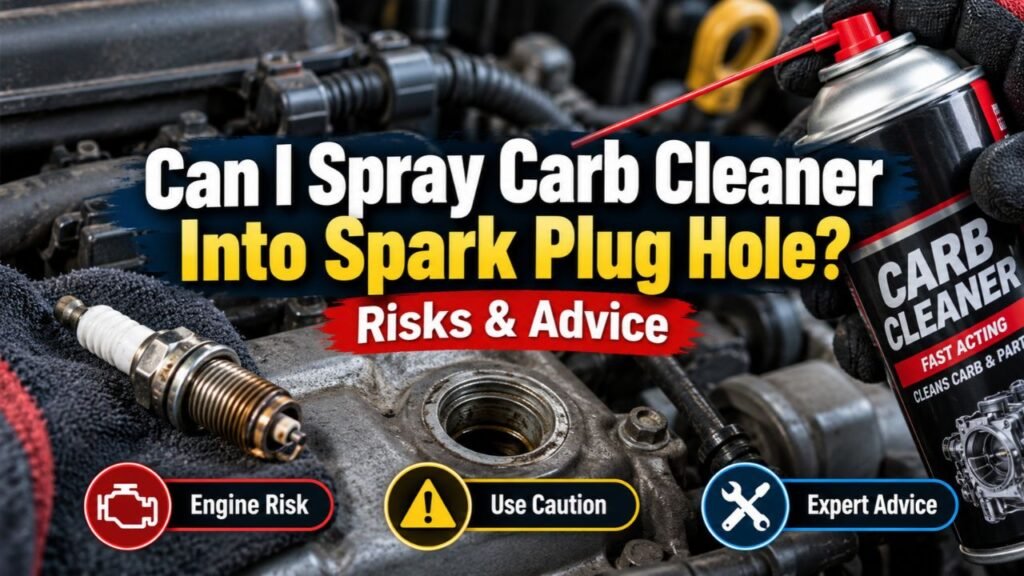
Technically, a small amount of carb cleaner can enter the cylinder without immediately damaging the engine. However, spraying carb cleaner directly into the spark plug hole is generally not recommended as a routine cleaning method.
The main problem is that carb cleaner is designed to dissolve varnish, grease, fuel residue, and deposits. It is not a lubricant.
Inside the cylinder, the piston rings and cylinder walls depend on a thin layer of engine oil for lubrication. A large amount of solvent can wash away some of this protective oil film.
A light accidental spray is very different from repeatedly spraying or pouring carb cleaner into the cylinder.
What Happens When Carb Cleaner Enters the Spark Plug Hole?
Once the spark plug is removed, the hole provides direct access to the combustion chamber.
Carb cleaner sprayed through the opening may reach:
- The top of the piston
- The cylinder walls
- Intake or exhaust valve surfaces
- Carbon deposits inside the combustion chamber
A small quantity may evaporate fairly quickly.
A larger amount can remain as liquid inside the cylinder or seep past the piston rings into the crankcase.
That is where the main risks begin.
Risks of Spraying Carb Cleaner Into a Spark Plug Hole
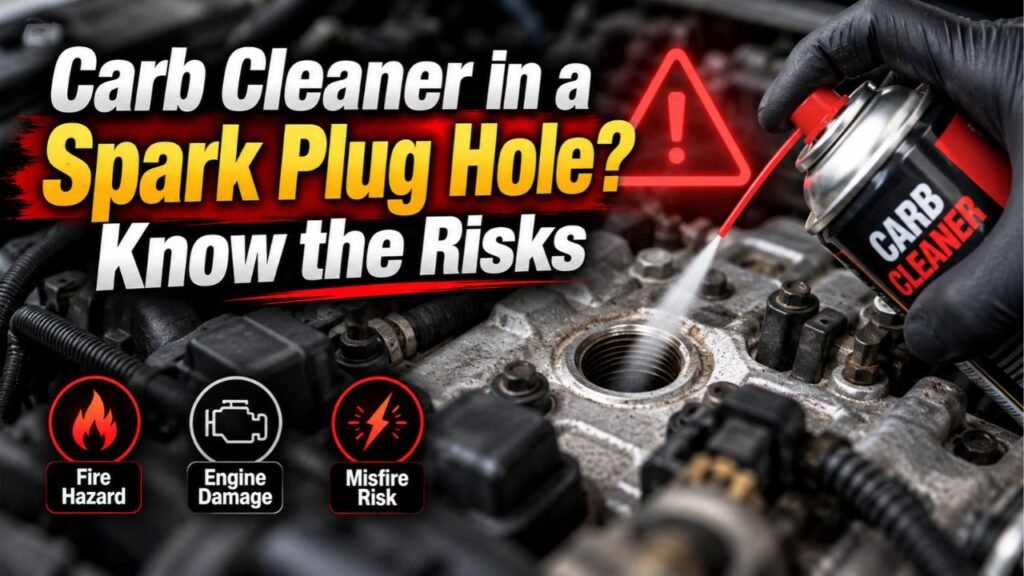
Carb Cleaner Can Remove Cylinder Wall Lubrication
The cylinder wall needs a thin oil film to reduce friction between the piston rings and the cylinder surface.
Carb cleaner is a powerful solvent. Heavy spraying can remove some of this protective oil.
If the engine is started immediately afterward, the cylinder may temporarily operate with less lubrication than normal.
A small amount is unlikely to destroy an engine, but flooding the cylinder with solvent provides no useful advantage.
Too Much Cleaner Can Cause Hydrolock
Air can be compressed. Liquid cannot be compressed nearly as easily.
If enough liquid accumulates inside the cylinder and the piston moves upward, the piston may attempt to compress the liquid.
This condition is called hydrolock.
Severe hydrolock can potentially damage:
- Connecting rods
- Pistons
- Bearings
- Starter components
One or two brief sprays normally will not contain enough liquid to fill an automotive cylinder.
Pouring carb cleaner into the spark plug hole, however, creates a much greater risk.
Carb Cleaner Can Contaminate Engine Oil
Some cleaner may pass between the piston rings and cylinder wall.
It can then enter the crankcase and mix with the engine oil.
A significant amount of solvent in the oil can reduce the oil’s viscosity and lubrication ability.
If a cylinder has been heavily soaked with carb cleaner, checking the engine oil and considering an oil change may be appropriate.
Carb Cleaner Creates Flammable Vapors
Most carb cleaners are highly flammable.
Spraying the product directly into a combustion chamber can leave concentrated solvent vapors inside the engine.
Keep cigarettes, flames, electrical sparks, and other ignition sources away from the work area.
Do not spray carb cleaner into the cylinder while the ignition system is energized.
Carb Cleaner May Affect Some Materials
Carb cleaner formulations vary.
Some aggressive products can damage or discolor certain:
- Rubber components
- Plastics
- Paint
- Seals
- Electrical insulation
The inside of the cylinder contains fewer exposed plastic components, but overspray around the spark plug well can still reach ignition coils, coil boots, wiring, and connectors.
Will Carb Cleaner Clean Carbon From the Cylinder?
Carb cleaner may soften or dissolve some carbon and fuel deposits, but spraying it through the spark plug hole is not a reliable way to clean a combustion chamber.
Carbon deposits can form on the:
- Piston crown
- Combustion chamber
- Valves
- Spark plugs
- Injector tips
Spraying solvent into the cylinder may affect deposits close to where the cleaner lands while leaving deposits elsewhere untouched.
More importantly, heavy carbon buildup may indicate another issue such as:
- Oil consumption
- Rich air-fuel mixture
- Faulty fuel injectors
- Ignition problems
- Excessive idling
- PCV system problems
- Internal engine wear
Cleaning the deposits without fixing their cause may only produce temporary results.
Can I Use Carb Cleaner to Clean a Spark Plug?
Yes, carb cleaner can sometimes be used to clean a removed spark plug.
That is much safer than spraying the cleaner directly into the cylinder.
Remove the spark plug and lightly spray the contaminated area away from the engine. Allow the plug to dry completely before reinstalling it.
However, cleaning does not repair a worn spark plug.
Replacement is generally better if the plug has:
- Severely worn electrodes
- Excessive spark plug gap
- Cracked ceramic insulation
- Damaged threads
- Heavy recurring deposits
- Physical damage
Cleaning cannot replace electrode material that has already worn away.
What If There Is Oil Around the Spark Plug Hole?
First determine whether the oil is inside the combustion chamber or simply sitting inside the spark plug well.
These are different problems.
Oil in the Spark Plug Well
Many modern engines have spark plugs located at the bottom of deep tubes.
Oil may collect around the spark plug because of a leaking:
- Valve cover gasket
- Spark plug tube seal
- Valve cover assembly
If the spark plug well contains oil, remove as much of the oil as possible before taking the spark plug out.
Otherwise, the oil may fall into the cylinder when the plug is removed.
Using suction or absorbent material is generally better than filling the area with carb cleaner.
Oil on the Spark Plug Tip
If the firing end of the spark plug is oily, engine oil may be entering the combustion chamber.
Possible causes include:
- Worn piston rings
- Valve stem seal problems
- Cylinder wear
- Other internal engine issues
Cleaning the spark plug will not fix the underlying cause if oil continues entering the cylinder.
Can I Spray Carb Cleaner Into the Cylinder to Free Stuck Piston Rings?
Some DIY procedures involve soaking a cylinder with chemicals to try to loosen stuck piston rings.
Carb cleaner should not be treated as a general-purpose piston soak.
Improper cylinder soaking can cause:
- Hydrolock
- Engine oil contamination
- Loss of cylinder wall lubrication
- Heavy smoke after startup
- Potential seal or coating damage
If stuck piston rings are suspected, diagnosis should come first.
A compression test or leak-down test can help determine whether the problem is actually related to piston rings, valves, or another mechanical issue.
What Should I Use Instead of Carb Cleaner?
The correct product or method depends on what you are trying to clean.
For a Dirty Spark Plug
Remove the spark plug and clean it outside the engine if cleaning is appropriate.
If the plug is heavily fouled, damaged, or near its replacement interval, replacing it is usually the better option.
For Dirt Around the Spark Plug
Remove loose dirt before taking the plug out.
Compressed air can be useful if used carefully.
Wear eye protection and make sure debris is not blown toward your face.
For Carbon Inside the Combustion Chamber
Use a product and procedure specifically designed for combustion chamber or upper-engine cleaning.
Follow vehicle manufacturer recommendations whenever available.
Some engines, especially gasoline direct-injection engines, can develop deposits that require specialized cleaning procedures.
For Oil in the Spark Plug Well
Remove the standing oil rather than adding additional solvent.
Then repair the valve cover gasket, spark plug tube seal, or other source of the leak.
Can I Spray a Small Amount Into the Spark Plug Hole?
A very small amount is unlikely to damage most healthy engines.
For example, one or two brief accidental sprays normally will not contain enough liquid to cause hydrolock.
The important question is why you are spraying it there.
If you are simply trying to clean carbon or a dirty cylinder, randomly spraying solvent through the spark plug opening is usually not the best solution.
Avoid spraying enough cleaner for liquid to visibly pool inside the cylinder.
What Should I Do If I Already Sprayed Carb Cleaner Into the Spark Plug Hole?
What you should do depends on how much cleaner entered the cylinder.
If You Used Only a Small Amount
If you used only one or two light sprays, there is usually no reason to panic.
Allow the cleaner to evaporate before reinstalling the spark plug and starting the engine.
Do not immediately seal the cylinder and crank the engine if a large amount of wet solvent is still present.
If You Sprayed a Large Amount
If visible liquid has collected inside the cylinder, do not immediately reinstall the spark plug and crank the engine normally.
The excess liquid should be removed or allowed to evaporate sufficiently.
In some repair procedures, the spark plugs are left removed while the engine is carefully rotated to clear excess liquid.
Liquid may spray from the spark plug hole during this process, so eye protection and fire precautions are essential.
If You Poured Carb Cleaner Into the Cylinder
Do not simply reinstall the spark plug and attempt to start the engine.
A substantial amount of liquid can create a hydrolock risk.
The excess cleaner needs to be removed before the engine is cranked normally.
If you are unsure how much liquid is inside the cylinder, professional assistance is safer than taking a chance.
Should I Add Oil After Using Carb Cleaner in the Cylinder?
If a large amount of solvent has washed the cylinder walls, restoring lubrication may be necessary during certain repair procedures.
However, adding too much oil through the spark plug hole can create another liquid accumulation problem.
A tiny measured amount and pouring oil into the cylinder are very different things.
If you performed a significant cylinder soak, follow a proper engine-specific procedure rather than guessing how much oil to add.
Can Carb Cleaner Damage Spark Plugs?
Brief exposure to carb cleaner generally does not damage a standard spark plug.
A removed plug can usually be lightly sprayed and allowed to dry.
However, avoid aggressive scraping or sanding of fine-wire iridium or platinum electrodes.
These electrodes are very small and can be damaged easily.
If the plug is badly worn, replacement is better than trying to restore it with cleaning.
Can Carb Cleaner Cause a Misfire After Starting?
Yes, temporarily.
If cleaner remains inside the cylinder when the engine starts, you may notice:
- Rough running
- Temporary misfires
- Unusual exhaust smell
- Smoke
- Difficult starting
These symptoms may disappear as the remaining solvent burns or evaporates.
If the misfire continues, another problem should be diagnosed.
Can Carb Cleaner Damage the Catalytic Converter?
A tiny amount passing through the engine is unlikely to immediately damage a catalytic converter.
However, repeatedly introducing large amounts of combustible solvent into the engine is not a good practice.
Unburned fuel or solvent entering the exhaust can increase catalytic converter temperature.
This is one reason severe engine misfires should also be addressed quickly.
How to Keep Dirt Out of the Cylinder When Removing Spark Plugs
A large part of spark plug service involves preventing contamination from entering the engine.
A basic procedure is:
- Allow the engine to cool.
- Remove the ignition coil or plug wire correctly.
- Clean loose dirt and debris from around the spark plug.
- Remove any standing oil or liquid from the spark plug well.
- Remove the spark plug with the correct spark plug socket.
- Inspect the plug for wear, fouling, oil, carbon, or damage.
- Keep the open spark plug hole protected from dirt and foreign objects.
When reinstalling the plug, use the correct manufacturer torque specification.
Over-tightening or cross-threading a spark plug can damage the cylinder head.
When Should a Mechanic Inspect the Engine?
Consider professional diagnosis if the spark plugs repeatedly become contaminated or the engine has symptoms such as:
- Persistent misfires
- Low compression
- High oil consumption
- Blue exhaust smoke
- Severe carbon buildup
- Repeated spark plug fouling
- Engine knocking
- Major power loss
- Flashing check engine light
These symptoms can indicate a problem that cleaning the spark plugs or combustion chamber will not solve.
FAQs About Can I Spray Carb Cleaner Into Spark Plug Hole
Will a Little Carb Cleaner in the Cylinder Hurt the Engine?
Usually not.
A very small amount is unlikely to damage a healthy engine. Problems become more likely when enough cleaner is added to wash away cylinder lubrication, contaminate the oil, or accumulate as liquid above the piston.
Can I Spray Carb Cleaner on Spark Plugs?
Yes, a removed spark plug can generally be lightly cleaned with carb cleaner if the product is suitable.
Allow the spark plug to dry completely before reinstalling it.
Replace a plug that is badly worn, cracked, damaged, or repeatedly fouled.
Can I Pour Carb Cleaner Into the Spark Plug Hole?
Generally, no.
Pouring cleaner into the cylinder can create excess liquid, wash lubrication from the cylinder walls, contaminate the engine oil, and potentially cause hydrolock.
How Long Should Carb Cleaner Dry Before Starting the Engine?
There is no universal drying time.
Evaporation depends on how much cleaner was used, the product formulation, temperature, and ventilation.
The key point is that a pool of liquid should not remain inside the cylinder before you reinstall the plug and crank the engine.
Can Carb Cleaner Remove Carbon From a Piston?
It may soften some deposits, but spraying carb cleaner through the spark plug hole is not a reliable way to completely clean piston carbon.
Heavy deposits may require a dedicated combustion chamber cleaning procedure.
What Happens If Too Much Carb Cleaner Gets Into a Cylinder?
Too much cleaner can wash oil from the cylinder wall, dilute the engine oil, create difficult starting, and potentially cause hydrolock if enough liquid remains above the piston.
Avoid cranking the engine with the spark plug installed if a substantial amount of liquid is still inside.
Can I Use Brake Cleaner Instead of Carb Cleaner in a Spark Plug Hole?
No. Brake cleaner should not be considered a safer substitute.
Brake cleaner is also a strong solvent and is not intended to be sprayed into an engine combustion chamber.
Use a product specifically designed for the job you are performing.
Should I Clean or Replace a Fouled Spark Plug?
A lightly contaminated plug can sometimes be cleaned.
A badly fouled, damaged, cracked, or worn spark plug is usually better replaced.
If a replacement plug quickly becomes fouled again, diagnose the engine problem causing the contamination.
Conclusion
So, can I spray carb cleaner into spark plug hole? A tiny amount entering the cylinder normally will not cause immediate damage, but spraying or pouring a large amount of carb cleaner into the spark plug hole is generally not recommended.
Too much carb cleaner can wash lubricating oil from the cylinder walls, contaminate engine oil, create flammable vapors, and potentially cause hydrolock if liquid collects above the piston.
If your goal is to clean a spark plug, remove carbon, or diagnose a contaminated cylinder, use a method designed specifically for that task. If a large amount of carb cleaner has already entered the cylinder, remove the excess before cranking or starting the engine.