
A smooth idle depends on every cylinder burning its air-fuel mixture consistently. Spark plugs play a major role in that process because they create the spark that ignites the mixture inside gasoline engines. As spark plugs age, their electrodes wear, deposits can accumulate, and the gap may increase beyond its intended specification.
Yes, old spark plugs can cause rough idle. Worn, fouled, or incorrectly gapped spark plugs may produce a weak or inconsistent spark, causing incomplete combustion or misfires that make the engine shake, stumble, or idle unevenly.
The problem may be most noticeable when the engine is sitting at a stoplight because engine speed is low and individual misfires are easier to feel. You may also notice hard starting, hesitation, reduced power, poor fuel economy, or a check engine light.
However, old spark plugs are only one possible cause of rough idle. Ignition coils, vacuum leaks, dirty fuel injectors, intake problems, sensors, low compression, and other faults can create almost identical symptoms.
This guide explains how worn spark plugs affect idle quality, what symptoms to look for, how to inspect them, and how to determine whether replacing the plugs is likely to solve the problem.
Can Old Spark Plugs Cause Rough Idle?
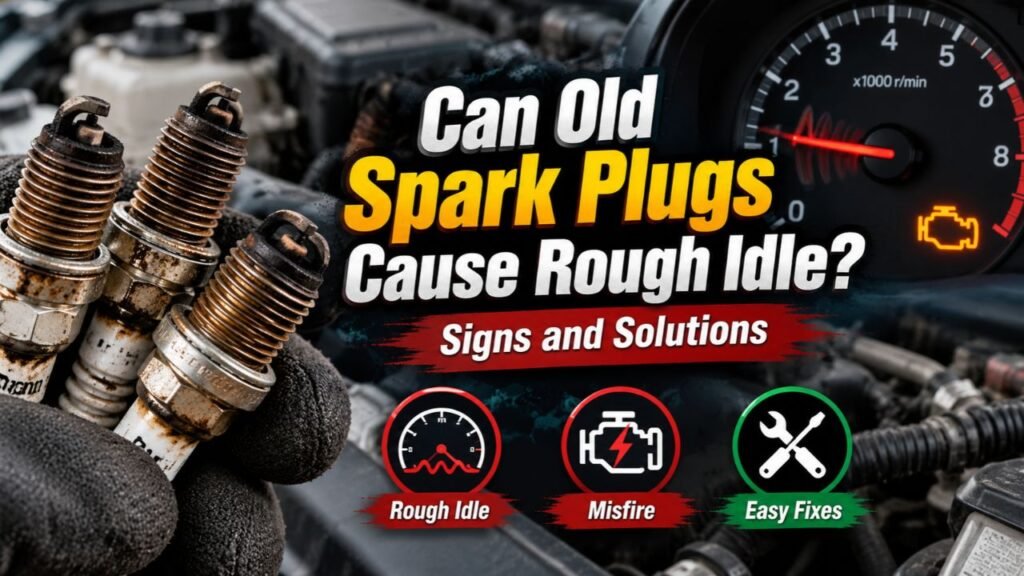
Yes. Old spark plugs can cause rough idle when electrode wear, excessive plug gap, carbon deposits, oil contamination, or other deterioration prevents the plugs from firing consistently.
When one cylinder does not burn its mixture correctly, its power contribution becomes weaker than the others. Instead of the engine rotating smoothly, you may feel:
- Shaking
- Vibrations
- Surging
- Stumbling
- Uneven RPM
- Intermittent misfires
A single worn spark plug can sometimes be enough to make an engine idle noticeably rough.
If multiple plugs have exceeded their normal service life, the roughness may become even more obvious.
How Spark Plugs Affect Engine Idle
A gasoline engine repeatedly performs four basic processes:
- Air and fuel enter the cylinder.
- The piston compresses the mixture.
- The spark plug ignites it.
- Combustion pushes the piston downward.
This process must occur at the correct time in every cylinder.
At idle, the engine is operating at relatively low RPM. Each combustion event has a noticeable effect on engine smoothness.
If a spark plug fires weakly or occasionally fails to ignite the mixture, the affected cylinder produces less power.
That creates the shaking or uneven feeling commonly described as a rough idle.
Why Old Spark Plugs Start Causing Problems
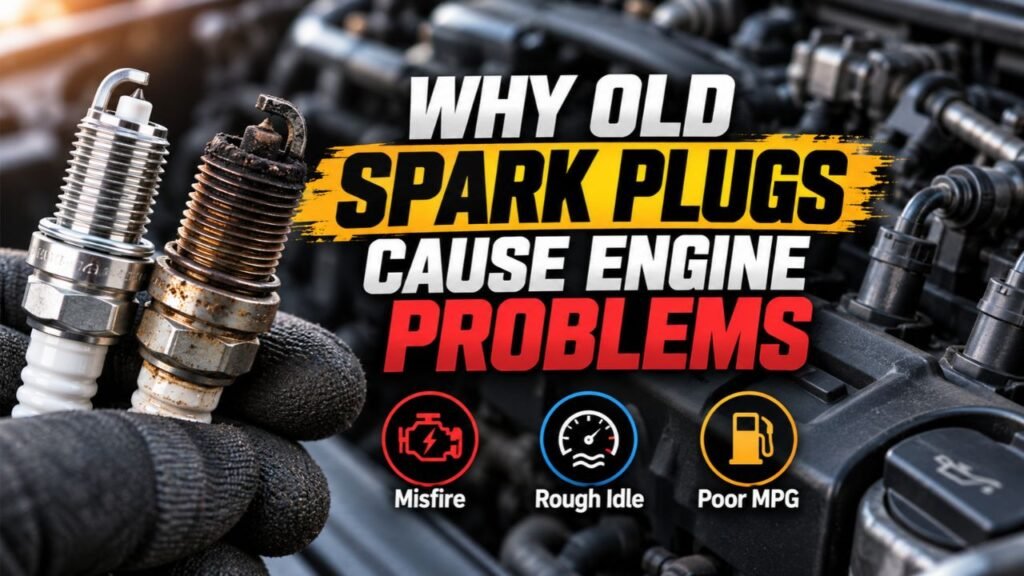
Spark plugs work in an extremely demanding environment.
They are repeatedly exposed to:
- High voltage
- Combustion heat
- Pressure
- Fuel
- Carbon deposits
- Combustion byproducts
Over thousands of miles, several changes can occur.
Electrode Wear
Every spark removes a tiny amount of material from the electrodes.
Eventually, the center and ground electrodes become worn or rounded.
This can increase the amount of voltage required to create a spark.
The ignition system may still fire the plug most of the time but occasionally fail, especially under unfavorable operating conditions.
Spark Plug Gap Becomes Too Wide
The spark plug gap is the distance between the center electrode and ground electrode.
As electrodes wear, this distance often increases.
A wider gap generally requires more voltage for the spark to jump across.
If the ignition coil cannot reliably supply enough voltage, misfires can develop.
Carbon Deposits Form
Carbon can accumulate around the firing end of the plug.
Heavy deposits may interfere with normal spark formation.
Carbon fouling can be associated with:
- Rich air-fuel mixture
- Frequent short trips
- Excessive idling
- Incorrect plug heat range
- Certain engine problems
A heavily fouled plug may begin misfiring.
Oil Fouling
Engine oil entering the combustion chamber can coat the spark plug.
Possible sources include:
- Worn piston rings
- Valve stem seal problems
- Certain PCV system faults
- Internal engine wear
An oily plug may not fire reliably.
Replacing the plug can temporarily improve the symptom, but the underlying oil consumption problem may foul the new plug again.
Common Symptoms of Old Spark Plugs
Rough idle often appears alongside other ignition-related symptoms.
Engine Shaking at Idle
You may feel vibration through the:
- Steering wheel
- Seat
- Dashboard
- Floor
The vibration may become less noticeable when engine speed increases.
RPM Fluctuation
The tachometer may move slightly up and down while the engine idles.
Severe misfires can cause more noticeable RPM drops.
Hard Starting
Worn plugs may require more cranking before the engine starts, especially in cold conditions.
Hesitation During Acceleration
A weak spark can become more obvious under load.
You may press the accelerator and feel:
- Hesitation
- Stumbling
- Jerking
- Temporary loss of power
Poor Fuel Economy
Misfires and incomplete combustion can reduce efficiency.
However, reduced fuel economy has many possible causes, so it should not be used alone to diagnose spark plugs.
Reduced Engine Power
Worn plugs may prevent one or more cylinders from producing their normal power.
The vehicle may feel sluggish during acceleration.
Check Engine Light
Repeated misfires can trigger the check engine light.
Common diagnostic trouble codes may include:
- P0300 – Random/multiple-cylinder misfire
- P0301 – Cylinder 1 misfire
- P0302 – Cylinder 2 misfire
- P0303 – Cylinder 3 misfire
The pattern continues according to cylinder number.
A misfire code tells you which cylinder is affected, but it does not automatically prove that the spark plug is the cause.
Can One Bad Spark Plug Cause Rough Idle?
Yes.
Each cylinder contributes to keeping the crankshaft rotating smoothly.
If one spark plug repeatedly fails to ignite its cylinder properly, that cylinder may produce little or no useful power during some combustion cycles.
On a four-cylinder engine, losing one cylinder’s contribution is especially noticeable because each cylinder represents a relatively large portion of total engine output.
You may feel less vibration on a larger engine, but a single-cylinder misfire can still create a rough idle.
Can Worn Spark Plugs Cause Rough Idle Without a Check Engine Light?
Yes.
A spark plug can begin deteriorating before misfires become frequent enough for the engine computer to turn on the check engine light.
You might experience:
- Slight vibration
- Occasional stumble
- Mild hesitation
while no warning light appears.
Intermittent misfires may take time to meet the threshold required to store a diagnostic trouble code.
Therefore, the absence of a check engine light does not automatically prove that the ignition system is healthy.
Why Rough Idle May Be Worse When the Engine Is Cold
A worn spark plug can sometimes create more obvious symptoms during a cold start.
Cold engines generally require different fuel delivery than warm engines, and combustion conditions are less stable.
A marginal ignition component may struggle more under these conditions.
Once the engine warms up, the symptom may improve.
However, cold rough idle can also result from:
- Vacuum leaks
- Fuel injector problems
- Coolant temperature sensor problems
- Intake valve deposits
- Compression issues
Do not automatically assume the plugs are responsible.
Why Rough Idle May Improve When You Accelerate
Some engines with mild ignition problems feel roughest at idle but seem smoother once RPM increases.
At higher RPM, engine momentum can make individual combustion irregularities less obvious to the driver.
The misfire may still be occurring.
In other cases, the misfire becomes worse under acceleration because higher cylinder pressure requires more ignition voltage.
The way symptoms change with engine speed can provide diagnostic clues but is not enough by itself to identify the faulty component.
How to Check Whether Old Spark Plugs Are Causing Rough Idle
A proper diagnosis should combine service history, visual inspection, and trouble-code information.
Check the Spark Plug Replacement History
Look at your maintenance records.
If the plugs are significantly overdue according to the vehicle manufacturer’s maintenance schedule, they become a reasonable suspect.
Different spark plug materials have different service lives.
Copper, platinum, and iridium plugs should not all be assumed to last the same amount of time.
Always follow the maintenance interval specified for your engine.
Scan for Diagnostic Trouble Codes
An OBD-II scanner can reveal stored or pending misfire codes.
A cylinder-specific misfire code can help narrow the search.
For example, if cylinder 3 consistently misfires, inspect components related to that cylinder.
Remove and Inspect the Spark Plugs
After the engine has cooled, remove the plugs according to the vehicle’s service procedure.
Look for:
- Worn electrodes
- Excessive gap
- Heavy carbon buildup
- Oil contamination
- Cracked porcelain
- Burned electrodes
- Abnormal coloring
Compare plugs from different cylinders.
One plug looking significantly different from the others can reveal a problem affecting that cylinder.
What Does a Worn Spark Plug Look Like?
A normal used plug may show some electrode wear without being severely damaged.
A plug nearing the end of its service life may have:
- Rounded electrode edges
- Enlarged spark gap
- Deposits
- Eroded center electrode
A heavily worn plug may require more ignition voltage than the system can reliably provide.
Do not diagnose engine condition from spark plug color alone. Modern engines, fuels, additives, and driving conditions can make visual interpretation more complicated than older spark-plug charts suggest.
Check the Spark Plug Gap
Spark plug gap should match the specification for the particular engine and plug.
An excessive gap can cause:
- Hard starting
- Misfires
- Hesitation
- Rough idle
Older conventional spark plugs may sometimes be adjusted, but many fine-wire platinum and iridium plugs require special care.
Do not aggressively bend or damage delicate center electrodes.
If an old plug has significant electrode wear, replacing it is normally better than simply closing the gap and reinstalling it.
Old Spark Plugs vs. Bad Ignition Coils
Spark plugs and ignition coils work together.
The coil generates high voltage, while the plug creates the spark inside the cylinder.
Either component can create a misfire.
Signs That May Point Toward Spark Plugs
- Plugs are overdue for replacement.
- Electrode gaps are visibly excessive.
- Plugs are heavily fouled.
- Several plugs show similar wear.
- Symptoms improve after replacement.
Signs That May Point Toward an Ignition Coil
- Misfire stays with a specific coil.
- Coil has visible cracks or damage.
- Misfire moves to another cylinder when coils are swapped during diagnosis.
Many modern vehicles use coil-on-plug ignition, meaning each cylinder has its own ignition coil mounted directly over the plug.
A technician may swap coils between cylinders to see whether a misfire code follows the coil.
Other Causes of Rough Idle
Replacing old plugs is reasonable when they are due, but many other problems can make an engine idle poorly.
Vacuum Leak
Unmetered air entering the intake can make the air-fuel mixture too lean.
Possible leak locations include:
- Vacuum hoses
- Intake manifold gasket
- PCV hoses
- Brake booster hose
Dirty or Faulty Fuel Injector
An injector that does not deliver the correct amount of fuel can create a weak or misfiring cylinder.
Dirty Throttle Body
Carbon deposits around the throttle plate can affect airflow at idle on some engines.
Mass Airflow Sensor Problems
Incorrect airflow information can affect fuel delivery.
PCV System Problems
A failed PCV valve or damaged hose can create a vacuum leak or airflow problem.
Low Compression
A cylinder with worn valves, piston rings, or other internal problems may not burn properly even with a good spark plug.
Fuel Pressure Problems
Low or unstable fuel pressure can affect multiple cylinders.
EGR Problems
On vehicles equipped with exhaust gas recirculation systems, an EGR valve stuck open at idle can make the engine run roughly.
Will New Spark Plugs Fix Rough Idle?
They can if worn or fouled spark plugs are actually causing the misfire.
Replacement is particularly reasonable when:
- Plugs are overdue.
- Plug gaps are excessive.
- Electrodes are worn.
- Plugs are damaged.
- Plugs are heavily fouled.
However, installing new plugs will not permanently fix rough idle caused by another engine problem.
For example, an engine burning oil may quickly foul a new set.
Should You Replace All Spark Plugs at Once?
In most routine maintenance situations, yes.
Spark plugs generally experience similar operating time and mileage.
If one is worn from normal service life, the others are usually approaching similar wear.
Replacing the complete set provides:
- Consistent spark plug condition
- Consistent gaps
- Easier maintenance tracking
An exception may be a relatively new set where one plug was physically damaged or contaminated by a separate repair issue.
Can Driving With Worn Spark Plugs Cause Damage?
Continuing to drive with severe ignition misfires can cause additional problems.
Unburned fuel may enter the exhaust system and overheat the catalytic converter.
A flashing check engine light commonly indicates an active misfire serious enough to risk catalytic converter damage.
If the check engine light is flashing and the engine is running badly, reduce driving and have the vehicle inspected promptly.
How Often Should Spark Plugs Be Replaced?
There is no universal mileage interval.
Replacement depends on:
- Plug material
- Engine design
- Manufacturer recommendation
- Driving conditions
Some engines use long-life iridium or platinum plugs, while others specify shorter intervals.
The owner’s manual or factory maintenance schedule is the best source for your exact vehicle.
Do not assume a generic mileage recommendation applies to every engine.
Common Mistakes When Replacing Spark Plugs
Installing the Wrong Plug
Use the correct:
- Part number
- Heat range
- Thread size
- Reach
- Seat design
A plug that physically threads into the engine is not necessarily correct.
Incorrect Tightening
Overtightening can damage cylinder head threads or the plug.
Undertightening can cause sealing and heat-transfer problems.
Follow the specified torque procedure.
Damaging the Ignition Coil or Boot
Pull coils and boots carefully.
Old rubber components can become brittle.
Ignoring Oil in the Spark Plug Well
Oil around the outside of the plug may indicate a valve-cover gasket or spark plug tube seal leak.
Correcting the leak can prevent future ignition problems.
Assuming New Plugs Will Fix Every Misfire
If rough idle remains after correct plug replacement, continue diagnosing rather than repeatedly replacing ignition parts.
FAQs About Can Old Spark Plugs Cause Rough Idle
Can old spark plugs make the engine shake at idle?
Yes. Worn plugs can cause intermittent misfires, making engine speed uneven and producing noticeable shaking or vibration.
Can bad spark plugs cause rough idle only when cold?
Yes, weak or fouled plugs can contribute to a rough cold idle.
However, vacuum leaks, injector problems, sensors, and engine mechanical issues can produce the same symptom.
Can spark plugs cause RPM to fluctuate at idle?
Yes.
Intermittent combustion from a misfiring plug can make engine speed rise and fall slightly.
Larger RPM fluctuations may point toward airflow, fuel, or idle-control problems as well.
Can old spark plugs cause a check engine light?
Yes.
If worn plugs cause repeated misfires, the engine computer may store P0300-series misfire codes and turn on the check engine light.
Can worn spark plugs cause poor acceleration?
Yes.
A weak spark can cause hesitation or misfiring when the engine is under load, reducing power during acceleration.
Will changing spark plugs make the engine idle smoother?
If worn or fouled plugs are causing the rough idle, replacing them can restore smoother combustion.
If the rough idle has another cause, changing plugs may have little or no effect.
Can one bad spark plug make the whole engine run rough?
Yes.
One consistently misfiring cylinder can make the entire engine shake, particularly on four-cylinder engines.
How can I tell if rough idle is caused by plugs or coils?
Inspect the plugs, check their service history, and scan for cylinder-specific misfire codes.
On some coil-on-plug systems, moving a suspected ignition coil to another cylinder can help determine whether the misfire follows the coil.
Conclusion
So, can old spark plugs cause rough idle? Yes. Worn electrodes, excessive spark plug gaps, carbon deposits, oil fouling, or physical plug damage can weaken or interrupt ignition and cause one or more cylinders to misfire at idle.
If your spark plugs are overdue for replacement, inspecting and replacing them with the correct plugs is a sensible first step. However, rough idle can also come from ignition coils, vacuum leaks, injectors, sensors, fuel-delivery problems, or low compression.
If new plugs do not correct the problem—or the check engine light is flashing—the engine should be properly diagnosed rather than continuing to replace parts by guesswork.