
Spark plugs generally do not wear out simply from sitting unused because normal electrode wear occurs mainly while the plug is firing inside a running engine. However, plugs stored poorly or left installed in an inactive engine can develop corrosion, contamination, moisture-related problems, or physical deterioration that may make inspection or replacement necessary.
The important distinction is where the spark plug has been sitting. A brand-new plug stored in a dry box is very different from a used plug left inside an engine that has been parked outdoors for several years.
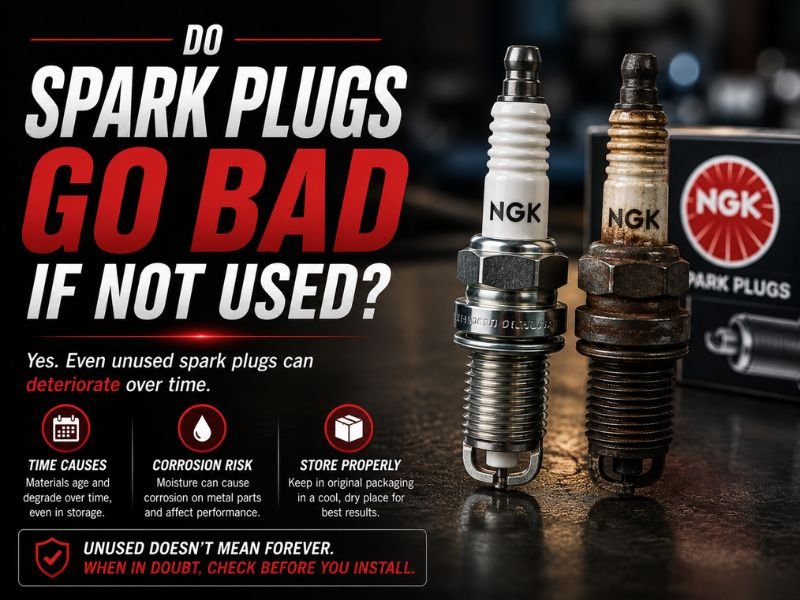
Three Different Types of “Unused” Spark Plugs
When someone asks whether spark plugs expire from lack of use, they may be describing three very different situations.
| Situation | Likely Result |
| New spark plugs stored properly | Usually remain usable for years |
| Used plugs removed and stored | Condition depends on prior wear and storage |
| Plugs installed in a vehicle sitting unused | May be affected by moisture, corrosion, deposits, or engine condition |
Understanding which situation applies makes the answer much clearer.
Do New Spark Plugs Go Bad Sitting on a Shelf?
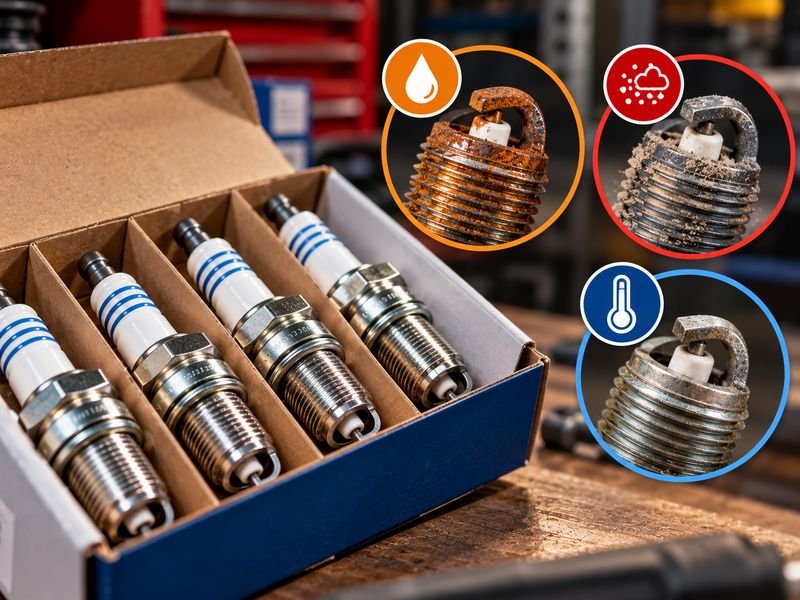
Normally, not just because time has passed.
A new spark plug does not experience the repeated electrical discharge, combustion heat, and pressure cycles that create normal electrode wear inside an operating engine. DENSO explains that electrode wear occurs through spark discharge and oxidation during use, while materials such as nickel alloys, platinum, and iridium are selected partly to reduce that wear.
NGK also uses corrosion-resistant plating on its spark plug threads specifically to protect against moisture and chemicals.
That means a properly manufactured plug kept clean, dry, and protected from physical damage generally does not have a fixed expiration date comparable to a battery or chemical product.
The bigger storage risks are environmental rather than chronological.
If a plug has spent years in a damp garage, open toolbox, or damaged package, inspect it before installation.
Moisture Is a Bigger Concern Than Age
Metal components can corrode when exposed to unfavorable environments.
NGK specifically notes that its thread plating is designed to provide corrosion resistance against moisture and chemicals. That protection reduces risk, but it does not mean a spark plug should intentionally be stored wet or exposed to corrosive substances.
Before installing an old unused plug, look closely at the metal shell and threads.
Light cosmetic discoloration is not automatically a failure, but heavy rust, pitting, damaged plating, or corrosion around the electrodes deserves caution.
NGK identifies electrode corrosion and oxidation as abnormal conditions capable of contributing to gap growth and deterioration.
If corrosion has materially affected the firing surfaces or threads, replacement is inexpensive insurance compared with risking ignition problems or damaged cylinder-head threads.
What if the Spark Plugs Are Already Installed in a Car That Sits?
This is the more complicated situation.
The spark plugs themselves are not accumulating normal firing wear while the engine is parked. However, the engine environment can change during storage.
Moisture, oil migration, fuel residue, combustion deposits, and corrosion elsewhere in the engine can all affect what happens when the vehicle eventually returns to service.
A plug that was already carbon fouled or oil fouled before storage does not become clean simply because the engine stops running.
DENSO identifies carbon fouling, oil fouling, and fuel fouling as conditions associated with hard starting and misfires.
So if an engine was running poorly before it was parked, long-term inactivity can leave you with the same plug problem—or an additional storage-related problem—when you try to restart it.
Spark Plugs Don’t Normally “Age Out” Like a Battery
Spark plugs and batteries fail for very different reasons.
A battery undergoes chemical aging even when it is not actively starting the engine. A spark plug is primarily a mechanical/electrical component whose normal service-life deterioration is strongly tied to electrode erosion from ignition events.
DENSO explains that electrode wear occurs as the center electrode experiences spark discharge and oxidation, gradually becoming rounded and less effective.
No firing means that particular wear mechanism largely stops.
This is why a low-mileage vehicle that sits for several years does not automatically need new spark plugs solely because of calendar age.
Condition and vehicle-specific maintenance requirements still matter, though.
What Happens to Used Spark Plugs That Are Removed and Stored?
A used plug can be stored, but its existing wear does not disappear.
Suppose you remove a set at 60,000 miles and place them in a drawer for five years.
When you come back, those plugs are still 60,000-mile plugs.
Their electrode erosion, enlarged gap, deposits, and previous thermal history remain.
NGK explains that as plugs wear, their gaps increase and greater voltage is required to produce a spark.
Storage does not reset that service life.
If the plugs were removed because they had reached their normal maintenance interval, keeping them unused does not make them suitable for another full interval later.
Can Spark Plugs Rust While Sitting in an Engine?
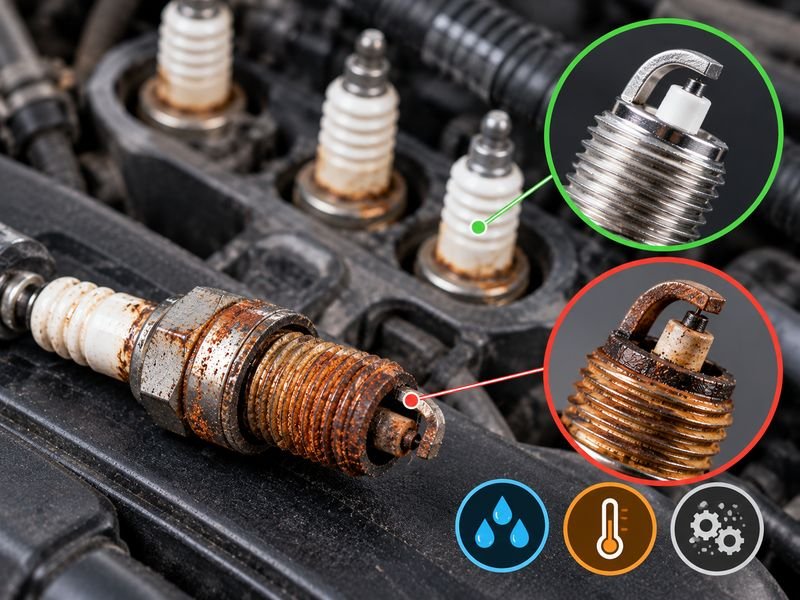
Corrosion is possible, although the degree depends on environmental and engine-storage conditions.
The plug shell is exposed to the cylinder head and outside environment, while its firing end extends into the combustion chamber.
NGK notes that corrosion and oxidation can affect spark plug electrode material and contribute to abnormal gap growth.
A vehicle stored in a dry, climate-controlled location presents a different risk from an engine left for years in a humid environment.
If a long-stored engine is being returned to service, inspecting the plugs can provide useful information about both the plugs and the internal condition of the cylinders.
Do not force a heavily corroded plug out of an aluminum cylinder head without using the correct service procedure, as thread damage can make the repair considerably more expensive.
Do Spark Plugs Get Fouled From Not Driving?
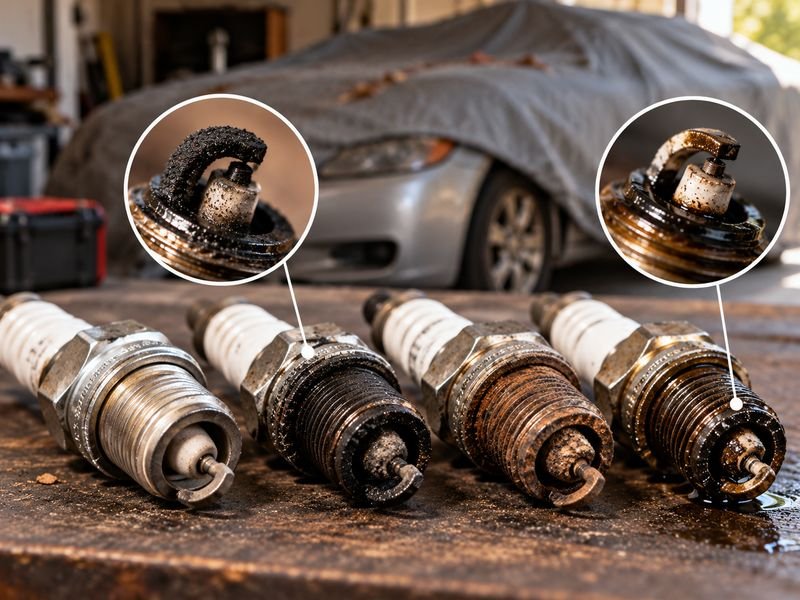
Simply sitting does not create normal combustion carbon deposits because there is no combustion occurring.
However, short periods of operation without reaching full temperature can contribute to fouling.
NGK explains that a spark plug needs to reach approximately 450°C (842°F) at the firing end to begin self-cleaning carbon deposits. Frequent short trips and continuous low-speed operation can prevent the plug from reaching that temperature, increasing the risk of carbon fouling.
That means a vehicle that is “rarely used” but is occasionally started for only a few minutes may actually create more plug-fouling risk than a vehicle left properly stored and later driven long enough to reach normal operating temperature.
Starting an engine briefly is not necessarily the same as maintaining it properly.
Can Oil Contaminate Spark Plugs While a Vehicle Sits?
Oil on the firing end can create starting and misfire problems, but it usually points to an engine condition rather than the spark plug spontaneously deteriorating.
DENSO associates oil fouling with oil entering the combustion chamber through conditions involving piston rings, cylinders, valve guides, or other engine factors.
If an engine has been stored for a long period and a removed plug is wet with oil, diagnose where that oil came from before assuming the plug simply “went bad from sitting.”
Replacing the plug may restore spark temporarily, but it will not correct an underlying oil-control problem.
Can Old Unused Spark Plugs Still Be Installed?
Often, yes, provided they are the correct plugs and pass inspection.
Before installing an older unused set, verify the part number, thread dimensions, reach, heat range, and required gap for the exact engine.
Vehicle applications change, and a plug purchased years ago for a previous vehicle may physically fit another cylinder head without being technically correct.
NGK warns that the proper spark plug gap is application-specific and that incorrect gap can contribute to misfires, power loss, fouling, poor fuel economy, and accelerated wear.
Inspect older stored plugs for physical damage as well.
DENSO warns not to use dropped plugs because internal cracks or changes to the electrode gap may occur even when damage is not immediately obvious.
Does Iridium Have a Shelf Life?
Iridium plugs do not normally become worn simply because they have been sitting unused.
The iridium electrode is chosen specifically for durability and resistance to wear during demanding combustion service. DENSO identifies iridium alloy as particularly effective at minimizing electrode consumption.
That does not make the entire plug immune to poor storage.
The steel shell, plating, ceramic insulator, gasket, and electrodes can still be damaged by corrosion, impact, contamination, or improper handling.
So an unused iridium plug that has remained dry and undamaged can generally remain suitable for installation for a long period, while one stored loose in a damp environment deserves inspection regardless of how little it has been used.
Platinum and Standard Plugs Follow the Same Basic Rule
The same principle applies to platinum, nickel-alloy, and other spark plug types.
Precious-metal designs mainly extend operating life because they resist electrode erosion during firing.
A conventional plug sitting unused is not burning through its normal mileage interval just because the calendar is moving.
However, once installed and operated, different materials wear at different rates.
DENSO explains that electrode wear depends partly on properties such as the material’s melting point, strength, and hardness.
Therefore, the normal replacement interval should still match the actual plug design and vehicle application.
Should You Replace Spark Plugs After a Car Has Sat for Years?
Not automatically, but inspection is sensible.
If the vehicle was parked with relatively new plugs and stored properly, those plugs may still be completely serviceable.
If the plugs were already near their maintenance interval when the vehicle was parked, replacement may make more sense than reinstalling or continuing to use them.
Inspect for:
Corrosion, electrode wear, excessive gap, oil or fuel contamination, heavy deposits, cracked ceramic, and damaged threads.
NGK describes a normally functioning plug as generally showing a brown or light-gray firing end, while heavy wet or dry deposits can indicate abnormal engine conditions.
A long-stored engine should also be evaluated as a complete system rather than assuming the plugs are the only possible starting problem.
How to Store New Spark Plugs Properly
Spark plugs do not require complicated preservation.
Keep them dry, clean, protected from chemicals, and preferably inside their original packaging so the firing tips and ceramic insulators cannot strike other tools or metal objects.
Avoid dropping them.
DENSO specifically warns that dropping a spark plug can create internal cracking or alter the gap enough to prevent correct operation.
Do not coat new NGK spark plug threads with anti-seize merely because they are going into storage or have been stored for a long time. NGK states that its plugs use corrosion-resistant thread plating and are designed to be installed dry; adding anti-seize can alter installation torque and create other problems.
Signs an Unused or Stored Spark Plug Should Not Be Installed
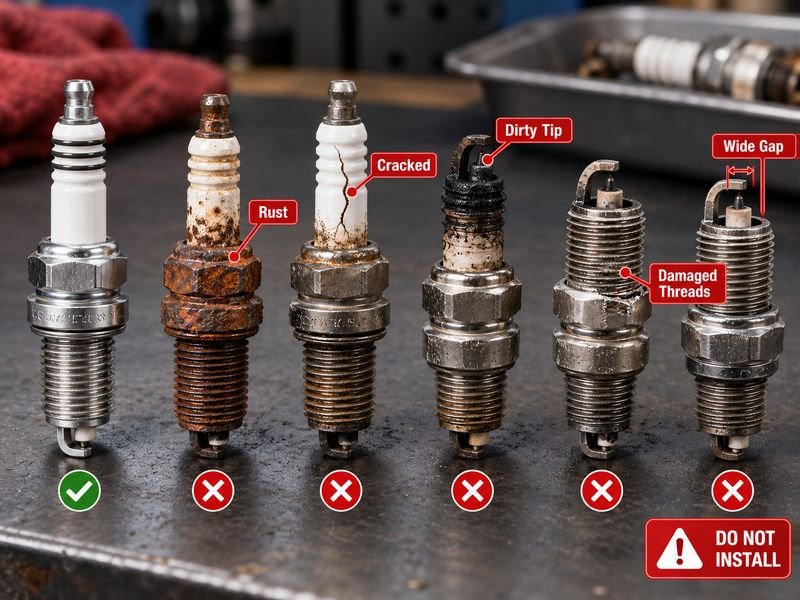
Age alone is not the main concern.
Condition is.
A stored plug is questionable if you find substantial thread corrosion, a cracked insulator, damaged or bent electrodes, an obviously altered gap, heavy contamination, or evidence that the plug was dropped.
Bosch warns that even dropped plugs without obvious external damage may develop hairline ceramic cracks, which can lead to malfunction.
When spark plugs are relatively inexpensive compared with the labor required to access them, installing a visibly questionable plug rarely makes sense.
This is especially true on engines where plug replacement requires removing intake components or working in very tight spaces.
Frequently Asked Questions
Do Spark Plugs Expire if They Are Never Used?
They generally do not have a simple calendar expiration caused by sitting unused. Normal electrode wear primarily occurs while the plug is firing, although poor storage can cause corrosion, contamination, or physical damage.
Can New Spark Plugs Sit for 10 Years?
A properly stored, undamaged plug may remain usable for many years. Inspect it for corrosion and physical damage and confirm that the part number is still correct for the intended engine before installation.
Do Spark Plugs Go Bad in a Car That Sits?
They may remain usable, but plugs installed in a long-stored engine can be affected by existing deposits, moisture, corrosion, oil contamination, or other engine-storage conditions.
Do Iridium Spark Plugs Go Bad From Sitting?
Not simply from lack of firing. Iridium is highly resistant to normal electrode wear, although the rest of the plug can still suffer from corrosion or physical damage if storage conditions are poor.
Can Spark Plugs Rust?
Corrosion and oxidation can occur under unfavorable conditions. NGK identifies corrosion and oxidation as possible forms of abnormal electrode deterioration.
Should I Replace Spark Plugs After a Car Sits for Five Years?
Not based on time alone. Consider the plugs’ mileage before storage, current physical condition, gap, and the vehicle’s maintenance schedule.
Can Briefly Starting a Stored Car Foul the Spark Plugs?
Repeated very short operation can contribute to carbon fouling if the plugs never reach their self-cleaning temperature. NGK places that temperature at approximately 450°C at the firing end.
Can a Stored Spark Plug Lose Its Gap?
Normal storage should not significantly change the gap, but physical impact or improper handling can bend an electrode. DENSO warns that dropping a plug can change its gap or cause internal damage.
Should Old Unused Spark Plugs Be Cleaned Before Installation?
New plugs that were stored properly should not require cleaning. If a plug is heavily corroded or contaminated, replacement may be preferable to aggressive cleaning that could damage the electrodes or ceramic.
How Can I Tell if a Stored Spark Plug Is Still Good?
Check for corrosion, cracks, damaged threads, bent electrodes, contamination, and the correct gap. Also verify that the exact part number remains appropriate for your engine.
Do Spark Plugs Go Bad If Not Used Overall?
Spark plugs generally do not go bad simply because they have not been used, and normal electrode wear largely stops when the plug is not firing. A new plug kept clean, dry, and protected from impact can remain serviceable for years because its normal wear mechanisms occur primarily during engine operation.
What matters more than calendar age is storage condition and previous use.
A spark plug left installed in a vehicle for years may need inspection for corrosion, deposits, oil contamination, or other signs related to how the engine was stored. A used plug that had already accumulated significant mileage before storage remains a used plug when you return to it.
For unused replacement plugs, keep them in their original packaging in a dry location and protect them from impact and chemicals. Before installing an old stored set, verify the application, inspect the ceramic and electrodes, and check the required gap.
Spark plugs do not normally expire from inactivity—but moisture, damage, contamination, and previous wear can still make an unused-looking plug unsuitable for service.