
If you are asking, “how does spark plug gap affect performance,” the key point is simple: the gap controls how far the spark must jump between the plug electrodes. That small distance can change how well the ignition system lights the air-fuel mix inside the cylinder.
The correct gap gives the ignition system a practical balance. It must be wide enough to help the spark reach and ignite the mixture well, but not so wide that the coil struggles to make the spark jump the gap. This matters in everyday U.S. driving, from cold starts and stop-and-go traffic to highway trips and towing.
A common mistake is to assume that a larger gap always makes more power. It does not. Modern ignition systems, plug designs, compression levels, fuel systems, and engine controls all affect the result. The vehicle maker’s specified gap remains the best starting point.
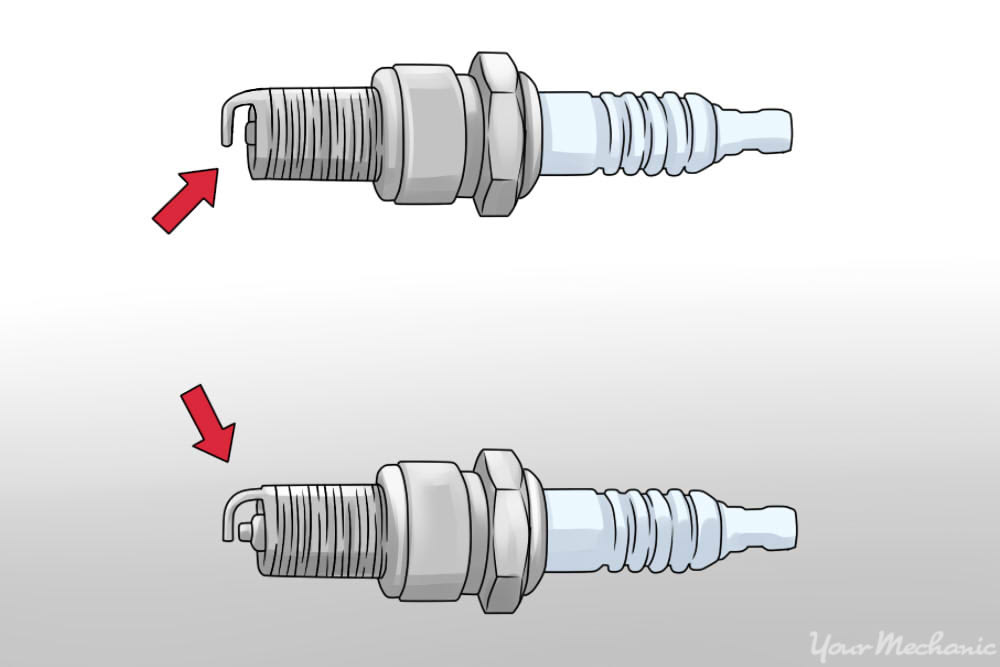
What Is Spark Plug Gap?
Spark plug gap is the distance between the center electrode and the ground electrode. When the ignition system sends high voltage to the plug, the voltage can create an electric arc across this gap. That arc is the spark that starts combustion.
Spark plug gaps are usually measured in inches or millimeters. The correct value varies by engine and plug design. Some modern plugs use fine-wire electrodes and special shapes, so the physical design matters along with the gap size.
The gap may look tiny, but the ignition system must create enough voltage to bridge it under real engine conditions. Cylinder pressure, temperature, mixture strength, ignition coil output, and plug condition can all affect how easily the spark forms.

- ✦ Center electrode
The center electrode carries high voltage toward the end of the plug and forms one side of the spark gap.
- ✦ Ground electrode
The ground electrode forms the other side of the gap and completes the electrical path when the spark jumps.
- ✦ Spark gap
The gap is the small space the electrical arc must cross to ignite the air-fuel mixture.
Why the Gap Matters
The ignition coil must produce enough voltage to jump the gap. As the gap gets wider, the voltage needed to create a spark generally rises. If the required voltage becomes greater than what the ignition system can reliably provide, the engine may misfire.
This is the core reason why how spark plug gap affects performance is not simply a question of bigger versus smaller. The gap must work with the entire ignition system and the engine’s operating conditions.
- ✦ Correct gap
Helps the ignition system produce a reliable spark under the conditions for which the engine was designed.
- ✦ Too-wide gap
Can demand more ignition voltage and may lead to misfires when the coil or plug cannot meet that demand.
- ✦ Too-small gap
Can reduce the size and exposure of the initial spark, which may affect flame growth and combustion quality.
How Does Spark Plug Gap Affect Engine Performance?
How does spark plug gap affect performance in a running engine? It mainly affects the reliability and quality of the spark that starts combustion. A correct gap helps the engine ignite the mixture at the right point with a spark that the ignition system can produce consistently.
When the gap is wrong, the engine may not burn the mixture as well. The driver may notice rough idle, hesitation, poor throttle response, reduced power, or harder starting. In some cases, the engine control system may detect a misfire and turn on the check engine light.
The effect is often more noticeable when the engine is under load. High cylinder pressure can make it harder for the spark to jump the gap. That means a gap that seems fine during light driving may expose an ignition weakness during hard acceleration, climbing a hill, or towing.

- ✦ Power
An incorrect gap can cause incomplete or unstable combustion, which may reduce usable engine power.
- ✦ Throttle response
A reliable spark supports smooth combustion, while spark problems can cause hesitation when the driver asks for more power.
- ✦ Idle quality
A weak or inconsistent spark can make the engine shake, stumble, or idle unevenly.
- ✦ Starting
A suitable gap helps the ignition system create a dependable spark during cranking, including cold starts.
Why a Wider Gap Is Not Always Better
A wider gap can expose the spark to more of the air-fuel mixture. In a suitable engine and ignition system, that can support good flame growth. But widening the gap also increases the electrical demand on the ignition system.
If the ignition coil does not have enough voltage reserve, the wider gap may cause spark blowout or misfire. This is why changing the gap without following the engine maker’s specification can create problems instead of adding power.
- ✦ Possible benefit
A suitable wider gap can help the initial flame kernel reach more of the mixture in some engine designs.
- ✦ Possible drawback
A wider gap needs more voltage and can increase misfire risk if the ignition system cannot maintain the spark.
What Happens When the Spark Plug Gap Is Too Wide?
A spark plug gap that is too wide can place extra demand on the ignition system. The coil must create more voltage before the spark can cross the larger space. If the system cannot reach the required voltage, the spark may become weak or fail to occur at the needed time.
This can lead to a misfire. A misfire means the cylinder does not burn its air-fuel charge correctly. The result may be felt as a stumble, shake, hesitation, or loss of power.
A wide gap can be especially troublesome when cylinder pressure rises. This can happen during hard acceleration, high engine load, or boost in a turbocharged engine. An ignition system that works well at light load may show its limits under these conditions.

- ✦ Misfires
The spark may fail to jump the gap reliably, causing one or more cylinders to miss combustion events.
- ✦ Hard starting
The ignition system may struggle to produce a reliable spark while the engine is cranking.
- ✦ Hesitation
The engine may stumble when the throttle opens and cylinder pressure rises.
- ✦ Ignition stress
Repeatedly demanding high voltage can place greater electrical stress on ignition components.
Signs of an Excessive Gap
Common signs include a rough idle, intermittent misfire, poor acceleration, and a check engine light. Some drivers also notice that the engine runs acceptably at low speed but breaks up during hard acceleration.
These symptoms do not prove that the gap is too wide. A worn plug, damaged ignition coil, poor connection, fuel problem, vacuum leak, or engine fault can create similar symptoms. The gap should be checked as part of a wider diagnosis.
- ✦ Under-load stumble
The engine may misfire when climbing a hill, accelerating hard, or carrying a heavy load.
- ✦ Intermittent fault
The problem may appear only at certain speeds, temperatures, or engine loads.
What Happens When the Spark Plug Gap Is Too Small?
A gap that is too small reduces the distance the spark must cross. That can make it easier for the ignition system to create a spark. However, easier sparking does not automatically mean better combustion.
The initial spark needs to start a flame that spreads through the air-fuel mixture. If the gap is much smaller than the design calls for, the spark may have less useful exposure to the mixture. That can affect how the flame begins and spreads.
A small gap can also change the way the spark behaves near the electrodes. In some engines, this may reduce combustion efficiency or alter the way the mixture burns. The exact effect depends on the engine, plug, ignition system, and operating conditions.

- ✦ Lower voltage demand
A smaller gap generally requires less voltage for the spark to cross.
- ✦ Possible weaker combustion start
A gap below the intended specification can change the initial flame development and may reduce combustion quality.
- ✦ Not a cure-all
Reducing the gap may hide an ignition weakness for a time, but it does not repair a failing coil, poor wiring, or another underlying fault.
How Spark Plug Gap Affects Fuel Economy
Spark plug gap can affect fuel economy when the wrong gap causes unstable or incomplete combustion. A healthy ignition system with the correct plug and gap helps the engine burn its mixture consistently. That supports normal combustion efficiency.
However, changing the gap by itself is not a reliable way to improve gas mileage. Modern vehicles use engine computers, fuel injection, oxygen sensors, ignition timing, and other systems to manage combustion. The plug gap is only one part of that system.
If fuel economy suddenly drops after a plug service, check the gap along with plug condition, ignition coils, air filters, tire pressure, fuel system issues, and fault codes. Do not assume the gap is the only cause.

- ✦ Correct combustion
A suitable gap helps the ignition system start combustion reliably and supports normal engine operation.
- ✦ Misfire losses
Repeated misfires can waste fuel because the affected cylinder does not burn its charge correctly.
- ✦ Do not chase mileage with gap changes
Use the manufacturer’s specified gap instead of changing it solely to seek better fuel economy.
Does a Wider Gap Improve Gas Mileage?
Not by default. A wider gap can work well when the engine and ignition system are designed for it, but increasing the gap beyond specification can cause misfires and reduce efficiency.
For a stock daily driver, the safest approach is simple: use the specified spark plug and set the gap to the specified value. If the vehicle has aftermarket engine parts, follow the instructions for that exact setup.
How Spark Plug Gap Affects Turbocharged and High-Performance Engines
Turbocharged engines can place greater demands on the ignition system because boost increases the pressure inside the cylinder. Higher cylinder pressure can make it harder for the spark to jump the gap. That can make the correct gap even more important.
Some modified engines use a smaller gap to give the ignition system more voltage margin under high load. This does not mean every turbo engine needs a small gap. The correct setting depends on the engine, boost level, ignition hardware, plug type, and tuning.
For a modified vehicle, use the plug and gap recommendation from the engine builder, tuner, or plug maker for that exact combination. A stock specification may not apply after major changes to boost, compression, fuel, or ignition hardware.

- ✦ Higher cylinder pressure
More pressure in the cylinder can increase the voltage needed to create a reliable spark.
- ✦ Ignition margin
A smaller gap may provide more voltage margin in some high-load applications, but the correct value must come from the specific setup.
- ✦ Modified engines
Changes to boost, compression, fuel, or ignition parts can change the ideal plug and gap combination.
How to Check and Set Spark Plug Gap
Checking the gap is a basic part of spark plug installation. Use the vehicle’s service information or the spark plug manufacturer’s instructions to find the correct value. Do not rely on a generic gap chart when an exact specification is available.
A spark plug gap gauge or wire-style gauge can measure the distance. If adjustment is allowed for the plug, move the ground electrode carefully. Do not pry against the center electrode or porcelain, because damage can ruin the plug.
Many modern spark plugs come pre-gapped, but that does not mean you should skip checking. Shipping, handling, or previous adjustment can change the gap. Some plugs also have designs that should not be adjusted in the same way as a basic nickel-alloy plug.

- ✦ Find the exact specification
Check the owner’s manual, service information, or plug manufacturer’s data for the exact engine and plug.
- ✦ Measure the gap
Use a suitable spark plug gap gauge and compare the measured distance with the specified value.
- ✦ Adjust with care
If the plug allows adjustment, move the ground electrode gently and avoid damaging the center electrode or insulator.
- ✦ Recheck the measurement
Measure the gap again after adjustment so you know it matches the required specification.
Should You Gap New Spark Plugs?
It depends on the plug and vehicle. Some plugs are supplied at the intended gap, while others may need checking or adjustment before installation. Even a pre-gapped plug should be inspected if the manufacturer says to verify the gap.
The important question is not whether a plug is labeled pre-gapped. The important question is whether its actual gap matches the specification for your engine.
- ✦ Check first
Confirm the actual gap instead of assuming every new plug is set perfectly for your application.
- ✦ Follow plug instructions
Some fine-wire, precious-metal, or special-design plugs have limits on how their electrodes should be adjusted.
If an engine runs poorly after a spark plug change, check the basics first. Confirm that the plugs are the correct part number, the gaps match the specification, the plugs are properly installed, and the ignition coils and connectors are seated correctly.
Do not replace parts based on the gap alone. Misfires can come from ignition coils, injectors, fuel pressure, vacuum leaks, compression problems, timing issues, or wiring faults. A diagnostic scan can help identify which cylinder or system is showing a problem.
A useful diagnostic pattern is to note when the fault occurs. A problem that appears only under heavy load can point toward an ignition system that lacks enough voltage reserve, while a constant rough idle may have a wider range of possible causes.
- ✦ Check the plug type
Make sure the installed plug matches the engine’s required specification.
- ✦ Check the gap
Measure the actual gap and compare it with the exact specification.
- ✦ Inspect ignition parts
Look for damaged coils, loose connectors, cracked insulators, or other ignition faults.
- ✦ Scan for fault codes
A diagnostic scan can reveal misfire codes and help narrow down the affected cylinder or system.
- ✦ Test under the right conditions
If the fault occurs only during acceleration or high load, test the vehicle under safe conditions that reproduce the symptom.
Common Mistakes When Changing Spark Plug Gap
One common mistake is opening the gap because someone claims that a bigger gap always makes more power. Another is closing the gap to hide a weak ignition coil. Both approaches can create misleading results.
The better method is to start with the correct specification. If the engine still has a problem, diagnose the ignition system and engine rather than using the gap as a substitute for repair.
- ✦ Using a generic gap
Different engines can require different gaps, even when they use similar spark plugs.
- ✦ Changing the gap for power
A gap change should be based on the engine and ignition setup, not a general performance claim.
- ✦ Ignoring plug design
Fine-wire and precious-metal plugs may have electrode designs that require careful handling.
What Is the Best Spark Plug Gap for Your Car?
There is no single best spark plug gap for every car. The correct value depends on the engine design, spark plug part number, ignition system, compression, fuel system, and whether the engine remains stock or has been modified.
For most everyday vehicles, use the gap listed by the vehicle maker or the spark plug maker for the exact application. This gives the ignition system the operating range it was designed to handle.
If your vehicle has a performance tune, turbocharger, supercharger, higher compression, or other major engine changes, use a specification made for that setup. A professional tuner or engine builder can help when the application differs from the factory configuration.
- ✦ Stock vehicle
Start with the factory specification for the exact engine and approved spark plug.
- ✦ Aftermarket modifications
Use guidance that matches the modified engine and its ignition system.
- ✦ Do not guess
Avoid choosing a gap from another vehicle simply because the engine size or plug looks similar.
Does Spark Plug Gap Affect Horsepower?
Yes, but the effect depends on whether the gap is suitable for the engine and ignition system. A correct gap can support stable combustion, while an incorrect gap can cause misfires or less efficient combustion.
A gap adjustment is not a simple horsepower upgrade. On a healthy stock engine, changing the gap away from the specified value may provide no useful gain and can create drivability problems.