
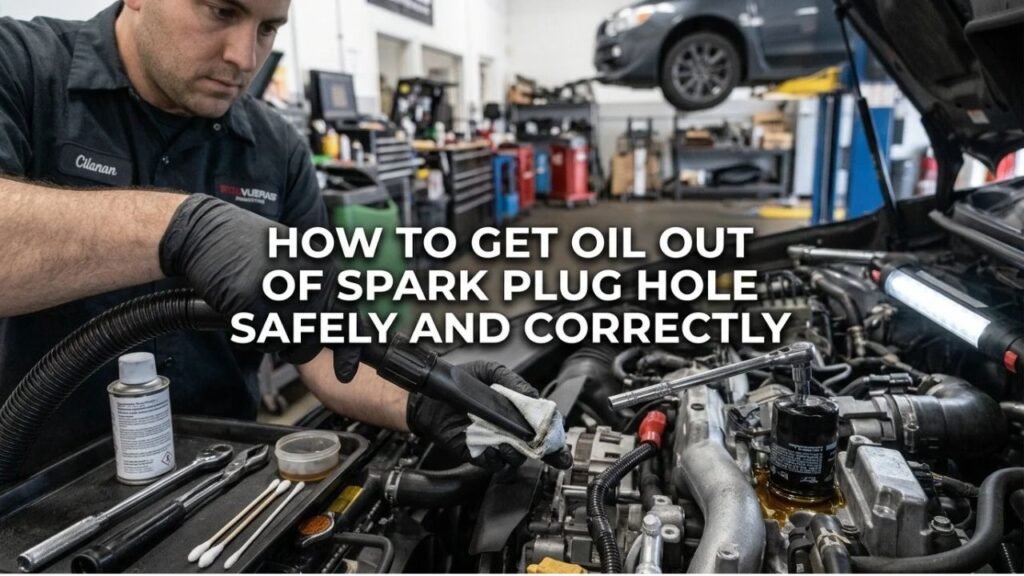
If you want to know how to get oil out of spark plug hole, first determine whether the oil is sitting in the spark plug well around the outside of the plug or has actually entered the combustion chamber through the open plug hole. If the spark plug is still installed, remove as much oil as possible with a suction tool, syringe, absorbent towel, or other controlled method before removing the plug. If oil has already entered the cylinder, the removal process is different and requires more caution.
In many modern engines, the spark plugs sit at the bottom of deep tubes in the valve cover or cylinder head. A failed spark plug tube seal or valve cover gasket can allow engine oil to fill those tubes. When you remove the ignition coil, you may find the boot soaked in oil and the top of the spark plug surrounded by a puddle.
The temptation is to simply unscrew the plug and let the oil fall into the cylinder. I do not recommend that. A small amount may eventually burn off, but a larger quantity can foul the plug, create heavy smoke, interfere with starting, and in extreme cases introduce enough liquid into the cylinder to create mechanical problems.
The better approach is to remove the oil first, clean the well, repair the source of the leak, and only then install or inspect the spark plug.
In this guide, I’ll explain how to get oil out of a spark plug hole, what tools work best, what to do if oil falls into the cylinder, whether compressed air is safe, how to clean the ignition coil boot, and what usually causes the oil leak in the first place.
First, Determine Where the Oil Actually Is
This is the most important step.
People often use the phrase “oil in the spark plug hole” to describe two completely different situations.
Oil in the Spark Plug Well
This means oil is sitting around the outside of the spark plug, usually inside a deep tube in the valve cover or cylinder head.
The spark plug is still installed and sealing the combustion chamber.
This is generally caused by an external oil leak.
The most common sources are:
a failed spark plug tube seal, leaking valve cover gasket, cracked valve cover, or improperly installed valve cover seal.
This is the easier situation to deal with because the oil has not necessarily entered the cylinder.
Oil Inside the Cylinder
This means oil has passed through the spark plug opening after the plug was removed, or oil is entering the combustion chamber internally.
If you accidentally remove a spark plug while the well is full of oil, the oil surrounding the plug can drain directly into the cylinder.
That requires more careful cleanup.
Internal oil entering the cylinder during normal engine operation is a different issue altogether and may point toward piston rings, valve stem seals, PCV problems, or other mechanical faults.
For this article, the main focus is oil that has collected in the plug well and needs to be removed safely.
Key Takeaways:
- Oil around an installed spark plug is usually in the spark plug well, not inside the cylinder.
- Remove pooled oil before unscrewing the spark plug.
- Oil already inside the combustion chamber requires a different cleanup procedure.
What Causes Oil to Fill the Spark Plug Hole?
Oil does not normally belong in the spark plug well.
If you find a pool of it there, something above the combustion chamber is leaking.
Leaking Spark Plug Tube Seals
This is one of the most common causes.
Many engines use circular seals around the spark plug tubes where they pass through the valve cover.
These seals keep engine oil from entering the tubes.
Over time, heat causes the rubber to harden, shrink, crack, or lose elasticity.
Oil then seeps into the well.
You may find one plug well oily while the others remain dry, or several may leak at once.
Valve Cover Gasket Leak
On some engines, the spark plug tube seals are integrated into the valve cover gasket system.
If the gasket deteriorates, oil may leak around the outside of the cover and into the spark plug openings.
Replacing only the spark plugs will not solve this problem.
Cracked or Warped Valve Cover
Plastic valve covers can crack or warp from age and heat.
If the cover no longer seals properly, a new gasket may not stop the leak.
The valve cover itself may need replacement.
Incorrect Previous Repair
A gasket installed out of position, excessive sealant, improperly torqued valve-cover bolts, or damaged mating surfaces can cause a relatively new gasket to leak.
If oil returns soon after a valve-cover repair, inspect the repair itself before assuming the new gasket is defective.
What You Need to Remove Oil From a Spark Plug Well
You do not need many tools.
The goal is to remove liquid without pushing debris into the spark plug hole.
A large syringe with flexible tubing works very well.
A small hand-operated fluid extractor or suction pump is even better if a lot of oil is present.
Lint-free shop towels can absorb the last small amount.
Long needle-nose pliers or a narrow nonsharp tool may help position the towel, but nothing should be pushed aggressively around the spark plug ceramic.
You may also need basic hand tools to remove the ignition coil.
Wear eye protection and disposable gloves.
If the engine has just been running, let it cool before working around the cylinder head.
How to Get Oil Out of Spark Plug Hole Step by Step
If the spark plug is still installed, the process is relatively simple.
1. Turn the Engine Off and Let It Cool
Do not remove spark plugs from a very hot aluminum cylinder head unless the vehicle manufacturer specifically directs you to do so.
Working on a cool engine also reduces the risk of burns from the valve cover, exhaust components, and ignition coils.
Disconnect the battery if required by your service procedure.
2. Remove the Ignition Coil or Spark Plug Wire
Disconnect the coil electrical connector carefully.
Remove the coil retaining bolt if the engine uses coil-on-plug ignition.
Pull the coil upward with a gentle twisting motion.
Do not yank on wiring.
If the boot is soaked in oil, set the coil on a clean towel for inspection.
On engines with spark plug wires, grip the boot rather than pulling directly on the wire.
3. Inspect How Much Oil Is Present
Use a flashlight.
If there is only a thin film, absorbent material may be enough.
If there is a deep puddle surrounding the plug, suction is better.
Do not unscrew the spark plug yet.
4. Suction Out the Majority of the Oil
A large syringe with narrow flexible tubing is one of the easiest methods.
Feed the tube down beside the spark plug until it reaches the bottom of the well.
Pull the plunger slowly.
Empty the oil into an appropriate waste-oil container.
Repeat until very little liquid remains.
A hand-operated fluid extractor works on the same principle and may be easier if several wells are full.
5. Absorb the Remaining Film
After removing most of the liquid, use a narrow strip of clean lint-free shop towel to absorb the remaining oil.
Do not leave pieces of paper or lint in the well.
Do not use a metal screwdriver to jam fabric tightly around the porcelain.
The goal is simply to soak up the residual oil.
6. Clean Around the Spark Plug
Once the liquid is gone, inspect the bottom of the well.
Any dirt, grit, or loose debris should be removed before you unscrew the plug.
This is important because whatever remains in the well can fall into the cylinder after the spark plug is removed.
A controlled low-pressure air blast may be useful in some situations, but only after most liquid oil has been removed and only if you can prevent debris from being sprayed toward your face or throughout the engine bay.
More on compressed air below.
7. Remove the Spark Plug
Once the well is reasonably dry and clean, use the correct spark plug socket.
Break the plug loose carefully.
If it feels abnormally tight, do not force it aggressively.
Follow the vehicle-specific removal procedure.
Remove the plug and inspect it.
Oil on the outside upper portion may simply be from the leaking well.
Oil on the firing tip requires further diagnosis because that part was inside the combustion chamber.
8. Clean or Replace the Coil Boot
If the boot was soaked in oil, wipe it clean.
Inspect it for swelling, cracking, softness, carbon tracking, or other deterioration.
Oil exposure can damage boot material over time.
If the boot is damaged and separately replaceable, install a new one.
If it is permanently integrated into the ignition coil and badly deteriorated, the complete coil may need replacement.
9. Repair the Oil Leak
Do not stop after cleaning the well.
If the tube seal or valve cover gasket is still leaking, the oil will return.
Replace the failed seal or valve-cover component before considering the job finished.
10. Reinstall the Spark Plug Correctly
Use the correct plug and verify its gap when required.
Start the plug by hand to avoid cross-threading.
Tighten it to the vehicle manufacturer’s torque specification.
Reinstall the coil or plug wire and make sure the electrical connection is secure.
Is a Syringe the Best Way to Remove Oil?
For DIY work, it is one of the safest and most controlled methods.
A large disposable syringe with flexible tubing lets you reach the bottom of a deep spark plug tube without disturbing the plug.
It also prevents oil from being sprayed around the engine bay.
A small suction pump works equally well.
For a very small amount of oil, absorbent shop towel may be simpler.
The important part is that whatever method you choose should remove the oil rather than push it somewhere else.
Can You Use a Turkey Baster?
Technically, a narrow baster may work if it can physically reach the bottom of the well, but a syringe with tubing is usually more practical.
Spark plug wells are often narrow and deep.
A rigid baster tip may not fit beside the plug.
If you use any household-style suction tool for automotive fluids, do not return it to kitchen use afterward.
Keep automotive tools permanently separate.
Can You Use a Shop Vacuum?
I generally prefer not to use a normal household or shop vacuum to remove liquid from a spark plug well unless the vacuum is specifically designed for the material being collected.
The amount of oil may be small, but automotive wells can contain fuel vapor, solvent residue, and other contaminants.
A syringe or hand pump gives you much better control.
It also makes disposal easier.
For dry debris after the oil has been removed, a suitable vacuum with a narrow attachment may be useful if the equipment is appropriate.
Can You Blow Oil Out With Compressed Air?
I do not recommend starting with compressed air while the plug well is full of oil.
You may spray engine oil all over the valve cover, wiring, belts, nearby painted surfaces, and yourself.
You may also drive dirt deeper into the well.
Suction should come first.
After most of the oil has been removed, low-pressure compressed air can sometimes help clear small debris from around the still-installed spark plug.
Wear eye protection and direct the air so debris moves away from your face.
Why the Spark Plug Should Stay Installed During Cleaning
The installed spark plug acts as a barrier between the dirty well and the combustion chamber.
Once it is removed, anything you blow or brush around the opening can enter the cylinder.
That is why cleaning the well before plug removal is such an important habit.
Key Takeaways:
- Suction is better than compressed air when the well contains liquid oil.
- Keep the spark plug installed while removing oil and debris whenever possible.
- Clean the well before the plug comes out so contamination does not fall into the cylinder.
What If You Already Removed the Spark Plug and Oil Fell Into the Cylinder?
Do not panic.
A very small amount of oil entering the cylinder will usually burn during startup.
You may see temporary blue or gray exhaust smoke.
However, if a substantial amount of oil drained into the cylinder, do not simply reinstall the plug and crank the engine normally.
Liquid does not compress the way air does.
Enough oil inside a cylinder can interfere with piston movement and, in an extreme case, contribute to hydrolock.
First, Do Not Start the Engine
Leave the spark plug out.
If practical, use a syringe and narrow flexible tube to reach through the spark plug opening and suction out as much liquid as possible.
The piston position can affect how much oil you can reach.
Do not force hard objects into the cylinder.
Removing Remaining Oil by Cranking
In some cases, a mechanic may disable fuel and ignition, remove the affected spark plug or all spark plugs, cover the opening safely, and crank the engine briefly to expel residual liquid.
However, oil can spray forcefully from the plug hole.
This can create a serious mess and an eye-injury hazard.
It is also important that fuel injection and ignition are properly disabled.
If you are not familiar with how to do that safely on your vehicle, suctioning what you can and having a technician finish the procedure is safer.
What Happens When a Small Amount Remains?
A thin residual coating of engine oil inside the cylinder is not normally catastrophic.
The cylinder already operates with a microscopic oil film on its walls.
A small additional amount may produce temporary smoke after startup.
The concern is a large pool of liquid.
If you are uncertain how much entered, treat the situation cautiously rather than assuming it will simply burn off.
What If the Engine Smokes After Cleaning the Spark Plug Hole?
Temporary smoke can happen if oil entered the combustion chamber.
The exhaust may appear blue or blue-gray.
If only a small amount entered, the smoke should diminish as the oil burns away.
Persistent smoke is different.
If the engine continues smoking after the accidental oil should have been consumed, it may already have an internal oil-burning problem.
Valve stem seals, piston rings, PCV faults, or cylinder wear may need diagnosis.
Do not automatically assume persistent smoke is from the plug-well cleanup.
Can Oil in a Spark Plug Hole Cause a Misfire?
Yes.
Oil in the well can interfere with the ignition system even if it never enters the cylinder.
The ignition coil boot has to insulate very high voltage.
Oil contamination can degrade the rubber and encourage voltage leakage.
A damaged boot may allow the spark to travel down the outside of the spark plug ceramic instead of through the electrode gap.
This can create carbon tracking and repeated misfires.
Common Symptoms
You may notice rough idle, hesitation, weak acceleration, engine vibration, or a check-engine light.
If the misfire is severe, the check-engine light may flash.
A flashing light can indicate a catalyst-damaging misfire and should not be ignored.
What Is Carbon Tracking?
Carbon tracking appears as a thin black or gray line on the spark plug ceramic or inside the coil boot.
It forms when high voltage repeatedly arcs along the surface.
Once the path becomes conductive, the spark can continue using it.
If you discover matching carbon tracks on the plug and boot, replacing only one component may allow the problem to return.
A new spark plug and new boot may both be required.
Fix the oil leak at the same time.
Can Oil Ruin an Ignition Coil?
Possibly.
The electronic portion of the coil may remain functional, but long-term oil exposure can damage the rubber boot, seals, and high-voltage insulation.
If the oil reaches electrical connectors, additional contamination problems may develop.
Clean the coil thoroughly and inspect it.
If the engine continues to misfire after the plug well is dry and a good spark plug is installed, test the ignition coil.
Do not automatically replace all coils just because one plug well contained oil.
Should You Replace the Spark Plug After It Gets Covered in Oil?
It depends on where the oil was.
If only the outside ceramic and threads became oily because the spark plug well leaked, the firing tip may still be perfectly usable.
If the plug is otherwise relatively new and undamaged, cleaning the outside may be sufficient.
If the electrode itself is oil-fouled, heavily carbonized, worn, or already due for replacement, install a new plug.
Modern iridium and platinum plugs should not be aggressively wire-brushed because their fine precious-metal electrodes can be damaged.
For a heavily fouled plug, replacement is generally the safer choice.
Should You Clean the Spark Plug Threads?
If oil from the well coated the outside threads during removal, wipe the plug clean if it will be reused.
Do not automatically lubricate the threads before reinstalling.
Many modern spark plugs have plated threads designed for dry installation.
Oil or anti-seize changes thread friction and can affect the relationship between torque and clamping force.
Follow the spark plug and vehicle manufacturer’s installation instructions.
How to Fix the Leak So Oil Does Not Come Back
Cleaning the plug hole is only the immediate repair.
The underlying gasket or seal must be fixed.
Replace Spark Plug Tube Seals
If your engine uses replaceable tube seals, they are often serviced while the valve cover is removed.
Many gasket sets include both the perimeter valve-cover gasket and tube seals.
It usually makes sense to replace both at the same time when age has hardened the rubber.
Replace the Valve Cover Gasket
Clean the mating surfaces according to the service procedure.
Do not gouge aluminum sealing surfaces.
Install the gasket correctly and tighten the valve cover in the specified sequence.
Valve-cover bolts generally require relatively low torque.
Overtightening can deform the cover or crush the gasket.
Inspect the Valve Cover
Look for cracks around bolt holes, tube openings, breather connections, and corners.
A warped plastic cover may leak even with a new gasket.
If the cover itself is damaged, replace it.
Check the PCV System
Excessive crankcase pressure can worsen oil leaks.
If the PCV system is restricted or malfunctioning, pressure may push oil past otherwise marginal seals.
Inspect the PCV components according to the vehicle maintenance procedure.
How to Clean the Spark Plug Well After Repair
After the leaking gasket or seals have been replaced, clean any residual oil from the well.
Use suction for pooled oil and lint-free material for the remaining film.
The well does not need to be surgically sterile, but it should be dry enough that the coil boot is not sitting in oil.
Inspect the coil boot again before final installation.
A tiny amount of dielectric grease inside the upper portion of the boot may be used if recommended by the ignition coil or vehicle manufacturer.
Do not pack the entire boot full of grease.
Can You Drive With Oil in the Spark Plug Well?
The engine may continue to run, but I would not ignore the problem.
A small leak may initially cause no symptoms.
As the oil level rises, the coil boot can become saturated.
Eventually, the cylinder may begin misfiring.
The leak can also spread across the valve cover or onto other components.
Repairing the gasket early is generally cheaper than allowing oil contamination to damage ignition components.
If the check-engine light is flashing or the engine is misfiring severely, avoid continued driving until the problem is addressed.
Common Mistakes When Removing Oil From Spark Plug Holes
One of the biggest mistakes is unscrewing the spark plug while the well is still full.
That allows the oil to drain into the combustion chamber.
Another mistake is immediately blasting the oil with compressed air.
That turns a contained leak into oil spray.
Do not stuff paper towel deeply into the well and leave fragments behind either.
Use lint-free material that you can retrieve completely.
Another mistake is cleaning the oil but ignoring the leaking tube seal.
The well will simply refill.
Finally, do not assume oil around the outside of the spark plug means the engine has worn piston rings.
An external tube-seal leak is much more likely when the firing tip itself remains dry.
Key Takeaways:
- Remove oil first, then remove the spark plug.
- Repair the valve-cover or tube-seal leak or the problem will return.
- Oil in the well and oil on the firing electrode point toward very different problems.
How to Tell External Oil Leakage From Internal Oil Burning
This distinction can save you from an incorrect diagnosis.
If the upper spark plug body and ignition boot are oily but the firing tip is dry, suspect the plug well.
If the well is dry but the electrode is wet and oily, the engine may be burning oil internally.
Possible internal causes include worn piston rings, stuck oil-control rings, worn valve stem seals, excessive valve-guide clearance, or PCV-related oil ingestion.
If both the well and firing tip are oily, you may have more than one issue.
Clean the external leak first and then monitor the new or cleaned plug to see whether oil fouling returns.
FAQs about How to Get Oil Out of Spark Plug Hole
How do you get oil out of a spark plug hole?
If the spark plug is still installed, use a syringe with flexible tubing or a small fluid extractor to suction out the oil. Absorb the remaining film with lint-free shop towel before removing the plug.
Should I remove the spark plug first?
No. If oil is pooled around the plug, remove the oil while the plug is still installed. Otherwise, the oil may drain into the combustion chamber.
Can I use compressed air to remove oil?
Do not use compressed air as the primary method for a well full of oil. It can spray oil everywhere. Suction most of the liquid first.
Can I use a shop vacuum?
A syringe or hand-operated fluid pump provides better control. Avoid using a vacuum that is not designed for automotive fluids or potentially flammable vapors.
What causes oil in spark plug holes?
The most common causes are leaking spark plug tube seals, a valve cover gasket leak, or a damaged valve cover.
Is oil in the spark plug well serious?
It should be repaired. The leak may eventually damage coil boots and cause ignition misfires even if the engine is not burning oil internally.
What if oil falls into the cylinder?
Do not immediately start the engine if a significant amount entered. Suction out as much as possible through the spark plug hole. A small residual amount may burn off, but a large amount of liquid should be removed.
Will oil in the cylinder damage the engine?
A small amount usually burns off. A large quantity can interfere with piston movement and may create hydrolock risk, so it should be removed before cranking normally.
Will the car smoke after oil gets into the spark plug hole?
If oil enters the combustion chamber, temporary blue-gray exhaust smoke may occur after startup while the oil burns away.
Can oil in a spark plug hole cause a misfire?
Yes. Oil can damage or contaminate the coil boot and allow ignition voltage to leak instead of reaching the spark plug properly.
Do I need to replace the ignition coil?
Not automatically. Clean and inspect it first. Replace the boot or coil if it is cracked, swollen, carbon-tracked, or still causes a misfire.
Do I need to replace the spark plug?
Replace it if the firing end is heavily fouled, damaged, worn, or due for service. A relatively new plug that only became oily externally may still be reusable after cleaning.
Can a valve cover gasket cause oil in spark plug wells?
Yes. A failed valve-cover sealing system or spark plug tube seal is one of the most common causes.
Can bad piston rings cause oil in the plug well?
Piston rings cause oil contamination inside the combustion chamber, not normally a pool of oil around the outside of the spark plug.
Should I put dielectric grease in the plug well after cleaning?
No. Do not fill the well with grease. If recommended, use only a small amount inside the ignition boot where specified.
How do I stop oil from coming back?
Replace the failed spark plug tube seals, valve cover gasket, or damaged valve cover and inspect the PCV system if crankcase pressure is excessive.
Conclusion
Learning how to get oil out of spark plug hole starts with identifying whether the oil is outside the spark plug in the well or already inside the combustion chamber.
If the spark plug is still installed, leave it in place while you remove the oil. I recommend using a large syringe with flexible tubing or a small hand-operated fluid extractor to suction out the majority of the oil, followed by lint-free shop towel to absorb the remaining film.
Only after the well is reasonably clean and dry should you remove the spark plug.
This prevents pooled oil, dirt, and debris from falling directly into the cylinder.
If oil has already entered the combustion chamber, remove as much as possible through the plug opening before starting the engine. A very small residual amount will usually burn off and may create temporary smoke, but a large quantity of liquid should not be ignored because of the risk of fouling or, in extreme cases, hydrolock.
Most importantly, do not treat cleaning as the final repair. Oil in the spark plug well normally means a spark plug tube seal, valve cover gasket, or valve cover itself is leaking. Until that fault is corrected, the oil will eventually return.
After repairing the leak, inspect the spark plug and coil boot for oil damage and carbon tracking, reinstall everything correctly, and monitor the engine for misfires.
The safest sequence is simple: remove the pooled oil first, clean the well, remove the spark plug, repair the leak, and only then reinstall the ignition components.