
Common spark plug failure symptoms include engine misfires, rough idling, slow acceleration, difficult starting, reduced power, poor fuel economy, and an illuminated check engine light. A badly worn or contaminated plug may also cause engine shaking, unusual exhaust sounds, fuel odors, and poor performance under load.
Spark plugs create the electrical spark that ignites the compressed air-fuel mixture inside a gasoline engine. When a plug becomes worn, fouled, damaged, or incorrectly gapped, the spark may become too weak or inconsistent to support normal combustion. The affected cylinder may fire intermittently or stop producing useful power.
In this guide, I will explain how failed spark plugs affect engine operation, what causes them to deteriorate, how to inspect and diagnose them, and when replacement is necessary. Many ignition, fuel, and mechanical problems can produce similar symptoms, so accurate diagnosis is important before installing new parts.
What Does a Spark Plug Do?
A spark plug is installed in the cylinder head of a gasoline engine. Its firing end extends into the combustion chamber, while the upper terminal connects to an ignition coil or spark plug wire.
When the engine control system commands ignition, the coil generates high voltage. That voltage travels to the spark plug and jumps across the small space between the center and ground electrodes. The resulting spark ignites the air-fuel mixture, beginning the combustion event that pushes the piston downward.
Every plug must fire repeatedly while exposed to high combustion pressure, extreme temperature changes, fuel deposits, oil contamination, and electrical stress. Over time, the electrodes can wear and their edges become rounded. A larger or irregular gap may require more voltage than the ignition system can reliably provide.
Spark plugs also transfer heat from their firing ends into the cylinder head. A plug with the incorrect heat range, improper installation torque, or unsuitable design may operate too hot or too cold for the engine.
The Most Common Spark Plug Failure Symptoms
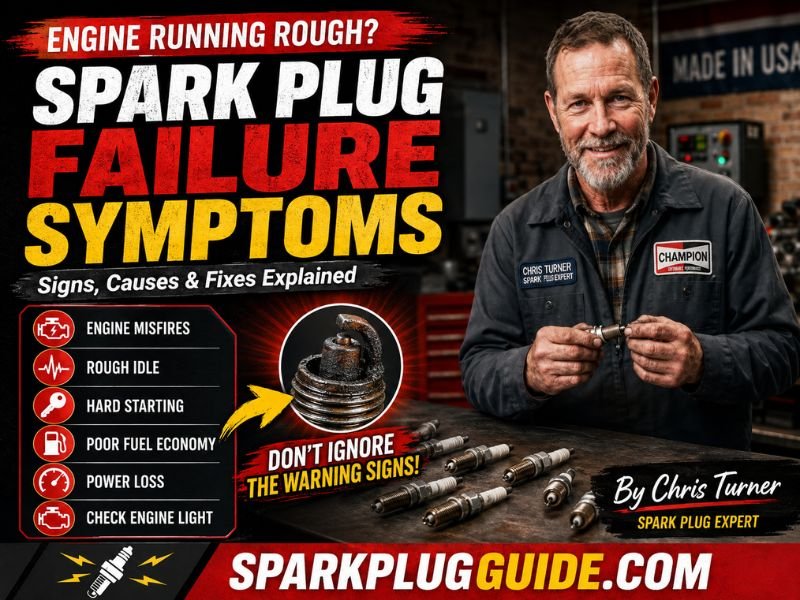
A failing plug does not always stop working completely. Early symptoms may be intermittent and appear only during cold starts, heavy acceleration, wet weather, or high-speed driving.
Engine Misfires
An engine misfire is one of the most recognizable signs of a spark plug problem. A misfire occurs when combustion in a cylinder is missing, delayed, incomplete, or too weak to produce normal power.
You may feel a brief stumble, shaking sensation, or interruption in acceleration. A mild misfire might occur only occasionally, while a severe one can make the entire vehicle vibrate.
Misfires often become more noticeable under load. Accelerating uphill or merging onto a highway increases cylinder pressure, which makes it more difficult for the spark to cross the plug gap. A worn or fouled plug that works at idle may fail during heavy acceleration.
A misfire can also be caused by a defective ignition coil, damaged plug wire, clogged fuel injector, vacuum leak, low compression, valve problem, or incorrect mechanical timing. The symptom identifies a combustion problem but does not prove that the spark plug is responsible.
Rough or Unstable Idle
A healthy engine should idle at a relatively steady speed. When one cylinder fires irregularly, the engine may shake, surge, or feel unbalanced while the vehicle is stopped.
The vibration may be noticeable through the steering wheel, seat, floor, or dashboard. The tachometer may move slightly as the engine control module attempts to stabilize idle speed.
A plug can cause rough idle when its electrodes are worn, its gap is incorrect, or deposits interfere with spark formation. Carbon or oil fouling may allow voltage to leak across the insulator rather than jump correctly between the electrodes.
Rough idle can also result from dirty fuel injectors, intake leaks, throttle-body deposits, weak ignition coils, or worn engine mounts. Diagnosis should consider the complete engine system.
Difficult Starting or Extended Cranking
Spark plugs must ignite the mixture effectively during startup, when the engine is cold and operating conditions may be less stable. Weak plugs can cause the engine to crank longer than usual before starting.
The engine may start and immediately run roughly, or it may require several attempts. Cold weather can make the problem more noticeable because battery output may be lower and fuel vaporization may be less effective.
If several plugs are severely fouled, the engine may not start at all. However, a no-start condition can also involve the battery, starter, fuel pump, crankshaft sensor, security system, ignition coils, or engine timing.
Before replacing plugs, confirm that the engine is cranking at normal speed and receiving both fuel and ignition commands.
Hesitation During Acceleration
A vehicle with weak spark plugs may hesitate when you press the accelerator. Instead of responding smoothly, the engine may pause, stumble, or surge before gaining speed.
Acceleration increases the amount of air and fuel entering the cylinders. It also raises combustion pressure, creating a greater demand on the ignition system. Worn electrodes or an excessive plug gap can make it difficult for the coil to create a reliable spark under these conditions.
Hesitation may feel similar to a transmission problem or fuel-delivery issue. If it occurs with a cylinder-specific misfire code, rough running, and overdue plugs, the ignition system becomes a stronger suspect.
Reduced Engine Power
A misfiring cylinder contributes less power than it should. If the condition affects several cylinders, the vehicle may feel noticeably slower and less responsive.
You may need to press the accelerator farther to maintain highway speed or climb a hill. Towing and carrying heavy loads may become more difficult.
Loss of power related to worn plugs may develop gradually. Drivers sometimes adjust to the declining performance without realizing how much power has been lost until the plugs are replaced.
Reduced power can also result from a restricted air filter, clogged catalytic converter, fuel-pressure problem, turbocharger fault, or internal engine wear. A complete diagnosis is necessary when the problem is severe.
Poor Fuel Economy
A weak or inconsistent spark can reduce combustion efficiency. The engine may consume more fuel to deliver the requested power, especially if the driver compensates by pressing the accelerator harder.
Fuel economy may decline slowly rather than suddenly. Changes in weather, tire pressure, driving habits, traffic, and fuel formulation can also affect mileage, so this symptom is most meaningful when accompanied by misfires, rough idle, or difficult starting.
A worn plug may also place additional demand on the ignition coil. The coil must generate more voltage to bridge an enlarged gap, which can increase stress on the ignition system.
Check Engine Light
A misfire caused by a bad spark plug can illuminate the check engine light. An OBD-II scanner may reveal P0300 for random or multiple-cylinder misfires or a cylinder-specific code such as P0301, P0302, or P0303.
The number at the end of a cylinder-specific code generally identifies the cylinder in which the control module detected the misfire. It does not identify the failed component.
For example, a P0302 code indicates a detected misfire involving cylinder two. The cause could be the plug, coil, injector, wiring, compression, or an air leak near that cylinder.
A flashing check engine light is more serious than a steady light. It often indicates an active misfire severe enough to overheat and damage the catalytic converter. Avoid hard acceleration and arrange diagnosis promptly.
Engine Shaking Under Load
Some spark plug problems are barely noticeable at idle but cause severe shaking during acceleration. High cylinder pressure increases the voltage required to fire the plug, exposing weakness in worn electrodes, cracked insulators, coils, or plug boots.
The engine may run normally while cruising gently and shake when you press the accelerator. This pattern is sometimes called a load-related misfire.
Driving repeatedly with this condition can increase exhaust temperatures and reduce driving safety, especially when merging or passing.
Popping, Backfiring, or Uneven Exhaust Sound
Failed ignition can allow unburned fuel to enter the exhaust system. The engine may produce popping sounds, an irregular exhaust rhythm, or occasional backfiring.
A gasoline odor may also be present because fuel is leaving a cylinder without burning completely. Strong fuel odors require prompt attention, particularly if there is any possibility of an external fuel leak.
Popping and backfiring are not exclusive to spark plugs. Incorrect valve timing, a rich fuel mixture, intake leaks, ignition timing faults, and damaged valves can produce similar noises.
Increased Exhaust Emissions
Incomplete combustion can increase unburned hydrocarbons in the exhaust. A vehicle with persistent misfires may fail an emissions inspection even if it still appears drivable.
The engine control module may attempt to compensate for irregular combustion, but it cannot correct a plug that is physically unable to produce a consistent spark.
A failed emissions test should be followed by code scanning and proper diagnosis rather than automatic replacement of oxygen sensors or catalytic converters.
What Causes Spark Plugs to Fail?
Spark plugs are wear items, but premature failure often indicates another condition that should be corrected.
Normal Electrode Wear
Every spark erodes a very small amount of electrode material. Over thousands or millions of ignition events, sharp electrode edges become rounded and the gap increases.
Copper, platinum, double-platinum, and iridium plugs have different designs and expected service intervals. The correct replacement schedule is determined by the vehicle manufacturer, not by a universal mileage rule.
Once electrode wear exceeds the intended range, the ignition coil must produce more voltage. Misfires may then begin during cold starting or heavy acceleration.
Carbon Fouling
Carbon fouling creates dry, black deposits on the firing end. These deposits can provide an unintended electrical path across the insulator, weakening or preventing the spark.
Possible causes include repeated short trips, excessive idling, an overly rich air-fuel mixture, a dirty air filter, a leaking fuel injector, weak ignition, or a plug that operates too cold for the application.
Replacing the plug may restore operation temporarily, but the deposits can return unless the underlying cause is corrected.
Oil Fouling
Oil fouling leaves wet, dark, or shiny deposits on the plug. Oil may enter the combustion chamber through worn piston rings, valve guides, valve seals, a malfunctioning crankcase ventilation system, or certain engine-design problems.
Oil can also collect outside the plug in the spark plug well because of a leaking valve-cover gasket. This external leak may contaminate the ignition coil boot and cause electrical tracking.
New plugs alone will not repair internal oil consumption or an external gasket leak.
Fuel Fouling
A plug can become wet with fuel after repeated unsuccessful starting attempts or when the engine receives too much fuel.
Possible causes include leaking injectors, excessive fuel pressure, failed sensors, low compression, weak ignition coils, or starting attempts in very cold conditions.
A fuel-fouled plug may fail to ignite even after the original problem is corrected. It may need to be cleaned according to approved procedures or replaced.
Overheating
An overheated spark plug may have a very white or blistered insulator, rapid electrode wear, melted components, or signs of abnormal combustion.
Possible causes include an incorrect heat range, lean air-fuel mixture, advanced ignition timing, cooling-system problems, detonation, pre-ignition, or improper installation.
Overheating is not simply a spark plug maintenance issue. Severe pre-ignition or detonation can damage pistons, valves, and cylinder heads.
Incorrect Spark Plug Gap
The plug gap must match the manufacturer’s specification. A gap that is too wide increases the voltage required to create a spark. A gap that is too narrow may produce a smaller flame kernel and poor combustion.
Some new plugs are supplied with a preset gap, but that does not guarantee the setting matches every engine that uses the same plug number. Fine-wire electrodes can also be damaged by improper gapping tools or force.
Always verify the specification and follow the plug manufacturer’s handling instructions.
Wrong Plug Type or Heat Range
A spark plug may physically fit an engine but still have the wrong thread reach, seat design, heat range, electrode configuration, resistor value, or projected-tip length.
A plug that extends too far into the combustion chamber can contact the piston or valves. One that is too short may place the spark in the wrong area and leave exposed threads inside the cylinder head.
Incorrect heat range can contribute to fouling or overheating. Use an application-specific parts catalog or manufacturer service information rather than selecting a plug only by appearance.
Incorrect Installation Torque
Spark plugs transfer heat through their metal shells and seats into the cylinder head. Incorrect tightening can interfere with this heat-transfer path and damage the plug or head.
A loose plug may overheat, leak combustion gas, damage the threads, or eventually work free. An overtightened plug can distort its shell, crack the insulator, stretch the threads, or damage an aluminum cylinder head.
Torque requirements vary by plug design, gasket style, thread size, cylinder-head material, and whether the plug is new or previously installed.
Cracked Insulator
The ceramic insulator can crack from impact, incorrect tool use, overtightening, side loading, or being dropped before installation.
A crack may allow high voltage to escape instead of reaching the electrode gap. The result can be an intermittent misfire that changes with engine temperature or load.
A cracked plug must be replaced. Adhesives or external repairs cannot restore safe operation.
Spark Plug Failure Symptoms vs. Other Ignition Problems
Spark plugs, coils, and wires operate together, so their failure symptoms often overlap.
| Symptom | Possible Spark Plug Cause | Other Likely Causes |
| Cylinder-specific misfire | Worn, fouled, cracked, or incorrectly gapped plug | Coil, injector, compression, wiring |
| Misfire under acceleration | Excessive gap or worn electrodes | Weak coil, damaged boot, low fuel pressure |
| Rough cold start | Fouled plug or weak spark | Battery, injector leak, temperature sensor |
| Fuel odor | Cylinder not igniting fuel | Fuel leak, rich mixture, failed injector |
| Poor fuel economy | Weak combustion | Oxygen sensor, thermostat, fuel-system fault |
| Oil on plug | Oil entering cylinder or plug well | Valve-cover leak, worn rings, valve seals |
| White blistered plug | Overheating or lean operation | Cooling, fueling, timing, or engine problem |
Accurate diagnosis prevents unnecessary replacement and helps identify conditions that could damage a new set of plugs.
How to Diagnose a Failed Spark Plug
Start by scanning the vehicle for diagnostic trouble codes and recording freeze-frame information. Do not clear the codes before documenting them because the stored data can show engine speed, temperature, and load when the problem occurred.
Inspect the ignition system with the engine off and cool. Look for loose coil connectors, oil in the plug wells, damaged boots, cracked wires, corrosion, and signs of arcing.
If a specific cylinder is misfiring, a technician may exchange the plug with one from another cylinder. If the misfire follows the plug, the plug becomes a strong suspect. Parts should only be exchanged when the design and condition allow it, and the test must be documented carefully.
When removing a plug, inspect its firing end and compare it with the others. One plug that looks significantly different may point to a cylinder-specific fuel, oil, cooling, or compression problem.
Measure the gap with the correct tool and compare it with the vehicle specification. Check the center and ground electrodes for wear, cracks, melting, deposits, or physical damage.
A spark plug inspection should not replace compression, leak-down, injector, coil, or fuel-pressure testing when the evidence points elsewhere.
What Spark Plug Appearance Can Reveal
A normal used plug often has light tan, gray, or brown deposits with reasonably even electrode wear. Color interpretation is not perfect because modern fuels, additives, and engine-management systems affect deposits, but major differences remain useful.
Dry black deposits suggest carbon fouling. Wet oily material may indicate oil contamination. A fuel-wet plug suggests the cylinder received fuel without burning it effectively.
A very white, blistered, or damaged firing end may indicate overheating. Melted electrodes or cracked ceramic require immediate investigation for abnormal combustion, incorrect parts, or severe temperature conditions.
A single unusual plug often points to a problem limited to one cylinder. Similar deposits across every plug may indicate a system-wide condition.
When Should Spark Plugs Be Replaced?
Follow the maintenance schedule in the vehicle owner’s manual or manufacturer service information. Replacement intervals differ widely based on plug material, engine design, operating conditions, and emissions strategy.
Replace plugs earlier when inspection confirms excessive electrode wear, fouling that cannot be corrected, damaged threads, a cracked insulator, overheating, or an incorrect gap that cannot be adjusted safely.
It is common to replace plugs as a complete set because they have accumulated similar operating time. However, the underlying cause of abnormal wear or deposits should be repaired before assuming the new set will solve the problem permanently.
Can You Drive With Failed Spark Plugs?
A minor intermittent misfire may not stop the vehicle immediately, but continued driving can worsen performance and increase the risk of catalytic-converter damage.
Do not continue driving normally if the check engine light is flashing, the engine is shaking severely, power is dramatically reduced, or a strong raw-fuel smell is present. Reduce load and arrange prompt diagnosis.
If the vehicle is difficult to control, stalls repeatedly, overheats, or produces unusual mechanical noise, move to a safe location and consider towing it.
Spark Plug Replacement Cost Factors
The cost of replacing spark plugs depends on the engine layout, number of cylinders, plug type, labor access, and whether additional repairs are required.
Some four-cylinder engines provide easy access to every plug. Other engines require removal of intake components, ignition assemblies, engine covers, or surrounding hardware. Certain transverse V6 and V8 layouts can involve significantly more labor.
The parts cost may also vary between standard nickel-alloy, platinum, and iridium plugs. The correct plug specification is more important than choosing the least expensive or most heavily marketed option.
Related expenses may include ignition coils, coil boots, plug wires, valve-cover gaskets, intake gaskets, or thread repair if damage is discovered.
How to Help Spark Plugs Last Longer
Use the exact plug type specified for the engine and follow the correct installation procedure. Verify the gap where applicable, use a proper socket, and tighten each plug to the specified torque.
Repair oil leaks, coolant problems, rich fuel mixtures, ignition-coil faults, and injector issues promptly. These conditions can damage new plugs long before their normal replacement interval.
Avoid repeated unnecessary short trips when possible because the engine may not remain at operating temperature long enough to reduce deposits. Maintain the battery and charging system so the ignition coils receive reliable voltage during starting.
Frequently Asked Questions
What Is the First Sign of a Bad Spark Plug?
An intermittent misfire or slight hesitation under acceleration is often an early sign. Rough idle, harder starting, and a check engine light may appear as the condition worsens.
Can Bad Spark Plugs Cause a Car Not to Start?
Yes. Severely worn or fouled plugs can prevent ignition, especially if several cylinders are affected. Battery, fuel, sensor, and mechanical problems can also cause a no-start condition.
Can Failed Spark Plugs Damage Ignition Coils?
Worn plugs and excessive gaps can increase the voltage demand placed on the coils. Continued operation may contribute to insulation breakdown or coil failure.
Will New Spark Plugs Improve Fuel Economy?
They can restore normal efficiency when the existing plugs are worn or fouled. Replacing healthy plugs is unlikely to produce a dramatic improvement.
Can One Bad Spark Plug Cause Engine Shaking?
Yes. One misfiring cylinder can make the engine shake, particularly at idle or during acceleration.
Should I Replace Coils With the Spark Plugs?
Not automatically. Coils should be inspected and tested. Replacing functioning coils without evidence of failure can add unnecessary expense.
Do Diesel Engines Use Spark Plugs?
Conventional diesel engines use compression ignition rather than spark plugs. Many use glow plugs to assist cold starting, but glow plugs serve a different purpose.
Conclusion
Spark plug failure symptoms commonly include misfires, rough idle, hesitation, difficult starting, reduced power, poor fuel economy, and check engine warnings. Physical inspection may reveal worn electrodes, excessive gaps, carbon deposits, oil fouling, fuel contamination, overheating, or cracked ceramic.
These symptoms can also result from coils, injectors, wiring, air leaks, or internal engine problems. I recommend scanning for codes, inspecting the complete ignition system, and comparing the plugs with manufacturer specifications before replacing parts.
When failed plugs are confirmed, installing the correct replacements and repairing the condition that damaged them can restore smooth combustion, reliable starting, normal power, and better fuel efficiency.