
An inline spark plug tester is a small tool that can save time when an engine cranks but will not start. It gives you a quick way to check whether the ignition system is sending spark toward the spark plug. The test is useful on many gasoline engines, from cars and trucks to lawn equipment and other small engines.
If you know how to use an inline spark plug tester, you can split a no-start problem into smaller steps. You can check for spark before replacing plugs, coils, wires, or other parts. That simple check can help prevent guesswork and unnecessary parts swaps.
The basic test is easy, but safety still matters. Ignition systems can create very high voltage. Keep hands, tools, clothing, and loose wires away from moving parts and exposed ignition connections while the engine cranks. Always follow the tester and vehicle service instructions when they differ from general steps in this guide.
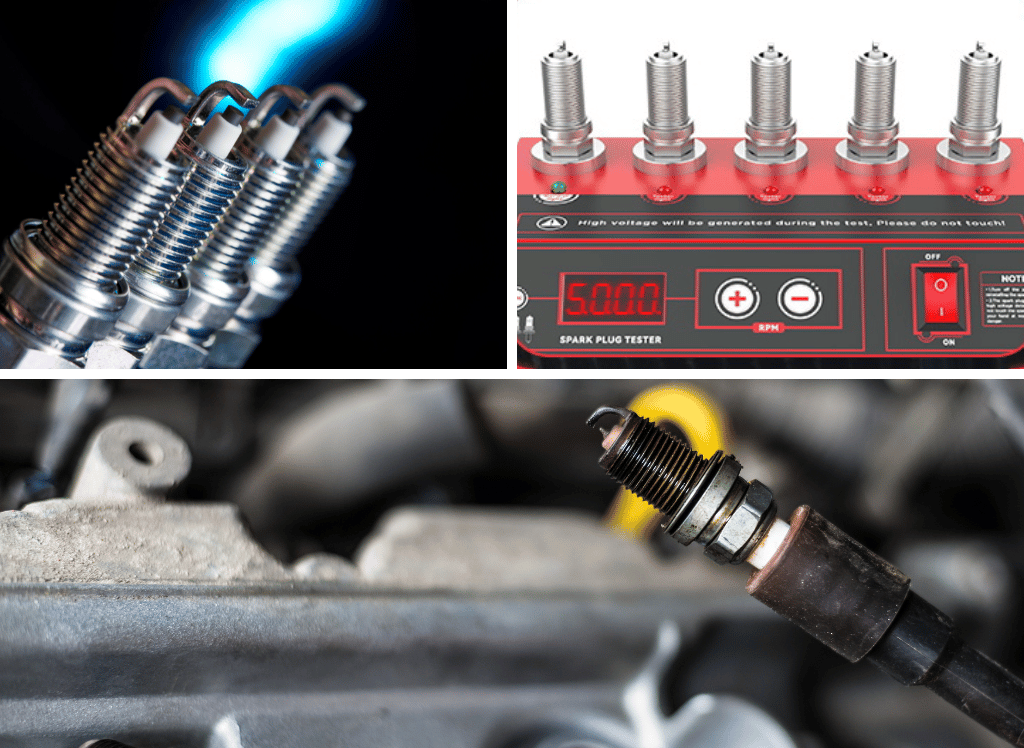
What Is an Inline Spark Plug Tester?
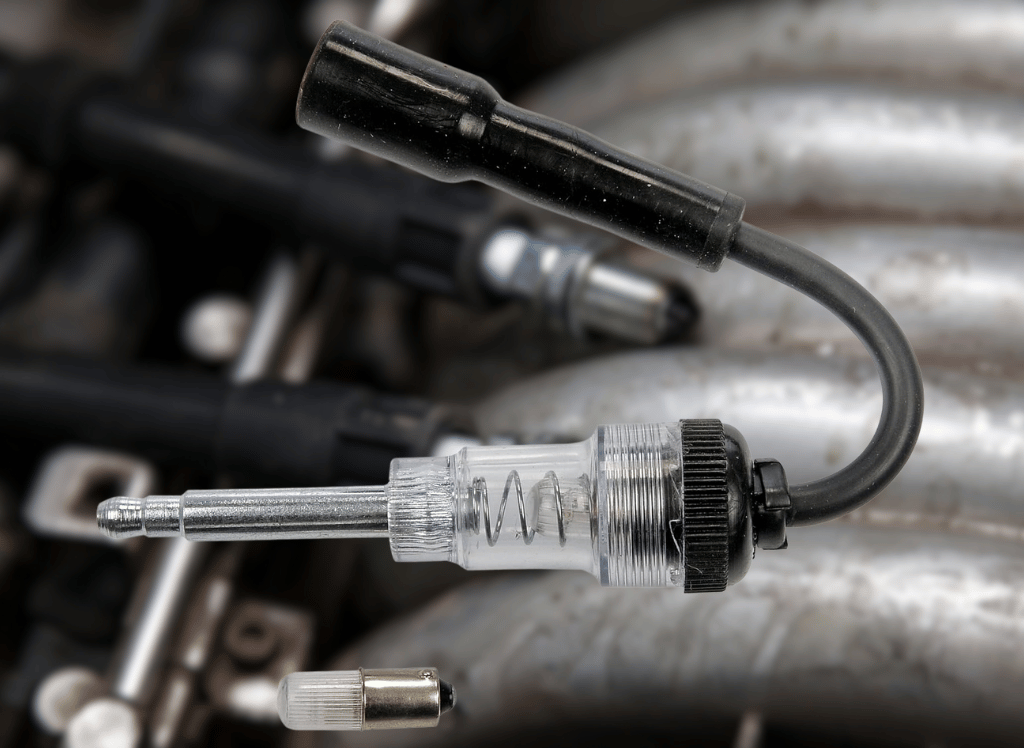
An inline spark plug tester is a simple diagnostic tool. It goes in the ignition path between the spark plug and the part that sends high voltage to the plug. When the engine turns, the tester shows a visible spark or flash if ignition voltage reaches the tester.
The tool does not replace the spark plug. It acts as a small viewing window in the ignition circuit. This makes it useful when you want to check for spark without removing the spark plug from the engine.
Learning how to use an inline spark plug tester starts with knowing what it can and cannot tell you. A flash means the tester is seeing an ignition pulse. It does not, by itself, prove that the plug can make a strong spark inside the cylinder under compression.
- ✦ Main purpose
The tester checks whether an ignition spark signal reaches the spark plug circuit.
- ✦ Simple visual result
Many inline testers use a small clear body or viewing window so you can see a flash while the engine cranks.
- ✦ Useful for diagnosis
The result can help separate an ignition problem from fuel, air, or other engine problems.
Inline Tester vs. Basic Spark Tester
An inline tester stays in the ignition path while you crank the engine. A basic spark tester may instead connect between an ignition lead and a suitable ground point. Both tools check for spark, but the connection method differs.
Always check the design of your specific tester. Some tools are made for plug wires, while others are made for coil-on-plug systems. A tester that does not fit the ignition setup may give a poor result or may not be suitable for the system at all.
- ✦ Inline design
It is installed between the spark plug and its ignition connection.
- ✦ System fit
The tester must match the type of ignition connection used by the engine.
When Should You Use an Inline Spark Plug Tester?
Use an inline spark plug tester when a gasoline engine has a possible ignition problem. A common example is an engine that cranks normally but does not start. The test can also help when an engine runs rough, misfires, or suddenly loses power.
The tool is most useful as an early diagnostic check. If there is no spark, you can focus on the ignition system before spending time on other causes. If spark is present, you know that the no-start problem needs a wider check.
For a vehicle that starts and runs, you may also use the tester to look for an intermittent ignition signal. In that case, follow the vehicle maker’s test procedure and use the tester in a safe location where you can observe it without touching the ignition parts.

- ✦ Engine cranks but will not start
A spark test can quickly show whether ignition spark is reaching the plug.
- ✦ Engine misfire
A missing or irregular ignition signal may help point toward an ignition fault.
- ✦ After ignition work
The tester can provide a quick check after replacing a plug, wire, coil, or related part.
- ✦ Intermittent faults
A visible tester can sometimes reveal a spark signal that cuts in and out while the engine turns.
What You Need Before the Test
You do not need a large tool set for a basic inline spark test. The main tool is the correct spark tester for the ignition system. You may also need basic hand tools if you must remove an engine cover or access a coil or plug wire.
Park the vehicle on a stable surface and work in a well-ventilated area. Keep the transmission in Park or Neutral as required by the vehicle, set the parking brake, and keep people clear of the engine bay.
Before you learn how to use an inline spark plug tester, read the tester instructions. Some modern ignition systems use coil-on-plug units rather than traditional plug wires. The connection steps can differ.

- ✦ Correct inline spark tester
Use a tester designed for the type of ignition connection on your engine.
- ✦ Vehicle service information
The owner’s manual or service manual can show the correct ignition layout and safety steps.
- ✦ Basic safety gear
Wear suitable eye protection and avoid loose clothing, jewelry, and anything that can catch on moving engine parts.
- ✦ Good lighting
A bright work area helps you connect the tester correctly and see the flash.
Know the Ignition System First
Older gasoline engines often use a distributor and plug wires. Many newer engines use individual coil-on-plug units or coil packs. The tester must connect at the correct point for the system.
Do not force a tester onto a connector or boot that does not fit. If you are unsure about the ignition design, check the service information for the exact engine.
- ✦ Plug wires
The tester normally fits between the plug and the plug wire.
- ✦ Coil-on-plug
The correct tester and connection method depend on the coil design and manufacturer instructions.
How to Use an Inline Spark Plug Tester Step by Step
The basic process is simple: shut the engine off, access the ignition connection, install the tester in line, crank the engine, and observe the tester. Take your time with the connection. A loose tester can give a false result.
The exact connection can vary by tester and engine. The steps below describe the common setup for an ignition system that uses a removable spark plug wire. If your vehicle uses another design, use the specific tester instructions for that system.
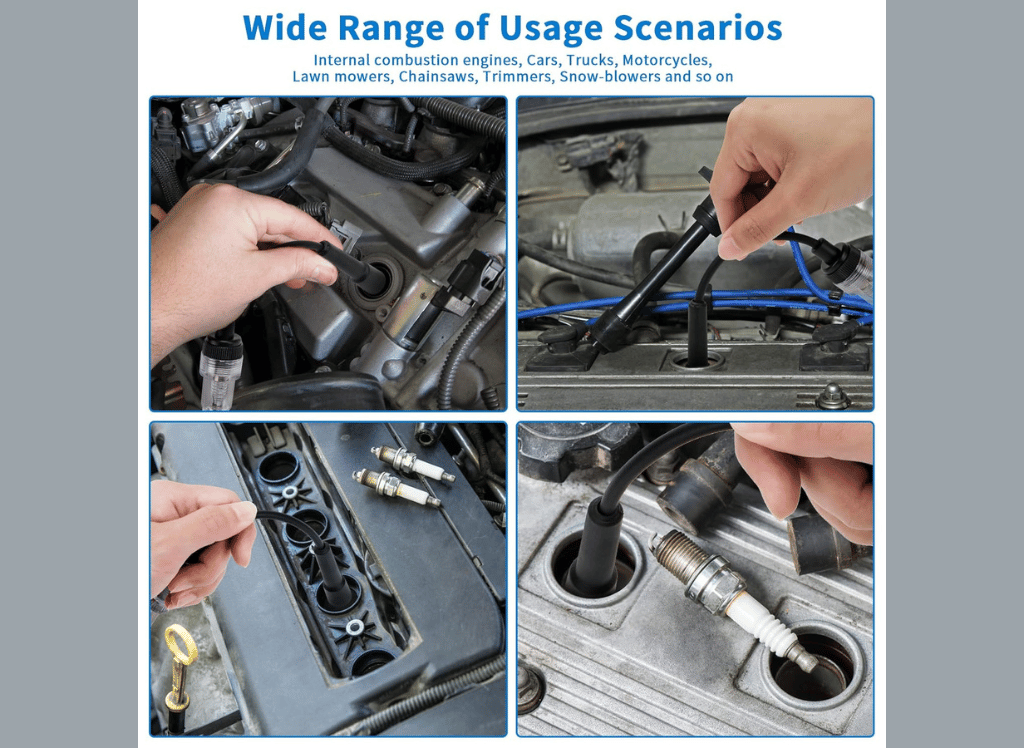
- ✦ 1. Turn the engine off
Make sure the engine is off before touching or changing any ignition connection.
- ✦ 2. Find the spark plug connection
Locate the spark plug and the ignition wire or boot that supplies spark to it.
- ✦ 3. Disconnect the ignition lead
Remove the plug wire or ignition connection from the spark plug only after the engine is off and the connection is safe to handle.
- ✦ 4. Install the tester
Connect one end of the inline tester to the spark plug and the other end to the ignition lead, following the tester’s markings and instructions.
- ✦ 5. Keep clear of the ignition system
Move your hands and tools away from the tester, plug, wires, belts, fans, and other moving parts before cranking.
- ✦ 6. Crank the engine
Have the engine crank for a short period while you watch the tester’s viewing window.
- ✦ 7. Watch for a flash
A repeating flash as the engine turns normally indicates that the ignition circuit is producing a spark pulse at that point.
- ✦ 8. Stop the test
Turn the ignition off and wait for moving parts to stop before removing the tester.
Step 1: Prepare the Vehicle
Put the vehicle in a safe position before you begin. Set the parking brake and use the correct transmission position. Keep the area around the engine clear.
If the engine has a cooling fan that can start on its own, keep your hands away from it even when the engine is not running. Treat the engine bay as an active work area whenever the battery and electrical system are connected.
Step 2: Connect the Tester
Remove the spark plug wire from the plug if the tester is designed for that setup. Connect the tester between the plug and the wire so the ignition signal passes through the tester.
Push each connection on firmly. The tester should not hang loosely from the plug. If the connection feels wrong or the parts do not match, stop and check the tester instructions rather than forcing the fit.
Step 3: Crank and Observe
Stand where you can see the tester without reaching into the engine bay. Crank the engine for a short period and watch the viewing window.
A steady repeating flash is the main result you want to see. No flash means the tester is not detecting the expected ignition pulse at that point. An irregular flash can point to an intermittent problem, but it needs more testing before you identify the failed part.
How to Read the Tester Results
The key question is whether the tester flashes while the engine cranks. A regular flash usually means that an ignition pulse is reaching the tester. No flash suggests that the spark path needs further diagnosis.
Do not treat the flash as a complete ignition-system health check. A simple inline tester mainly tells you that spark is present at the test point. It does not measure every part of the ignition system or prove that the spark remains strong under cylinder pressure.
When you learn how to use an inline spark plug tester, it helps to think of the result as one piece of evidence. Combine it with symptoms, fault codes, wiring checks, and the vehicle’s service procedure when needed.
- ✦ Regular flash
This usually indicates that an ignition pulse is reaching the tester during cranking.
- ✦ No flash
This indicates that the tester is not seeing the expected spark signal and further ignition checks are needed.
- ✦ Irregular flash
An uneven signal may suggest an intermittent fault, but more testing is needed to identify its cause.
- ✦ Dim or hard-to-see flash
The result can depend on the tester design, viewing conditions, engine speed, and ignition system, so do not diagnose a weak coil from brightness alone.
What a Flash Tells You
A flash shows that the tester is detecting ignition activity. This can rule out a complete loss of spark at that test point.
If the engine still will not start, check other systems too. Fuel delivery, compression, valve timing, sensor signals, and engine control faults can all cause a no-start condition.
What No Flash Tells You
No flash means you should trace the ignition path. Depending on the vehicle, possible causes include a failed ignition coil, damaged plug wire, poor electrical connection, control-system fault, blown fuse, or another ignition problem.
Do not replace the coil simply because the tester stays dark. Test the circuit and follow the vehicle maker’s diagnostic steps before buying parts.
How to Use an Inline Spark Plug Tester on Different Ignition Systems
Not every gasoline engine has the same ignition setup. Older vehicles may have plug wires and a distributor, while many newer vehicles use coil packs or individual coil-on-plug units. This changes where and how you connect the tester.
The most important rule is to use a tester that is made for the ignition system in front of you. A traditional inline plug-wire tester may not be the right tool for every coil-on-plug design.

- ✦ Distributor systems
A tester can often be installed in the plug-wire path when the tester is designed for that type of ignition.
- ✦ Coil-pack systems
The test point depends on the coil and plug-wire arrangement. Follow the vehicle and tester instructions.
- ✦ Coil-on-plug systems
These systems place a coil directly over each plug. A suitable tester or manufacturer-approved test method may be needed.
- ✦ Small engines
Many lawn and garden engines use simple ignition systems, but the same safety rule applies: use a compatible tester and keep clear of moving parts.
Coil-on-Plug Engines
Coil-on-plug systems can look simple because the coil sits directly on the spark plug. However, the high-voltage path and connector design differ from older plug-wire systems.
Do not assume that an inline tester made for a plug wire is safe or suitable for a coil-on-plug unit. Check the tester instructions and vehicle service information first.
Common Mistakes to Avoid
Most spark-test mistakes come from poor connections, unsafe positioning, or reading too much into a simple result. A careful setup makes the test both safer and more useful.
If you are learning how to use an inline spark plug tester for the first time, focus on getting a clean connection and a clear observation. Do not rush to replace parts based on one test.

- ✦ Testing with a poor connection
A loose tester can cause a false or inconsistent result. Make sure both ends are firmly connected.
- ✦ Touching ignition parts while cranking
High-voltage ignition systems can cause a painful shock. Keep your hands away while the engine turns.
- ✦ Ignoring moving parts
Belts, pulleys, fans, and other parts can move without warning. Keep tools, hair, clothing, and hands clear.
- ✦ Using the wrong tester
A tester designed for one ignition style may not work correctly with another.
- ✦ Calling a flashing tester proof of a good ignition system
The tester shows spark activity, but it does not prove every ignition component is working correctly under load.
- ✦ Replacing parts too soon
Use the spark result with other tests before buying a coil, plug, wire, or control module.
What to Check If There Is No Spark
If the tester does not flash, work backward through the ignition system. Start with simple checks, such as the tester connection, battery condition, and visible wiring damage. Then use the vehicle’s service information to test the ignition circuit in more detail.
A no-spark result can come from several different faults. The cause may be a coil, plug wire, power supply, ground, ignition control signal, crankshaft position signal, or another part of the system.
Do not assume the spark plug itself caused the no-spark result. The inline test checks the ignition path at the test point, so the next step depends on where the system stops producing the expected signal.

- ✦ Check the tester
Make sure the tester is suitable for the ignition system and that both connections are secure.
- ✦ Check battery voltage
A weak battery can reduce cranking speed and may affect ignition operation on some vehicles.
- ✦ Inspect wires and connectors
Look for broken insulation, loose terminals, corrosion, or damaged ignition connections.
- ✦ Check ignition power
Use the correct electrical test procedure to confirm that the ignition system receives the required power.
- ✦ Check control signals
Some ignition systems need crank or cam sensor information before the control system commands spark.
- ✦ Follow diagnostic codes
If the vehicle stores fault codes, use them as clues and verify the related circuit rather than replacing a part automatically.
When a No-Spark Result Is Only the Start
A no-spark result is useful because it narrows the search, but it rarely identifies the failed component by itself. Modern ignition systems can involve several inputs and control circuits.
For a complex fault, use a wiring diagram, a suitable multimeter, and the manufacturer’s test values. A scan tool may also help when the engine computer stores ignition or sensor faults.
Safety Tips for Using an Inline Spark Plug Tester
Safety is the most important part of any ignition test. Automotive ignition systems can produce high voltage, and the engine may have moving parts that can cause serious injury.
Before you learn how to use an inline spark plug tester, understand that the tester is only a viewing tool. Never hold an ignition wire, coil connection, spark plug terminal, or exposed high-voltage part while the engine cranks.
- ✦ Keep clear of high voltage
Do not touch ignition components while the system is operating or the engine is cranking.
- ✦ Keep clear of moving parts
Stay away from belts, pulleys, fans, and other moving engine parts.
- ✦ Use good ventilation
Run an engine only in a properly ventilated area because exhaust gases can be dangerous.
- ✦ Avoid fuel exposure
Keep sparks and ignition testing away from spilled fuel, fuel vapors, and other flammable materials.
- ✦ Follow the manual
Use the vehicle manufacturer’s procedure when it differs from general spark-testing advice.
- ✦ Stop if unsure
If the connection or test method is unclear, stop and confirm the correct procedure before continuing.
Why Ignition Voltage Needs Respect
The ignition system creates a voltage high enough to jump the spark plug gap. That voltage is useful for the engine but unsafe to handle directly.
The inline tester lets you observe ignition activity without deliberately holding an exposed ignition connection. That is one reason it is a practical diagnostic tool when used as directed.
Limits of an Inline Spark Plug Tester
An inline spark plug tester is a fast first check, not a complete ignition diagnosis. It can show that a spark pulse reaches the test point, but it does not measure every feature of the spark.
For example, a tester may flash even when another ignition problem appears only under engine load. A plug can also have issues that are not obvious from a simple spark-presence test.
When the test result does not match the engine symptoms, move to the next diagnostic step. Depending on the vehicle, that may include checking spark timing, coil control, plug condition, compression, fuel delivery, or sensor data.
- ✦ It does not test everything
The tool mainly checks for ignition activity at the point where it is installed.
- ✦ Spark quality can be more complex
Spark behavior inside a pressurized cylinder can differ from what a basic tester shows.
- ✦ It cannot diagnose fuel problems
A flashing tester does not prove that fuel delivery or fuel pressure is correct.
- ✦ It cannot prove engine compression
A spark test says nothing about compression, valve timing, or mechanical engine condition.