Spark plugs are small engine components, but they provide valuable information about the overall health of a vehicle. Every time the engine runs, spark plugs work under extreme heat and pressure to ignite the air-fuel mixture inside the combustion chamber. Over time, wear, deposits, and damage can affect their performance, making regular inspection an important part of vehicle maintenance.
Many drivers only think about spark plugs when the engine starts showing problems such as rough idling, misfires, poor acceleration, or difficulty starting. However, checking spark plugs before these issues become serious can help identify early warning signs and prevent unnecessary repairs.
Learning how to check spark plugs does not always require advanced mechanical knowledge. By removing the spark plugs and carefully examining their appearance, condition, and wear patterns, you can understand whether they are operating normally or showing signs of engine-related problems.
In this complete guide, you will learn how to inspect spark plugs step by step, what different spark plug colors mean, how to identify worn or damaged spark plugs, how to check the spark plug gap, and what signs indicate that replacement may be necessary.
What You Will Learn From This Guide
In this guide, you will discover:
- When you should check spark plugs
- What tools are needed for spark plug inspection
- How to safely remove spark plugs for checking
- How to identify normal and abnormal spark plug conditions
- What carbon buildup, oil deposits, and heat damage mean
- How to check spark plug gap correctly
- How to recognize signs of bad spark plugs
- How related ignition components can affect spark plug performance
Spark plug inspection is not only about deciding whether a spark plug looks old. The condition of a spark plug can reveal important information about combustion quality, fuel mixture, engine temperature, and possible mechanical issues.
At SparkPlugGuide, I focuse on making automotive maintenance easier to understand by explaining technical topics in a practical way. Whether you are a beginner learning basic car maintenance or an experienced vehicle owner looking for better diagnostic knowledge, this guide will help you confidently inspect your spark plugs.
What Does Checking Spark Plugs Mean?
Checking spark plugs means examining their physical condition, appearance, and wear patterns to determine whether they are working properly or showing signs of possible engine problems.
Unlike testing a spark plug, which focuses on electrical performance and spark output, checking a spark plug is mainly about inspection. It involves looking at visible signs such as electrode wear, deposits, cracks, contamination, and the overall condition of the plug.
A spark plug can provide useful information about what is happening inside the engine because it sits directly inside the combustion chamber. The deposits and wear patterns on the spark plug can indicate whether combustion is occurring normally or whether there may be underlying engine issues.
Why Is Checking Spark Plugs Important?
Regular spark plug inspection helps identify problems before they become more expensive.
A spark plug inspection can reveal:
- Normal engine operation
- Excessive carbon buildup
- Oil contamination
- Overheating problems
- Incorrect fuel mixture
- Electrode damage
For example, a spark plug covered with black carbon deposits may indicate incomplete combustion, while an oily spark plug may suggest that engine oil is entering the combustion chamber.
What Can a Spark Plug Tell You About an Engine?
A spark plug works inside one of the most important areas of the engine — the combustion chamber. Because of this, its condition can provide clues about engine performance.
During inspection, mechanics often look at:
Spark Plug Color
The color of the spark plug tip can indicate combustion conditions.
A healthy spark plug usually has a light brown or gray appearance, while unusual colors may suggest problems with fuel mixture, oil consumption, or excessive heat.
Electrode Condition
The center electrode and ground electrode gradually wear down over time.
Inspection can reveal:
- Rounded electrode edges
- Excessive erosion
- Missing material
- Abnormal wear patterns
Deposits on the Spark Plug
Deposits can form when combustion conditions are not ideal.
Common deposits include:
- Carbon deposits
- Oil deposits
- Fuel deposits
The type of deposit can help identify possible causes.
Checking Spark Plugs vs Testing Spark Plugs
Although the words “checking” and “testing” are sometimes used interchangeably, they have different meanings in automotive maintenance.
Checking spark plugs focuses on:
- Visual inspection
- Physical condition
- Wear patterns
- Deposits
- Damage
Testing spark plugs focuses on:
- Spark performance
- Electrical operation
- Ignition output
A visual inspection is often the first step because it can reveal many common spark plug problems without requiring advanced equipment.
When Should You Check Spark Plugs?
Spark plugs should be inspected during regular maintenance and whenever engine performance changes.
Common situations where spark plug inspection is useful include:
- Before replacing spark plugs
- After noticing engine problems
- During high-mileage maintenance
- When diagnosing combustion issues
A simple inspection can help determine whether spark plugs are healthy or whether further investigation is needed.
Understanding what checking spark plugs means is the foundation for proper spark plug maintenance. By learning how to inspect their condition, vehicle owners can better understand engine health and identify potential problems early.
When Should You Check Spark Plugs?
Spark plugs should be checked whenever there is a possibility that their condition may affect engine performance. While spark plugs are designed to last for thousands of miles, regular inspection helps identify wear, deposits, and damage before they create larger ignition problems.
The best time to check spark plugs depends on the vehicle’s maintenance schedule, driving conditions, and any symptoms the engine may be showing.
During Regular Vehicle Maintenance
Regular maintenance is one of the best times to inspect spark plugs. Many vehicle manufacturers recommend checking spark plugs at specific service intervals, especially on higher-mileage vehicles.
Routine inspection can help identify:
- Electrode wear
- Carbon buildup
- Oil contamination
- Incorrect spark plug gap
- Physical damage
Checking spark plugs during scheduled maintenance allows problems to be found before they affect engine reliability.
When Engine Performance Changes
Spark plug inspection is especially important when the engine starts behaving differently.
Common warning signs include:
- Rough engine idle
- Engine hesitation
- Reduced acceleration
- Difficulty starting
- Increased fuel consumption
- Engine misfires
These symptoms do not always mean the spark plugs are faulty, but inspecting them can help determine whether they are contributing to the problem.
Before Replacing Spark Plugs
Before installing new spark plugs, checking the existing spark plugs can help confirm whether replacement is actually needed.
An inspection can show whether the problem is caused by:
- Normal spark plug wear
- Excessive deposits
- Incorrect installation
- Engine-related issues
Replacing spark plugs without checking their condition may sometimes hide the actual cause of an engine problem.
After Experiencing Fuel or Engine Problems
Certain engine problems can affect spark plug condition.
Examples include:
- Fuel mixture problems
- Oil consumption issues
- Overheating conditions
- Poor combustion
Checking the spark plugs after these issues can provide useful clues about what is happening inside the engine.
How Often Should You Check Spark Plugs?
The frequency of spark plug inspection depends on the vehicle type, spark plug material, and driving conditions.
Drivers who frequently experience:
- Short-distance trips
- Heavy traffic driving
- High engine loads
may benefit from more frequent inspections.
Following the manufacturer’s maintenance recommendations is the best way to determine an appropriate inspection schedule.
Tools Needed to Check Spark Plugs
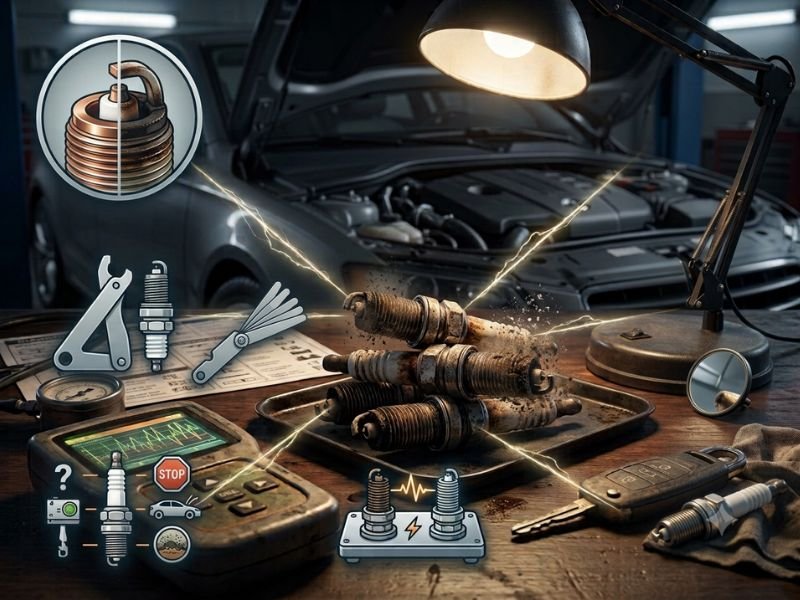
Checking spark plugs does not require a large collection of tools. A few basic tools are usually enough to safely remove the spark plugs and inspect their physical condition.
Using the correct tools helps prevent damage to the spark plug, ignition components, and engine parts during inspection.
Spark Plug Socket
A spark plug socket is the most important tool for removing spark plugs safely.
Unlike a standard socket, a spark plug socket is specifically designed to:
- Hold the spark plug securely
- Protect the ceramic insulator
- Prevent damage during removal
Common spark plug socket sizes include:
- 5/8 inch (16mm)
- 13/16 inch (21mm)
- 14mm
The correct size depends on the vehicle’s spark plug design.
Ratchet and Extension Bar
A ratchet is used to loosen and remove the spark plug, while an extension bar helps reach spark plugs located deep inside the engine.
Many modern engines place spark plugs in narrow or recessed areas, making an extension necessary.
Flashlight
A flashlight helps inspect areas around the spark plug before removal.
It can help identify:
- Dirt buildup
- Oil leaks
- Damaged ignition components
- Access problems
Keeping the area around the spark plug clean before removal helps prevent debris from entering the engine.
Spark Plug Gap Gauge
A spark plug gap gauge is used to check the distance between the center electrode and ground electrode.
Although gap checking is a separate part of inspection, it is an important step because an incorrect gap can affect ignition performance.
A gap gauge helps confirm whether the spark plug matches the recommended specification.
Protective Gloves
Protective gloves are useful when working around the engine area.
They help:
- Protect hands from dirt and oil
- Improve grip
- Reduce contact with hot or contaminated surfaces
Cleaning Tools
A small brush or compressed air can help clean dirt around the spark plug area before removal.
This prevents:
- Dust entering the cylinder
- Debris affecting inspection
- Contamination during installation
Tools You Do Not Need for Basic Inspection
For a basic spark plug check, you do not need advanced diagnostic equipment.
Tools such as:
- Multimeters
- Spark testers
- Electrical testing devices
are related to spark plug testing rather than physical inspection.
Keeping inspection and testing separate helps ensure the correct diagnostic method is used for the problem.
How to Check Spark Plugs Step by Step
Checking spark plugs involves carefully removing the spark plug and inspecting its condition. The goal is to identify signs of normal operation, wear, contamination, or possible engine problems.
Before starting, make sure the engine is completely cool and you have the correct tools for your vehicle.
Step 1: Allow the Engine to Cool Down
Always allow the engine to cool before checking spark plugs.
Spark plugs are installed in the cylinder head, which becomes extremely hot during operation. Removing spark plugs from a hot engine can cause:
- Burns
- Difficulty removing plugs
- Thread damage
A cool engine also makes the inspection process safer and easier.
Step 2: Locate the Spark Plugs
The location of spark plugs depends on the engine design.
In modern vehicles, spark plugs are usually found:
- Under ignition coils
- Beneath spark plug wires
- On top of the cylinder head
Some engines provide easy access, while others may require removing engine covers or additional components.
Step 3: Disconnect the Ignition Component
Before removing the spark plug, disconnect the component connected to it.
Depending on the vehicle, this may be:
- Ignition coil
- Spark plug wire
Remove connectors carefully to avoid damaging clips or electrical connections.
Step 4: Remove the Spark Plug Carefully
Use the correct spark plug socket and slowly remove the spark plug.
The general process includes:
- Place the spark plug socket over the plug
- Turn slowly to loosen it
- Remove the spark plug carefully
- Keep the removed plug organized by cylinder location
Keeping track of where each spark plug came from can help during diagnosis because different cylinders may show different conditions.
How to Check Spark Plugs Without Removing Them
Some spark plug problems can be suspected without physically removing the spark plugs. Changes in engine behavior, fuel economy, and overall performance may provide clues that something is wrong.
However, a complete spark plug inspection requires removal because important details such as electrode wear, deposits, cracks, and contamination cannot be properly checked from outside.
Step 5: Examine the Spark Plug Before Cleaning
Before cleaning the spark plug, inspect its natural condition.
Look for:
- Deposits on the tip
- Electrode condition
- Oil or fuel contamination
- Physical damage
Cleaning the spark plug before inspection may remove useful evidence about engine operation.
Step 6: Compare Spark Plugs if Multiple Are Removed
If the engine has multiple spark plugs, compare their conditions.
Differences between spark plugs can reveal:
- Cylinder-specific problems
- Uneven combustion
- Possible fuel or oil issues
A single abnormal spark plug may indicate a localized engine problem.
Properly following these steps helps ensure an accurate spark plug inspection and prevents missing important signs of engine-related issues.
How to Inspect Spark Plug Condition
Inspecting the condition of a spark plug is one of the most important parts of checking spark plugs. The appearance of the spark plug can provide valuable information about combustion quality, engine condition, and possible problems affecting performance.
A healthy spark plug usually shows normal wear, while unusual colors, deposits, or damage may indicate that the engine is not operating correctly.
Check Spark Plug Color
The color of the spark plug tip can reveal important information about how the engine is burning fuel.
A spark plug that has a normal color usually indicates proper combustion, while unusual colors may point to problems with fuel mixture, engine temperature, or oil consumption.
Light Brown or Gray Spark Plug
A light brown, tan, or gray-colored spark plug is generally considered a sign of normal engine operation.
This usually indicates:
- Proper air-fuel mixture
- Correct combustion temperature
- Normal spark plug operation
A clean-burning engine typically leaves minimal deposits on the spark plug tip.
Black Carbon Deposits on Spark Plug
A black, dry, and powdery spark plug often indicates carbon buildup.
Common causes include:
- Rich fuel mixture
- Incomplete combustion
- Dirty air filter
- Frequent short trips
- Excessive idling
Carbon deposits can build up on the electrode area and affect ignition performance over time.
White or Burned Spark Plug
A white or overheated-looking spark plug may indicate excessive combustion temperature.
Possible causes include:
- Lean fuel mixture
- Incorrect spark plug heat range
- Engine overheating
- Timing-related issues
A spark plug showing heat damage should be inspected carefully because continued operation may lead to engine problems.
Wet or Oily Spark Plug
An oily or wet spark plug may indicate that engine oil is entering the combustion chamber.
Possible causes include:
- Worn piston rings
- Damaged valve seals
- Internal engine wear
Oil contamination can prevent the spark plug from operating efficiently and may cause engine misfires.
Check Spark Plug Deposits
Deposits on a spark plug can reveal combustion problems.
Common deposit types include:
Carbon Deposits
Usually appear as black, dry buildup.
Possible causes:
- Excess fuel
- Poor combustion
- Limited engine operating temperature
Oil Deposits
Usually appear wet, dark, and oily.
Possible causes:
- Oil entering the cylinder
- Engine wear
Fuel Deposits
May occur when fuel does not burn completely.
Possible causes:
- Fuel system problems
- Ignition issues
Understanding spark plug deposits helps identify whether the problem is with the spark plug itself or another engine component.
Check Spark Plug Electrode Condition
The electrodes are one of the most important parts of a spark plug because they create the point where ignition occurs. Over time, repeated electrical discharge gradually wears down the electrode material.
Inspecting electrode condition helps determine whether the spark plug is still in good working condition.
Inspect the Center Electrode
The center electrode is located at the tip of the spark plug and is responsible for delivering the ignition spark.
A healthy center electrode should have:
- Proper shape
- Minimal wear
- No excessive erosion
Signs of a worn center electrode include:
- Rounded edges
- Reduced thickness
- Missing electrode material
Excessive wear can affect the spark plug’s ability to create efficient combustion.
Inspect the Ground Electrode
The ground electrode sits above the center electrode and completes the electrical path needed for ignition.
During inspection, check for:
- Uneven wear
- Erosion
- Damage
- Abnormal shape
A damaged ground electrode can change the spark gap and affect engine performance.
Signs of Excessive Electrode Wear
A spark plug with excessive electrode wear may show:
- Increased gap distance
- Reduced ignition efficiency
- Poor combustion performance
When the electrodes become too worn, the spark plug may no longer provide reliable operation.
Why Electrode Condition Matters
Electrode wear is a natural process because spark plugs create thousands of sparks during engine operation.
However, excessive wear can indicate:
- The spark plug has reached the end of its service life
- The engine is operating under harsh conditions
- The wrong spark plug type is installed
Regular inspection helps identify when replacement is needed.
Check Spark Plug Ceramic Insulator
The ceramic insulator is the outer protective section of the spark plug that surrounds the center electrode. It helps prevent electrical leakage and ensures the spark occurs at the correct location.
Damage to the ceramic insulator can affect spark plug performance and reliability.
Look for Cracks in the Ceramic
A cracked ceramic insulator is a serious issue because it can allow electricity to escape through the wrong path.
Possible causes include:
- Physical damage during installation
- Excessive tightening
- Improper handling
A cracked spark plug should generally be replaced because it may not operate safely.
Check for Carbon Tracking
Carbon tracking appears as dark lines or marks on the ceramic surface.
It can indicate that electricity has been traveling along the outside of the insulator instead of creating the correct spark.
Possible causes include:
- Contamination
- Damaged ignition components
- Moisture exposure
Inspect for Physical Damage
During inspection, check the ceramic area for:
- Chips
- Cracks
- Broken sections
- Unusual marks
Even small damage can affect spark plug reliability.
Why Ceramic Insulator Inspection Matters
The ceramic insulator plays an important role in controlling where the ignition spark occurs.
A damaged insulator can lead to:
- Misfires
- Poor combustion
- Reduced engine performance
Checking the ceramic condition is an important step when inspecting spark plugs because it helps identify problems that may not be visible by looking only at the electrode area.
How to Check Spark Plug Gap
Checking the spark plug gap is an important part of spark plug inspection because the gap directly affects how the ignition spark forms between the center electrode and ground electrode. The correct gap allows the spark plug to create a consistent spark and helps maintain efficient combustion.
Every engine is designed with a specific spark plug gap requirement. If the gap is incorrect, the spark plug may not perform as expected even if the plug itself is new.
What Is Spark Plug Gap?
Spark plug gap is the distance between the center electrode and the ground electrode at the tip of the spark plug.
This space is where the ignition spark jumps across to ignite the air-fuel mixture inside the combustion chamber.
The correct spark plug gap depends on:
- Vehicle manufacturer specifications
- Engine design
- Spark plug type
Why Checking Spark Plug Gap Is Important
An incorrect spark plug gap can affect ignition performance.
A gap that is too wide may cause:
- Difficulty creating a spark
- Weak combustion
- Engine misfires
A gap that is too narrow may cause:
- Reduced spark efficiency
- Poor combustion quality
Checking the gap helps ensure that the spark plug matches the engine’s requirements.
How to Check Spark Plug Gap
A spark plug gap gauge is used to measure the distance between the electrodes.
The general process includes:
- Select the correct measurement on the gap gauge
- Place the gauge between the electrodes
- Compare the measurement with manufacturer specifications
- Confirm whether the gap is within the recommended range
The spark plug should be checked carefully to avoid bending or damaging the electrodes.
Signs of Incorrect Spark Plug Gap
A spark plug with an incorrect gap may contribute to:
- Rough engine operation
- Poor acceleration
- Reduced fuel efficiency
- Ignition problems
If a spark plug gap is significantly different from the recommended specification, it should be corrected or the spark plug should be replaced if damaged.
Checking New Spark Plug Gap
Even new spark plugs should be inspected before installation.
Although manufacturers produce spark plugs with recommended specifications, handling and transportation can sometimes affect the gap.
Checking the gap before installation helps ensure proper engine performance.
How to Check If a Spark Plug Is Bad
Checking whether a spark plug is bad involves looking for physical signs of wear, contamination, or damage. A spark plug may continue working while gradually losing performance, so inspection helps identify problems before complete failure occurs.
A bad spark plug is usually identified by combining visual inspection with engine symptoms.
Physical Signs of a Bad Spark Plug
A spark plug may be considered damaged or worn when it shows:
- Excessive electrode wear
- Heavy carbon buildup
- Oil contamination
- Cracked ceramic insulation
- Severe corrosion
These conditions can prevent the spark plug from working efficiently.
Check for Worn Electrodes
Electrode wear is one of the most common signs of an aging spark plug.
Look for:
- Rounded electrode edges
- Thin center electrode
- Increased gap distance
A heavily worn electrode may indicate that the spark plug has reached the end of its useful life.
Check for Excessive Deposits
Deposits can prevent the spark plug from operating correctly.
Common deposits include:
- Black carbon buildup
- Oil residue
- Fuel-related deposits
The type of deposit can provide clues about possible engine problems.
Check for Cracks or Damage
A damaged spark plug should not continue operating because it may cause inconsistent ignition.
Inspect for:
- Cracked ceramic
- Broken insulator
- Physical damage
Even a small crack can affect spark plug reliability.
Symptoms That May Indicate a Bad Spark Plug
Although this article focuses on inspection, engine behavior can provide additional clues.
Common symptoms include:
- Rough idle
- Engine misfires
- Starting difficulty
- Poor acceleration
- Reduced fuel economy
These symptoms do not always confirm a bad spark plug because other ignition components can create similar issues.
Can a Spark Plug Look Good but Still Be Bad?
Yes, a spark plug can sometimes appear normal but still have performance problems.
Visual inspection is useful, but it does not always reveal every possible issue.
If symptoms continue after inspection, further diagnosis may be needed to identify whether the problem involves:
- Ignition components
- Fuel system
- Engine condition
A complete approach helps avoid replacing parts unnecessarily.
How to Check Spark Plug Wires
Spark plug wires are responsible for transferring electrical energy to the spark plugs in ignition systems that use traditional spark plug wires. Damaged wires can affect ignition performance and create symptoms similar to spark plug problems.
Checking spark plug wires involves inspecting their physical condition, connections, and signs of damage.
Inspect Spark Plug Wire Condition
Begin by visually examining the outside of the spark plug wires.
Look for:
- Cracks
- Burn marks
- Damaged insulation
- Exposed wire areas
Heat from the engine can gradually weaken the protective covering and reduce wire performance.
Check for Loose Connections
Spark plug wires must connect securely to both the spark plug and ignition system components.
Inspect for:
- Loose wire boots
- Poor connections
- Damaged connectors
A loose connection can prevent proper energy transfer and may cause engine performance issues.
Look for Signs of Heat Damage
Spark plug wires are located near hot engine components, which can cause deterioration over time.
Heat damage may appear as:
- Hardened insulation
- Melted areas
- Discoloration
Damaged wires should be inspected carefully because they can affect ignition reliability.
How Faulty Spark Plug Wires Affect Performance
Worn spark plug wires may contribute to:
- Engine misfires
- Rough operation
- Reduced acceleration
- Starting problems
Because spark plug wires and spark plugs work together, both components should be considered when diagnosing ignition-related problems.
How to Check Spark Plug Cables
Spark plug cables are another term commonly used for spark plug wires. Checking spark plug cables involves the same basic inspection process, including looking for physical damage, worn insulation, and connection problems.
A damaged cable may prevent electrical energy from reaching the spark plug properly, affecting engine performance.
Regular visual inspection helps identify cable problems before they create larger ignition issues.
How to Check Spark Plug Coil
The ignition coil is an important component that works with spark plugs to provide the energy needed for ignition. While spark plug inspection focuses on the physical condition of the spark plug, checking the ignition coil can help identify whether another ignition component may be contributing to engine problems.
A faulty ignition coil can create symptoms that look similar to spark plug issues, so inspecting related components can help provide a clearer understanding of the problem.
Inspect the Ignition Coil Appearance
A visual inspection is the first step when checking an ignition coil.
Look for:
- Cracks on the coil housing
- Burn marks
- Corrosion
- Damaged connectors
- Loose connections
Physical damage may affect the coil’s ability to work correctly.
Check Ignition Coil Connections
The connection between the ignition coil and spark plug system should be secure.
Inspect:
- Electrical connectors
- Wiring condition
- Coil seating position
Loose or damaged connections can interrupt proper ignition operation.
Look for Signs of Ignition Coil Problems
Although ignition coil diagnosis requires specific testing methods, some common signs may indicate a possible coil-related issue.
These may include:
- Engine misfires
- Rough idle
- Reduced acceleration
- Check engine light
If spark plugs appear normal but ignition symptoms continue, other ignition components such as the coil may need further inspection.
Spark Plug Coil and Spark Plug Relationship
Spark plugs and ignition coils work together as part of the ignition system.
The ignition coil provides the required electrical energy, while the spark plug creates the ignition point inside the combustion chamber.
Because they work together, a problem with one component can sometimes appear similar to a problem with the other.
Understanding this relationship helps prevent replacing spark plugs when the actual issue may involve another ignition component.
How to Check Lawn Mower Spark Plug
Lawn mower spark plugs require regular inspection because small engines depend on reliable ignition to start and operate efficiently. Although lawn mower spark plugs are smaller than automotive spark plugs, the inspection process is similar.
Checking a lawn mower spark plug can help identify problems such as starting difficulty, rough operation, or reduced engine performance.
Turn Off the Engine and Prepare for Inspection
Before checking a lawn mower spark plug:
- Turn off the engine completely
- Allow the engine to cool
- Disconnect the spark plug wire
Safety is important because small engines can become extremely hot during operation.
Remove the Lawn Mower Spark Plug
Use the correct spark plug socket to carefully remove the spark plug.
Before removal:
- Clean dirt around the spark plug area
- Prevent debris from entering the engine
- Remove the plug carefully
Keeping the area clean helps ensure an accurate inspection.
Inspect Lawn Mower Spark Plug Appearance
Check the spark plug for common signs of problems.
Look for:
- Carbon deposits
- Oil contamination
- Electrode wear
- Cracked ceramic insulation
A healthy lawn mower spark plug usually has minimal deposits and shows normal wear.
Check for Spark Plug Wear
Small engine spark plugs can wear due to:
- Long operating hours
- Poor fuel quality
- Improper maintenance
Signs of wear include:
- Damaged electrodes
- Excessive buildup
- Abnormal appearance
A worn spark plug may make the mower harder to start or reduce engine performance.
When Should You Check a Lawn Mower Spark Plug?
Lawn mower spark plugs should be checked:
- Before the mowing season
- When starting problems appear
- During regular maintenance
Regular inspection helps maintain reliable starting and smooth engine operation.
How to Check Spark Plugs Without Removing Them
Checking spark plugs without removing them means looking for signs of possible spark plug problems through engine behavior, maintenance history, and external inspection. While this method can provide clues, it cannot replace a complete physical inspection of the spark plug itself.
Many spark plug conditions, such as electrode wear, deposits, and cracks, can only be confirmed after removal.
Observe Engine Performance
Engine behavior can provide early warning signs that spark plugs may need inspection.
Possible indicators include:
- Rough idle
- Engine hesitation
- Reduced power
- Poor fuel economy
- Starting difficulty
These symptoms suggest that the ignition system may need attention.
Check Maintenance History
Vehicle maintenance records can provide useful information about spark plug condition.
Important factors include:
- Last replacement date
- Mileage since replacement
- Spark plug type installed
- Previous engine problems
A vehicle with overdue spark plug maintenance may require inspection even if symptoms are not obvious.
Inspect External Ignition Components
Some external checks can provide additional clues.
Inspect:
- Ignition coil area
- Spark plug wires
- Electrical connections
Visible damage around ignition components may indicate possible problems affecting spark plug performance.
Limitations of Checking Without Removal
A spark plug may look normal externally but have internal wear or electrode problems.
Without removing the spark plug, you cannot accurately inspect:
- Electrode condition
- Spark plug color
- Carbon deposits
- Oil contamination
- Spark gap
For a complete spark plug inspection, physical removal remains the most reliable method.
Using external signs can help identify possible issues, but removing and examining the spark plug provides a much clearer understanding of its actual condition.
Common Spark Plug Inspection Mistakes
Checking spark plugs is a simple maintenance task, but incorrect inspection methods can lead to inaccurate conclusions or unnecessary replacements. Understanding common mistakes helps ensure that spark plugs are inspected properly and that engine problems are diagnosed correctly.
Checking Spark Plugs When the Engine Is Hot
One of the most common mistakes is removing spark plugs while the engine is still hot.
A hot engine can create several problems:
- Risk of burns
- Difficulty removing spark plugs
- Possible thread damage in the cylinder head
Always allow the engine to cool completely before starting an inspection.
Ignoring Spark Plug Color and Deposits
Some people only look for obvious physical damage and ignore the condition of deposits on the spark plug.
The color and deposits can provide important clues about:
- Fuel mixture
- Combustion quality
- Oil consumption
- Engine temperature
A spark plug’s appearance can reveal problems that may not be visible through normal engine operation.
Cleaning the Spark Plug Before Inspection
Cleaning a spark plug before checking its condition can remove valuable information.
Deposits, discoloration, and contamination patterns may help identify possible engine issues.
It is better to inspect the spark plug first and clean it only if appropriate.
Replacing Spark Plugs Without Inspection
Replacing spark plugs immediately without checking their condition may not solve the actual problem.
Some engine symptoms may come from:
- Ignition coils
- Spark plug wires
- Fuel system issues
- Engine mechanical problems
Inspection helps determine whether spark plugs are actually the source of the problem.
Using the Wrong Spark Plug Specification
Checking a spark plug also means confirming that the correct spark plug is installed.
Using the wrong spark plug type can affect:
- Heat range
- Electrode design
- Spark gap
- Engine performance
Always compare the spark plug specification with the manufacturer’s recommendation.
Not Comparing Multiple Spark Plugs
When inspecting multiple spark plugs, checking only one plug can miss important information.
Comparing all spark plugs can reveal:
- Cylinder-specific problems
- Uneven combustion
- Differences between cylinders
A complete inspection provides a clearer picture of engine condition.
How Often Should You Check Spark Plugs?
The frequency of spark plug inspection depends on the vehicle type, spark plug material, driving conditions, and engine maintenance history. Regular checking helps identify wear and problems before they affect engine reliability.
Spark plug inspection does not always mean replacing the plugs. In many cases, a visual check is enough to determine whether the spark plugs are still in good condition.
Checking Spark Plugs During Scheduled Maintenance
The best time to inspect spark plugs is during regular vehicle maintenance.
Many manufacturers recommend checking spark plugs:
- During routine servicing
- Before replacement intervals
- During high-mileage maintenance
Regular inspection helps detect early signs of wear and contamination.
Checking Spark Plugs in Older Vehicles
Older vehicles may require more frequent spark plug inspections because components naturally experience more wear over time.
Inspection can help identify:
- Aging spark plugs
- Carbon buildup
- Ignition problems
High-mileage engines often benefit from more regular checks.
Checking Spark Plugs Based on Driving Conditions
Driving habits can affect how quickly spark plugs develop problems.
Vehicles used for:
- Frequent short trips
- Heavy city traffic
- Long periods of idling
may require more frequent inspection compared with vehicles mainly used for highway driving.
Checking Spark Plugs When Symptoms Appear
Regardless of mileage, spark plugs should be checked when engine performance changes.
Common warning signs include:
- Rough idle
- Misfires
- Reduced acceleration
- Starting problems
- Increased fuel consumption
Early inspection can help identify the cause before additional components are affected.
Frequently Asked Questions About Checking Spark Plugs
Spark plug inspection can raise many questions, especially for vehicle owners who want to understand whether their spark plugs are healthy or need replacement. Below are answers to common questions about checking spark plugs.
How Do I Know If My Spark Plugs Are Bad?
You can identify bad spark plugs by checking for visible signs such as worn electrodes, heavy deposits, oil contamination, cracks, or abnormal wear.
Engine symptoms such as rough idle, misfires, poor acceleration, and starting problems may also indicate that the spark plugs need inspection.
Can I Check Spark Plugs Without Removing Them?
You can identify possible spark plug problems through engine symptoms and external inspection, but a complete check requires removing the spark plugs.
Important details such as electrode wear, deposits, and ceramic damage can only be properly inspected after removal.
What Color Should a Good Spark Plug Be?
A healthy spark plug usually has a light brown, tan, or gray appearance.
This generally indicates normal combustion conditions. Unusual colors such as black, white, or oily appearances may suggest issues with fuel mixture, engine temperature, or oil contamination.
How Often Should I Check Spark Plugs?
Spark plugs should be checked according to the vehicle manufacturer’s maintenance recommendations.
They should also be inspected whenever engine performance changes or when symptoms such as misfires, rough idle, or poor acceleration appear.
What Does a Worn Spark Plug Look Like?
A worn spark plug may show:
- Rounded electrodes
- Increased spark gap
- Heavy deposits
- Damaged ceramic insulation
These signs indicate that the spark plug may no longer provide reliable ignition performance.
Can Spark Plugs Tell Engine Problems?
Yes, spark plugs can provide clues about engine condition.
The appearance of a spark plug can reveal possible issues related to:
- Fuel mixture
- Oil consumption
- Combustion temperature
- Engine condition
Mechanics often inspect spark plugs as part of engine diagnosis.
Should I Check Spark Plugs Before Replacing Them?
Yes, checking spark plugs before replacement is recommended.
Inspection helps confirm whether the spark plugs are actually worn or damaged and prevents replacing parts unnecessarily.
Conclusion
Learning how to check spark plugs is an important skill for understanding engine condition and maintaining reliable vehicle performance. A simple visual inspection can reveal valuable information about spark plug wear, combustion quality, and possible engine problems.
By checking spark plug color, electrode condition, ceramic insulation, deposits, and spark gap, vehicle owners can identify warning signs before they lead to more serious issues. Regular inspection also helps determine whether spark plugs need cleaning, adjustment, or replacement.
However, spark plug inspection should always be performed carefully using the correct tools and safety practices. The condition of spark plugs can provide useful clues, but other ignition components may also contribute to engine performance problems.
At SparkPlugGuide, Chris Turner focuses on making automotive maintenance easier to understand so drivers can confidently inspect their vehicles and make better decisions about spark plug care.