Spark plugs are designed to work in one of the harshest environments inside an engine. Every time the engine runs, spark plugs are exposed to extreme heat, pressure, fuel combustion, and thousands of ignition cycles. Over time, carbon deposits, fuel residue, and oil contamination can build up on the spark plug surface and affect its ability to create efficient combustion.
A dirty spark plug does not always mean it needs immediate replacement. In some situations, cleaning spark plugs can remove minor deposits and help restore normal performance. However, cleaning is only effective when the spark plug is still in good physical condition. A spark plug with worn electrodes, cracked ceramic insulation, or severe damage usually needs replacement instead of cleaning.
Learning how to clean spark plugs helps vehicle owners understand when cleaning is useful, what tools are needed, and how to perform the process safely without damaging the spark plug. Proper cleaning can also help identify whether engine problems are caused by dirty spark plugs or deeper issues affecting combustion.
In this complete guide, you will learn how to clean spark plugs step by step, why spark plugs become dirty, different cleaning methods, how to clean fouled spark plugs, common mistakes to avoid, and when replacing spark plugs is a better option than cleaning.
What You Will Learn From This Guide
In this guide, you will discover:
- Why spark plugs become dirty and develop deposits
- When spark plugs can be cleaned and reused
- Tools needed for safe spark plug cleaning
- Step-by-step methods to remove carbon and contamination
- How to clean different types of fouled spark plugs
- Mistakes that can damage spark plugs during cleaning
- How to decide between cleaning and replacing spark plugs
Spark plug cleaning is not only about removing dirt from the surface. Understanding why deposits form can provide important clues about engine condition, fuel mixture, and combustion quality.
At SparkPlugGuide, Chris Turner focuses on explaining automotive maintenance topics in a practical and beginner-friendly way. Whether you are maintaining your first vehicle or trying to understand ignition system care better, this guide will help you make informed decisions about cleaning and maintaining your spark plugs.
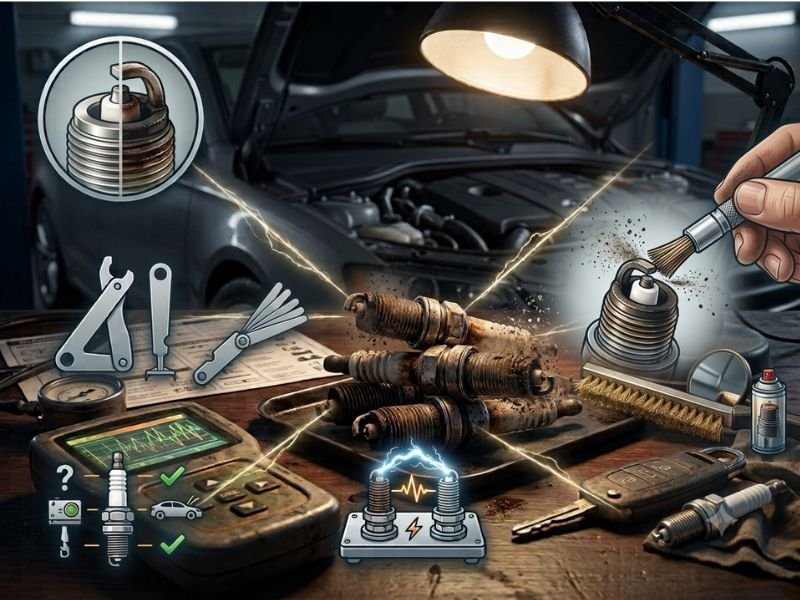
Can You Clean Spark Plugs?
Yes, spark plugs can be cleaned if they only have minor deposits, carbon buildup, or light contamination. Cleaning can sometimes restore the appearance and performance of a spark plug, especially when the plug is still within its service life and the electrodes are not badly worn.
However, cleaning is not a solution for every spark plug problem. A spark plug that has severe wear, physical damage, or serious contamination caused by engine problems may need replacement instead of cleaning.
Before cleaning any spark plug, it is important to inspect its overall condition and determine whether it is still safe to reuse.
When Cleaning Spark Plugs Makes Sense
Cleaning spark plugs can be useful in situations where deposits are affecting performance but the spark plug itself is still in good condition.
Common situations where cleaning may help include:
- Light carbon deposits on the electrode area
- Temporary fuel fouling
- Minor contamination from short trips
- Spark plugs that have been removed for inspection
For example, vehicles that are frequently driven on short distances may not reach normal operating temperatures, which can allow carbon deposits to build up. Cleaning these deposits may help restore normal operation.
When You Should Replace Spark Plugs Instead
Cleaning cannot repair physical wear or damage. Some spark plugs reach a point where replacement is the better option.
A spark plug should usually be replaced if it has:
- Excessively worn electrodes
- Cracked ceramic insulation
- Severe oil contamination
- Melted or damaged electrode material
- Incorrect spark gap that cannot be corrected
A worn spark plug may continue to look cleaner after cleaning, but it may still fail to provide reliable ignition.
Does Cleaning Restore an Old Spark Plug?
Cleaning can remove deposits, but it does not restore the original condition of a worn spark plug.
For example:
- Carbon buildup can often be removed
- Oil residue can sometimes be cleaned
- Worn electrodes cannot be repaired
The purpose of cleaning is to remove contamination, not to extend a spark plug beyond its normal lifespan.
Cleaning vs Replacing Spark Plugs
The decision between cleaning and replacing depends on the condition of the spark plug.
Cleaning may be suitable when:
- The plug has minor deposits
- The electrodes are still healthy
- The spark plug is relatively new
Replacement is better when:
- The plug has reached its recommended service interval
- Performance problems continue
- Physical damage is present
Understanding this difference helps avoid wasting time cleaning spark plugs that are no longer capable of reliable performance.
Why Do Spark Plugs Get Dirty?
Spark plugs become dirty when deposits or contaminants build up on the firing end of the plug. Since spark plugs operate directly inside the combustion chamber, they are constantly exposed to fuel, air, heat, and combustion byproducts.
The type of deposit found on a spark plug can provide clues about what is happening inside the engine.
A dirty spark plug is not always caused by the spark plug itself. In many cases, deposits are a result of engine operating conditions, fuel mixture problems, or mechanical issues.
Carbon Deposits on Spark Plugs
Carbon deposits are one of the most common reasons spark plugs become dirty.
They usually appear as:
- Black powdery buildup
- Dark deposits around the electrode
- Soot-like material
Common causes include:
- Rich fuel mixture
- Incomplete combustion
- Frequent short trips
- Excessive idling
- Restricted airflow
When too much fuel enters the combustion chamber or the engine does not burn fuel completely, carbon deposits can accumulate on the spark plug.
Oil Fouling on Spark Plugs
Oil fouling occurs when engine oil enters the combustion chamber and reaches the spark plug.
An oil-fouled spark plug may appear:
- Wet
- Dark
- Greasy
Possible causes include:
- Worn piston rings
- Damaged valve seals
- Engine wear
Cleaning may temporarily remove oil residue, but if oil continues entering the combustion chamber, the spark plug will become contaminated again.
Fuel Fouling on Spark Plugs
Fuel fouling happens when excess fuel prevents the spark plug from operating in normal combustion conditions.
Possible causes include:
- Repeated failed starting attempts
- Incorrect fuel mixture
- Fuel system problems
A fuel-fouled spark plug may appear wet and may have difficulty creating proper combustion.
Normal Wear and Deposit Formation
Even a properly operating engine can create some deposits over time.
Normal causes include:
- Regular combustion cycles
- Fuel additives
- Natural electrode wear
Regular inspection helps determine whether deposits are normal or a sign of a larger engine issue.
Tools Needed to Clean Spark Plugs
Cleaning spark plugs requires only a few basic tools, but using the correct equipment helps prevent damage during the cleaning process. The goal is to remove deposits without damaging the electrodes, ceramic insulator, or spark plug structure.
The tools you need depend on the level of contamination and the cleaning method you choose.
Spark Plug Socket
A spark plug socket is required to safely remove the spark plug from the engine.
It is designed differently from a standard socket because it helps:
- Hold the spark plug securely
- Protect the ceramic insulator
- Prevent damage during removal
Using the correct socket size reduces the risk of cracking the spark plug while removing it.
Wire Brush
A wire brush is commonly used to remove light carbon deposits from the spark plug surface.
It can help clean:
- Electrode area
- Metal shell
- External deposits
However, excessive force should be avoided because aggressive brushing can damage sensitive spark plug components.
Soft Cleaning Brush
A soft brush can be useful for removing loose dirt and surface contamination.
It is helpful when:
- Deposits are light
- The spark plug only needs basic cleaning
- You want to avoid scratching the surface
Cleaning Cloth
A clean cloth helps remove remaining dirt, moisture, and cleaning residue after the spark plug has been cleaned.
The spark plug should be completely dry before reinstalling it.
Brake Cleaner or Carburetor Cleaner
Automotive cleaners can help remove oil residue and stubborn contamination from spark plug surfaces.
They may be useful for:
- Removing grease
- Cleaning external deposits
- Dissolving residue
The spark plug should always be allowed to dry completely after using any cleaner.
Compressed Air
Compressed air helps remove loose particles and dry the spark plug after cleaning.
It can be useful for:
- Removing dust
- Clearing cleaning residue
- Drying hard-to-reach areas
Protective Equipment
Basic safety equipment is recommended when cleaning spark plugs.
Useful items include:
- Gloves
- Safety glasses
Cleaning products and deposits can irritate skin or eyes, so proper protection is important.
Using the correct tools makes spark plug cleaning safer and reduces the chance of accidental damage.
How to Clean Spark Plugs Step by Step
Cleaning spark plugs properly requires a careful approach because spark plugs contain delicate components that can be damaged easily. The goal is to remove deposits and contamination while keeping the electrode, ceramic insulator, and spark gap in good condition.
Before cleaning, always inspect the spark plug first. If the spark plug is severely worn or damaged, replacement is usually a better option than cleaning.
Step 1: Allow the Engine to Cool
Before removing spark plugs, make sure the engine is completely cool.
Working on a hot engine can cause:
- Burn injuries
- Difficulty removing spark plugs
- Possible thread damage
Allowing the engine to cool also makes the removal process safer and easier.
Step 2: Remove the Spark Plug Carefully
Use the correct spark plug socket and remove the spark plug carefully.
The basic process includes:
- Disconnect the ignition coil or spark plug wire
- Clean dirt around the spark plug area
- Place the spark plug socket over the plug
- Remove the spark plug slowly
Keeping dirt away from the spark plug opening helps prevent debris from entering the combustion chamber.
Step 3: Inspect the Spark Plug Before Cleaning
Before applying any cleaning method, inspect the spark plug condition.
Look for:
- Carbon buildup
- Oil deposits
- Fuel residue
- Electrode wear
- Ceramic cracks
This step is important because it determines whether cleaning is appropriate.
A spark plug with excessive wear may look cleaner after cleaning but still provide poor performance.
Step 4: Remove Loose Dirt and Deposits
Begin by removing loose dirt from the spark plug surface.
A soft brush or cloth can help remove:
- External dirt
- Loose carbon particles
- Surface contamination
Avoid aggressive cleaning because the electrode area can be damaged if excessive force is applied.
Step 5: Clean Carbon Deposits
Carbon deposits are one of the most common reasons spark plugs require cleaning.
To clean light carbon buildup:
- Use a suitable brush
- Gently remove deposits around the firing end
- Avoid bending the electrodes
The goal is to remove buildup without changing the original shape of the spark plug components.
Step 6: Clean Oil or Fuel Contamination
Oil and fuel residue require extra attention because they can affect spark plug performance.
The cleaning process may include:
- Applying an appropriate cleaner
- Removing residue with a cloth
- Allowing the spark plug to dry completely
If contamination returns quickly after cleaning, the engine may have an underlying problem that needs attention.
Step 7: Dry the Spark Plug Completely
After cleaning, make sure the spark plug is completely dry before installation.
Remaining moisture or cleaner residue can affect ignition performance.
Compressed air can help remove:
- Remaining liquid
- Loose particles
- Cleaning residue
Step 8: Inspect the Spark Plug Again
After cleaning, inspect the spark plug one more time.
Check:
- Electrode condition
- Ceramic insulation
- Remaining deposits
- Overall appearance
If the spark plug still shows significant wear or damage, replacement is recommended.
Step 9: Reinstall the Spark Plug Correctly
If the spark plug is suitable for reuse, reinstall it carefully.
Important steps include:
- Install by hand first
- Avoid cross-threading
- Tighten according to manufacturer specifications
- Reconnect ignition components properly
Correct installation is just as important as proper cleaning.
Different Methods to Clean Spark Plugs
There are several methods used to clean spark plugs depending on the type and amount of contamination. Light deposits can often be removed with simple tools, while heavier buildup may require additional cleaning products.
The cleaning method should always match the condition of the spark plug.
Cleaning Spark Plugs With a Wire Brush
A wire brush is one of the most common methods for removing light carbon deposits.
The process involves:
- Brushing the metal areas gently
- Removing loose carbon buildup
- Cleaning around the electrode area carefully
A wire brush can be effective, but too much pressure may damage the spark plug surface.
Advantages of Wire Brush Cleaning
Benefits include:
- Simple process
- Low cost
- Effective for light deposits
It is commonly used when spark plugs have minor carbon buildup but are otherwise in good condition.
Limitations of Wire Brush Cleaning
A wire brush may not remove:
- Severe oil contamination
- Heavy deposits
- Internal damage
It also cannot repair worn electrodes or damaged ceramic insulation.
Cleaning Spark Plugs With Carburetor Cleaner
Carburetor cleaner can help remove stubborn deposits and oily residue from spark plug surfaces.
It may help with:
- Grease removal
- Fuel residue
- Surface contamination
After using cleaner, the spark plug should be dried completely before reuse.
Cleaning Spark Plugs With Brake Cleaner
Brake cleaner is another product commonly used to remove contamination.
It can help clean:
- Oil residue
- Greasy deposits
- External buildup
Care should be taken to use cleaning products safely and avoid unnecessary exposure.
Cleaning Spark Plugs With Compressed Air
Compressed air is useful as a supporting cleaning method.
It helps:
- Remove loose particles
- Dry the spark plug
- Clear remaining residue
Compressed air alone may not remove heavy deposits, but it is useful after other cleaning methods.
Choosing the Right Cleaning Method
The best cleaning method depends on the spark plug condition.
For example:
- Light carbon deposits → gentle brushing may be enough
- Oil residue → cleaner may be required
- Severe damage → replacement is better
Cleaning should always focus on preserving the spark plug structure rather than aggressively removing every mark or deposit.
How to Clean Fouled Spark Plugs
Fouled spark plugs occur when deposits or contamination prevent the spark plug from operating efficiently. Different types of fouling have different causes, and the correct cleaning approach depends on the type of deposit present.
Understanding the type of fouling helps determine whether cleaning can solve the problem or whether the spark plug needs replacement.
Cleaning Carbon Fouled Spark Plugs
Carbon fouling is usually identified by black, dry deposits around the spark plug tip.
Common causes include:
- Rich fuel mixture
- Frequent short trips
- Incomplete combustion
- Excessive idling
Light carbon buildup can often be cleaned using a gentle brush and appropriate cleaning methods.
However, if carbon buildup continues returning, the engine condition should be investigated.
Cleaning Oil Fouled Spark Plugs
Oil fouling occurs when engine oil reaches the combustion chamber.
An oil-fouled spark plug may appear:
- Wet
- Dark
- Covered with oily residue
Cleaning may temporarily remove the oil, but the underlying cause must be addressed.
Possible causes include:
- Worn piston rings
- Valve seal problems
- Engine wear
A repeatedly oil-fouled spark plug usually indicates that cleaning alone is not a permanent solution.
Cleaning Fuel Fouled Spark Plugs
Fuel fouling occurs when excessive fuel prevents normal combustion.
This may happen after:
- Repeated failed starting attempts
- Fuel system problems
- Incorrect air-fuel mixture
A fuel-fouled spark plug may sometimes recover after proper drying and cleaning if there is no permanent damage.
When a Fouled Spark Plug Should Be Replaced
Cleaning is not always the correct solution.
A fouled spark plug should be replaced if it has:
- Severe electrode wear
- Damaged ceramic insulation
- Persistent contamination
- Poor physical condition
A clean but damaged spark plug may still fail to provide reliable ignition.
Understanding different types of fouling helps vehicle owners make better decisions about whether cleaning or replacement is the right approach.
How to Clean Spark Plugs Without Damaging Them
Cleaning spark plugs requires a careful approach because the components at the tip of the spark plug are designed with precise measurements. Aggressive cleaning methods can damage the electrode, change the spark gap, or weaken the ceramic insulator.
The goal of cleaning is to remove unwanted deposits while keeping the spark plug’s original structure and performance characteristics intact.
Avoid Damaging the Electrode
The electrode is one of the most sensitive parts of a spark plug. It controls where the ignition spark occurs and must maintain the correct shape and position.
When cleaning the electrode area:
- Use gentle pressure
- Avoid scraping aggressively
- Do not bend the electrode
- Avoid removing the original material
Damage to the electrode can change spark performance and reduce the reliability of the spark plug.
Protect the Ceramic Insulator
The ceramic insulator protects the electrical path inside the spark plug and helps prevent unwanted spark leakage.
During cleaning, avoid:
- Dropping the spark plug
- Hitting the ceramic surface
- Using excessive force
A small crack in the ceramic may affect spark plug operation and can lead to ignition problems.
Do Not Change the Spark Plug Gap Accidentally
The spark gap is the distance between the center electrode and ground electrode. This measurement is important because the engine is designed to operate with a specific gap.
During cleaning:
- Do not press against the electrodes
- Do not bend the ground electrode
- Check the gap after cleaning if necessary
An incorrect gap can affect combustion efficiency and engine performance.
Avoid Using Extremely Abrasive Materials
Some aggressive cleaning methods can remove deposits but may also damage the spark plug surface.
Avoid methods that can:
- Scratch the electrode
- Remove protective coatings
- Change component shape
A gentle cleaning approach is usually safer and more effective.
Do Not Clean Spark Plugs That Are Beyond Repair
Cleaning is not a way to restore severely damaged spark plugs.
Replacement is usually better when the spark plug has:
- Melted electrodes
- Broken ceramic
- Excessive wear
- Severe corrosion
A damaged spark plug may look cleaner after cleaning but still fail during engine operation.
Make Sure the Spark Plug Is Completely Dry
Before reinstalling a cleaned spark plug, ensure that:
- Cleaning products have evaporated
- No moisture remains
- No loose particles are present
A properly dried spark plug is important for reliable ignition performance.
Should You Clean or Replace Spark Plugs?
The decision between cleaning and replacing spark plugs depends on their condition, age, and the reason they became dirty. While cleaning can restore some spark plugs, it is not always the best solution.
A proper inspection helps determine whether the spark plug can continue being used or whether replacement is necessary.
When Cleaning Is Enough
Cleaning may be suitable when the spark plug has minor contamination but is still mechanically healthy.
Examples include:
- Light carbon deposits
- Temporary fuel fouling
- Surface dirt
- Minor residue
If the electrodes are still in good condition and the spark plug has not reached its service limit, cleaning may help restore normal operation.
When Replacement Is Better
Replacement is usually the better choice when the spark plug has reached the end of its useful life.
Replace spark plugs when you notice:
- Excessive electrode wear
- Cracked ceramic insulation
- Severe oil contamination
- Incorrect heat range
- Long service history
A new spark plug provides a fresh electrode surface and reliable ignition performance.
Cleaning vs Replacing: Cost Considerations
Cleaning spark plugs costs less because it requires only basic tools and materials.
However, replacing spark plugs may be more practical when:
- The plugs are already old
- Performance problems continue
- The engine has high mileage
Spending time cleaning an old spark plug that will soon require replacement may not provide long-term value.
Does Cleaning Improve Engine Performance?
Cleaning can improve performance when deposits are preventing normal operation.
Possible improvements include:
- Smoother idle
- Better combustion
- Easier starting
However, cleaning cannot fix problems caused by:
- Worn electrodes
- Engine mechanical issues
- Ignition system failures
How to Decide Between Cleaning and Replacement
Consider these factors:
- Spark plug age
- Physical condition
- Type of contamination
- Vehicle maintenance history
A relatively new spark plug with minor deposits may be worth cleaning, while an old or damaged spark plug should usually be replaced.
How Often Should You Clean Spark Plugs?
Spark plugs do not usually require frequent cleaning when the engine is operating correctly. Modern spark plugs are designed to maintain performance for long service intervals, and regular replacement is often more important than repeated cleaning.
However, certain situations may require spark plug cleaning or inspection.
Cleaning Spark Plugs in Regular Vehicles
For most daily-driven vehicles, spark plug cleaning is not part of routine maintenance.
Instead, vehicle owners should:
- Follow manufacturer replacement schedules
- Inspect spark plugs when necessary
- Address engine problems causing deposits
If spark plugs become dirty before their replacement interval, the cause should be investigated.
Cleaning Spark Plugs in Older Vehicles
Older engines may develop deposits more frequently due to:
- Engine wear
- Oil consumption
- Older fuel systems
In these cases, spark plug inspection and occasional cleaning may help identify ongoing issues.
Cleaning Spark Plugs in Performance Engines
Performance engines often operate under higher stress and may require more frequent inspection.
Factors include:
- Higher temperatures
- Increased engine load
- Modified fuel systems
Spark plug condition is often monitored closely in performance applications.
Should You Clean Spark Plugs Regularly?
Regular cleaning is not always necessary because excessive handling can create risks.
Repeated removal and cleaning may lead to:
- Damaged threads
- Incorrect installation
- Spark plug damage
The better approach is to inspect spark plugs when needed and clean them only when there is a clear benefit.
What Maintenance Helps Prevent Dirty Spark Plugs?
Keeping spark plugs clean starts with maintaining the engine properly.
Helpful maintenance includes:
- Regular oil changes
- Proper air filter maintenance
- Correct fuel system operation
- Using the correct spark plug type
A healthy engine creates better combustion conditions and helps reduce unnecessary spark plug deposits.
Common Spark Plug Cleaning Mistakes
Cleaning spark plugs may seem like a simple task, but incorrect cleaning methods can damage the spark plug or fail to solve the actual engine problem. Understanding common mistakes helps ensure that cleaning improves spark plug condition instead of creating additional issues.
Using Too Much Force During Cleaning
One of the most common mistakes is applying excessive pressure while removing deposits.
Aggressive cleaning can:
- Damage the electrode
- Change the spark gap
- Scratch important surfaces
Spark plugs are precision components, so cleaning should always be gentle and controlled.
Cleaning Spark Plugs That Should Be Replaced
Not every dirty spark plug can be restored through cleaning.
A spark plug should usually be replaced if it has:
- Severe electrode wear
- Cracked ceramic insulation
- Melted components
- Heavy oil contamination
Cleaning a damaged spark plug may only provide a temporary improvement while the underlying problem remains.
Ignoring the Cause of Spark Plug Deposits
Cleaning removes deposits, but it does not always fix why those deposits formed.
If a spark plug becomes dirty repeatedly, the cause may be related to:
- Incorrect fuel mixture
- Oil entering the combustion chamber
- Poor engine condition
- Fuel system problems
Finding and fixing the cause is more important than repeatedly cleaning the spark plug.
Installing a Wet Spark Plug
After cleaning, the spark plug must be completely dry before installation.
Installing a wet spark plug can affect:
- Ignition performance
- Electrical operation
- Combustion quality
Always allow enough time for cleaning products and moisture to disappear.
Accidentally Changing the Spark Plug Gap
During cleaning, it is possible to accidentally move the electrodes and change the spark gap.
An incorrect gap can cause:
- Poor combustion
- Misfires
- Reduced engine performance
The spark plug should be handled carefully to maintain the correct electrode position.
Using Incorrect Cleaning Products
Not all cleaning products are suitable for spark plugs.
Using inappropriate chemicals may:
- Damage surfaces
- Leave unwanted residue
- Affect spark plug operation
Use cleaning methods carefully and ensure the spark plug is properly dried before reuse.
Reusing Severely Fouled Spark Plugs
A spark plug with heavy contamination may not return to proper operation after cleaning.
Severely fouled spark plugs may have:
- Permanent deposits
- Electrode damage
- Reduced ignition ability
In these situations, replacement is usually the better solution.
Frequently Asked Questions About Cleaning Spark Plugs
Many vehicle owners have questions about whether spark plugs can be cleaned, reused, and maintained properly. The answers below cover common questions related to spark plug cleaning methods, safety, and replacement decisions.
Can You Clean Spark Plugs and Reuse Them?
Yes, spark plugs can sometimes be cleaned and reused if they only have minor deposits and are still in good condition.
However, cleaning cannot repair worn electrodes, cracked ceramic insulation, or severe damage. A spark plug should be inspected carefully before deciding whether it is suitable for reuse.
What Is the Best Way to Clean Spark Plugs?
The best cleaning method depends on the condition of the spark plug.
For light deposits, gentle brushing may be enough. For oil or fuel contamination, an appropriate cleaner may help remove residue.
The most important step is avoiding damage to the electrode and ceramic insulator.
Can WD-40 Clean Spark Plugs?
WD-40 may help remove some external dirt or moisture, but it is not specifically designed as a spark plug cleaning solution.
Spark plug cleaning should focus on removing deposits without leaving unwanted residue that may affect ignition performance.
Can I Clean Spark Plugs With Sandpaper?
Using sandpaper is generally not recommended because aggressive abrasion can damage the electrode surface or change the spark plug’s design characteristics.
A gentle cleaning method is usually safer for maintaining spark plug condition.
How Do You Clean Carbon Buildup From Spark Plugs?
Carbon buildup can often be removed using gentle cleaning methods such as brushing and appropriate cleaning products.
However, if carbon buildup returns quickly, the cause should be investigated because it may indicate fuel mixture or engine-related problems.
How Do You Clean Oil Fouled Spark Plugs?
Oil-fouled spark plugs can be cleaned by removing surface oil contamination, but the underlying cause of oil entering the combustion chamber must also be addressed.
If oil contamination continues, cleaning will only provide a temporary solution.
How Many Times Can You Clean a Spark Plug?
There is no exact number of times a spark plug can be cleaned.
The lifespan depends on:
- Electrode condition
- Spark plug age
- Amount of contamination
- Overall engine condition
Repeated cleaning is not recommended if the spark plug is already worn.
Is Cleaning Spark Plugs Better Than Replacing Them?
Cleaning may be useful for minor deposits, but replacement is usually better when spark plugs are old, damaged, or heavily worn.
New spark plugs provide more reliable performance when the existing plugs have reached the end of their service life.
Conclusion
Learning how to clean spark plugs can help vehicle owners maintain their ignition system and understand when a spark plug may be reusable. Cleaning can remove minor carbon buildup, fuel residue, and surface contamination, but it is not a replacement for proper spark plug maintenance or replacement when damage is present.
The most important part of spark plug cleaning is knowing when cleaning is appropriate and when replacement is the better choice. A spark plug with healthy electrodes and minor deposits may benefit from cleaning, while worn or damaged spark plugs should be replaced to maintain reliable engine performance.
Proper tools, careful handling, and correct cleaning methods help prevent accidental damage during the process. It is also important to remember that repeated spark plug contamination may indicate a deeper engine issue that needs attention.
At SparkPlugGuide, Chris Turner explains automotive maintenance topics in a practical way so drivers can understand their vehicles better and make informed decisions about spark plug care, cleaning, and replacement.