Spark plugs are small components, but their ability to create a strong and consistent ignition spark depends on one important measurement: the spark plug gap. The distance between the center electrode and ground electrode determines how easily the spark can jump across and ignite the air-fuel mixture inside the combustion chamber.
A spark plug with the wrong gap may still look perfectly normal, but it can affect engine performance. A gap that is too wide may make it harder for the ignition system to create a spark, while a gap that is too narrow may reduce spark efficiency. These issues can contribute to problems such as misfires, rough engine operation, poor acceleration, and reduced fuel economy.
Many new spark plugs come with a factory-set gap, but that does not always mean they are ready for every engine. Different vehicles require different spark plug gap specifications, and checking the gap before installation helps ensure proper ignition performance.
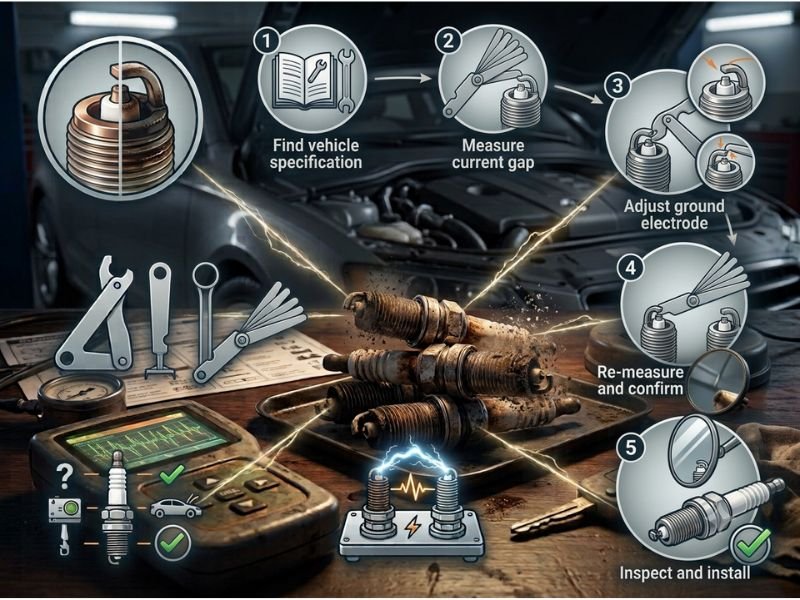
Learning how to gap spark plugs allows vehicle owners to correctly measure, adjust, and install spark plugs according to manufacturer specifications. In this complete guide, you will learn what spark plug gap means, why it matters, how to use a gap tool, how to adjust different types of spark plugs, and what mistakes to avoid during the process.
What You Will Learn From This Guide
In this guide, you will discover:
- What spark plug gap means and why it is important
- How the correct gap affects engine performance
- How to measure spark plug gap accurately
- How to adjust spark plug gap safely
- How to use different spark plug gap tools
- Whether iridium and pre-gapped spark plugs need adjustment
- Common mistakes that can damage spark plugs
Spark plug gapping is a simple maintenance step, but accuracy matters. A small difference in electrode distance can affect how efficiently the engine burns fuel.
At SparkPlugGuide, Chris Turner focuses on explaining automotive maintenance topics in a practical and beginner-friendly way. Whether you are replacing spark plugs for the first time or improving your vehicle maintenance knowledge, understanding spark plug gap will help you make better decisions for your engine.
What Is Spark Plug Gap?
Spark plug gap is the distance between the center electrode and the ground electrode at the firing end of a spark plug. This space is where the ignition spark jumps across to ignite the compressed air-fuel mixture inside the combustion chamber.
Although the spark plug gap may seem like a small measurement, it plays an important role in ignition performance. Every engine is designed with a specific spark plug gap requirement based on its ignition system, compression level, fuel system, and spark plug design.
How Spark Plug Gap Works
When the ignition system sends high voltage to the spark plug, the electrical energy travels through the center electrode and creates a spark across the gap to the ground electrode.
The spark must be strong enough to ignite the air-fuel mixture at the correct time.
The spark plug gap affects:
- How easily the spark forms
- Spark intensity
- Combustion efficiency
- Engine performance
A properly adjusted gap allows the ignition system to operate as the manufacturer intended.
Spark Plug Gap Components
To understand spark plug gap, it helps to know the main parts involved.
Center Electrode
The center electrode is the part where electrical energy reaches the tip of the spark plug.
It works with the ground electrode to create the ignition spark.
Ground Electrode
The ground electrode extends over the center electrode and provides the surface where the spark completes its path.
The distance between these two electrodes creates the spark plug gap.
Spark Plug Tip
The spark plug tip is located inside the combustion chamber and experiences extreme heat and pressure during engine operation.
The condition and positioning of the tip affect ignition reliability.
Why Spark Plug Gap Is Different for Each Engine
Not every engine uses the same spark plug gap because manufacturers design ignition systems differently.
Factors that influence spark plug gap include:
- Engine design
- Ignition coil output
- Compression ratio
- Fuel delivery system
- Spark plug material
For example, a modern engine with a powerful ignition system may use a different gap specification compared with an older engine.
Spark Plug Gap vs Spark Plug Size
Spark plug gap is not related to the physical size of the spark plug.
The size of a spark plug refers to factors such as:
- Thread diameter
- Reach length
- Socket size
The gap refers only to the distance between the two electrodes where the spark occurs.
Understanding this difference helps avoid confusion when selecting or installing spark plugs.
Why Is Spark Plug Gap Important?
The spark plug gap directly affects how effectively the ignition system can create a spark and burn the air-fuel mixture. Even a small difference from the recommended specification can change how the engine operates.
Maintaining the correct spark plug gap helps ensure reliable ignition, smooth combustion, and consistent engine performance.
Effect on Ignition Performance
The main purpose of a spark plug is to create a spark that ignites the fuel mixture.
The correct gap allows the ignition system to produce a strong and reliable spark.
If the gap is incorrect:
- The spark may be weaker
- Ignition may become inconsistent
- Combustion quality may decrease
A properly adjusted spark plug gap helps the engine receive the correct ignition performance.
Effect of a Spark Plug Gap That Is Too Wide
When the spark plug gap is too wide, the ignition system has to work harder to create a spark across the larger distance.
Possible problems include:
- Misfires
- Hard starting
- Weak acceleration
- Increased ignition system stress
A wide gap may require more voltage from ignition components, especially in engines with weaker ignition systems.
Effect of a Spark Plug Gap That Is Too Narrow
A spark plug gap that is too narrow can also affect engine performance.
Possible effects include:
- Reduced spark exposure
- Less efficient combustion
- Poor engine response
Although the spark may occur more easily, the smaller gap may not provide the ideal ignition characteristics required by the engine.
Effect on Engine Performance
The correct spark plug gap supports:
- Smooth engine operation
- Reliable starting
- Efficient fuel combustion
- Stable acceleration
An incorrect gap can create performance problems even when the spark plug itself is new.
Effect on Fuel Economy
A properly functioning spark plug helps the engine burn fuel efficiently.
If the gap is incorrect and combustion becomes incomplete, the engine may use more fuel to produce the same amount of power.
Maintaining the correct gap helps the engine operate closer to its designed efficiency.
Effect on Ignition System Components
Incorrect spark plug gaps can also affect other ignition components.
A gap that is too wide may increase demand on:
- Ignition coils
- Ignition system wiring
Over time, this additional stress may contribute to premature wear of ignition components.
Because of this, checking and setting the correct spark plug gap is an important step when installing spark plugs.
What Is the Correct Spark Plug Gap?
The correct spark plug gap is the specific distance between the center electrode and ground electrode recommended by the vehicle manufacturer. This measurement allows the spark plug to create the right ignition spark for the engine’s design and operating conditions.
There is no universal spark plug gap that works for every vehicle. Different engines require different gap specifications based on ignition system design, spark plug type, and combustion requirements.
Common Spark Plug Gap Measurements
Many spark plug gaps are typically found within a range of approximately 0.020 to 0.060 inches, but the exact specification varies between engines.
Some engines may require:
- Smaller gaps for specific ignition systems
- Larger gaps for improved combustion conditions
- Different measurements for performance applications
The correct measurement should always come from reliable vehicle specifications.
Where to Find Spark Plug Gap Specification
The recommended spark plug gap can usually be found in:
- Vehicle owner’s manual
- Manufacturer maintenance guide
- Spark plug manufacturer information
- Vehicle service documentation
Using the correct specification is important because the engine manufacturer designs the ignition system around a specific gap.
Why You Should Not Guess Spark Plug Gap
Using a random gap measurement can create ignition problems.
A gap that does not match the engine specification may lead to:
- Misfires
- Poor engine response
- Reduced fuel efficiency
- Increased ignition system stress
Even a small difference can affect how efficiently the spark plug performs.
Does Spark Plug Type Affect the Gap?
Yes, spark plug type can influence the recommended gap.
Factors include:
- Electrode material
- Spark plug design
- Engine requirements
For example, iridium spark plugs often use fine-wire electrodes that require careful handling during adjustment.
Checking Gap Before Installation
Even when installing new spark plugs, checking the gap is a good practice.
Reasons include:
- Confirming manufacturer specifications
- Detecting incorrect gaps
- Preventing installation problems
A quick gap check can help ensure the spark plug is ready before it goes into the engine.
Do Spark Plugs Come Pre Gapped?
Many spark plugs come with a factory-set gap, but they are not always perfectly matched to every vehicle application. A pre-gapped spark plug means the manufacturer has adjusted the electrode distance to a specific measurement, but the gap should still be checked before installation.
The correct gap depends on the engine where the spark plug will be installed.
Why Pre-Gapped Does Not Always Mean Ready to Install
Spark plugs are often produced with a standard gap setting, but different vehicles may require different specifications.
A spark plug designed for multiple applications may have a factory gap that does not match every engine.
Checking the gap before installation helps confirm:
- Correct electrode distance
- Proper ignition performance
- Compatibility with the vehicle
Do New Spark Plugs Need Gap Checking?
Yes, it is recommended to check new spark plugs before installing them.
Although manufacturers carefully produce spark plugs, the gap can sometimes change due to:
- Shipping
- Handling
- Storage conditions
A quick measurement ensures the spark plug matches the required specification.
Can a Pre-Gapped Spark Plug Be Adjusted?
Yes, a pre-gapped spark plug can usually be adjusted if the gap does not match the required specification.
However, adjustment should be done carefully, especially with spark plugs that have delicate electrode designs.
Should You Trust Factory Spark Plug Gap?
Factory gap settings are generally reliable, but they are not a replacement for checking vehicle requirements.
The best approach is:
- Confirm the recommended gap
- Measure the spark plug gap
- Adjust if necessary
This ensures the spark plug matches the engine’s ignition requirements.
Do You Have to Gap Spark Plugs?
Spark plug gapping is recommended because the correct electrode distance is important for reliable ignition performance. While many spark plugs come with a factory-set gap, checking the gap before installation helps ensure it matches the specific engine requirements.
Whether adjustment is required depends on the spark plug type and vehicle specification.
When Spark Plug Gapping Is Necessary
Spark plug gap should be checked when:
- Installing new spark plugs
- Changing spark plug types
- Using performance applications
- The manufacturer requires a specific adjustment
Checking the gap helps prevent installation problems caused by incorrect electrode distance.
When Spark Plug Adjustment May Not Be Required
Some spark plugs are manufactured specifically for a particular vehicle application and may already have the correct gap.
Even in these cases, confirming the measurement is still recommended.
Why Correct Gapping Matters
The ignition system is designed around a specific spark plug gap.
Incorrect gapping may affect:
- Spark formation
- Combustion quality
- Engine performance
A properly adjusted gap helps the engine operate efficiently.
Do Professional Mechanics Gap Spark Plugs?
Many professional technicians still check spark plug gaps before installation.
This step is quick and helps confirm that the spark plug meets manufacturer specifications.
A simple measurement can prevent problems after installation.
What Happens If You Skip Spark Plug Gapping?
Installing spark plugs without checking the gap may create issues if the gap is incorrect.
Possible results include:
- Engine hesitation
- Misfires
- Reduced performance
Taking a few minutes to verify the gap can help ensure reliable operation.
Tools Needed to Gap Spark Plugs
Gapping spark plugs requires only a few basic tools, but using the correct equipment helps ensure accurate measurements and prevents damage to the electrodes. The main purpose of these tools is to measure the distance between the spark plug electrodes and make small adjustments when necessary.
Using improper tools or methods can accidentally damage the spark plug and affect ignition performance.
Spark Plug Gap Gauge
A spark plug gap gauge is the most common tool used to measure spark plug gap.
It allows you to:
- Measure the electrode distance
- Compare the gap with manufacturer specifications
- Make small adjustments when needed
There are different types of spark plug gap gauges available, including coin-style gauges and wire-style gauges.
Coin-Style Gap Gauge
A coin-style gauge uses a gradually increasing edge to measure spark plug gap.
The user slides the gauge between the electrodes until the correct measurement point fits the gap.
Advantages include:
- Simple design
- Easy to carry
- Quick measurement
However, it should be used carefully to avoid applying excessive pressure to delicate electrodes.
Wire-Style Gap Gauge
A wire-style gauge uses individual wires with specific measurements to check the spark plug gap.
Benefits include:
- More precise measurement
- Reduced risk of damaging electrodes
- Suitable for fine-wire spark plugs
Many technicians prefer wire-style gauges because they provide accurate readings without forcing the electrodes apart.
Feeler Gauge
A feeler gauge is another tool that can measure spark plug gap.
It uses thin metal blades with specific thickness measurements.
It is useful for:
- Accurate measurement
- Checking precise gaps
- Professional applications
Spark Plug Gap Adjustment Tool
Some spark plug gap tools include a built-in adjustment feature.
They can help:
- Open the gap slightly
- Close the gap carefully
- Make small corrections
Adjustment should always be done gradually to avoid damaging the electrode.
Tools to Avoid for Spark Plug Gapping
Some tools can damage spark plugs during adjustment.
Avoid using:
- Screwdrivers
- Pliers with excessive force
- Hard objects for hitting electrodes
Spark plug electrodes are delicate, and incorrect tools can change their shape or damage the plug.
Using the correct tools makes spark plug gapping easier, safer, and more accurate.
How to Use Spark Plug Gap Tool
A spark plug gap tool helps measure the distance between the spark plug electrodes and confirm whether the gap matches the required specification. Using the tool correctly is important because even a small measurement error can affect ignition performance.
The process is simple, but it requires careful handling to avoid damaging the electrodes.
Step 1: Find the Correct Gap Specification
Before measuring the spark plug gap, find the recommended specification for your vehicle.
You can usually find this information from:
- Owner’s manual
- Vehicle manufacturer specifications
- Spark plug manufacturer information
Never adjust the gap based on guesswork.
Step 2: Insert the Gap Tool Between Electrodes
Place the measurement section of the gap tool between the center electrode and ground electrode.
The tool should fit naturally into the gap without forcing the electrodes apart.
Step 3: Read the Measurement
Check the measurement shown on the tool.
Compare it with the recommended spark plug gap specification.
For example:
- If the tool shows the correct measurement, no adjustment may be needed
- If the gap is too large or too small, adjustment is required
Step 4: Adjust the Gap if Necessary
If the measurement is incorrect, make small adjustments.
To increase the gap:
- Carefully move the ground electrode away from the center electrode
To decrease the gap:
- Gently move the ground electrode closer
Avoid applying pressure directly to the center electrode.
Step 5: Recheck the Measurement
After adjustment, measure the gap again.
Repeated checking helps ensure:
- Correct measurement
- Proper electrode position
- Accurate adjustment
How to Read a Spark Plug Gap Tool
Reading a spark plug gap tool depends on the type of gauge being used.
Most tools display measurements in:
- Inches
- Millimeters
The measurement represents the distance between the two electrodes.
Always compare the reading with the engine manufacturer’s recommended specification.
Common Mistakes When Using a Gap Tool
Avoid these common mistakes:
- Forcing the tool between electrodes
- Measuring at the wrong angle
- Ignoring manufacturer specifications
- Adjusting the center electrode
Proper use of a gap tool helps maintain the correct spark plug setting and prevents installation problems.
How to Gap Spark Plugs Step by Step
Gapping spark plugs involves measuring the existing electrode distance and adjusting it to match the required specification. Although the process is simple, careful handling is necessary because spark plug electrodes can be damaged easily.
Before starting, make sure you have the correct spark plug type and the recommended gap specification for your engine.
Step 1: Confirm the Required Spark Plug Gap
The first step is identifying the correct gap measurement.
Use:
- Vehicle owner’s manual
- Manufacturer specifications
- Spark plug application information
Different engines require different spark plug gaps, so avoid using a general measurement.
Step 2: Inspect the Spark Plug Condition
Before adjusting the gap, check that the spark plug is suitable for installation.
Look for:
- Damaged ceramic
- Worn electrodes
- Physical defects
A damaged spark plug should be replaced instead of adjusted.
Step 3: Measure the Existing Gap
Use a spark plug gap gauge to measure the current distance.
Compare the measurement with the recommended specification.
The gap may be:
- Correct
- Too wide
- Too narrow
Step 4: Adjust the Ground Electrode
The ground electrode is the part that should be adjusted.
To increase the gap:
- Carefully move the ground electrode upward
To reduce the gap:
- Gently move the ground electrode downward
Make small adjustments instead of large movements.
Step 5: Recheck the Spark Plug Gap
After adjustment, measure the gap again.
Repeat the process until the measurement matches the required specification.
Accurate measurement is more important than making quick adjustments.
Step 6: Install the Spark Plug
Once the gap is correct:
- Install the spark plug carefully
- Avoid cross-threading
- Tighten according to manufacturer specifications
Proper installation ensures the spark plug works correctly inside the engine.
Tips for Accurate Spark Plug Gapping
For the best results:
- Always measure before installation
- Use the correct gap tool
- Adjust only the ground electrode
- Handle fine-wire plugs carefully
A properly gapped spark plug helps maintain reliable ignition and efficient engine performance.
How Do I Adjust Spark Plug Gap?
Adjusting spark plug gap means changing the distance between the center electrode and ground electrode so it matches the recommended specification for the engine. This process is usually done when the existing gap is too wide or too narrow.
The adjustment should always be performed carefully because spark plug electrodes are designed with precise measurements. Excessive force can damage the spark plug and affect ignition performance.
Increasing Spark Plug Gap
If the spark plug gap is smaller than the recommended specification, the ground electrode needs to be moved slightly away from the center electrode.
To increase the gap:
- Place the gap adjustment tool carefully on the ground electrode
- Move the ground electrode upward slightly
- Measure the gap again
- Repeat until the correct measurement is reached
Small adjustments are better because moving the electrode too far can create an incorrect gap.
Reducing Spark Plug Gap
If the spark plug gap is too wide, the ground electrode needs to be moved closer to the center electrode.
To reduce the gap:
- Gently press the ground electrode downward
- Avoid hitting or forcing the electrode
- Measure again after adjustment
The goal is to achieve the correct distance without damaging the spark plug.
Adjust Only the Ground Electrode
When adjusting spark plug gap, the ground electrode should be the part that moves.
The center electrode should not be bent or forced because it is the main point where the ignition spark forms.
Damaging the center electrode can affect:
- Spark quality
- Combustion efficiency
- Spark plug lifespan
How Many Times Can You Adjust a Spark Plug Gap?
Spark plug gaps can usually be adjusted during installation or maintenance, but repeated adjustments are not recommended.
Frequent bending of the electrode may:
- Weaken the electrode structure
- Change the spark plug design
- Increase the risk of damage
If a spark plug requires major adjustment, it may be better to use the correct spark plug specification.
Checking the Gap After Adjustment
After making any adjustment:
- Measure the gap again
- Confirm it matches specifications
- Inspect the electrode position
Accurate adjustment ensures the spark plug works correctly with the engine’s ignition system.
How to Gap Spark Plugs Without Tool
Spark plug gap tools are the safest and most accurate way to measure and adjust spark plug gaps. However, some people look for ways to adjust spark plugs without specialized tools, especially during emergency situations.
Although basic adjustment may be possible without a dedicated tool, achieving an accurate measurement is difficult without proper equipment.
Why a Gap Tool Is Recommended
A spark plug gap tool is designed specifically to measure the distance between electrodes.
It helps ensure:
- Accurate measurements
- Proper electrode positioning
- Correct adjustment
Without a proper tool, it is easy to create a gap that is too wide or too narrow.
Risks of Adjusting Spark Plug Gap Without a Tool
Trying to gap spark plugs without the correct equipment can lead to:
- Incorrect gap measurement
- Damaged electrodes
- Poor engine performance
A spark plug may look correctly adjusted but still have an inaccurate gap.
Alternative Ways to Check Spark Plug Gap
If a gap tool is unavailable, some people may use other measuring methods, but these are not ideal for accurate engine maintenance.
Possible alternatives include:
- Using a measurement reference
- Comparing with specifications
However, proper tools should be used whenever possible.
Can You Adjust Spark Plug Gap by Eye?
No, adjusting spark plug gap by appearance alone is not recommended.
The gap difference between correct and incorrect settings can be very small, making visual estimation unreliable.
An engine may experience performance problems even when the gap looks acceptable.
Best Practice for Spark Plug Gapping
The recommended approach is:
- Use the correct spark plug gap specification
- Measure with a proper tool
- Adjust carefully if needed
- Confirm the final measurement
A low-cost gap tool can prevent installation mistakes and help maintain proper ignition performance.
How to Gap Iridium Spark Plugs
Iridium spark plugs require extra care during gapping because they use a fine-wire electrode design. The iridium tip is extremely durable but also more delicate than traditional spark plug materials.
Although iridium spark plugs can sometimes be adjusted, unnecessary force can damage the fine electrode and reduce spark plug performance.
Why Iridium Spark Plugs Need Extra Care
Iridium spark plugs use a small-diameter center electrode made from a strong and heat-resistant material.
The fine-wire design provides benefits such as:
- Efficient spark formation
- Better durability
- Long service life
However, the smaller electrode requires careful handling during gap adjustment.
Do You Gap Iridium Spark Plugs?
Many iridium spark plugs come pre-gapped from the manufacturer, but the gap should still be checked before installation.
Adjustment may be necessary when:
- The gap does not match vehicle specifications
- The spark plug application requires a different setting
- The plug was damaged during handling
Always follow the spark plug manufacturer’s recommendations.
How to Gap Iridium Spark Plugs Safely
When adjusting iridium spark plugs:
- Use a suitable gap tool
- Adjust the ground electrode only
- Apply minimal force
- Measure carefully
Avoid pushing against the fine center electrode because it can easily be damaged.
Can You Gap Iridium Spark Plugs?
Yes, iridium spark plugs can be gapped, but they should not be adjusted aggressively.
The main concern is protecting the fine-wire electrode design.
If the required adjustment is significant, replacing the spark plug with the correct specification may be a safer option.
Do Iridium Spark Plugs Need Less Adjustment?
In many cases, iridium spark plugs require less adjustment because manufacturers design them for specific applications.
However, checking the gap before installation is still a good practice to ensure compatibility with the engine.
Proper handling helps maintain the long lifespan and performance benefits that iridium spark plugs provide.
Are NGK Spark Plugs Pre Gapped?
Many NGK spark plugs come with a factory-set gap, but the correct gap depends on the specific spark plug model and the vehicle application. A pre-gapped spark plug means the manufacturer has adjusted the electrode distance to a standard measurement, but it may not always match the exact requirement of every engine.
Checking the gap before installation helps confirm that the spark plug is suitable for the vehicle.
Why NGK Spark Plugs Have Factory Gaps
NGK designs spark plugs for different engines, vehicles, and performance requirements.
Factory gapping helps provide:
- Consistent manufacturing quality
- Faster installation
- Proper starting specifications
However, one spark plug model may be used in multiple applications with different gap requirements.
Should You Check NGK Spark Plug Gap Before Installation?
Yes, checking the gap before installation is recommended.
Even if the spark plug is new, verify that:
- The gap matches vehicle specifications
- The electrodes are not damaged
- The spark plug is suitable for the engine
A quick inspection can prevent ignition problems after installation.
Can NGK Spark Plugs Be Adjusted?
Most NGK spark plugs can be adjusted carefully if the gap does not match the required specification.
However, the adjustment method depends on the spark plug type.
Extra care is needed with:
- Iridium spark plugs
- Fine-wire spark plugs
- Performance spark plugs
What Happens If NGK Spark Plug Gap Is Wrong?
An incorrect gap can affect:
- Engine starting
- Combustion quality
- Fuel efficiency
- Overall performance
Using the recommended spark plug gap helps the engine operate as designed.
Following NGK Specifications
The best approach is to follow both:
- Vehicle manufacturer recommendations
- NGK spark plug specifications
This ensures the spark plug gap matches the engine requirements.
How to Close Gap on Spark Plug
Closing the spark plug gap means reducing the distance between the center electrode and ground electrode when the gap is wider than the recommended specification.
This adjustment should be done carefully because excessive force can damage the electrode or change the spark plug design.
Why Would You Need to Close Spark Plug Gap?
A spark plug gap may need to be reduced when:
- The gap is larger than recommended
- The spark plug was adjusted incorrectly
- The electrode distance changed during handling
A correct gap helps maintain reliable ignition performance.
How to Close Spark Plug Gap Safely
To close the gap:
- Place the spark plug on a stable surface
- Use a proper gap adjustment tool
- Move the ground electrode slightly closer
- Measure the gap again
Small adjustments are safer than trying to move the electrode significantly in one step.
Do Not Hit the Spark Plug Electrode
Some people attempt to close the gap by tapping the spark plug against a hard surface.
This method is not recommended because it can:
- Damage the electrode
- Crack the ceramic insulator
- Create an inaccurate gap
Controlled adjustment is the safer approach.
How to Confirm the Gap Is Correct
After closing the gap:
- Measure with a gap gauge
- Compare with manufacturer specifications
- Adjust again if necessary
The final measurement matters more than the appearance of the electrode position.
Closing Gap on Different Spark Plug Types
Different spark plug materials require different levels of care.
Extra caution is needed with:
- Iridium spark plugs
- Platinum spark plugs
- Fine-wire designs
Delicate electrodes can be damaged if adjusted incorrectly.
How to Gap Spark Plugs for Proper Installation
Correct spark plug gapping is an important step before installing spark plugs because it ensures the electrode distance matches the engine requirements. Even a high-quality spark plug may not perform correctly if the gap is incorrect.
Proper installation involves more than simply placing the spark plug into the engine.
Check the Spark Plug Specification
Before adjusting or installing the spark plug, confirm:
- Correct spark plug model
- Recommended gap measurement
- Engine compatibility
Using the wrong specification can create performance issues even if the gap is adjusted correctly.
Measure Before Adjusting
Always measure the existing spark plug gap before making changes.
This helps determine whether:
- No adjustment is needed
- The gap needs to increase
- The gap needs to decrease
Avoid making unnecessary adjustments.
Adjust Carefully
When adjustment is required:
- Move only the ground electrode
- Make small changes
- Avoid damaging the center electrode
The goal is accuracy, not force.
Recheck After Adjustment
A final measurement confirms that the spark plug is ready for installation.
Check:
- Correct gap distance
- Electrode alignment
- No visible damage
A properly adjusted spark plug provides better reliability after installation.
Install According to Manufacturer Guidelines
After gapping:
- Install the spark plug carefully
- Avoid cross-threading
- Use the recommended tightening method
Correct installation combined with proper gapping helps maintain efficient engine operation.
Common Spark Plug Gapping Mistakes
Spark plug gapping is a simple process, but small mistakes can affect ignition performance and may even damage the spark plug. Using the correct tools, following manufacturer specifications, and handling electrodes carefully are important steps for achieving the right gap.
Avoiding common mistakes helps ensure that spark plugs work properly after installation.
Setting the Wrong Spark Plug Gap Specification
One of the biggest mistakes is using the wrong gap measurement.
Different engines require different spark plug gaps based on:
- Engine design
- Ignition system
- Spark plug type
- Manufacturer recommendations
Using a gap specification from another vehicle can lead to ignition problems even if the spark plug itself is correct.
Assuming New Spark Plugs Do Not Need Checking
Many people assume that new spark plugs are always ready for installation.
Although many spark plugs come pre-gapped, the gap should still be checked because:
- The specification may not match your vehicle
- The gap may change during handling
- Different applications may require different settings
A quick measurement before installation can prevent problems later.
Using the Wrong Tool for Adjustment
Using improper tools can damage spark plugs.
Avoid:
- Pliers
- Screwdrivers
- Hard objects for hitting electrodes
These methods can bend electrodes unevenly or damage the spark plug structure.
A proper spark plug gap tool provides safer and more accurate adjustment.
Damaging Iridium or Fine-Wire Spark Plugs
Iridium and fine-wire spark plugs require extra care because their electrodes are thinner and more delicate.
Common mistakes include:
- Applying too much pressure
- Bending the fine electrode
- Using unsuitable tools
Always follow manufacturer recommendations when adjusting advanced spark plug types.
Adjusting the Center Electrode
The center electrode should not be bent or forced during adjustment.
Only the ground electrode should be adjusted because the center electrode is designed with precise dimensions.
Damaging the center electrode may affect:
- Spark formation
- Combustion efficiency
- Spark plug lifespan
Not Rechecking the Gap After Adjustment
Another common mistake is assuming the gap is correct after making an adjustment.
Always measure again after changing the electrode position.
A final check ensures:
- Correct gap distance
- Proper electrode alignment
- Reliable ignition performance
How Often Should You Check Spark Plug Gap?
Spark plug gap should be checked whenever spark plugs are installed or when there are concerns about ignition performance. Although spark plug gaps do not usually change quickly, normal wear and engine conditions can gradually affect the electrode distance.
Regular gap checking helps maintain proper combustion and engine reliability.
Checking Gap When Installing New Spark Plugs
The most important time to check spark plug gap is before installing new spark plugs.
Even if the spark plugs are advertised as pre-gapped, checking confirms that:
- The gap matches vehicle specifications
- The spark plug is ready for installation
- No adjustment is required
Checking Gap During Spark Plug Maintenance
During spark plug inspection or maintenance, checking the gap can help identify wear.
As spark plugs age, electrode erosion may increase the gap over time.
A larger-than-normal gap may indicate:
- Normal wear
- Incorrect spark plug condition
- Need for replacement
Checking Gap in High-Performance Engines
Performance engines often require closer attention to spark plug gap because they operate under higher stress.
Factors that may affect gap requirements include:
- Increased engine load
- Higher cylinder pressure
- Modified engine components
Following performance specifications is important for reliable operation.
Does Spark Plug Gap Need Regular Adjustment?
Spark plug gap does not usually require frequent adjustment during normal operation.
Instead, the focus should be on:
- Checking during installation
- Inspecting during maintenance
- Replacing worn spark plugs when necessary
Repeated adjustment of worn spark plugs is not a substitute for replacement.
Frequently Asked Questions About Spark Plug Gap
Spark plug gap is a common topic among vehicle owners because it directly affects ignition performance. Below are answers to common questions about spark plug measurement, adjustment, and maintenance.
What Happens If Spark Plug Gap Is Wrong?
A wrong spark plug gap can affect how efficiently the spark plug ignites the air-fuel mixture.
A gap that is too large or too small may contribute to:
- Engine misfires
- Poor acceleration
- Difficult starting
- Reduced fuel efficiency
The correct gap helps the ignition system operate properly.
Should New Spark Plugs Be Gapped?
Yes, new spark plugs should usually be checked before installation.
Many spark plugs come with factory-set gaps, but the correct measurement depends on the specific engine application.
Checking the gap ensures it matches manufacturer specifications.
How Often Should Spark Plug Gap Be Checked?
Spark plug gap should be checked:
- Before installing new spark plugs
- During spark plug maintenance
- When ignition-related problems appear
Regular adjustment is not usually necessary unless the gap is incorrect.
Can Incorrect Spark Plug Gap Cause Misfire?
Yes, an incorrect spark plug gap can contribute to engine misfires.
A gap that does not match the engine requirement may prevent the spark plug from creating the ideal ignition spark.
However, other ignition and engine components can also cause similar symptoms.
What Tool Measures Spark Plug Gap?
The most common tools used to measure spark plug gap include:
- Spark plug gap gauge
- Wire-style gap gauge
- Feeler gauge
These tools measure the distance between the center and ground electrodes.
Can You Adjust All Types of Spark Plugs?
Many spark plugs can be adjusted, but some require extra care.
Special attention is needed for:
- Iridium spark plugs
- Fine-wire spark plugs
- Performance spark plugs
Always follow the manufacturer’s recommendations before adjusting.
Do Iridium Spark Plugs Need Gapping?
Iridium spark plugs often come with a factory-set gap, but the gap should still be checked before installation.
If adjustment is needed, it should be done carefully to avoid damaging the fine-wire electrode.
Does Spark Plug Gap Affect Performance?
Yes, spark plug gap can affect engine performance.
The correct gap helps provide:
- Reliable ignition
- Efficient combustion
- Smooth engine operation
An incorrect gap may reduce performance and fuel efficiency.
Conclusion
Learning how to gap spark plugs is an important part of proper spark plug installation and engine maintenance. The correct gap allows the spark plug to create a reliable ignition spark and helps the engine burn fuel efficiently.
Although many spark plugs come pre-gapped, checking the measurement before installation is always a good practice. Different engines require different specifications, and even a small gap difference can affect engine operation.
Using the correct tools, adjusting only when necessary, and handling electrodes carefully can help prevent common installation mistakes. Special care should be taken with iridium and fine-wire spark plugs because their delicate designs require proper handling.
At SparkPlugGuide, Chris Turner explains automotive maintenance topics in a simple and practical way so vehicle owners can better understand spark plug care and make informed decisions about installation and maintenance.