
A spark plug symptoms chart helps identify common ignition problems by matching engine symptoms with possible spark plug conditions. Issues like engine misfires, hard starting, rough idling, poor acceleration, and reduced fuel economy can indicate spark plug wear, fouling, incorrect gap, or other ignition problems.
Spark plugs play a major role in engine combustion because they create the spark needed to ignite the air-fuel mixture. When a spark plug becomes dirty, worn, damaged, or incorrectly adjusted, the engine may show noticeable performance changes.
Since many ignition problems create similar symptoms, identifying the exact cause can be difficult without proper inspection. A symptom chart makes it easier to understand what a specific problem may indicate and what steps should be taken next.
In this guide, you will find a complete spark plug symptoms chart with common signs, possible causes, spark plug conditions, and solutions to help diagnose ignition-related problems.
Spark Plug Symptoms Chart: Quick Overview
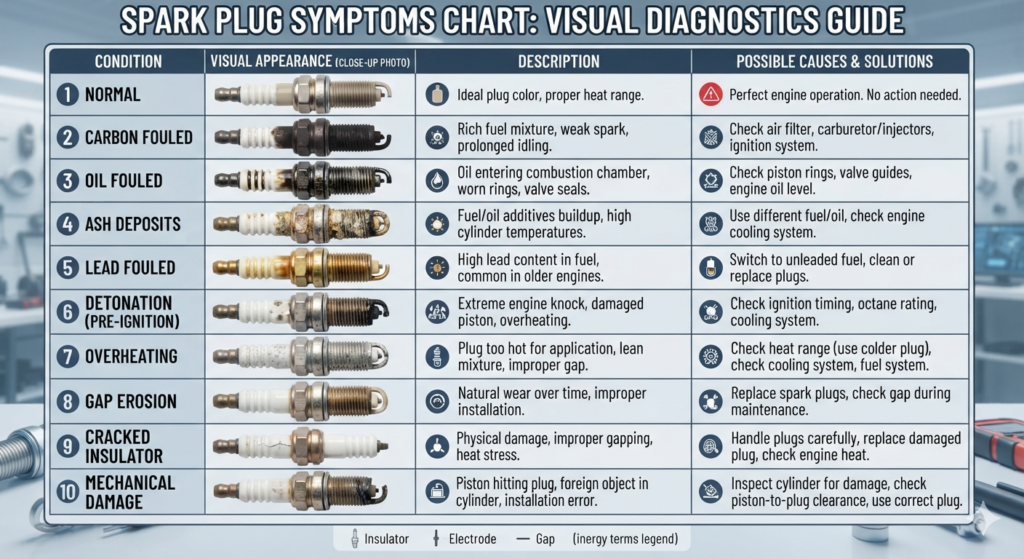
The following chart provides a quick reference for common spark plug symptoms and what they may indicate. These symptoms can help identify whether the issue is related to spark plug wear, contamination, incorrect adjustment, or another engine problem.
| Symptom | Possible Spark Plug Problem | Common Cause |
| Engine misfire | Weak or inconsistent spark | Worn spark plug, dirty deposits, incorrect gap |
| Hard starting | Poor ignition performance | Worn electrode or large spark gap |
| Rough idle | Uneven combustion | Dirty or fouled spark plug |
| Poor acceleration | Weak spark output | Damaged electrode or worn plug |
| Reduced fuel economy | Incomplete combustion | Fouled spark plug |
| Black spark plug | Carbon buildup | Rich fuel mixture |
| Wet spark plug | Fuel or oil contamination | Flooding or engine oil leakage |
| White spark plug | Excessive heat | Lean fuel mixture or overheating |
| Burned electrode | Heat damage | Incorrect heat range or engine condition |
| Large spark plug gap | Electrode wear | Old spark plug |
This chart provides a general diagnosis guide, but a single symptom can sometimes have multiple causes. For example, engine misfires can happen because of a bad spark plug, ignition coil problems, fuel issues, or other engine conditions.
A proper inspection of the spark plug condition helps confirm the actual cause.
Common Spark Plug Symptoms and What They Mean
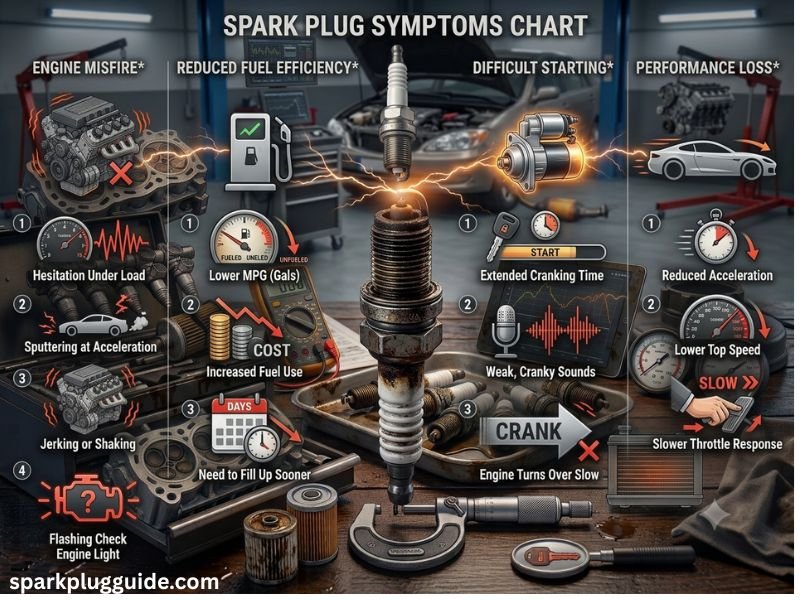
Spark plug problems usually affect engine performance because they interrupt the combustion process. Understanding each symptom can help determine whether the spark plug needs cleaning, adjustment, or replacement.
Engine Misfire
Engine misfire is one of the most common symptoms linked to spark plug problems.
A misfire happens when the spark plug fails to ignite the air-fuel mixture correctly inside the combustion chamber. When this happens, the affected cylinder does not produce normal power.
Common signs include:
- Engine shaking
- Uneven power delivery
- Hesitation during acceleration
- Rough engine operation
A spark plug misfire can happen because of:
- Worn electrodes
- Carbon buildup
- Oil contamination
- Incorrect spark plug gap
A damaged or dirty spark plug cannot create a strong enough spark, causing incomplete combustion.
Hard Starting Engine
Difficulty starting the engine can indicate that the spark plug is not producing a reliable ignition spark.
Drivers may notice:
- Longer cranking time
- Multiple starting attempts
- Poor cold-start performance
As spark plugs wear, the electrode gap often increases, making it harder for the ignition system to create a spark.
A weak spark may not ignite the fuel mixture immediately, especially when the engine is cold.
Rough Engine Idle
A rough idle occurs when the engine does not run smoothly while stationary.
Common signs include:
- Engine vibration
- Unstable RPM
- Uneven running
A dirty or worn spark plug can cause inconsistent combustion between cylinders. When one cylinder produces less power than the others, the engine may feel rough or unstable.
Poor Acceleration
Spark plug problems can reduce engine responsiveness during acceleration.
Symptoms may include:
- Slow throttle response
- Reduced power
- Hesitation when increasing speed
When combustion is incomplete, the engine cannot produce its normal power output. A weak spark caused by a faulty spark plug can make acceleration feel less smooth.
Reduced Fuel Economy
A damaged or dirty spark plug can affect fuel efficiency because the fuel mixture may not burn completely.
This can result in:
- Increased fuel consumption
- Lower engine efficiency
- More emissions
Maintaining properly functioning spark plugs helps ensure that fuel burns efficiently inside the engine.
Spark Plug Appearance Symptoms Chart
Inspecting the appearance of a spark plug can provide important clues about engine condition and ignition problems. Different types of deposits, colors, and damage patterns often indicate different causes.
A visual inspection cannot always confirm the exact problem, but it helps identify possible issues that require further diagnosis.
| Spark Plug Appearance | Meaning | Possible Cause |
| Black dry deposits | Carbon fouling | Rich fuel mixture, weak ignition |
| Wet fuel residue | Fuel fouling | Engine flooding, excessive fuel |
| Oily black coating | Oil contamination | Worn engine components |
| White or light deposits | Overheating | Lean fuel mixture, excessive temperature |
| Burned electrode | Heat damage | Wrong heat range, engine issues |
| Large electrode gap | Spark plug wear | Old spark plug |
Black Spark Plug Symptoms
A black spark plug usually indicates carbon buildup on the firing tip.
The plug may appear:
- Covered with dry black soot
- Dark around the electrode
- Powdery or dusty
Carbon buildup often happens when the engine burns too much fuel compared with the available air.
Possible causes include:
- Rich air-fuel mixture
- Dirty air filter
- Weak ignition system
- Frequent short-distance driving
A carbon-fouled spark plug may reduce spark strength and cause symptoms such as misfires, rough idling, and poor acceleration.
Wet Spark Plug Symptoms
A wet spark plug means that liquid contamination is affecting the ignition process.
The plug may be wet because of:
- Excess fuel
- Engine oil
- Moisture
A fuel-wet spark plug usually has a strong gasoline smell and may happen when the engine receives too much fuel.
An oil-wet spark plug usually appears:
- Shiny black
- Greasy
- Covered with thick residue
Oil contamination may indicate problems such as worn piston rings or valve seal issues.
White Spark Plug Symptoms
A white spark plug often indicates that the engine is running too hot.
The plug may appear:
- White
- Light gray
- Clean but overheated
Possible causes include:
- Lean fuel mixture
- Vacuum leaks
- Incorrect spark plug heat range
- Excessive engine temperature
A spark plug that runs too hot can suffer electrode damage and may reduce engine reliability.
Burned Electrode Symptoms
A burned or damaged electrode indicates that the spark plug has experienced excessive heat.
Signs include:
- Melted electrode edges
- Missing electrode material
- Rounded electrode shape
Possible causes include:
- Incorrect spark plug type
- Engine overheating
- Lean fuel mixture
A burned electrode usually requires spark plug replacement.
Spark Plug Gap Problem Symptoms Chart
The spark plug gap is the distance between the center electrode and the ground electrode. This measurement is important because it determines how easily the spark can jump between the electrodes.
An incorrect gap can affect ignition quality and create noticeable engine problems.
| Spark Plug Gap Condition | Symptoms | Possible Cause |
| Gap too wide | Misfire, hard starting, weak spark | Electrode wear |
| Gap too small | Poor combustion, weak performance | Incorrect adjustment |
| Uneven gap | Inconsistent ignition | Damage or improper installation |
Symptoms of a Spark Plug Gap That Is Too Wide
A spark plug gap becomes larger as the electrode wears over time.
A wide gap can cause:
- Hard starting
- Engine misfires
- Weak acceleration
- Increased ignition coil stress
The ignition system must create higher voltage to jump across a larger gap. If the spark is not strong enough, combustion may become inconsistent.
Symptoms of a Spark Plug Gap That Is Too Small
A spark plug gap that is too small can also create performance issues.
Possible symptoms include:
- Weak combustion
- Reduced engine power
- Poor fuel efficiency
When the gap is too small, the spark may not have enough energy to ignite the fuel mixture effectively.
Incorrect Spark Plug Gap Effects
Using the wrong spark plug gap specification can affect:
- Ignition reliability
- Engine performance
- Fuel efficiency
Always check the manufacturer’s recommended gap before installation.
A properly adjusted spark plug gap helps maintain consistent combustion and reduces unnecessary stress on ignition components.
Spark Plug Problems vs Other Ignition Problems
Many engine problems have similar symptoms, making it difficult to determine whether the spark plug is the actual cause. Spark plugs work together with ignition coils and other components, so proper diagnosis is important.
Spark Plug vs Ignition Coil Symptoms
Spark plug and ignition coil problems can both cause:
- Engine misfires
- Rough idle
- Power loss
- Starting problems
However, the failure pattern is often different.
A spark plug problem usually develops gradually due to:
- Electrode wear
- Carbon buildup
- Oil contamination
- Incorrect gap
An ignition coil problem may appear more suddenly and can cause:
- Immediate misfires
- Sudden power loss
- Complete loss of spark
Spark Plug vs Fuel System Problems
Fuel system issues can also create symptoms similar to spark plug problems.
For example:
- Poor acceleration
- Rough idle
- Reduced fuel economy
may be caused by either ignition problems or fuel delivery issues.
A dirty fuel injector or incorrect fuel mixture can create spark plug deposits, while a faulty spark plug can prevent proper fuel combustion.
Why Proper Diagnosis Matters
Replacing spark plugs without identifying the actual cause may not solve the problem permanently.
A complete diagnosis may include:
- Inspecting the spark plug condition
- Checking spark plug gap
- Testing ignition components
- Reviewing engine error codes
Finding the real cause prevents unnecessary repairs and helps restore proper engine performance.
How to Diagnose Spark Plug Symptoms
Diagnosing spark plug problems requires checking both the spark plug condition and the symptoms shown by the engine. Since many ignition problems can create similar signs, a proper inspection helps determine whether the spark plug is the actual cause.
A step-by-step diagnosis can prevent replacing parts that are still working properly.
Check Spark Plug Condition
The first step is removing and inspecting the spark plug.
Look for signs such as:
- Carbon buildup
- Oil deposits
- Fuel residue
- Electrode wear
- Cracked ceramic
The appearance of the spark plug often provides information about what is happening inside the engine.
For example, a black spark plug may indicate carbon buildup, while a wet spark plug may suggest fuel or oil contamination.
Check Spark Plug Gap
Measuring the spark plug gap helps determine whether the plug is worn or incorrectly adjusted.
An incorrect gap can cause:
- Weak spark
- Misfires
- Hard starting
A spark plug gap tool can be used to compare the current measurement with the manufacturer’s recommended specification.
If the gap is too large because of electrode wear, replacing the spark plug is usually the best solution.
Check for Engine Error Codes
Modern vehicles use onboard diagnostic systems that can detect ignition problems.
A diagnostic scanner can reveal:
- Cylinder misfire codes
- Ignition-related faults
- Combustion problems
Although error codes do not always identify the exact failed component, they provide useful information during diagnosis.
Test Spark Quality
Checking spark quality can help confirm whether the ignition system is working correctly.
A weak spark may indicate:
- Bad spark plug
- Ignition coil problem
- Electrical connection issue
Testing helps separate spark plug problems from other ignition system failures.
When Should You Replace Spark Plugs?
Spark plugs should be replaced when they become worn, damaged, or unable to provide reliable ignition. Waiting too long can reduce engine performance and increase stress on other ignition components.
The correct replacement time depends on the spark plug type, engine design, and driving conditions.
Replace Based on Mileage
Spark plugs have a recommended service interval provided by the vehicle manufacturer.
Replacement schedules depend on:
- Spark plug material
- Engine requirements
- Vehicle usage
Copper spark plugs generally require more frequent replacement, while platinum and iridium spark plugs usually last longer.
Replace When Symptoms Appear
Spark plugs should be inspected when common warning signs appear.
These include:
- Engine misfires
- Hard starting
- Poor acceleration
- Reduced fuel economy
- Rough idling
Symptoms indicate that the spark plug may no longer be performing efficiently.
Replace Damaged Spark Plugs
A spark plug should be replaced immediately if it has visible damage.
Examples include:
- Cracked ceramic insulator
- Burned electrode
- Severe carbon buildup
- Heavy oil contamination
A damaged spark plug cannot reliably create the required ignition spark.
Replace All Spark Plugs Together
For engines with multiple spark plugs, replacing them as a set is usually recommended.
Benefits include:
- Consistent ignition performance
- Balanced engine operation
- Similar wear levels
Replacing all plugs together also makes future maintenance easier.
How to Prevent Spark Plug Problems
Preventing spark plug problems requires regular maintenance and keeping the engine operating correctly. Many spark plug issues are caused by other engine conditions that create deposits, overheating, or excessive wear.
Proper maintenance can extend spark plug life and maintain efficient combustion.
Maintain the Correct Air-Fuel Mixture
The air-fuel mixture plays an important role in spark plug condition.
A mixture that is too rich can cause:
- Carbon buildup
- Black spark plugs
- Poor combustion
A mixture that is too lean can cause:
- Excessive heat
- White spark plug appearance
- Electrode damage
Keeping the correct mixture helps prevent spark plug problems.
Replace Air Filters Regularly
A clean air filter allows proper airflow into the engine.
A dirty air filter can cause:
- Incorrect fuel mixture
- Carbon deposits
- Reduced combustion efficiency
Regular air filter replacement helps protect spark plugs from contamination.
Fix Oil Consumption Issues
Oil entering the combustion chamber can quickly damage spark plugs.
Possible causes include:
- Worn piston rings
- Valve seal problems
- Engine wear
Repairing oil-related problems prevents repeated spark plug fouling.
Use the Correct Spark Plug
Using the correct spark plug specification is important for proper engine operation.
The spark plug should match:
- Engine requirements
- Heat range
- Manufacturer recommendations
The wrong spark plug can lead to overheating, fouling, or poor ignition performance.
Follow Regular Maintenance
Routine maintenance helps identify spark plug problems before they become serious.
Important steps include:
- Inspecting spark plugs regularly
- Following replacement intervals
- Addressing engine symptoms early
Proper maintenance improves reliability and helps maintain smooth engine performance.
Frequently Asked Questions About Spark Plug Symptoms Chart
Spark plug symptoms can sometimes be confusing because many engine problems create similar warning signs. This FAQ section explains common questions about spark plug symptoms, diagnosis, and replacement.
What Are the Most Common Spark Plug Symptoms?
The most common spark plug symptoms include:
- Engine misfires
- Hard starting
- Rough idling
- Poor acceleration
- Reduced fuel economy
These problems usually happen when the spark plug cannot create a strong enough spark or when deposits interfere with ignition.
How Do I Know If My Spark Plug Is Bad?
You can identify a bad spark plug by checking both engine performance and spark plug condition.
Common signs include:
- Worn electrodes
- Incorrect spark gap
- Carbon buildup
- Oil or fuel contamination
A physical inspection combined with engine symptoms provides the best indication of spark plug condition.
Can Spark Plugs Cause Engine Misfires?
Yes, spark plugs are one of the common causes of engine misfires.
A misfire can happen when:
- The spark is weak
- The spark plug is dirty
- The electrode is worn
- The spark gap is incorrect
However, ignition coils, fuel injectors, and other engine components can also cause misfires.
Can Spark Plugs Affect Fuel Economy?
Yes, faulty spark plugs can reduce fuel economy.
When the spark plug does not ignite the fuel mixture properly, combustion becomes inefficient.
This can lead to:
- Increased fuel consumption
- Reduced engine efficiency
- More emissions
Maintaining clean and properly functioning spark plugs helps improve fuel efficiency.
What Does a Black Spark Plug Mean?
A black spark plug usually indicates carbon buildup.
Common causes include:
- Rich fuel mixture
- Poor combustion
- Dirty air filter
- Weak ignition
A black spark plug should be inspected to determine whether the problem is related to fuel, air, or ignition.
What Does a White Spark Plug Mean?
A white spark plug usually indicates excessive heat inside the combustion chamber.
Possible causes include:
- Lean fuel mixture
- Vacuum leak
- Incorrect spark plug heat range
- Engine overheating
A white spark plug may indicate a condition that needs attention to prevent engine damage.
Can I Drive With Bad Spark Plugs?
It may be possible to drive with bad spark plugs for a short time, but it is not recommended.
Continuing to drive with faulty spark plugs can lead to:
- Poor engine performance
- Increased fuel consumption
- Additional stress on ignition components
Replacing damaged spark plugs early helps prevent bigger problems.
How Often Should Spark Plugs Be Checked?
Spark plug inspection frequency depends on the vehicle and spark plug type.
They should be checked:
- During regular maintenance
- When engine symptoms appear
- Before replacement intervals if performance changes
Regular inspection helps detect problems early.
Spark Plug Symptoms Chart: Quick Diagnostic Guide
A simple diagnostic guide can help connect common symptoms with possible spark plug conditions.
| Engine Symptom | Possible Spark Plug Issue | Recommended Action |
| Misfire | Dirty, worn, or incorrectly gapped plug | Inspect and replace if needed |
| Hard starting | Weak spark or worn electrode | Check spark plug condition |
| Rough idle | Fouled spark plug | Clean or replace plug |
| Poor acceleration | Weak ignition spark | Inspect plug and ignition system |
| Low fuel economy | Incomplete combustion | Check plug condition |
| Black plug | Carbon buildup | Check fuel mixture |
| Wet plug | Fuel or oil contamination | Find contamination source |
| White plug | Excessive heat | Check engine condition |
| Large gap | Electrode wear | Replace spark plug |
This chart is useful for identifying possible causes, but a complete diagnosis may require checking other ignition and engine components.
Conclusion
Spark plug symptoms can provide important clues about ignition and engine performance problems. A spark plug symptoms chart makes it easier to understand the relationship between common signs, possible causes, and recommended solutions.
Problems such as misfires, hard starting, rough idling, poor acceleration, and reduced fuel economy often indicate that the spark plug is not creating an effective spark. Visual signs like black deposits, wet residue, white coloring, or excessive gap can also reveal potential issues.
However, spark plug symptoms may overlap with problems from ignition coils, fuel systems, or other engine components. Proper inspection is necessary before replacing parts.
Regular spark plug checks, correct maintenance, and timely replacement help maintain efficient combustion, improve engine reliability, and prevent larger performance issues.